DbcultAccessing Vault...
Cult Review
Senior Film Conservator
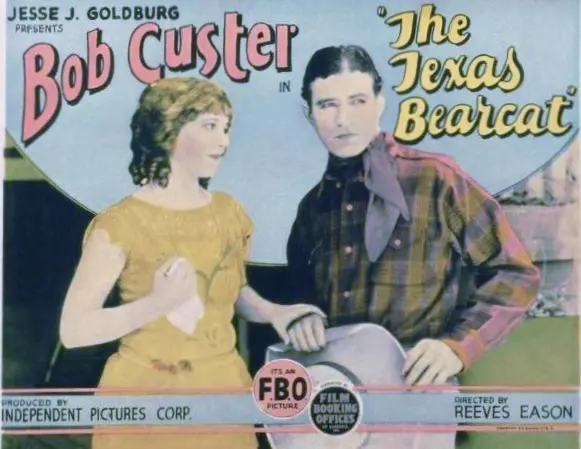
Is 'The Texas Bearcat' a forgotten Western classic deserving of contemporary attention? Short answer: yes, but with significant caveats that demand a specific kind of viewer. This film is a fascinating artifact for silent film enthusiasts, Western genre historians, and those intrigued by early narrative complexities, but it will likely prove a challenging watch for casual viewers accustomed to modern pacing and storytelling conventions.
This film works because it attempts a surprisingly intricate narrative for its era, weaving together themes of identity, revenge, and unexpected lineage with a certain audacious spirit. It embraces melodrama with an earnestness that can be quite compelling, particularly in its audacious plot twists.
This film fails because its technical limitations, inconsistent pacing, and often melodramatic performances hinder its ability to fully realize its ambitious plot, leaving many emotional beats feeling underdeveloped. The silent film conventions, while historically significant, sometimes struggle to convey the full emotional weight the script clearly intended.
You should watch it if you are a dedicated student of early cinema, a Western aficionado seeking historical context, or someone who appreciates uncovering the foundational storytelling techniques that paved the way for more sophisticated narratives. It’s a glimpse into the formative years of a beloved genre.
Hailing from an era when cinema was still finding its voice, 'The Texas Bearcat' presents a narrative that, on paper, is brimming with the kind of dramatic tension and familial intrigue one would expect from a sprawling Western epic. It’s a tale of mistaken identity, bitter feuds, and the kind of shocking revelations that define the very essence of melodrama. Yet, its execution, bound by the conventions and limitations of early silent film, offers a unique lens through which to view the birth of cinematic storytelling. This isn't just a film; it's a historical document of a genre in its infancy.
The core strength of 'The Texas Bearcat' undeniably lies in its ambitious and often convoluted plot. The story of Dave Sethman, raised to believe he is the half-breed son of a gruff rancher, Sethman, immediately establishes a foundation of conflict and identity crisis. This isn't merely a backdrop; it's the engine driving much of the film's emotional weight, even if that weight isn't always fully felt by modern audiences.
The introduction of John Crawford, the Eastern industrialist, and his daughter, Jean, sets the stage for a classic Western conflict: the old guard against the new money, tradition against progress. The film cleverly intertwines this land dispute with personal drama, making the stakes feel both grand and intimately personal. Dave's repeated acts of heroism in saving Jean, first from a runaway horse and later from the advances of Murdock, are not just moments of action; they are crucial beats in forging an improbable connection between characters on opposing sides of a simmering war.
The narrative’s most audacious move, however, comes with the elder Sethman’s dying confession. The revelation that Crawford is Dave’s true father, and that Dave was stolen as an infant, is a narrative bombshell. It completely recontextualizes every interaction that came before, shifting the entire emotional landscape of the film. This twist is pure, unadulterated melodrama, and it works to elevate the story beyond a simple good-vs-evil Western.
The subsequent reconciliation between Dave and Crawford, despite Dave having shot his biological father in the hand, is a testament to the film's commitment to dramatic resolution, however swift it may seem. The final reveal that Jean is adopted, freeing her to pursue a romance with Dave, feels like a necessary, if somewhat convenient, untangling of the dramatic knots. It’s a classic move to ensure a happy ending, typical of the era, and while it might feel a little too neat, it provides a satisfying closure to a genuinely complex setup.
Silent film acting, by its very nature, often feels exaggerated to contemporary viewers. Actors relied on broad gestures, expressive facial movements, and often melodramatic pantomime to convey emotions and narrative beats without the aid of dialogue. 'The Texas Bearcat' is no exception, and understanding this convention is key to appreciating the performances within it.
Bob Custer, as Dave Sethman, embodies the stoic, conflicted Western hero. His performance, while lacking the nuanced subtlety we expect today, effectively conveys a sense of inner turmoil and heroic resolve. Moments where he protects Jean, or confronts the elder Sethman, are communicated through a physicality that, for the time, was considered robust and effective. He carries the weight of his character's unknown lineage with a compelling intensity.
Sally Rand, playing Jean, brings a necessary feminine presence to the rugged landscape. Her portrayal likely focused on conveying vulnerability and eventual strength, particularly in scenes where she is threatened or saved by Dave. While specific nuances are hard to discern without dialogue, the visual storytelling would have emphasized her reactions to danger and her growing affection for Dave. Her character acts as a catalyst for much of the film's interpersonal drama.
Harry von Meter, likely as the elder Sethman, and Jack Richardson, perhaps as Crawford, would have delivered performances characterized by strong, clear emotional beats. The elder Sethman's gruff exterior and eventual deathbed confession would have demanded a powerful, if brief, emotional arc, relying on intense gaze and deliberate movement. Crawford, the industrialist, would have embodied a different kind of strength, perhaps a more calculating and less physical presence until the climactic confrontations. The antagonist, Murdock, likely played by Carlton S. King, would have leaned into villainous posturing, making his unwanted advances visually clear and unsettling.
One could argue that the performances, while effective for their time, occasionally tip into caricature. This is not a flaw of the actors themselves, but a reflection of the medium’s nascent stage. The challenge for these performers was immense: to tell a story entirely through movement and expression, without the luxury of spoken words to clarify intent or add depth. They succeed in communicating the plot, even if the emotional resonance is sometimes lost to modern sensibilities.
Directed by Lee Shumway, 'The Texas Bearcat' operates within the stylistic confines of early 20th-century filmmaking. The direction would have prioritized clear narrative progression and the effective staging of action sequences. The runaway horse scene, for instance, would have been a prime opportunity for dynamic camera work and editing, even if rudimentary by today's standards. Such sequences were often the highlights of early action-adventure films, demonstrating the raw power of the moving image.
The cinematography, while not necessarily groundbreaking, would have aimed to capture the vastness and rugged beauty of the Western landscape. Shots of characters riding across open plains, or confrontations against a backdrop of natural rock formations, would have been standard. These wide shots served not just as scenery, but as a crucial element in establishing the tone and scale of the Western genre, making the human conflicts feel dwarfed by the environment.
Pacing in silent films can be a contentious point for contemporary viewers. Without the cadences of spoken dialogue, scenes often relied on intertitles to convey information, which could disrupt the flow. However, skilled directors like Shumway would have used variations in shot length and editing to build tension, particularly during moments of conflict or revelation. The speed at which the plot twists unfold—from Sethman’s deathbed confession to Crawford’s adoption reveal—indicates a desire for brisk, impactful storytelling, even if the transitions feel abrupt to a modern eye.
The tone of the film is a fascinating blend of Western grit and high melodrama. It attempts to balance the harsh realities of frontier life with the heightened emotions of a family saga. This combination, while sometimes uneven, is a hallmark of early cinema, where genre boundaries were often more fluid. The dramatic reveals and swift resolutions are a testament to this melodramatic sensibility, aiming for emotional impact above all else.
'The Texas Bearcat' is more than just a forgotten film; it's a valuable piece of the Western genre's evolutionary puzzle. It showcases many nascent tropes that would become staples: the conflicted hero, the land dispute, the damsel in distress, and the dramatic family secret. While it may not possess the iconic status of later Westerns, its ambition to weave a complex narrative stands out among its contemporaries.
Unlike simpler, action-focused shorts like Paddy O'Hara (also from 1917, for example) or early chase films, 'The Texas Bearcat' actively grapples with themes of identity and moral ambiguity, albeit through a melodramatic lens. The idea of a protagonist believing he is a 'half-breed' — a term loaded with historical context and often used to signify internal conflict or social ostracization in early Westerns — adds a layer of depth that many films of the era shied away from, even if its resolution feels a little too convenient.
One strong, debatable opinion is that early Westerns like this one, despite their technical limitations, often possessed a raw narrative energy that later, more polished films sometimes lost in favor of realism. There's a certain audaciousness in the storytelling here, a willingness to embrace heightened drama without apology, which is undeniably refreshing. It's a testament to the fact that compelling stories don't always need pristine production values; they need heart and daring.
However, it's also true that the very conventions that made these films impactful then can make them feel dated now. The speed of emotional shifts, the reliance on intertitles, and the often-exaggerated acting styles require a shift in viewing perspective. It’s not just watching a film; it’s engaging with a historical artifact. The surprising observation might be how quickly the dramatic reveals are absorbed and acted upon by the characters, a pacing choice that feels almost jarringly rapid compared to modern storytelling.
Yes, for specific audiences, this film is absolutely worth watching. It offers a unique glimpse into early Western cinema. It provides historical context for the genre. It showcases ambitious storytelling for its time. However, it is not for those seeking modern pacing or dialogue. It demands patience and an appreciation for silent film conventions.
'The Texas Bearcat' is a fascinating, if imperfect, relic. It works. But it’s flawed. Its narrative ambition far outstrips its technical capacity, yet in that disparity lies its enduring charm. It’s a film that demands to be viewed not just as entertainment, but as a crucial stepping stone in the development of a beloved genre. For those willing to adjust their expectations, it offers a rich, if sometimes dusty, cinematic experience that speaks volumes about where Westerns began and how far they've come.
IMDb —
1920
Community
Log in to comment.