DbcultAccessing Vault...
5.7/10
Senior Film Conservator
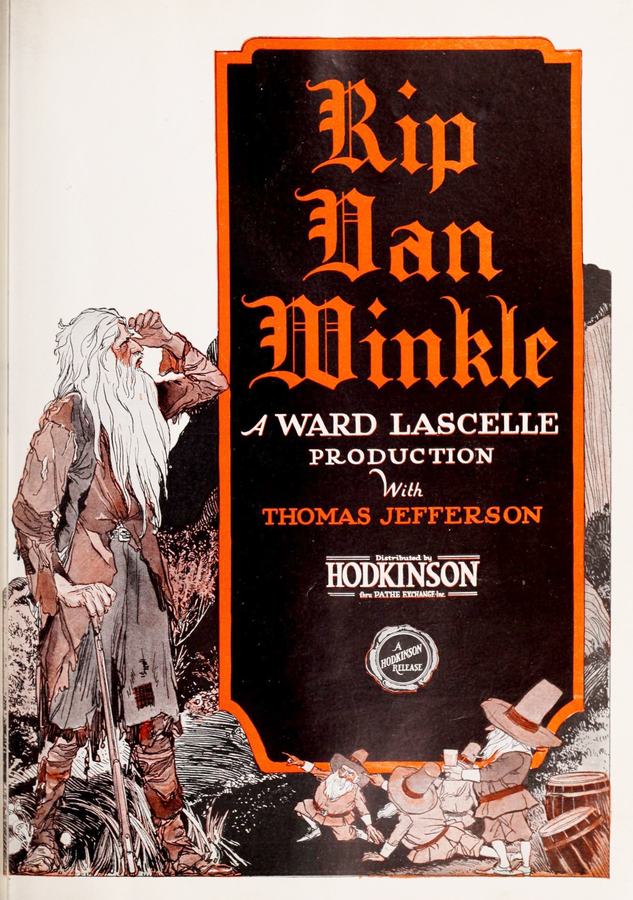
A definitive 5.7/10 rating for a film that redefined the boundaries of cult cinema. Rip Van Winkle remains a cornerstone of transgressive art.
Stepping back into the annals of early cinema, one encounters certain adaptations that, despite the limitations of their medium, manage to encapsulate the very essence of their source material while simultaneously imbuing it with contemporary resonance. Edward Ludwig and Agnes Parsons' 1921 rendition of Rip Van Winkle, based on Washington Irving's seminal tale and the theatrical adaptations by Joseph Jefferson and Dion Boucicault, is precisely such a film. It isn't merely a quaint retelling of a man who sleeps for two decades; it is a profound cinematic meditation on the birth and rapid development of a nation, viewed through the bewildered eyes of an accidental time-traveler. This silent epic, starring Thomas Jefferson in the titular role, supported by a robust ensemble including Mary Anderson, Ted Billings, and Francis Carpenter, leverages the visual storytelling inherent to its era to paint a vivid picture of America's divergent evolution across political, social, and economic spheres.
The genius of the 1921 Rip Van Winkle lies in its ability to transcend the personal narrative of Rip's long slumber and transform it into an allegorical exploration of American identity. When Rip (Thomas Jefferson, a descendant of the original stage Rip, Joseph Jefferson) first wanders into the Catskills, the world he leaves behind is one still tethered, however loosely, to colonial traditions. The villagers, their customs, their loyalties, all bear the imprint of a pre-revolutionary era. His awakening, therefore, is not just a rude shock to his individual psyche, but a stark confrontation with a completely new national consciousness. The film meticulously contrasts the sleepy, agrarian community Rip knew with the bustling, self-assured republic that has emerged. This shift is brilliantly conveyed through visual cues: the transformation of flags, the portraits adorning public spaces, and the very demeanor of the citizenry. The King's portrait, once a symbol of distant authority, is replaced by the stern, hopeful visage of George Washington, a silent yet potent declaration of independence not just political, but cultural.
Silent film, often underestimated in its capacity for nuance, here proves to be an exceptionally potent vehicle for this particular narrative. Without dialogue, the filmmakers are forced to rely on exaggerated expressions, symbolic gestures, and meticulous set design to convey the passage of time and the enormity of change. Thomas Jefferson's portrayal of Rip is a masterclass in physical comedy and pathos; his wide-eyed confusion, his hesitant steps, and his desperate attempts to comprehend a world that has moved on without him are palpable. The audience feels his disorientation, becoming complicit in his journey of rediscovery, making the grand sweep of American history intimately personal. It’s a similar ambition to convey complex emotional and societal shifts that one might find in films like The Power of Love, though that film focuses more on interpersonal drama, Rip Van Winkle aims for a broader societal canvas.
The social transformation depicted in Rip Van Winkle is perhaps the most immediate and visually striking. The film contrasts the simple, almost bucolic existence of Rip's original village with the vibrant, bustling, and arguably more complex society he re-enters. Fashion has evolved dramatically; the powdered wigs and knee breeches have given way to more contemporary, if still period-appropriate, attire. The manners of the people, too, seem to have shifted, reflecting a more dynamic, self-reliant populace. There's a tangible sense of increased urbanization and the beginnings of a more interconnected society. The film implies that the small, insular community has expanded, both geographically and psychologically. New faces, new customs, and a general air of progress permeate every frame of Rip’s post-slumber experience.
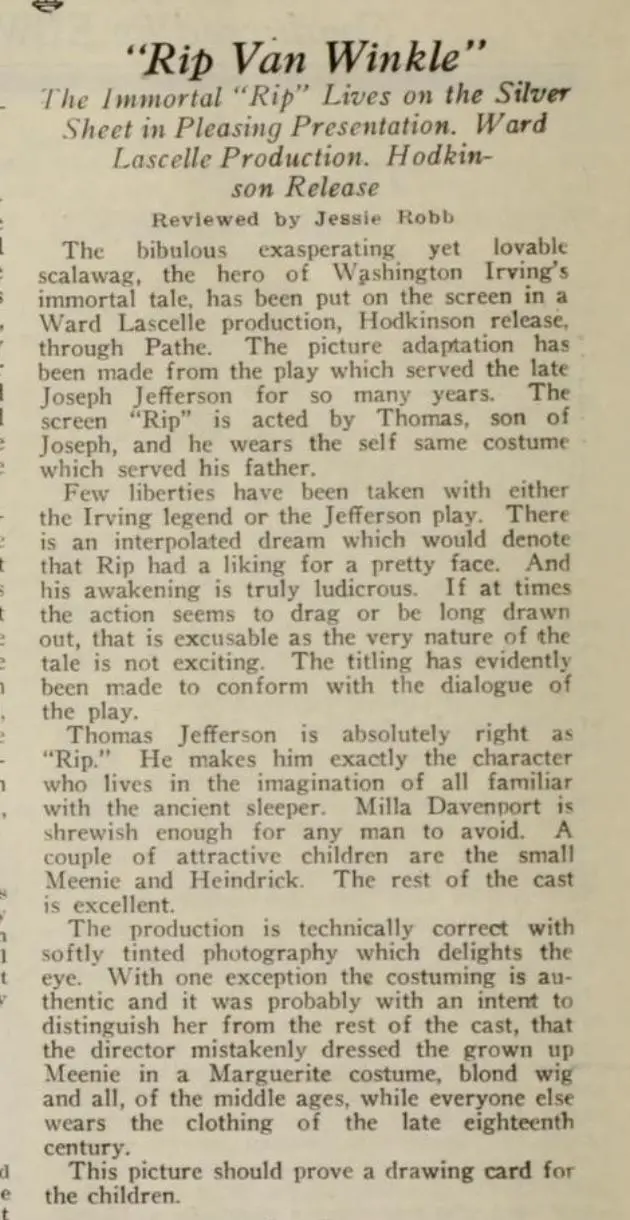
Consider the portrayal of children, for instance. Francis Carpenter, a known child actor of the era, and Gertrude Messinger, likely playing Rip's daughter Judith as a child, represent the innocence of the past. Daisy Jefferson, playing Judith as an adult, embodies the new generation, one that has grown up entirely within the framework of the new republic. Her character’s journey parallels the nation’s: from a child of the old world to a woman fully integrated into the new. This subtle yet powerful character development, conveyed through performance and visual storytelling, underscores the film’s larger themes. It's a nuanced look at generational shifts that some contemporary films, like Peck's Bad Boy, explored through the lens of mischievous youth, but here it serves a grander, more historical purpose.
The societal changes also extend to the very idea of community. The film suggests a transition from tightly knit, almost familial hamlets to more formalized towns and cities. The individual's place within this new social structure is different; there's a greater emphasis on civic participation and public discourse, a direct consequence of the political revolution. Rip, a man who famously shirked responsibility, finds himself utterly adrift in a world where civic engagement is paramount. His struggle to find his place within this new social order is a poignant reflection of the challenges faced by many during periods of rapid national development.
Economically, the film presents a compelling visual narrative of a nation transitioning from a largely agrarian, subsistence-level economy to one with the stirrings of industrialization and robust commerce. The initial scenes of Rip's village depict a simple life, likely sustained by farming, hunting, and perhaps local bartering. Upon his return, the landscape is dotted with signs of burgeoning enterprise. Mills might be seen, goods are openly traded in a more organized marketplace, and the overall impression is one of increased economic activity and complexity. The concept of money, its value, and its circulation would have taken on new significance in this post-Revolutionary America, a stark contrast to Rip's former indolent existence, where such concerns were largely managed by his industrious wife.
The film, through its visual language, suggests a move towards a more capitalist framework, driven by innovation and expansion. This economic dynamism is a direct byproduct of the political independence that allowed the United States to forge its own trade policies and pursue its own industrial development. The characters Rip encounters are no longer just simple villagers; they might be merchants, tradesmen, or burgeoning entrepreneurs, each contributing to the new economic fabric. This subtle but effective portrayal of economic shifts is a testament to the filmmakers' understanding of the broader historical context of Irving's story. It's not just about a man waking up; it's about a nation waking up to its own economic potential, a theme that, while not explicitly detailed in every silent film, underpins many stories of progress and change, even if contrasted with narratives of struggle like The Root of Evil.
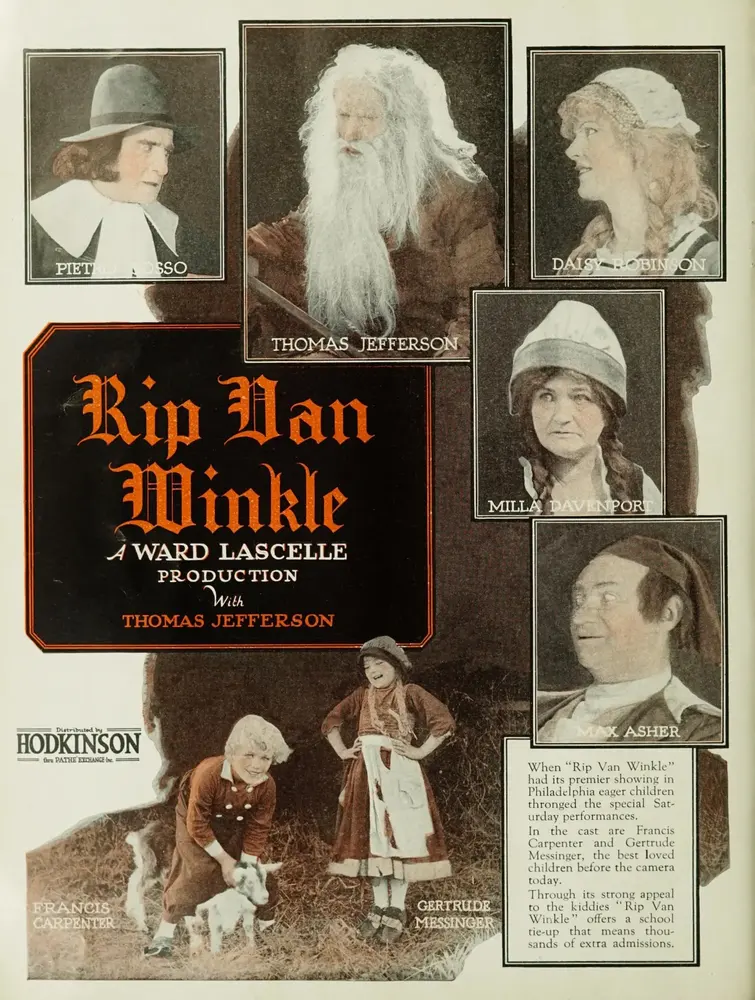
The success of Rip Van Winkle (1921) hinges significantly on its cast and the interpretive power of its writers, Joseph Jefferson and Dion Boucicault, whose theatrical adaptations provided a robust framework for Edward Ludwig and Agnes Parsons to translate to the screen. Thomas Jefferson, inheriting the role that brought his grandfather immense fame, embodies Rip with a blend of endearing laziness and profound bewilderment. His performance is key to grounding the fantastical elements of the story in relatable human emotion. The supporting cast, including Mary Anderson and Milla Davenport, add layers of character to the village, ensuring that Rip's world, both before and after his slumber, feels lived-in and authentic. The film's ability to convey such sweeping changes without spoken dialogue is a testament to the power of visual acting and expressive cinematography, which must carry the entire narrative burden.
The writers, drawing from Washington Irving's original masterpiece, understood the inherent metaphorical power of Rip's story. It was never just a whimsical tale; it was a reflection on time, change, and the forging of a new national identity. Ludwig and Parsons, as directors, skillfully translated these themes into a cinematic language that resonated with audiences of the early 20th century, themselves living through a period of immense change and modernization. The film's pacing, its use of intertitles, and its visual metaphors all contribute to a cohesive and emotionally resonant experience. While other films of the era, such as David Copperfield, tackled literary adaptations with their own unique challenges, Rip Van Winkle stands out for its specific focus on historical allegory.
What makes Rip Van Winkle (1921) endure, beyond its historical significance as an early silent film, is its timeless exploration of themes that continue to resonate. The feeling of being left behind by progress, the struggle to adapt to a rapidly changing world, and the profound impact of national events on individual lives are universal experiences. The film serves as a poignant reminder that change is constant, and often bewildering. It invites viewers to consider their own relationship with history and progress, and how swiftly the familiar can become foreign. The narrative arc, while rooted in fantasy, mirrors the very real anxieties and wonders associated with societal evolution. It’s a compelling piece that, even a century later, retains its power to provoke thought and emotion, making it a valuable entry in the cinematic canon.
The portrayal of the Catskill Mountains themselves, often depicted with a mystical, almost ethereal quality, contributes significantly to the film’s atmosphere. The mountains are not just a backdrop; they are a character, a silent witness to Rip's extraordinary slumber and the nation's transformation. They represent the timeless, unchanging aspects of nature contrasted with the fleeting, dynamic nature of human civilization. This juxtaposition adds a layer of philosophical depth to the narrative, urging contemplation on man's place within the grander scheme of existence. The film’s visual poetry, in this regard, is surprisingly sophisticated for its time, demonstrating a keen understanding of how environment can enhance storytelling.
In essence, Rip Van Winkle (1921) is far more than a simple adaptation of a beloved American myth. It is a meticulously crafted cinematic document that uses the personal plight of one man to illuminate the monumental shifts that defined the birth and early growth of the United States. Through its silent imagery, compelling performances, and thoughtful direction, the film effectively conveys the political upheaval, the social restructuring, and the economic burgeoning that reshaped a nascent nation. It’s a testament to the enduring power of Washington Irving’s story and the interpretive brilliance of early filmmakers who, with limited tools, managed to capture such expansive and profound themes. For anyone interested in the intersection of American history, silent film artistry, and timeless storytelling, Rip Van Winkle offers a rich and rewarding experience, a true cinematic time capsule of a nation in flux.
This film, in its quiet power, reminds us that the past is never truly gone; it merely sleeps, waiting for us to awaken and observe the world it has left behind. The journey of Rip Van Winkle is, ultimately, a journey into the heart of American identity itself, constantly evolving, perpetually surprising. It stands as a magnificent example of how early cinema could tackle grand narratives with subtlety and grace, demonstrating that the absence of sound could be an asset, forcing a reliance on visual storytelling that, in this case, proved profoundly effective in conveying the nuanced development of a nation. It's a film that demands a thoughtful viewing, rewarding the patient observer with a deep dive into both cinematic history and the very fabric of American change. The film is a dialogue across time, a conversation between an old world and a new one, facilitated by the universal language of visual storytelling.
IMDb —
1924
Community
Log in to comment.