DbcultAccessing Vault...
Cult Review
Senior Film Conservator
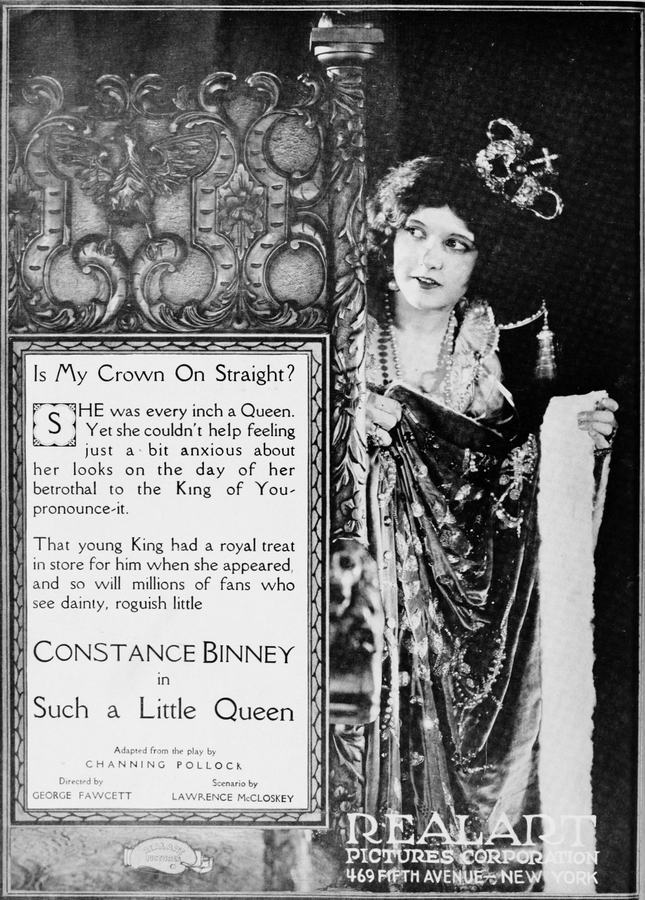
In the annals of early cinema, few genres captivated audiences quite like the romantic comedy, especially when infused with a dash of exoticism and the charming absurdity of a fish-out-of-water premise. 'Such a Little Queen,' a 1921 silent film from the creative minds of Lawrence McCloskey, J. Clarkson Miller, and Channing Pollock, adapted from Pollock's own play, delivers precisely this delightful concoction. It's a journey from the gilded cages of European royalty to the bewildering freedom of American democracy, all wrapped in a surprisingly nuanced narrative that, even a century later, retains a certain whimsical charm. The film, starring the luminous Constance Binney as the titular Queen Anne, invites us into a world where crowns are traded for kitchen aprons and diplomatic crises give way to domestic dilemmas.
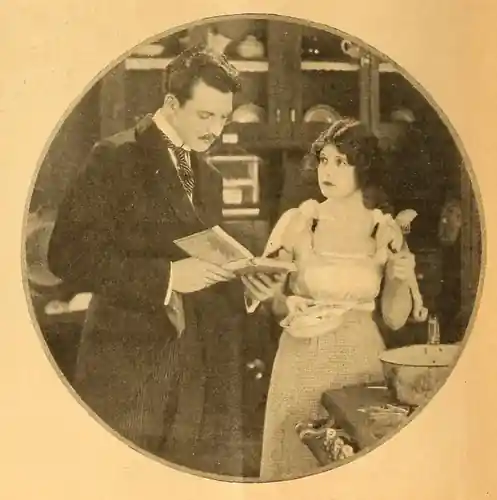
The narrative unfurls with a dramatic urgency: Queen Anne of Gzbfernigambia, a young monarch on the cusp of a politically advantageous marriage to King Stephen of Hetland, finds her world upended by a sudden, violent revolution. This initial thrust of geopolitical turmoil quickly gives way to a more intimate, character-driven exploration as Anne, accompanied by her steadfast Baron Cosaco, flees to the perceived sanctuary of the United States. New York City, a crucible of cultures and a beacon of aspiration, becomes their unlikely refuge. The contrast between their former opulence and current penury is stark, setting the stage for both comedic moments and genuine pathos. It’s a classic trope, certainly, but one executed with a particular grace here, echoing perhaps the broader American fascination with European aristocracy, a theme explored in various forms throughout cinematic history, from the more comedic The Slim Princess (1920) to the dramatic gravitas of later period pieces. The film cleverly uses Anne’s predicament to highlight the often-absurd disconnect between inherited power and practical survival skills.
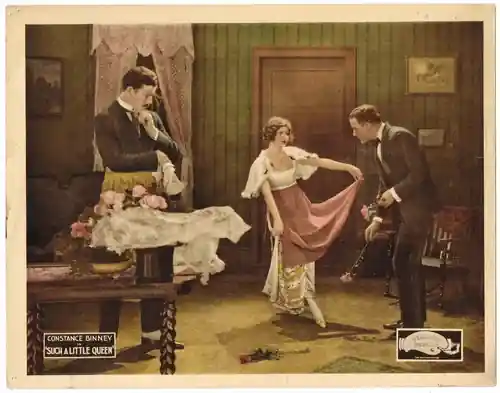
Enter Bob Trainor, portrayed with an endearing breeziness by Roy Fernandez. Bob, an office manager for the conspicuously wealthy meat packer Adolph Lawton, embodies the quintessential American spirit of helpfulness and unpretentious charm. His immediate, uncalculated kindness towards the displaced royals is a pivotal moment, shifting the film's tone from political drama to a more lighthearted romantic comedy. Bob's ability to find them an apartment on the East Side, a far cry from their palatial former residence, marks their true immersion into American life. Here, the film truly shines in its comedic potential, as Queen Anne, accustomed to a retinue of servants, comically attempts to navigate the alien landscape of household chores. Constance Binney's performance in these scenes is a masterclass in silent film acting, conveying awkwardness, frustration, and a burgeoning sense of self-reliance through subtle expressions and physical comedy. One can almost see the gears turning in her royal mind as she grapples with a broom or a cooking pot, a delightful subversion of the regal persona. This domestic struggle serves as a powerful metaphor for her shedding the skin of her old identity and forging a new one, even if temporarily, in the land of the free.
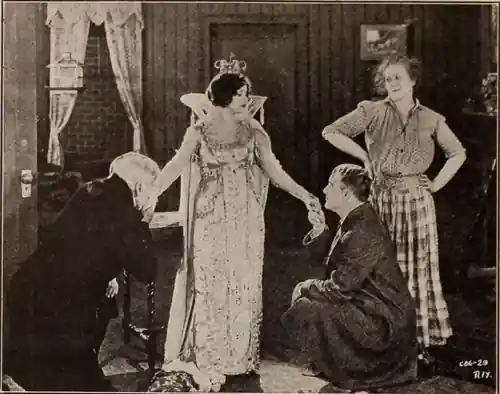
The arrival of the royals in New York also stirs the pot of Adolph Lawton's social ambitions. Lawton, played by the formidable Frank Losee, sees in the exiled queen an opportune pathway to elevate his family's status, eagerly envisioning a royal marriage for his daughter, Elizabeth. However, Elizabeth (Betty Carpenter) has her own ideas about love, her heart already claimed by the unassuming Bob Trainor. This creates a fascinating love triangle, or perhaps more accurately, a romantic quadrilateral, where the queen's presence inadvertently ignites Elizabeth's jealousy. The dynamic between Elizabeth and Anne is particularly interesting, as it's not simply a catfight over a man, but a clash of worlds: the established American heiress versus the displaced European monarch, both vying for affection and, in Elizabeth's case, a sense of security that her father's wealth cannot buy. The writers, McCloskey, Miller, and Pollock, skillfully navigate these emotional crosscurrents, ensuring that each character's motivations, from Lawton's social climbing to Elizabeth's genuine love, feel authentic within the silent film's often-exaggerated idiom.
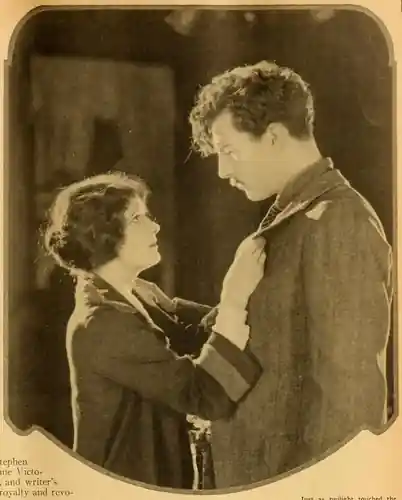
Just as the romantic entanglements reach a fever pitch, the political dimension reasserts itself with the arrival of King Stephen of Hetland (J.R.O. Perkins), Anne's original betrothed. This development reignites the royal courtship, shifting the focus back to the larger geopolitical stakes. The film deftly balances the intimate romantic drama with the broader implications of national stability. King Stephen's reappearance is not merely a plot device to resolve the love triangle, but a catalyst for the restoration of order and the unification of two kingdoms. The financial woes plaguing Gzbfernigambia and Hetland, the underlying cause of much of the initial turmoil, are pragmatically resolved through a substantial loan from Adolph Lawton. This moment is a brilliant stroke of narrative economy, allowing Lawton to achieve his social ambitions indirectly, by playing the benevolent benefactor to royalty, while simultaneously facilitating the happy ending for Anne and Stephen. It underscores the pervasive influence of American wealth, even on distant European monarchies, a theme that perhaps resonated strongly with audiences of the era. The resolution of the royal crisis then clears the path for the commoners' happiness, with Elizabeth and Bob finally free to become engaged, their romance validated by the very events that initially threatened to tear them apart.
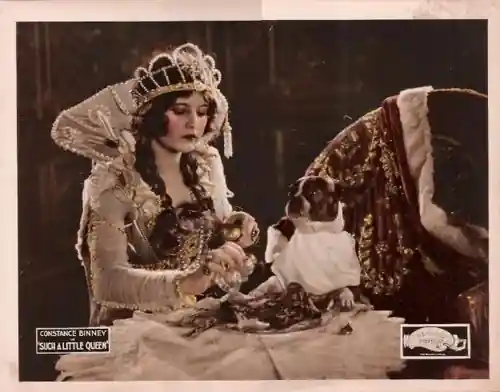
The success of 'Such a Little Queen' hinges significantly on its cast, and they deliver with the expressive power characteristic of the silent era. Constance Binney, as Queen Anne, is a revelation. She portrays Anne not as a fragile royal, but as a spirited young woman capable of adapting and even thriving in adversity. Her transition from haughty monarch to bewildered housekeeper, and then to a woman finding her footing in a new world, is rendered with impressive subtlety and comedic timing. Her eyes, often the most crucial tool for silent actors, convey a range of emotions, from regal disdain to genuine vulnerability. Roy Fernandez, as Bob Trainor, is the perfect foil, embodying the earnest, straightforward American hero. His performance is understated yet impactful, providing the grounding force against the royal extravagance. Frank Losee, as Adolph Lawton, perfectly captures the ambitious, somewhat boorish but ultimately well-meaning industrialist, a character archetype that would become a staple in American cinema. The supporting cast, including Jessie Ralph, J.H. Gilmour, Vincent Coleman, Henry Leone, and J.R.O. Perkins, each contribute to the film's rich tapestry, creating a believable, if heightened, world. The chemistry, particularly between Binney and Fernandez, is palpable, a testament to the actors' ability to communicate complex emotions without a single spoken word. This kind of nuanced performance is a hallmark of the best silent films, distinguishing them from mere pantomime and elevating them to genuine art, much like the compelling character studies seen in films such as The Fatal Sign or The Supreme Temptation, where expressive acting carried the narrative weight.
The screenplay by Lawrence McCloskey and J. Clarkson Miller, adapted from Channing Pollock's play, is remarkably well-structured. It manages to integrate elements of political drama, romantic comedy, and social commentary into a coherent and engaging narrative. The pacing, a critical aspect of silent film, is handled with a deft hand, allowing moments of humor to breathe while maintaining a steady forward momentum towards the resolution. The intertitles are crisp and informative, providing necessary exposition without bogging down the visual storytelling. What's particularly commendable is the way the writers use the fish-out-of-water scenario not just for cheap laughs, but to explore themes of identity, adaptation, and the universal human need for connection, regardless of social standing. The contrast between European tradition and American pragmatism is a recurring motif, subtly woven into the dialogue of the intertitles and the actions of the characters. The direction, though uncredited in the provided details, must have been astute, guiding the actors through their emotionally demanding roles and ensuring the visual clarity of the narrative. The cinematography, while perhaps not as groundbreaking as some of its contemporaries, effectively captures the grandeur of royal settings and the bustling energy of New York City, creating a visually appealing backdrop for the unfolding drama. The meticulous attention to detail in set design and costuming further immerses the viewer in the film's distinct world, a level of production quality often seen in the more ambitious projects of the era, such as Snow White or Yamata, which also relied heavily on visual spectacle.
Beyond its charming surface, 'Such a Little Queen' delves into themes that remain pertinent even today. The idea of forced displacement and the struggle for survival in a new land is deeply resonant, mirroring countless real-world experiences. Queen Anne's journey is one of self-discovery, learning to value intrinsic worth over inherited status. Her awkward attempts at housekeeping are not just comedic relief; they represent her shedding the trappings of royalty and embracing a more fundamental human experience. The film also explores the clash between old-world traditions and new-world ideals. Adolph Lawton's ambition, while rooted in social climbing, also embodies the American dream of upward mobility and self-made success, contrasting sharply with the inherited power of the European monarchs. The romantic plot, too, is more than just a simple love story; it questions the nature of true affection, pitting convenience and political alliance against genuine emotional connection. Elizabeth's steadfast love for Bob, despite her father's desires for a royal match, speaks to the enduring power of individual choice in matters of the heart. This exploration of social strata and personal values is a common thread in films of this period, often used to highlight emerging societal shifts, much like the observations on class in Dabbling in Society or The Fringe of Society.
While 'Such a Little Queen' is undeniably a product of its time, its core appeal endures. The silent film format, far from being a barrier, invites a different kind of engagement, encouraging viewers to focus on visual storytelling, body language, and the evocative power of music (if accompanied by a score). The film's gentle humor, heartfelt romance, and surprisingly relevant themes make it a delightful watch for both silent film aficionados and those new to the genre. It's a reminder that good storytelling transcends technological limitations. The narrative arc, from exile and hardship to love and political stability, offers a satisfying sense of closure, a comforting reassurance that even in the face of grand upheavals, individual happiness can be found. It’s a testament to the enduring power of the 'feel-good' story, a quality that makes classics like What Happened to Rosa or Homespun Folks continue to charm audiences. This film, with its blend of high-stakes drama and charming domesticity, proves that a century ago, filmmakers were already mastering the art of crafting tales that resonate deeply with the human experience, regardless of whether a crown is involved.
In conclusion, 'Such a Little Queen' is more than just a historical curiosity; it’s a vibrant, engaging piece of early cinematic art. It showcases the talents of its cast, the ingenuity of its writers, and the timeless appeal of a story that blends romance, comedy, and a touch of royal intrigue. It serves as a beautiful window into the cultural landscape of the early 1920s, reflecting societal values and aspirations while delivering a narrative that is both entertaining and, in its own quiet way, profound. For anyone seeking to understand the evolution of film or simply to enjoy a well-told story, this 'little queen' offers a genuinely majestic experience, a true gem from the silent era that deserves to be rediscovered and celebrated.
IMDb 6.7
1927
Community
Log in to comment.