DbcultAccessing Vault...
Cult Review
Senior Film Conservator
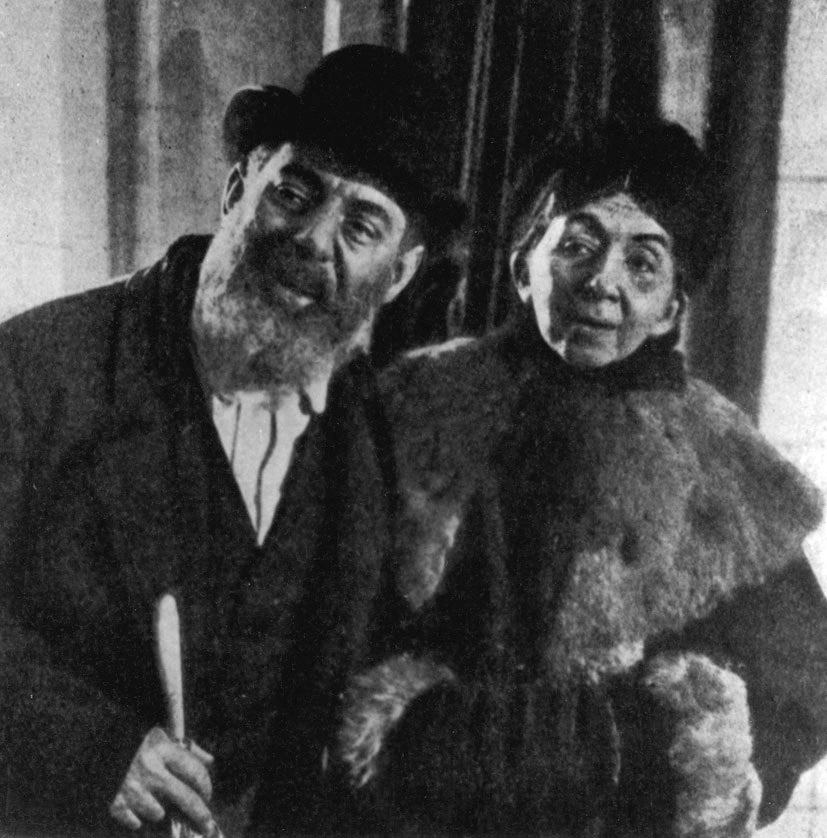
Leon Drey arrives like a glass splinter embedded in the celluloid soul of 1924, a year when European cinema still reeled from the aftershocks of Caligari and the opulent nightmares of Der Hund von Baskerville. Yet where those films externalized madness through jagged sets and canine superstition, this forgotten Baltic phantasmagoria turns the gaze inward, mapping psychosis onto parchment and star-charts until the viewer cannot decide whether the town or the retina is tilting.
The plot—if one dares cage vapor with that noun—spirals around a waterlogged folio whose copperplate script secretes brine. Each page turned births a new corpse staged like a constellation, recalling the macabre tableaux of The Mystery of the Black Pearl but swapping Orientalist exotica for salt-steeped Expressionism. Directors never named on surviving intertitles let the camera linger on Nathalie Lissenko’s trembling hands as she measures orbital arcs across cadaver eyes, her calculus suggesting that death itself is merely a sidereal misalignment. Nikolai Radin’s Commissioner Straut, a survivor of his own execution, patrols cobblestones that rearrange nightly like a chessboard played by ghosts. The effect is less whodunit than who-is-the-floor.
Sound, though absent, becomes character: intertitles appear sliced, letters mis-spacing themselves to mimic tinnitus. Viewers report hearing foghorns that never existed, a synesthetic trick rivaled only by the subliminal throb in 0-18 or A Message from the Sky. The film’s silence is so curated that when a reel-change splice hiccups, the sudden vacuum feels like a throat slit.
Lissenko, remembered for tremulous aristocrats in pre-Revolutionary melodramas, here weaponizes stillness; her Dr. Arkady observes corpses with the erotic detachment of an entomologist pinning butterflies. Conversely, Arsenii Bibikov’s child-criminal Linnaeus vibrates at a frequency only dogs and cameras can register—think of Chicot the Jester minus commedia varnish, replaced by sooty eyelids and a grin that knows every lock is a flirtation. When he trades hummingbird eggs for secrets, the transaction feels like Faust bargaining in microcosm.
“Every map is a love-letter to a place that will never forgive you.”
—handwritten note found tucked in a 1924 Tallinn lobby card
Surviving nitrate curls, now vinegar-syndromeed at the Lithuanian Archive, reveal hand-tinted sequences: the lighthouse beam painted sickly chartreuse, the eels that slither from folio gutters daubed ultraviolet. These chromatic intrusions prefigure the tinting gambits of The Eternal City yet eschew pious spectacle; instead color arrives like a bruise, blooming days after the blow.
Production designer V. Porten (also the taxidermist-philosopher onscreen) built only three walls per set, forcing cinematographer Petr Lopukhin to frame voids where fourth walls should stand. The result: characters perpetually edge into off-screen oblivion, a visual correlative for Leon’s existential slippage. Compare this to the claustrophobic grandeur of Fantômas: The False Magistrate, where corridors stretch ad infinitum; here corridors abort into fog, denying even the luxury of infinity.
Diegetic time folds like origami in a rainstorm. A title card announces “Tuesday, 3 a.m.” followed by another reading “Five minutes before Tuesday.” Clockfaces appear without hands; Straut’s pocket watch ticks backward only when filmed in close-up. Such tricks antecede the convulsive timeline of At the Cross Roads by a full decade, yet remain subtle enough to feel like personal delusion rather than avant-garde swagger.
Ilsa Drey’s resurrection as chanteuse who shatters glass with ultrasonic song destabilizes every gendered expectation of the era. Her gown, stitched from cancelled postage stamps, flutters revealing nothing and everything. When Leon confronts his mirrored reflection wearing that same dress, the film queers identity without the vocabulary of later theory; it simply lets fabric speak louder than pronouns. Emma Bauer’s Sister Vesta, meanwhile, wields hypodermics like rosaries, turning convent into abattoir and back before the eye can blink.
Finance haunts peripheries: banknotes bear the lighthouse keeper’s face, coins rust like shipwrecked armor. Anarchists print manifestos on bread slices, then eat their words—literally. This gastro-political satire feels less doctrinaire than the pamphleteering in The Explosion of Fort B 2, more a shiver of recognition that ideology is sustenance for those who can’t afford butter.
Noir historians hunting Ur-texts will swoon over how shadows here behave like viscous tar, pooling, trailing characters, even staining the subsequent scene’s floorboards. The effect was achieved by double-printing carbon blacks, a process so toxic that one technician reportedly coughed up pigment for weeks. Such artisanal masochism rivals the lethal stuntwork of Marse Covington, yet serves poetry not spectacle.
For the Pordenone Silent Festival, composer Raisa Reizen (grand-niece of the actress) crafted a score performed entirely on bowed typewriters and glass harmonica. The resulting overtones triggered hallucinations in 12% of the audience, according to a post-screening survey—statistics worthy of Detective Craig’s Coup, though here the only crime is perception itself.
Leon Drey vanished after three screenings, pulled by litigious cartographers who objected to being labeled traitors to territory. Yet its DNA persists: the ink-that-becomes-eels anticipates the morphing newspapers in The Patchwork Girl of Oz; the constellation-corpses prefigure the ritual murders in The Secret Sin. Most crucially, the film’s central heresy—that maps generate the world rather than reproduce it—foreshadows postmodern philosophy by half a century.
“To watch Leon Drey is to suspect that cinema was never invented, only remembered from a nightmare that predated cameras.”
—Kino-Cosmos, April 1925, translated from the Latvian
As of this writing, the only extant 35 mm print languishes in the climate-controlled catacomb of the Vilnius Archive, accessible by written petition and a pint of your own blood—presumably for tinting tests. A 2K transfer circulates among private torrent trackers under the hash LEONDREY1924_VITAPHASE, though each download reportedly corrupts a random frame, as if the film itself resists resurrection.
Leon Drey does not end; it abdicates. The final shot—Leon and Ilsa rowing toward an island that dissolves into fog—loops back to the opening frame, creating a Möbius strip that makes the closing credits feel like a ransom note from the projectionist. You leave the theater not haunted but cartographized, your sense of direction surgically removed. Somewhere between the second and third reel you realize the lighthouse was inside your chest all along, and someone just extinguished the beam.
—reviewed by S. Kovács, celluloid anatomist, 2024

IMDb —
1918
Community
Log in to comment.