DbcultAccessing Vault...
Cult Review
Senior Film Conservator
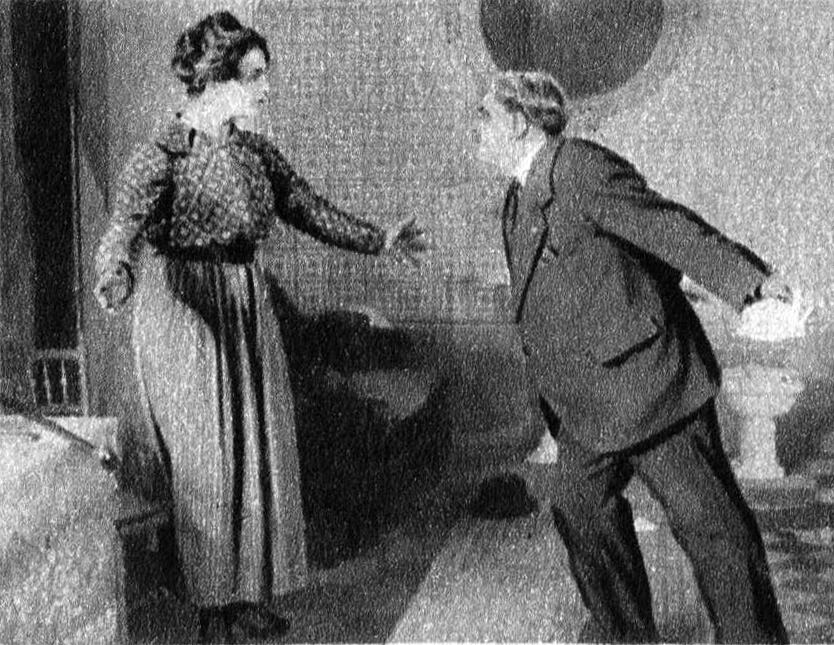
In the annals of silent cinema, where flickering shadows once held entire audiences captive, there exist films that, despite the passage of a century, continue to resonate with an almost uncanny prescience. Riquette et le nouveau riche, a profound creation penned by Alexandre Devarennes, stands as one such luminous artifact. It is not merely a period piece; rather, it is a vibrant, living testament to the perennial human drama of class, aspiration, and the elusive nature of true happiness. This film, featuring the nuanced performances of Sémery and Suzanne Bianchetti, delves into the very heart of societal transformation, painting a vivid tableau of a France grappling with the shifting sands of wealth and influence in the wake of significant historical upheaval.
The central conceit of Riquette et le nouveau riche is a masterstroke of dramatic irony and social observation. At its core lies the compelling juxtaposition of two distinct worlds, embodied by its titular characters. Riquette, portrayed with an exquisite blend of fragility and fierce independence by Suzanne Bianchetti, is the embodiment of Parisian bohemianism. Her existence, though often financially precarious, is rich in spirit, animated by an unyielding dedication to her art. She is the inheritor of a certain cultural lineage, perhaps not of aristocratic blood, but certainly of a bohemian nobility that values creativity and authenticity above all else. Her world is one of light, shadow, and the raw, unvarnished truth of human experience, meticulously captured in her sketchbooks. Bianchetti imbues Riquette with a captivating vulnerability, a youthful exuberance that is both infectious and deeply sympathetic. Her gestures, her expressive eyes, communicate volumes without uttering a single word, a hallmark of truly great silent film acting.
Opposite her stands Monsieur Armand Dubois, the 'nouveau riche,' brought to life with a remarkable blend of gruffness and underlying pathos by Sémery. Dubois represents the seismic shift in societal power dynamics, a self-made industrialist whose wealth has been amassed through sheer force of will and shrewd business acumen rather than inherited privilege. He is a man of considerable influence, yet one who remains an outsider in the refined circles he now inhabits. Sémery's portrayal is particularly commendable for avoiding caricature; Dubois is not merely a villain or a buffoon, but a complex individual yearning for acceptance, struggling to navigate the intricate social codes that elude him. His attempts to buy his way into respectability are both comical and tragic, revealing a deep-seated insecurity beneath the veneer of his newfound affluence. The initial friction between Riquette and Dubois is palpable, a clash of sensibilities that provides much of the film's early dramatic tension. Riquette, with her artistic eye, initially sees only the vulgarity, the ostentation, the lack of refinement in Dubois's world. Her disdain is not born of snobbery, but of a genuine artistic sensibility that recoils from what it perceives as superficiality. One might even draw parallels to the class struggles depicted in films like Les Misérables (1917), though here the conflict is less about survival and more about the clash of values and aspirations within a rapidly changing social landscape.
The narrative truly blossoms when Dubois commissions Riquette to paint his portrait. This act, ostensibly a transaction of art and patronage, becomes the crucible in which their relationship is forged. As Riquette spends hours observing Dubois, her initial prejudices begin to dissolve. She sees beyond the expensive suits and the grand mansion, catching glimpses of the man beneath – a man burdened by solitude, driven by a desire for something more profound than mere material accumulation. Bianchetti's subtle shifts in expression, from initial skepticism to dawning understanding, are magnificent. Similarly, Sémery portrays Dubois's growing fascination with Riquette with a quiet intensity. He is captivated not by her beauty alone, but by her vibrant spirit, her unyielding integrity, and the purity of her artistic vision, qualities that stand in stark contrast to the calculating ambition he encounters in his own social sphere. This slow, organic development of mutual respect and affection is one of the film's greatest strengths, allowing the audience to truly invest in their burgeoning connection. It speaks to a universal truth: that genuine understanding often transcends superficial differences, much like the unexpected bonds formed in narratives such as What Love Can Do, where circumstances force individuals to see beyond their initial judgments.
No compelling drama is complete without an antagonist, and in Riquette et le nouveau riche, that role is expertly filled by Genevieve, Dubois's ambitious and utterly ruthless fiancée. Genevieve is the antithesis of Riquette – polished, poised, and utterly devoid of genuine warmth. She is a woman who understands the intricate rules of high society and is determined to exploit them to her advantage. Her ambition is cold, calculating, and laser-focused on securing her social ascent through her marriage to Dubois. She sees Riquette not as a rival for affection, but as a dangerous impediment to her meticulously laid plans. The film masterfully builds tension through Genevieve's insidious machinations, as she orchestrates a series of misunderstandings designed to drive a wedge between Riquette and Dubois. Her subtle manipulations, her whispered lies, and her carefully constructed scenarios paint Riquette as a mere fortune-hunter and Dubois as a fickle patron. The audience is privy to her deceit, making the emotional impact of Riquette's subsequent heartbreak all the more poignant. This kind of social maneuvering and deceptive plotting finds echoes in films like The Pretenders (1916), where appearances and hidden agendas dictate much of the dramatic action.
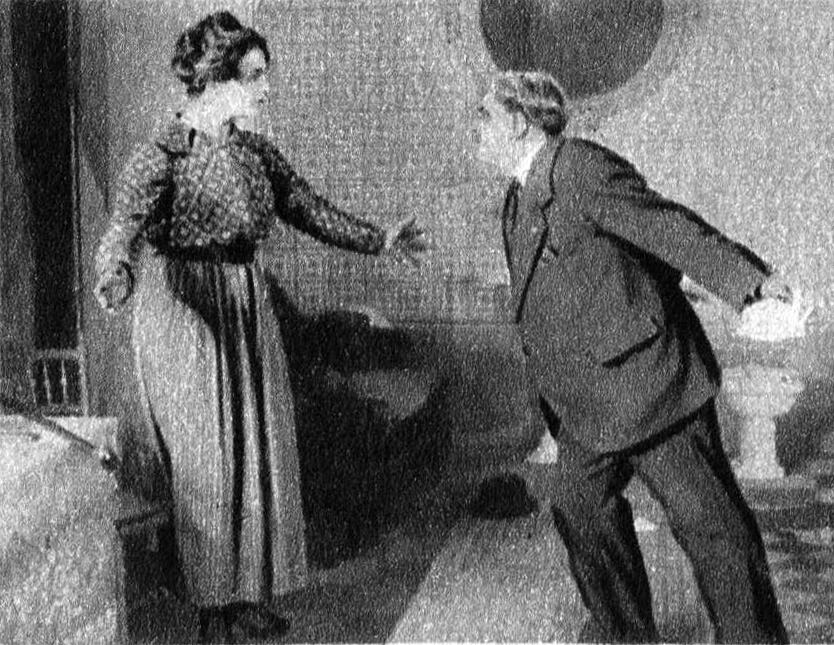
Devarennes's direction, while perhaps less overtly experimental than some of his contemporaries, demonstrates a profound understanding of visual storytelling. The film's cinematography, though simple by modern standards, is effective in conveying mood and character. The contrasting environments – the dusty, vibrant artist's studio versus the opulent, yet sterile, drawing rooms of Dubois's mansion – are used to great effect, visually reinforcing the thematic divide between the characters. The use of close-ups is particularly impactful, allowing the audience to intimately connect with the characters' emotional journeys. Suzanne Bianchetti, in particular, excels in these moments, her eyes conveying a depth of emotion that transcends the need for spoken dialogue. Her performance is a masterclass in silent acting, relying on subtle gestures, expressive facial movements, and an innate ability to project inner turmoil and joy. Sémery matches her, albeit with a more restrained, often melancholic, demeanor that slowly reveals Dubois's inner world. The film understands that in silent cinema, every flicker of an eye, every slight tilt of the head, carries immense narrative weight. This visual richness, where every frame tells a story, is reminiscent of the meticulous scene composition seen in films like Der Thug. Im Dienste der Todesgöttin, where visual spectacle and dramatic tension are intertwined.
The climax of Genevieve's deception leads to Riquette's profound heartbreak. Believing Dubois to have betrayed her, to have dismissed her as merely another fleeting distraction, she flees, abandoning not only her portrait but also her artistic aspirations. This moment of despair is powerfully rendered, showcasing Bianchetti's capacity for conveying profound emotional pain. Riquette's retreat into anonymity and poverty serves as a stark reminder of the vulnerability of artistic souls in a world driven by material concerns. Her disillusionment is palpable, a silent scream against the injustice she perceives. Meanwhile, Dubois, slowly but surely, uncovers the full extent of Genevieve's deceit. The realization of her calculating nature and Riquette's true, untarnished character hits him with the force of a revelation. Sémery's portrayal of Dubois's dawning understanding and subsequent remorse is deeply affecting. His transformation from a man seeking social validation to one driven by genuine love and regret is one of the film's most compelling arcs. This desperate search for Riquette, a journey through the labyrinthine streets of Paris, symbolizes his quest for redemption and true connection, echoing the profound personal journeys often seen in films like The Inner Struggle, where characters must confront their own flaws to find their path.
The film's denouement is a masterclass in emotional release and dramatic satisfaction. The grand social event, intended by Genevieve as her triumphant entry into permanent social ascendancy, becomes instead the stage for Dubois's public repudiation of her and his heartfelt declaration of love for Riquette. This act of public defiance, of choosing authenticity over societal expectation, is incredibly powerful. Sémery delivers this moment with a potent blend of conviction and vulnerability, shedding the last vestiges of his 'nouveau riche' insecurities. Riquette's return, her spirit rekindled by Dubois's unwavering devotion and his championing of her artistic talent, brings the narrative to a profoundly moving close. Their reconciliation is not merely a romantic resolution; it is a symbolic triumph of heart over artifice, of genuine connection over superficial status. The film suggests that true riches lie not in inherited titles or newly acquired fortunes, but in the shared spirit, mutual respect, and profound understanding that binds two souls. This timeless message of love transcending social barriers resonates deeply, much like the enduring themes explored in What Happened at 22, where personal revelations lead to profound change.
Alexandre Devarennes, as the writer, deserves immense credit for crafting a narrative that is both deeply personal and broadly resonant. His screenplay for Riquette et le nouveau riche is a finely woven tapestry of character study, social commentary, and romantic drama. Devarennes demonstrates a keen understanding of human psychology, particularly the subtle interplay between aspiration, vulnerability, and the corrosive effects of societal pressure. The dialogue, though unseen, is implicitly conveyed through the actors' performances and the film's visual language, suggesting a sharp wit and a profound empathy for his characters. The film's ability to tackle themes of class mobility, the superficiality of wealth, and the redemptive power of love, all within the constraints of silent cinema, speaks volumes about Devarennes's skill as a storyteller. His work contributes significantly to the rich legacy of early French cinema, offering a window into the cultural anxieties and romantic ideals of the era. The lasting impact of such nuanced writing can be seen in how even seemingly simple plots, like that of The Cricket, can evoke deep emotional responses through masterful storytelling.
Riquette et le nouveau riche, with its compelling narrative, memorable performances, and insightful social commentary, remains a powerful and relevant film. It serves as a poignant reminder that while the trappings of wealth and social status may shift across generations, the fundamental human desires for connection, authenticity, and love endure. Suzanne Bianchetti's luminous portrayal of Riquette, combined with Sémery's nuanced depiction of Dubois, creates a magnetic central dynamic that anchors the film's emotional weight. Alexandre Devarennes's vision, brought to life through elegant direction and evocative cinematography, ensures that this silent film speaks volumes even today. It's a testament to the power of early cinema to transcend its technological limitations and deliver stories that resonate with universal truths. For anyone interested in the evolution of cinematic storytelling, the social history of France, or simply a beautifully told tale of unlikely love, Riquette et le nouveau riche is an essential viewing experience. It reminds us that sometimes, the greatest treasures are found not in what we acquire, but in the connections we forge and the truths we uncover within ourselves and others. Its themes echo the timeless struggles and triumphs found in diverse silent films, from the dramatic intensity of O Crime dos Banhados to the moral complexities of Man and His Soul, each contributing to the rich tapestry of early filmmaking.
The enduring appeal of Riquette et le nouveau riche lies in its ability to present a microcosm of societal change through the lens of individual human experience. It's a film that asks profound questions about identity, belonging, and the true cost of ambition. The emotional journey of Riquette, from spirited independence to profound disillusionment and eventual triumph, is mirrored by Dubois's own transformation from a man seeking external validation to one embracing genuine affection and integrity. The subtle interplay between the characters, conveyed through body language and intensely expressive gazes, is a masterclass in non-verbal communication, a skill often perfected in the silent era, much like the intricate emotional displays in The Shop Girl. The film's ability to maintain a delicate balance between social commentary and heartfelt romance ensures its place as a significant contribution to the cinematic heritage. It's a narrative that encourages introspection, urging viewers to consider what truly constitutes 'riches' in a world often preoccupied with superficial indicators of success. The deft handling of such weighty themes, without resorting to heavy-handed moralizing, is a testament to the artistry of Devarennes and his collaborators. This film, truly, is more than just a historical curiosity; it is a vibrant, compelling story that continues to speak to the human condition with remarkable clarity and emotional depth.

IMDb —
1935
Community
Log in to comment.