DbcultAccessing Vault...
Cult Review
Senior Film Conservator
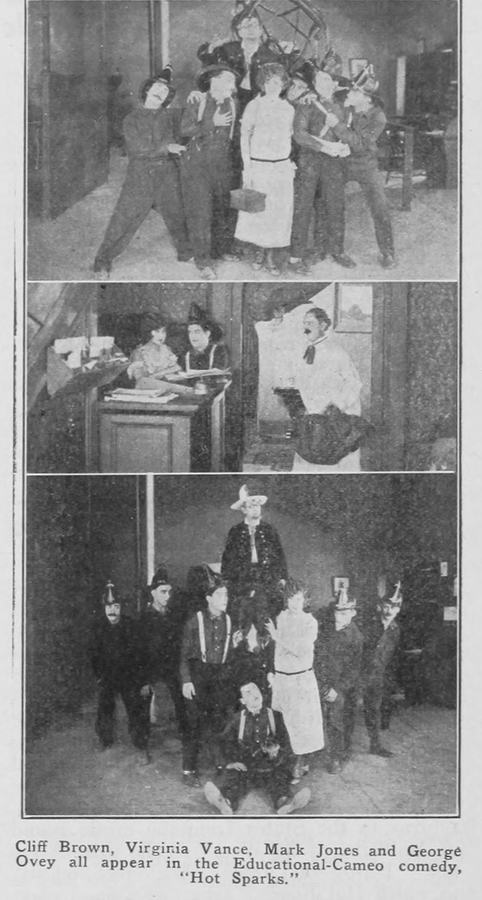
In the pantheon of silent-era comedy, few tropes were as ripe for subversion as the figure of the public servant. While contemporary audiences might be accustomed to the frantic heroism of modern emergency cinema, Hot Sparks offers a refreshing, albeit chaotic, descent into the realm of professional negligence. The film, led by the agile and often overlooked Cliff Bowes, posits a world where the fire department is not a beacon of safety, but a sanctuary for those who have elevated indolence to an art form.
The premise is deceptively simple: Cliff is the chief of a fire force notorious for its refusal to interfere with fires. However, the execution is anything but straightforward. The film utilizes the physical geometry of the firehouse as a stage for a series of escalating gags that challenge our perceptions of duty. Unlike the romanticized struggles found in He Loved Her So, where emotional stakes drive the narrative, Hot Sparks finds its pulse in the absence of urgency. There is a profound, almost nihilistic humor in watching a crew of grown men meticulously avoid the very task for which they are ostensibly paid.
Cliff Bowes, a performer whose physicality often mirrored the rubbery resilience of Buster Keaton but with a more overt penchant for the absurd, navigates this landscape with a brilliant, deadpan grace. His leadership is not one of command, but of redirection. When the fire bell rings, it is not a call to action but a nuisance to be managed. This subversion of the 'hero' role is a sophisticated commentary on the burgeoning bureaucracies of the early 20th century, echoing the societal skepticism also seen in films like Why Trust Your Husband.
The supporting cast, featuring Phil Dunham and George Ovey, provides a textured layer of comedic entropy. Dunham, often the perfect foil for Bowes’ more manic energy, brings a sense of weary resignation to the screen. The chemistry between the men is palpable, suggesting a long history of shared laziness. In many ways, their interactions represent a comedic inversion of the rugged pioneers seen in Desert Gold. While the characters in the latter fight against the elements for survival, the firemen of Hot Sparks treat the element of fire as a distant, almost theoretical concept.
"The brilliance of the film lies in its pace. It is a 'slow burn' in the most literal sense, allowing the viewer to marinate in the absurdity of the situation before hitting them with a flurry of high-speed acrobatics."
Virginia Vance provides the necessary domestic grounding, though the film rarely allows the domestic sphere to overshadow the delightful chaos of the firehouse. Her presence serves as a reminder of the world that these firemen are failing to protect, adding a layer of satirical bite to the proceedings. The writers have managed to weave a thread of social critique into what could have been a standard slapstick short, much like the subtle class observations found in Snobs.
Technically, Hot Sparks is a fascination. The way the director frames the 'non-action' is crucial. We see smoke in the distance, we see the frantic panic of the citizenry, and then the camera cuts back to the firehouse where the crew is perhaps engaged in a high-stakes game of checkers or a perfunctory nap. This juxtaposition is the engine of the film's comedy. It lacks the pastoral beauty of Caprice of the Mountains or the lyrical flow of The Lure of Crooning Water, but it replaces those aesthetics with a gritty, urban kineticism that is uniquely suited to the slapstick genre.
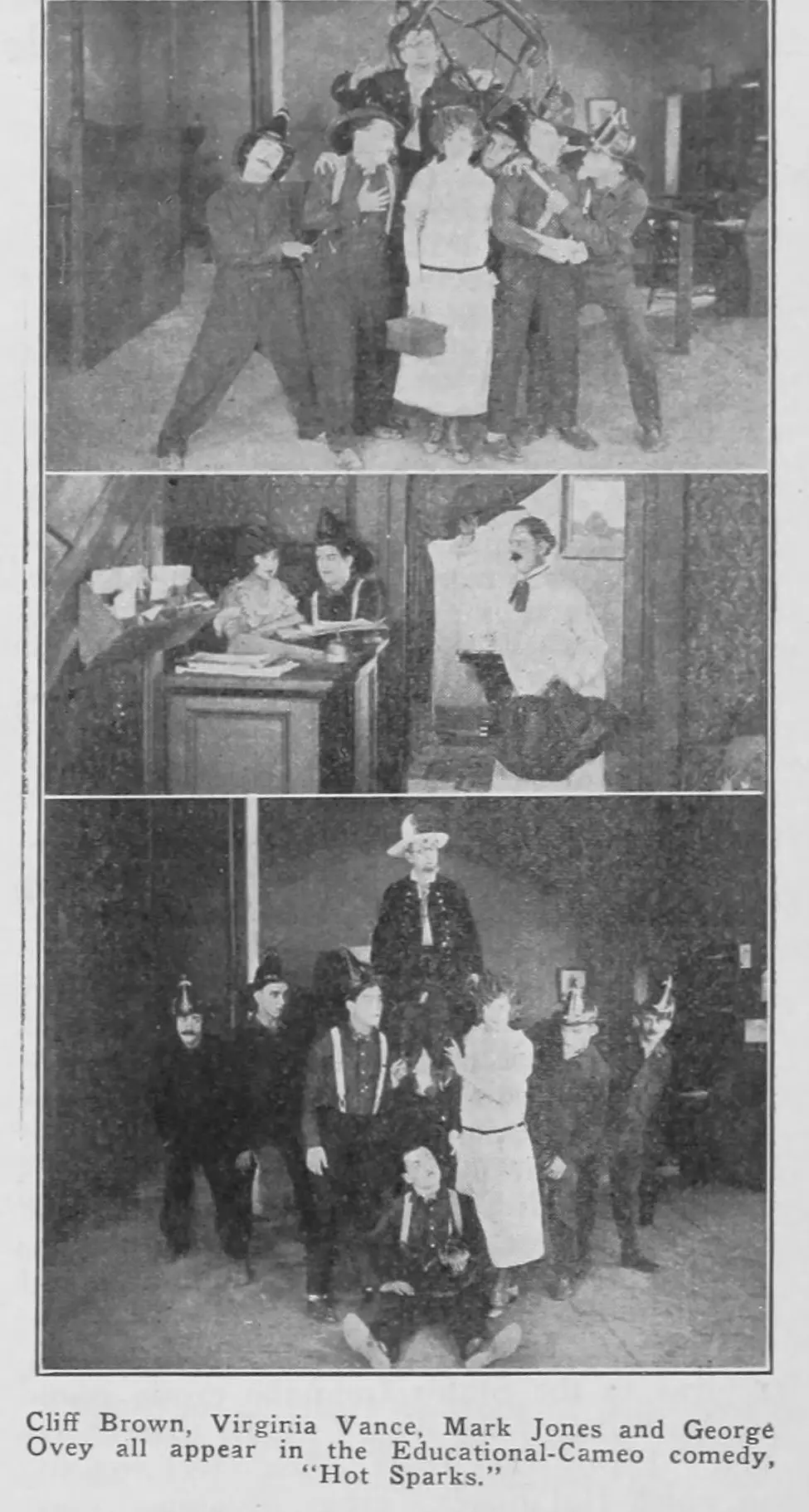
The use of practical effects—real smoke, real ladders, and the precarious stunts that were the hallmark of the era—gives the film a visceral quality. There is no CGI to soften the blows or the falls. When Bowes tumbles, the impact is felt. This physical reality makes the character's refusal to engage with the 'real' danger of the fire even more hilarious. It is a meta-commentary on the nature of film itself: the actors are in real danger to entertain us with a story about men who refuse to face danger.
When placed alongside contemporaries like The Sultan of Djazz, which leans heavily into the exotic and the rhythmic, Hot Sparks feels remarkably grounded in its cynicism. It shares a certain DNA with The Cub in its exploration of a protagonist who is somewhat out of his depth, yet Bowes' Chief is not a victim of circumstance but a master of his own stagnant destiny. Even in the more dramatic or melodramatic offerings of the time, such as Sua figlia! or the emotive Heart of Gold, the sense of duty is usually paramount. Hot Sparks stands as a defiant outlier, a celebration of the 'un-hero'.
The film’s influence can be seen in later decades of comedy where the 'useless professional' became a staple—from the bumbling cops of the Keystone era to the modern workplace sitcom. It captures a specific post-war disillusionment, where the grand institutions of society are viewed through a lens of mockery. While Amazonas, Maior Rio do Mundo was capturing the scale of the natural world, Hot Sparks was capturing the scale of human absurdity within the confines of a small-town fire station.
We must also consider the linguistic diversity of the visual gags. A ladder is not just a tool for climbing; in the hands of this crew, it becomes a weapon of accidental destruction, a balance beam, and a barrier. This transformation of everyday objects is a hallmark of the genre, but here it serves the specific narrative purpose of interference. By misusing their equipment, the firemen are actively preventing themselves from doing their jobs. It is a sophisticated loop of logic that requires the viewer to be fully engaged with the visual grammar of the scene.
In the vein of Should William Tell?, where the tension of the 'shot' is played for laughs, Hot Sparks plays with the tension of the 'burn'. Every second the fire grows is a second the crew finds a new way to be distracted. This creates a unique comedic rhythm that is both stressful and hysterical. It lacks the sweeping romanticism of Havasi Magdolna or the straightforward narrative drive of Down the Line, opting instead for a fragmented, almost avant-garde approach to storytelling.
Ultimately, Hot Sparks is a testament to the power of the silent short to deliver biting social commentary under the guise of low-brow humor. It reminds us that the most effective way to critique an institution is often to simply show it doing nothing at all. Cliff Bowes and his team created a masterpiece of inaction that remains as vibrant and relevant today as it was a century ago. It challenges the viewer to look at the 'sparks' in their own lives—the minor crises and the major conflagrations—and ask if they, too, are merely standing by with a shrug and a smile.
As we look back at the vast library of silent cinema, from the domestic dramas like The Honey Bee to the grand adventures, Hot Sparks remains a bright, flickering light. It is a film that refuses to be put out, much like the fires it so gleefully ignores. For any serious student of film history or lover of pure, unadulterated comedy, this is an essential piece of the puzzle—a chaotic, brilliant, and utterly defiant work of art.
IMDb —
1925
Community
Log in to comment.