DbcultAccessing Vault...
Cult Review
Senior Film Conservator
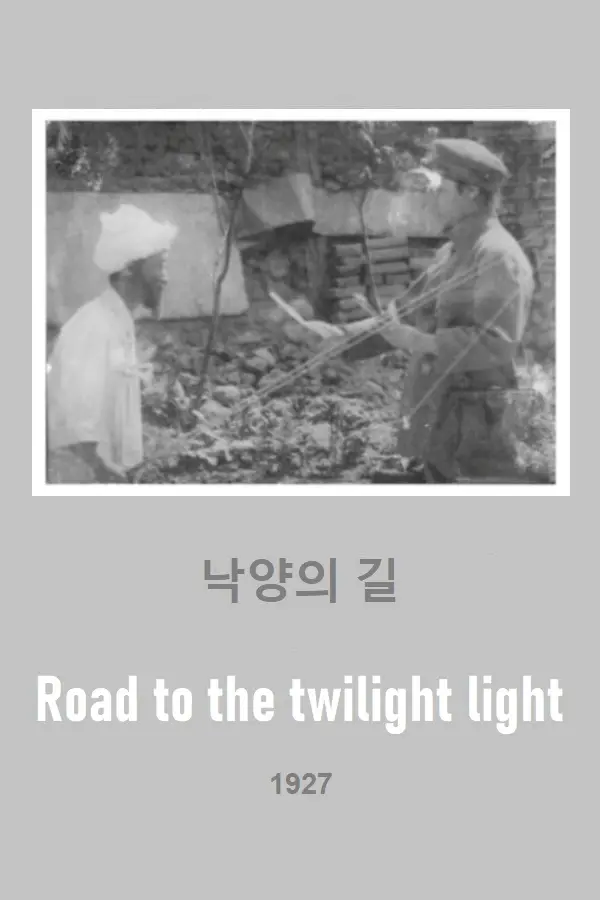
Does Road to the Twilight Light hold up as a piece of entertainment in the modern era? Short answer: No, it does not offer the 'escapism' most viewers crave, but it provides a haunting, essential window into the soul of a rebuilding nation.
This film is strictly for the cinematic archaeologist and the lover of historical melodrama; it is not for those who demand high-fidelity sound or fast-paced narrative progression.
For those looking for a direct assessment, here is where the film stands in the pantheon of early Asian cinema.
If you are a student of history, the answer is a resounding yes. Road to the Twilight Light is not merely a movie; it is a survivor. Watching it today feels like peering through a cracked lens at a world that was trying to remember how to breathe after decades of occupation.
However, for the average moviegoer, the experience may be grueling. The pacing is deliberate to the point of being stationary. It demands a level of patience that our current dopamine-fueled media landscape has largely eroded. It is a film that requires you to meet it halfway.
Pil-woo Lee was a man obsessed with the mechanics of the image. In Road to the Twilight Light, his background as a cinematographer shines through even the grainiest of frames. He understands that light is not just a tool for visibility, but a character in its own right.
Consider the recurring motif of silhouettes against the evening sky. These aren't just pretty shots. They represent the erasure of identity. In one specific scene, Nanju Kim stands by a window, the light fading behind her, and for a moment, she becomes a ghost in her own home. It is a devastating visual shorthand for the loss of self.
Unlike the more theatrical compositions found in The Stubbornness of Geraldine, Lee’s work here feels more grounded in the dirt and the dust. There is a tactile quality to the environments. You can almost feel the coldness of the rooms and the dampness of the streets.
Nanju Kim delivers a performance that is remarkably restrained for 1948. At a time when many actors were still leaning into the broad, pantomime-style gestures of the silent era—much like what we see in My Hero!—Kim chooses internal conflict over external display.
Her eyes do the heavy lifting. There is a scene where she simply watches her family eat, and the mixture of love, resentment, and fear on her face is more communicative than any monologue could be. It is a masterclass in 'acting by being.'
The supporting cast, including Nan-ok Kim and Yeongwol Kim, provide a necessary contrast. They represent the various ways people react to trauma—some through anger, others through a desperate, forced optimism. The chemistry isn't always smooth, but the friction feels real.
We have to talk about the sound. It’s rough. Pil-woo Lee was a pioneer of sound in Korea, but he was working with limited resources in a post-war economy. There are moments where the dialogue drops or becomes a muddy hiss.
But here is a debatable opinion: I believe the technical 'failures' actually enhance the film's atmosphere. The static and the crackle feel like the literal sound of time passing. It adds a layer of hauntology to the viewing experience that a clean, digital restoration might actually ruin.
Compare this to the relatively polished production of something like Pals First. While that film is easier to watch, it lacks the raw, bleeding-edge emotional stakes that Lee’s technical struggle implicitly communicates. The film is a mess. But it’s a beautiful, necessary mess.
Melodrama often gets a bad rap for being 'extra.' But in Road to the Twilight Light, the heightened emotion is a response to a heightened reality. When the characters weep, they aren't just crying over a lost love; they are crying for a lost world.
The film shares some DNA with the heavy-handed morality of The Eye of Envy, but it avoids the trap of being purely didactic. Lee isn't trying to teach us a lesson. He is trying to show us a condition. The 'twilight' isn't a transition to night; it’s a permanent state of being for these characters.
The pacing is glacial. It hurts. But in that pain, Lee finds a truth that faster films gloss over. He forces you to sit with the characters in their boredom and their grief. It’s an endurance test, but one that rewards the patient viewer with a profound sense of empathy.
Pros:
Cons:
When placed alongside other films of the late 40s, such as Vengeance or A Son of Erin, Road to the Twilight Light stands out for its lack of artifice. While other films were trying to emulate the polish of Hollywood or the prestige of European cinema, Lee was making something that felt uniquely Korean.
It lacks the adventurous spirit of The Mutiny of the Bounty, but it replaces that external scale with an internal depth that is much more resonant. It is a small film about big things.
Road to the Twilight Light is a difficult, demanding, and ultimately rewarding piece of cinema. It is not a 'masterpiece' in the sense that it is perfect; it is a masterpiece because it is a perfect record of an imperfect time. It works. But it’s flawed. And that is exactly why it matters.
If you can look past the hiss of the audio and the scratches on the film, you will find a story that is as relevant today as it was in 1948. It is a reminder that even in the twilight, there is light. You just have to wait for your eyes to adjust.
"A haunting, essential relic that demands patience and rewards it with a profound sense of historical empathy."
IMDb 4.8
1927
Community
Log in to comment.