DbcultAccessing Vault...
Cult Review
Senior Film Conservator
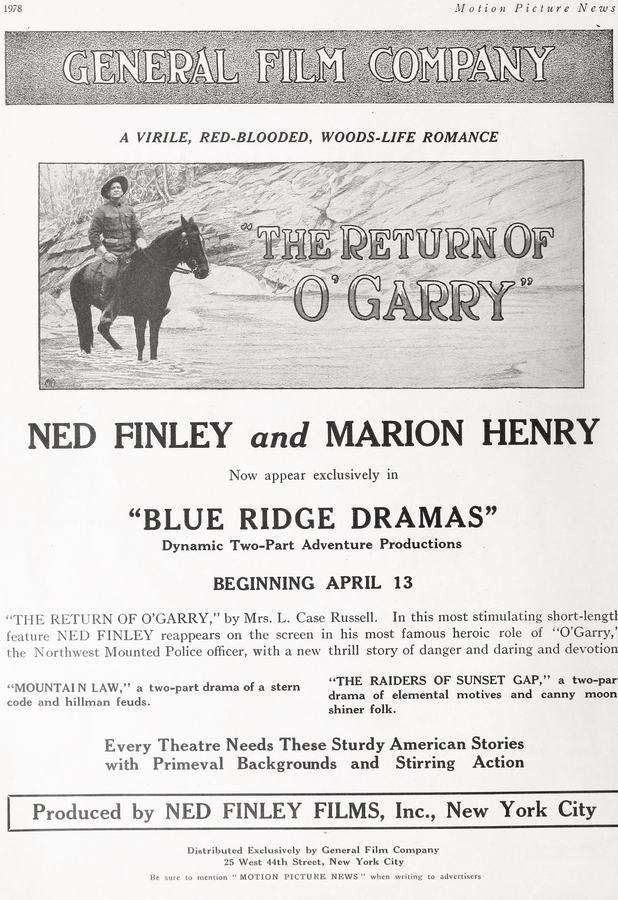
Stepping into the world of early cinema, particularly a frontier narrative like The Return of O'Garry, is akin to unearthing a time capsule. It’s a journey back to a nascent art form grappling with its own potential, a medium finding its voice through grand gestures, stark moralities, and the raw, untamed landscapes that defined a nation's mythos. This particular gem, penned by the prolific Lillian Case Russell and featuring the stoic presence of Ned Finley alongside the compelling Marion Henry, is more than just a simple Western; it's a fascinating study in escalating stakes, moral ambiguity, and the enduring power of the human spirit against overwhelming odds.
From its very inception, the film plunges us into a desolate tableau where the rule of law is a fragile concept, constantly challenged by the audacious greed of those who operate beyond its reach. O'Garry, our protagonist, a Royal Mounted officer, is not merely a figure of authority but an archetype of unwavering dedication. His commitment to justice is so profound that he willingly sheds the symbols of his office, donning the unassuming garb of a 'tenderfoot' to infiltrate a ruthless gang of cattle rustlers. This act of disguise, a common trope in adventure narratives, is handled here with an earnestness that speaks to the era's storytelling sensibilities. It's less about elaborate prosthetic trickery and more about a fundamental shift in persona, a deliberate vulnerability embraced for a higher purpose. The tension builds organically as O'Garry navigates this treacherous environment, his every interaction fraught with the potential for exposure, his very life hanging by the thread of his assumed identity.
The rustlers' ranch, their operational hub near the American border, isn't just a location; it's a character in itself—a den of iniquity, a crucible where loyalty is tested and deceit is currency. As O'Garry embeds himself, the audience is drawn into the clandestine rhythms of their illicit trade. The film excels in depicting the grim reality of their operations, culminating in the chilling scene of the re-branding process. This isn't just an act of theft; it's a symbolic defacement, a re-writing of ownership with searing iron. It is at this pivotal moment that O'Garry's carefully constructed facade shatters. His arrest of the foreman, a bold declaration of his true identity, ignites a furious melee. The ensuing brawl, no doubt a spectacle of physical prowess for its time, underscores the brutal stakes. O'Garry, despite his training and resolve, is overpowered, a stark reminder of the numerical and environmental disadvantages he faces. This defeat, however, is not a sign of weakness, but a catalyst for the true dramatic heart of the story.
The narrative takes a compelling turn with the introduction of Ciel, the foreman's daughter, portrayed with a nuanced blend of vulnerability and nascent strength by Marion Henry. Her character is a masterclass in moral ambiguity, a young woman caught between familial loyalty and an emerging sense of justice. Initially, her attempt to free O'Garry speaks to an inherent goodness, a refusal to condone the brutality she witnesses. But her detection by the gang forces a desperate, split-second decision that defines her character's journey. Pushing O'Garry into a bear trap, a shocking act of apparent betrayal, is in fact a brilliant, albeit cruel, maneuver born of self-preservation. It’s a moment that resonates with the complexities of survival in a lawless land, a testament to the lengths one might go to protect oneself while secretly harboring a deeper, more honorable intent. This sequence could be seen as a precursor to later cinematic explorations of moral grey areas, where characters like those in The Desire of the Moth or even The Soul of a Child navigate treacherous ethical landscapes, making difficult choices that challenge audience perceptions.
Ciel's subsequent actions confirm her true allegiance. Her clandestine release of O'Garry, urging him to seek reinforcements, is an act of profound courage, placing her own life in grave peril. The wilderness, a character as formidable as any human antagonist, immediately asserts its dominance. Her desperate scramble up a tree to escape a pack of wolves is a vivid illustration of the raw, elemental dangers that permeate this world. It’s a moment that highlights the sheer brutality of nature, a constant, unyielding threat that often eclipses the human-made dangers. The film expertly balances these two forms of peril, demonstrating that survival in this frontier is a multi-faceted struggle against both man and beast.
The film's climax is a powerful crescendo of suspense and visceral drama. O'Garry's return, timed with a heroic precision that defines many a classic Western, is not just about apprehending the rustlers, but about rescuing Ciel from a fate far more insidious than mere capture. Her stepfather, a figure of patriarchal tyranny, is revealed in a truly monstrous light, attempting to brand her with a red-hot iron. This act, echoing the earlier re-branding of cattle, is a horrifying perversion of ownership, an attempt to subjugate Ciel's very identity for her refusal to marry his half-breed companion. Here, the film touches upon themes of forced marriage, female agency, and the often-brutal realities faced by women in such isolated, lawless territories. The racial undertones, particularly the mention of a 'half-breed companion' as a tool for coercion, are also stark reminders of the social prejudices prevalent in the era, a theme that might find a subtle echo in films like Half Breed, though perhaps explored with different nuances.
The final confrontation is a brutal, no-holds-barred fight, a testament to O'Garry's unwavering dedication and Ciel's desperate plight. It’s a spectacle designed to elicit a strong emotional response, a clear demarcation between good and evil, even if the path to that clarity was paved with morally ambiguous choices. The mounted officer's ultimate victory is not just a personal triumph but a symbolic reassertion of order, a re-establishment of justice in a world that had teetering on the brink of chaos. It's a satisfying conclusion that fulfills the genre's promise of retribution and the triumph of the righteous, a narrative arc that viewers of films like The Square Deal Man would undoubtedly appreciate.
Lillian Case Russell's screenplay for The Return of O'Garry is a remarkable piece of early cinematic writing. She weaves a narrative that, despite its relatively straightforward plot, is rich with dramatic incident and compelling character arcs. Her ability to craft such a layered story, incorporating elements of suspense, romance, and brutal realism, speaks volumes about her talent during a period when screenwriting was still finding its footing. The pacing is relentless, each scene building upon the last to propel the audience forward, a true hallmark of effective storytelling. The film avoids the meandering narratives that sometimes plagued early features, instead maintaining a tight focus on its core conflict and characters.
Ned Finley, as O'Garry, embodies the stoic, heroic ideal of the Royal Mounted officer. His performance, likely characterized by strong physical presence and expressive facial work (given the silent film era), conveys a sense of unwavering duty and quiet determination. Marion Henry, as Ciel, is equally crucial, her character's journey from apparent complicity to outright heroism providing the emotional anchor of the film. Her portrayal of a young woman navigating extreme duress and making profound moral choices adds a depth that elevates the film beyond a simple action-adventure. The raw emotion she must have conveyed without dialogue is a testament to her skill and the expressive power of silent film acting.
Considering the technological limitations of the time, the film likely relied heavily on location shooting, evoking the rugged beauty and inherent dangers of the frontier. The visual storytelling, characteristic of silent cinema, would have been paramount, with sweeping vistas and close-ups used to convey emotion and scale. One can imagine the impact of the bear trap scene, or Ciel's ascent of the tree, or the final branding attempt, all rendered with a dramatic flair that would have captivated audiences. The very concept of O'Garry's disguise, his 'doppelgänger' identity, while simple, serves as a powerful narrative device, much like the thematic duality explored in films such as Die Doppelnatur, albeit in a different genre context.
The Return of O'Garry stands as a compelling artifact from an era when cinema was rapidly evolving. It’s a testament to the enduring appeal of the Western genre, a canvas upon which timeless tales of good versus evil, courage, and redemption are perpetually painted. The film's exploration of justice, personal sacrifice, and the raw struggle for survival in a challenging environment continues to resonate. It captures a specific moment in cinematic history, a period where narrative clarity and dramatic impact were achieved through ingenious visual storytelling and powerful, if broad, characterizations.
The enduring power of films like this lies in their ability to transport us, not just to a different time and place, but to a foundational period of storytelling. It reminds us of the roots of cinematic spectacle, the power of a clear narrative, and the universal themes that continue to captivate audiences. For enthusiasts of early American cinema, or anyone interested in the foundational myths of the frontier, The Return of O'Garry offers a rich, engaging experience. It’s a vivid illustration of how early filmmakers, with limited resources but boundless creativity, crafted narratives that were both thrilling and deeply human, laying the groundwork for the cinematic language we understand today. Its legacy is not just in its plot points, but in its contribution to the very grammar of film, demonstrating how suspense, character development, and moral dilemmas could be woven into a cohesive and captivating whole. It serves as a stark reminder that even in an age of technological infancy, the power of a well-told story, driven by compelling characters and high stakes, remains paramount. In many ways, its narrative echoes the directness and unvarnished heroism found in other frontier stories such as Pierre of the Plains, emphasizing the often solitary and dangerous path of those who uphold justice.
The raw, unpolished nature of such early films often lends them an authenticity that polished modern productions sometimes lack. There’s a palpable sense of genuine effort, of filmmakers pushing the boundaries of what was possible with the nascent technology at their disposal. The dramatic beats, the emotional highs and lows, are delivered with a directness that bypasses cynicism and appeals straight to the heart. This is not a film that seeks to deconstruct its genre; rather, it embraces it wholeheartedly, delivering a quintessential Western experience that would influence countless films to come. It’s a foundational text, a blueprint for the heroic journeys and moral quandaries that would define the genre for decades. The courage displayed by Ciel, for instance, resonates with the spirited resolve seen in heroines of other films like Elusive Isabel, showcasing women who, against all odds, find their inner strength. Such portrayals were vital in shaping early audience perceptions of female characters as more than just damsels in distress.
Moreover, the film's ability to interweave multiple threats – human villains, wild animals, and the unforgiving wilderness itself – creates a tapestry of peril that keeps the audience on edge. This multi-layered approach to danger is a sophisticated narrative technique for its time, demonstrating a keen understanding of how to maintain suspense. The resolution, while definitive, doesn't feel unearned; it is the culmination of O'Garry's relentless pursuit of justice and Ciel's courageous, if initially ambiguous, acts of defiance. It’s a conclusion that satisfies the desire for order to be restored, but also leaves a lasting impression of the harsh realities that necessitate such heroic interventions. The themes of personal liberty and defiance against tyranny, particularly Ciel's refusal to be branded, echo the spirit of rebellion found in films like The Rebel, albeit through a more personal and immediate lens. This commitment to individual freedom against oppressive forces is a timeless narrative that continues to resonate.
IMDb —
1916
Community
Log in to comment.