DbcultAccessing Vault...
Cult Review
Senior Film Conservator
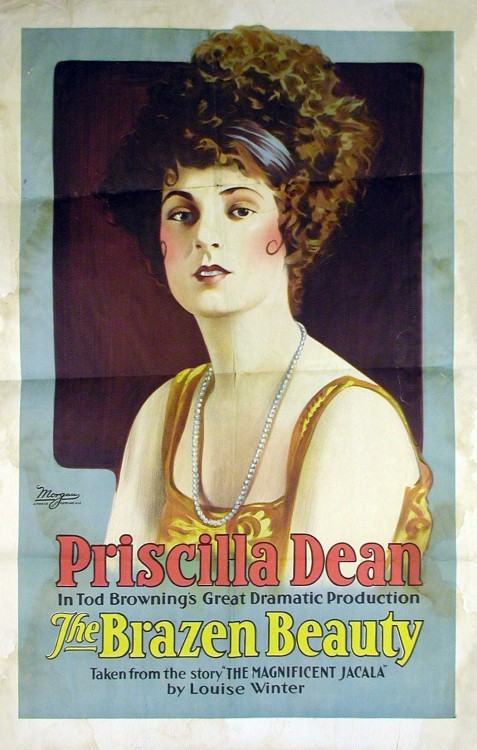
The flickering luminescence of early cinema often served as a potent mirror to the societal anxieties and aspirations of its era, and The Brazen Beauty, a 1918 silent drama, stands as a fascinating testament to this tradition. Directed with an eye for both dramatic tension and social nuance, this film, penned by the perceptive duo Louise Winter and William E. Wing, delves into the perennial themes of class, perception, and the elusive nature of true happiness. It’s a narrative that, despite its century-old vintage, resonates with an almost startling contemporaneity, dissecting the superficiality of high society and the perils of judging by appearances.
At its core, The Brazen Beauty is a character study of Jacala, portrayed with a compelling blend of fierce independence and vulnerable ambition by the captivating Edith Roberts. Roberts, a prolific actress of the silent screen, imbues Jacala with a spirited intensity that is palpable even through the expressive exaggerations characteristic of the era. Her Jacala is no demure wallflower; she is a force of nature, forged in the rugged expanse of a Montana ranch, inheriting not just her father's millions but also his untamed will. This inheritance acts as the catalyst, propelling her from the authenticity of the frontier into the gilded cage of New York’s elite. The film masterfully charts her journey, not merely as a geographical relocation but as a profound internal metamorphosis, a struggle between her inherent integrity and the seductive allure of social acceptance.
The transition from ranch life to Fifth Avenue is depicted with a keen awareness of the cultural chasm Jacala must bridge. Her initial attempts to navigate this sophisticated landscape are marked by a raw enthusiasm, a determination to earn her place, not merely buy it. Yet, the very society she seeks to penetrate is riddled with unspoken rules, veiled judgments, and a pervasive superficiality that proves far more treacherous than any Montana terrain. It's in this new world that she encounters Kenneth Hyde, played by the distinguished Hans Unterkircher. Unterkircher delivers a performance that is subtly nuanced, conveying an inherent nobility often masked by the idle rich persona he is forced to adopt. Jacala's immediate, visceral attraction to Kenneth is undeniable, a spark of genuine connection amidst the calculated civilities of her new life. However, this nascent affection is tragically complicated by her misinterpretation of his circumstances. She perceives him as a shiftless man-about-town, burdened by a neglected wife – an assumption that speaks volumes about the societal prejudices and gossip that permeated such circles. This misunderstanding, a classic dramatic device, sets in motion a cascade of events that forms the narrative's central conflict.
Driven by a desire to solidify her social standing and, perhaps, to quash her inconvenient feelings for the 'unavailable' Kenneth, Jacala makes a fateful decision: she hires Tony Dewey to pose as her fiancé. Leo White, as Tony Dewey, embodies the archetype of the opportunistic cad with chilling effectiveness. White's performance is a masterclass in silent film villainy, his expressions ranging from fawning obsequiousness to venomous spite. Dewey is a man motivated solely by avarice, seeing Jacala not as a person but as a means to a wealthy marriage. This arrangement, born of Jacala's misguided ambition and a desperate attempt to control her image, quickly unravels. When Dewey's mercenary advances are met with Jacala's stern rebuffs – a testament to her enduring moral compass despite her social aspirations – his wounded pride and thwarted greed transform him into a malicious rumour-monger. He systematically spreads scandalous stories about Jacala, leveraging the inherent vulnerability of a woman attempting to break into a rigid social structure. The film, in these moments, becomes a trenchant critique of the destructive power of gossip and the precarious position of women in a society quick to judge and condemn.
The supporting cast, while perhaps not as central, provides vital texture to the narrative. Katherine Griffith, Gertrude Astor, and Alice Wilson, among others, contribute to the tapestry of New York society, portraying its varied denizens with characteristic silent-era flair. Their performances, often exaggerated for dramatic effect, nonetheless convey the societal pressures and expectations that Jacala navigates. Thurston Hall and Rex De Rosselli also make their presence felt, though their roles are more ancillary to the central romantic and social drama. The writers, Louise Winter and William E. Wing, deserve commendation for crafting a screenplay that, while adhering to the conventions of its time, manages to imbue its characters with genuine psychological depth and its plot with compelling stakes. They skillfully weave a tale of mistaken identity, social satire, and romantic awakening, demonstrating a sophisticated understanding of human folly and redemption.
The visual storytelling of The Brazen Beauty is particularly noteworthy. Silent films, reliant on pantomime and intertitles, demanded a heightened sense of visual communication. The sets and costumes, while perhaps not as lavish as some contemporary productions, effectively convey the opulence of New York society contrasted with the rustic simplicity of Montana. The director's use of close-ups on Edith Roberts' expressive face allows the audience to intimately connect with Jacala's emotional turmoil, her moments of defiance, her despair, and ultimately, her enlightenment. The film's pacing, a crucial element in silent cinema, is well-judged, allowing the dramatic tension to build gradually before culminating in a satisfying resolution. In a broader context, one might draw parallels between Jacala's struggle for acceptance and the societal challenges depicted in films like The Squaw Man, where characters from different worlds grapple with cultural clashes and prejudices, or even The Lash, which often explored the constraints and judgments imposed by societal norms. The Brazen Beauty, like these contemporaries, uses personal drama to comment on larger social structures.
The turning point in Jacala’s arduous journey arrives with the revelation that Kenneth's 'wife' is, in fact, his sister. This shattering of misconception is a pivotal moment, not just for Jacala but for the audience, who have been privy to her internal conflict. It underscores the film’s central message about the dangers of superficial judgment and the importance of seeking truth beyond appearances. Simultaneously, Kenneth, having witnessed the vile machinations of Tony Dewey, comes to believe Jacala’s earnest claims that Dewey’s scandalous stories are entirely untrue. This mutual understanding, born out of shared adversity and a newfound clarity, forms the emotional core of the film’s resolution. It’s a beautifully rendered moment of recognition, where two individuals, initially separated by layers of misunderstanding and societal artifice, finally connect on a deeper, more authentic level. The film suggests that true connection transcends the glitter and glamour of high society, finding its roots in honesty and shared values.
The climax sees Jacala and Kenneth, now united in their disillusionment with the superficial world they once inhabited, retreat from the very society Jacala had so ardently coveted. This retreat is not one of defeat, but of triumph – a victory of authenticity over artifice, of genuine connection over social climbing. It’s a powerful statement, particularly for a film produced in an era often characterized by rags-to-riches narratives. The Brazen Beauty dares to suggest that true wealth lies not in inherited millions or social standing, but in integrity and meaningful relationships. This thematic depth elevates it beyond a mere romantic drama, positioning it as a thoughtful social commentary. It’s a narrative arc that resonates with the themes explored in films like The Angel Factory, which might similarly critique the moral compromises made in the pursuit of status, or even Nye dlya deneg radivshisya (Born Not for Money), if its plot similarly addresses the corrosive influence of wealth and societal expectations.
The enduring appeal of The Brazen Beauty lies not just in its engaging plot or the compelling performances of its lead actors, but in its timeless exploration of human nature. It reminds us that appearances can be deceiving, that societal acceptance often comes at a steep price, and that the pursuit of external validation can lead us astray from our true selves. Edith Roberts' portrayal of Jacala is particularly memorable, her transformation from a headstrong, somewhat naive ranch girl to a woman who understands the true value of authenticity being the emotional anchor of the film. Hans Unterkircher's understated performance as Kenneth Hyde provides the perfect foil, his quiet dignity eventually shining through the initial misconceptions. Leo White’s villainous turn as Tony Dewey is a stark reminder of the darker side of ambition and greed, his character serving as a crucial catalyst for Jacala's ultimate enlightenment.
From a technical perspective, the film showcases the evolving craft of silent cinema. The cinematography, though perhaps rudimentary by today's standards, effectively captures the contrasting worlds of Montana and New York. The use of intertitles is judicious, providing necessary exposition without overwhelming the visual narrative. The direction, while not overtly innovative, is competent and ensures that the story unfolds with clarity and emotional impact. The creative vision of Louise Winter and William E. Wing in crafting such a resonant story speaks to their understanding of both popular entertainment and underlying social critique. Their screenplay deftly balances moments of lighthearted flirtation with genuine dramatic tension, ensuring that the audience remains invested in Jacala's fate.
In conclusion, The Brazen Beauty is far more than a historical curiosity; it is a vibrant, engaging piece of early cinema that continues to speak to contemporary audiences. Its exploration of social climbing, mistaken identity, and the search for authentic connection remains as relevant today as it was over a century ago. It stands as a testament to the power of silent film to convey complex emotions and sophisticated ideas through visual storytelling and the compelling performances of its cast. For aficionados of classic cinema, it offers a fascinating glimpse into the social mores of the early 20th century and a timeless narrative about finding one's true path amidst the glittering distractions of the world. It’s a reminder that sometimes, the greatest act of bravery is to turn away from what society dictates and embrace a life defined by one's own terms. The film's message, delivered through the expressive artistry of its era, continues to resonate, proving that true beauty often lies in the courage to be oneself, unburdened by societal expectations or the judgments of others. Its subtle critique of the 'brazen' pursuit of status ultimately champions a more profound, more enduring form of human connection.

IMDb 5.8
1931
Community
Log in to comment.