DbcultAccessing Vault...
2.3/10
Senior Film Conservator

A definitive 2.3/10 rating for a film that redefined the boundaries of cult cinema. Robbery Under Arms remains a cornerstone of transgressive art.
Stepping back into the formative years of cinema, one encounters certain films that, despite the limitations of their era, resonate with a raw, undeniable power. Robbery Under Arms, an early Australian cinematic endeavor, stands as a testament to this truth, offering a fascinating glimpse into the nascent storytelling capabilities of the medium while simultaneously encapsulating a pivotal piece of Australian folklore. This isn't merely a historical artifact; it's a vibrant, if rudimentary, window into a defining period of national identity, brought to life through the audacious exploits of Captain Starlight.
Rolf Boldrewood’s enduring novel, a cornerstone of Australian literature, provided the rich narrative soil from which this film sprouted. Its adaptation to the silver screen, particularly in an era still grappling with the language of moving pictures, was an ambitious undertaking. The story of Captain Starlight, a charismatic yet ultimately doomed bushranger, epitomizes the romanticized outlaw figure – a character type that has captivated audiences across cultures and centuries. In Australia, the bushranger narrative is deeply entwined with the nation’s colonial past, embodying a spirit of defiance against authority and a rugged individualism forged in the unforgiving bush. The film, therefore, wasn't just adapting a popular book; it was attempting to cinematicize a cultural touchstone.
Considering the technological constraints of early 20th-century filmmaking, the very existence of Robbery Under Arms is remarkable. Unlike the meticulously staged boxing matches or simple street scenes prevalent in much of early cinema – think of films like The Corbett-Fitzsimmons Fight or the various Life and Passion of Christ adaptations which often relied on static cameras and theatrical blocking – a bushranger epic demanded dynamic action, sprawling landscapes, and complex character interactions. This film, in its own way, pushed the boundaries of what was then conceivable for narrative cinema, striving for a sense of movement and grand scale that would become hallmarks of later adventure genres.
The portrayal of Captain Starlight by John Forde is central to the film's impact. While modern audiences might find the acting style of the era overtly theatrical or melodramatic, it’s crucial to contextualize Forde’s performance within the prevailing norms of early silent cinema. Actors often had to convey emotion and character through exaggerated gestures and facial expressions, compensating for the lack of spoken dialogue and the relatively distant camera angles. Forde imbues Starlight with a certain dashing quality, a roguish charm that hints at the character's magnetic appeal. He embodies the archetype of the 'gentleman bushranger,' a figure who, despite his criminal endeavors, often commands a degree of public sympathy due to his perceived honor and defiance against an oppressive system.
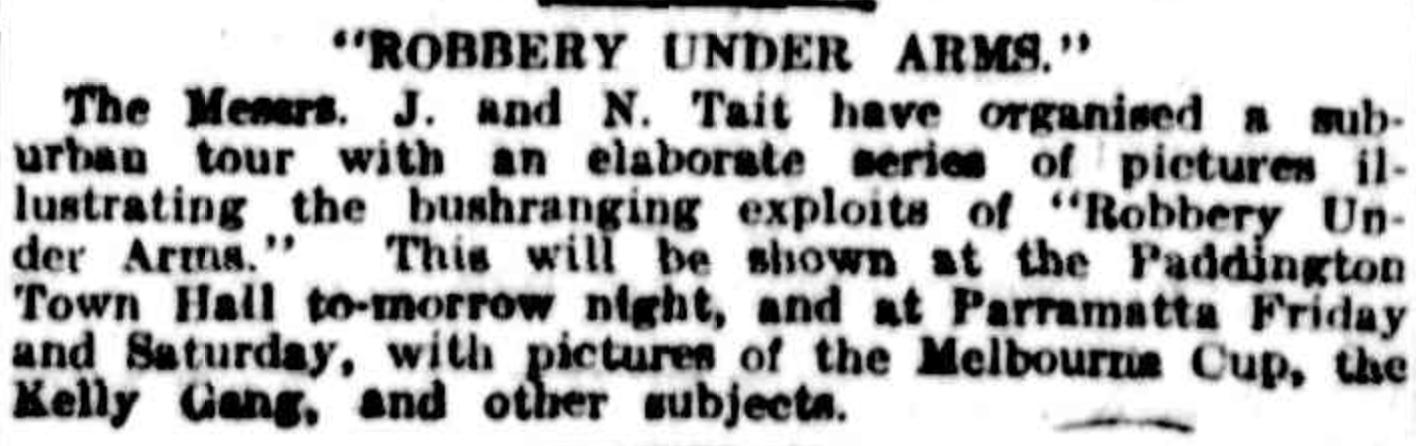
Forde’s Starlight is not merely a bandit; he’s a symbol. His actions, from daring robberies to narrow escapes, are depicted with an almost balletic grace, suggesting a mastery over his environment and a certain fatalistic elegance. This characterization is vital to understanding the enduring appeal of bushranger narratives. They aren't just crime stories; they are tales of survival, rebellion, and the quest for freedom in a harsh land. Forde’s performance, even through the grainy, flickering images of a century past, manages to convey this complex interplay of charisma, desperation, and an unwavering spirit.
One of the most compelling aspects of Robbery Under Arms is its implicit understanding of the Australian landscape’s role in shaping its inhabitants and their destinies. The vast, untamed bush is not merely a backdrop; it is an active participant in the drama, offering both refuge and peril to Starlight and his gang. The film, through its surviving fragments and historical accounts, suggests an effort to capture the rugged beauty and formidable challenge of the Australian wilderness. This serves to elevate the bushranger narrative beyond simple criminality, imbuing it with an almost mythological grandeur. The isolation, the harshness, and the sheer scale of the landscape contribute significantly to the outlaw’s mystique, making their exploits seem all the more extraordinary.
In this regard, Robbery Under Arms shares a thematic kinship with other early Australian productions like The Story of the Kelly Gang. Both films understand that the Australian identity, particularly in its formative years, was inextricably linked to the bush. The challenges of settlement, the struggle against nature, and the emergence of a distinct national character are all subtly woven into the fabric of these bushranger tales. The land itself becomes a character, dictating strategies, offering concealment, and ultimately, playing a role in the fate of those who dare to challenge its laws, both natural and man-made.
For a film of its vintage, Robbery Under Arms likely employed innovative techniques for its time, even if those innovations seem rudimentary by today's standards. The challenge of depicting action sequences – horse chases, shootouts, and dramatic confrontations – would have required considerable ingenuity from the filmmakers. Unlike the static, observational camera work seen in many early actuality films, a narrative feature like this would have demanded a more deliberate approach to framing, editing, and staging to convey a coherent and exciting story. While specific details of its production are scarce, one can infer a pioneering spirit in attempting to translate a complex, multi-faceted novel into a compelling visual spectacle.
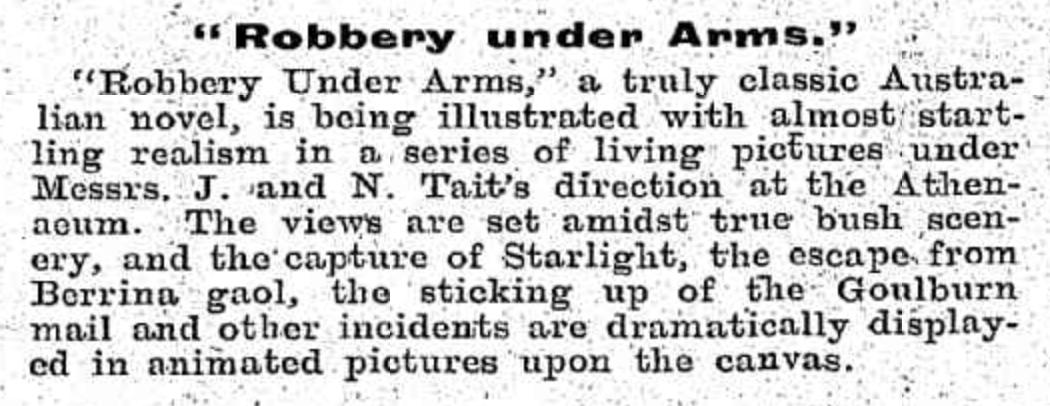
The very act of adapting a popular novel was, in itself, a significant step in the evolution of cinema. It demonstrated a burgeoning understanding that film could be more than a novelty; it could be a powerful medium for storytelling, capable of competing with literature and theatre. This move towards adapting established narratives was crucial for attracting broader audiences and legitimizing cinema as an art form. It allowed filmmakers to leverage pre-existing fan bases and provide familiar stories in a thrilling new format, paving the way for the narrative sophistication that would define the golden age of Hollywood.
At its heart, Robbery Under Arms grapples with profound themes that transcend its specific setting. The struggle between individual freedom and societal law is paramount. Captain Starlight, despite his criminal deeds, often embodies a yearning for a life unburdened by the strictures of colonial society, a romantic ideal of self-determination. However, the narrative also subtly explores the inexorable march of fate, demonstrating that even the most daring outlaw cannot escape the consequences of their choices or the long arm of the law indefinitely. The bush, while offering refuge, also limits their horizons, trapping them in a cycle of flight and confrontation.
This thematic depth is what elevates the film beyond a simple adventure story. It delves into the human condition, exploring loyalty, betrayal, love, and loss within the high-stakes world of bushranging. The characters, though broadly drawn by necessity in early cinema, represent universal struggles. The film acts as a morality play, examining the allure of the illicit and the ultimate cost of a life lived outside conventional boundaries. It’s a compelling exploration of the choices that define us and the societal forces that shape our destinies, particularly in a frontier environment where rules are still being written.
The historical significance of Robbery Under Arms cannot be overstated. As an early Australian feature film, it played a crucial role in establishing a national cinematic identity, proving that local stories could captivate local audiences. While much of early cinema was dominated by imports, films like this demonstrated the potential for indigenous narrative production. It contributed to the ongoing cultural conversation about Australian heroes and anti-heroes, solidifying the bushranger as a potent symbol in the national consciousness. Its influence can be seen in subsequent Australian films that explore similar themes of rebellion, landscape, and identity.
Moreover, its existence reminds us of the fragility of early film history. Many productions from this era are lost, existing only in fragments or through written accounts. The very fact that we can discuss Robbery Under Arms, even if its complete form is elusive, underscores its importance as a surviving artifact of a bygone cinematic age. It's a foundational text, a cinematic ancestor that helped pave the way for the rich and diverse Australian film industry we know today. It stands as a powerful reminder that even in its infancy, cinema was capable of grand ambition and profound storytelling, laying the groundwork for the immersive narrative experiences we now take for granted.
In conclusion, Robbery Under Arms is more than just an early film; it's a cultural touchstone, a historical document, and a fascinating example of pioneering narrative cinema. It brings to life a beloved literary character, immerses viewers in the unique landscape of colonial Australia, and explores timeless themes of freedom, fate, and national identity. For enthusiasts of film history and Australian culture alike, it remains a compelling and essential watch, a testament to the enduring power of storytelling through the moving image, even in its most nascent form.

IMDb —
1925
Community
Log in to comment.