DbcultAccessing Vault...
Cult Review
Senior Film Conservator
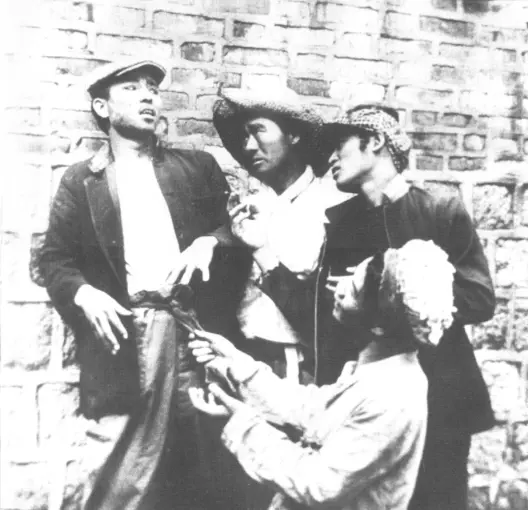
Is Jalitgeola worth seeking out in the modern era? Short answer: Yes, but only if you approach it as a historical excavation rather than a Friday night popcorn flick.
This film is for the cinephile who values the roots of national identity and the raw power of silent-era performance. It is definitely not for anyone looking for high-definition spectacle or a fast-paced, linear narrative. It is a ghost of a film, a remnant of a time when cinema was the only voice for a silenced people.
1) This film works because: It captures a unique, unrepeatable cultural melancholy (Han) through the magnetic and tortured screen presence of Na Woon-gyu.
2) This film fails because: Its fragmented existence and the technical limitations of 1928 Korea make it a difficult, often jarring experience for those used to the fluid editing of films like The Biggest Show on Earth.
3) You should watch it if: You want to understand the DNA of Korean cinema and how the theme of 'Farewell' became a foundational trope for an entire nation's storytelling.
Na Woon-gyu was not just a filmmaker; he was a cultural erupting volcano. In Jalitgeola, his direction lacks the bourgeois polish of German expressionism seen in Der lachende Ehemann, but it replaces that artifice with a desperate, grounded reality. He doesn't just block scenes; he builds altars to human suffering. There is a specific moment in the middle act where the camera lingers on a handshake—a simple gesture that Na transforms into a life-altering tragedy through timing alone.
His pacing is deliberate. It is slow. It is agonizing. But it is never accidental. While a film like Hoot Mon! relies on the energy of the gag, Jalitgeola relies on the weight of the silence. Na understands that in a silent film, the space between the actors is where the story actually lives. He uses the frame to trap his characters, often positioning them against vast, indifferent backgrounds that emphasize their isolation.
The performance of Na Woon-gyu himself is the film's beating heart. He doesn't act; he vibrates. There is a primitive energy in his movements that makes the refined acting in The Silent Master look like a stage play. He brings a physicality to the role that suggests a man who has been beaten by life but refuses to stop walking. It’s a performance of resistance.
Yeon-sil Kim provides the necessary emotional counterweight. Where Na is the storm, Kim is the aftermath. Her ability to convey complex grief without the benefit of dialogue is staggering. In one close-up, her eyes tell a story of ten years of hardship in ten seconds. It is a level of nuance that was rare for the 1920s, where overacting was often the default. Compare her subtlety to the broader strokes found in A Model's Confession, and you see the leap in craft Jalitgeola represented.
Geum-ryong Lee brings a sense of traditional gravity to the production. He represents the old world, the one that is being bid 'farewell' to. His interactions with Ok Jeon create a generational friction that feels incredibly modern. They aren't just characters; they are symbols of a shifting society. The chemistry between the cast feels lived-in, likely a result of the tight-knit nature of the early Korean film community.
The visual language of Jalitgeola is one of stark contrasts. The cinematography doesn't strive for the 'pretty' frames of The Dwelling Place of Light. Instead, it embraces the dust, the shadows, and the harsh natural light of the Korean landscape. There is a graininess to the image that feels appropriate—it feels like a memory that is fading even as you watch it.
One standout sequence involves a long shot of a departing train. It is a cliché now, but in 1928, under Na’s lens, it was a political statement. The train represents the forced modernization and the literal removal of people from their land. The way the smoke obscures the characters’ faces is a brilliant, perhaps accidental, metaphor for the loss of identity. It is visually arresting in its simplicity.
Jalitgeola is a difficult film to 'watch' in the traditional sense because so much of it is lost to time. However, the fragments and the historical context make it an essential experience for anyone serious about cinema. It is a visceral reminder that film was once a dangerous, revolutionary act.
If you are looking for a complete, high-quality viewing experience, you will be disappointed. But if you want to touch the hem of a legend, this is it. It is raw. It is broken. It is beautiful in its ugliness. It is a film that demands your respect, even if it can no longer provide a smooth viewing experience.
When you compare Jalitgeola to something like Mary Regan or The Risky Road, the difference in intent is jarring. Western films of the late 20s were often moving toward a polished, commercial aesthetic. Jalitgeola, by contrast, feels like a folk song. It is unpolished because the world it depicts was unpolished. It doesn't have the budget of Burglars of 'Baghdad' Castle, but it has a soul that those films often lack. It is a film of the soil, not the studio.
"Na Woon-gyu didn't just make films; he carved the Korean identity into the celluloid itself. Jalitgeola is the sound of a heart breaking in silence."
Jalitgeola is a flawed, decaying, but ultimately essential piece of art. It is a film that refuses to be forgotten, even as the physical film itself rots away. It is a testament to the power of the director as a social leader. It works. But it’s flawed. It’s a tragedy in more ways than one. If you have the patience to look past the scratches and the missing frames, you will find a story that is as relevant today as it was in 1928: the story of what we leave behind when we are forced to move on.
IMDb —
1914
Community
Log in to comment.