DbcultAccessing Vault...
2.5/10
Senior Film Conservator
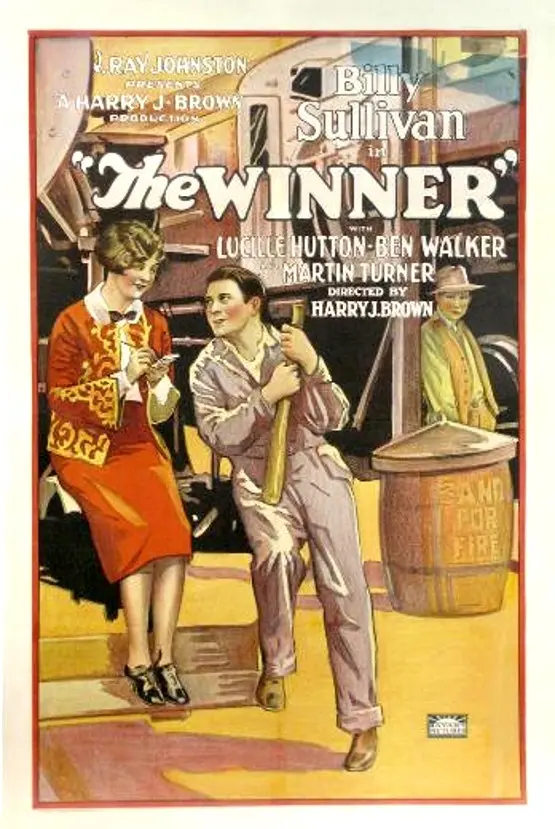
A definitive 2.5/10 rating for a film that redefined the boundaries of cult cinema. The Winner remains a cornerstone of transgressive art.
Is 'The Winner' worth watching today? Short answer: yes, but with significant caveats. This early cinematic offering provides a fascinating glimpse into the nascent stages of narrative film, blending burgeoning romantic tropes with a distinct, if somewhat heavy-handed, class commentary. It’s a film best appreciated by cinephiles and historians keen to trace the evolution of storytelling, rather than casual viewers seeking seamless modern entertainment.
This film is for those who appreciate the foundational elements of cinema, enjoy character-driven conflict rooted in social dynamics, and possess a high tolerance for the narrative conventions of its era. It is decidedly NOT for viewers seeking rapid pacing, complex psychological depth, or contemporary production values. Expect a charming, if occasionally clunky, journey into a bygone era of moviemaking.
In 'The Winner,' F. McGrew Willis, a writer whose work often explored the intricacies of human relationships, crafts a narrative that feels both familiar and refreshingly direct in its simplicity. The core conflict — a love triangle complicated by class and professional hierarchy — is a timeless setup, yet its execution here feels raw, unrefined in a way that modern audiences might find jarring. It’s a story about desire, deception, and the lengths one will go to win the heart of another, set against the unromantic backdrop of a bustling railroad yard.
The film introduces us to Scotty McTavish, played by Billy Sullivan, a young man whose privileged background is quickly shed for the gritty blue-collar world of the railroad. His motivation is singular: Patsy Thorne, portrayed with understated charm by Lucille Hutton. Patsy is the daughter of the yardmaster, a figure of innocence and an object of affection for both Scotty and the formidable foreman, "Slugger" Martin, brought to life by Martin Turner. This dynamic immediately establishes the stakes, painting Martin not just as a rival in love, but as an antagonist whose professional power bleeds into his personal machinations.
Willis's screenplay, while not delving into profound psychological states, excels at establishing clear character motivations. Scotty's impulsive infatuation drives the plot, Martin's possessiveness fuels the conflict, and Patsy's position as the innocent prize anchors the emotional core. The railroad yard itself isn't merely a setting; it's an active participant, its industrial rhythm and inherent dangers providing a constant, tangible threat that elevates the romantic stakes beyond mere whispered sweet nothings.
This film works because of its clear, uncomplicated narrative and the palpable tension created by the love triangle. The performances, particularly Martin Turner's "Slugger" Martin, inject a much-needed grit and believability into the proceedings, elevating what could have been a simplistic melodrama into something more engaging. The industrial setting is also utilized effectively, grounding the romance in a harsh reality.
This film fails because its pacing can feel sluggish by contemporary standards, and some of the character motivations, while clear, lack the nuanced depth modern viewers might expect. The resolution, while satisfying, feels somewhat abrupt, leaving certain threads feeling less explored than they could have been. The constraints of early filmmaking are evident in its visual storytelling, which can sometimes feel less dynamic than desired.
You should watch it if you are a student of early cinema, enjoy straightforward romantic dramas with a dash of villainy, or are curious about the social dynamics portrayed in films from this era. It offers an accessible entry point into understanding the foundational narrative structures that would later evolve into more complex cinematic forms. It's a film for those who appreciate the journey of film history, not just its perfected destinations.
The cast of 'The Winner' delivers performances that are largely indicative of their time, marked by a certain theatricality yet possessing an undeniable earnestness. Martin Turner, as "Slugger" Martin, is undoubtedly the film's standout. He embodies the villainous foreman with a menacing physicality and a possessive glare that transcends the limitations of silent era acting. His presence is a constant, simmering threat, making his character genuinely detestable and, consequently, compelling. Every time he enters a scene, the tension ratchets up, a testament to his commanding performance.
Billy Sullivan, as the lovestruck Scotty McTavish, offers a portrayal that balances youthful idealism with a nascent determination. His transformation from a seemingly carefree young man to a determined suitor, willing to get his hands dirty, is convincingly conveyed. While his expressions might feel broad to a modern eye, his earnestness is infectious, making his character easy to root for. There’s a particular scene where he first confronts Martin, a silent battle of wills, where Sullivan’s defiance shines through.
Lucille Hutton, as Patsy Thorne, projects an air of gentle resilience. She is not a damsel in distress in the most passive sense; rather, her quiet strength and unwavering moral compass define her. Her interactions with both Scotty and Martin reveal a nuanced understanding of her predicament, caught between two powerful figures. Hutton manages to convey a sense of inner turmoil and dignity, making Patsy more than just a prize to be won. Her subtle reactions to Martin’s advances are particularly effective, conveying discomfort without overt histrionics.
The supporting cast, including Tom O'Brien and Ben Walker, provide solid grounding for the central drama. Their contributions, while not as prominent, help to build the world of the railroad yard, lending authenticity to the environment. The ensemble works together to sell the relatively simple premise, often relying on body language and exaggerated expressions to convey complex emotions in an era before synchronized sound.
F. McGrew Willis, primarily known for his writing, takes the directorial reins here, demonstrating a clear understanding of the story he wishes to tell. His direction, while not groundbreaking in its visual language, is effective in establishing the contrasting worlds of privilege and labor. The initial shots of Scotty in his "big automobile" quickly give way to the sprawling, gritty expanse of the railroad yards, a visual shorthand for his journey into a different class and a different kind of struggle.
The cinematography, though uncredited, plays a crucial role in setting the tone. The film effectively uses the industrial setting, with its towering trains, smoke, and labyrinthine tracks, to create an atmosphere of both opportunity and danger. There are moments where the sheer scale of the locomotives dwarfs the human figures, subtly emphasizing the power dynamics at play – both societal and personal. One could argue that the trains themselves are characters, their constant movement a metaphor for the relentless march of the plot.
Willis employs a relatively straightforward shot-reverse-shot technique for dialogue, but also utilizes wider shots to establish the environment and the characters' places within it. The camera often lingers on significant details, such as a stolen glance or a clenched fist, ensuring the audience grasps the emotional undercurrents. While it lacks the experimental flair of some of its contemporaries, like the German Expressionism seen in films such as Jettchen Gebert's Story, its practical approach serves the narrative well.
However, the visual storytelling occasionally feels constrained by the technological limitations of the era. Some scenes, particularly those involving more intricate action, can appear static or stagey. Yet, for every moment that feels a bit too posed, there’s another that captures a genuine sense of immediacy, like the bustling activity of the yard or the raw emotion etched on Martin Turner’s face. The film’s strength lies in its ability to tell a clear story visually, even if the visual grammar is still in its infancy.
The pacing of 'The Winner' is undeniably a product of its time. It unfolds at a more deliberate speed than modern audiences are accustomed to, allowing scenes to breathe and emotions to register without the constant need for rapid-fire cuts. This measured approach has both its advantages and disadvantages. On one hand, it allows for a deeper immersion into the characters' predicaments, particularly Patsy's quiet struggle and Scotty's persistent courtship. On the other, it can lead to moments where the narrative momentum feels a little slack, particularly in the mid-section before Martin's villainy escalates.
The tone is largely that of a romantic drama, but it's infused with elements of a social commentary and even a subtle thriller. The romantic pursuit is sweet, yet the underlying tension of Martin's presence and his crooked dealings adds a darker, more serious layer. It prevents the film from descending into pure saccharine sentimentality. The tone is consistent, maintaining a serious yet hopeful outlook, even when the characters face significant obstacles.
There's an interesting shift, or perhaps an intensification, in tone when Martin's true colors are fully revealed. What begins as a romantic rivalry morphs into something more sinister, introducing elements of danger and moral corruption. This tonal evolution, while perhaps not as sharply defined as in later films, is effective in raising the stakes and ensuring the audience remains invested in Scotty and Patsy's eventual triumph. It’s a classic arc, executed with the straightforward earnestness of early cinema.
For contemporary audiences, 'The Winner' stands as a historical artifact, a valuable piece of the cinematic puzzle that demonstrates how fundamental narratives were being constructed. It’s not a film that will likely captivate casual viewers seeking a quick thrill or a deeply nuanced character study. Its value lies in its historical context and its ability to showcase the foundational elements of storytelling that persist even in today's blockbusters.
If you approach 'The Winner' with an understanding of early cinema's limitations and a genuine curiosity for its pioneering spirit, you will find much to appreciate. Martin Turner's performance alone is worth the price of admission for anyone interested in classic screen villainy. It serves as a reminder that compelling characters and clear conflicts are the bedrock of any good story, regardless of the technological advancements.
"The Winner may not be a forgotten masterpiece, but it is a compelling blueprint for how early filmmakers wrestled with themes of love, class, and corruption. It works. But it’s flawed."
It’s a film that asks you to engage with it on its own terms, to look past the occasional stylistic anachronisms and appreciate the raw power of its narrative. Much like revisiting a foundational text in literature, there's insight to be gained from seeing where it all began. It's an important stepping stone, not necessarily a peak achievement, but essential nonetheless.
'The Winner' stands as a testament to the enduring power of a simple, well-told story, even when told through the nascent language of cinema. It's not a film that will redefine your understanding of the medium, nor will it sweep you away with its technical prowess. Instead, it offers a foundational experience, a chance to witness the building blocks of narrative film in action. Its charm lies in its earnestness, its conflict in its clarity, and its value in its historical footprint. While it demands a certain patience from the modern viewer, the payoff is a satisfying, if not revolutionary, romantic drama. It's a film that won't win over every audience, but for those willing to engage with its particular brand of early cinematic storytelling, it is indeed a modest win.
IMDb 5.3
1926
Community
Log in to comment.