DbcultAccessing Vault...
7.6/10
Senior Film Conservator
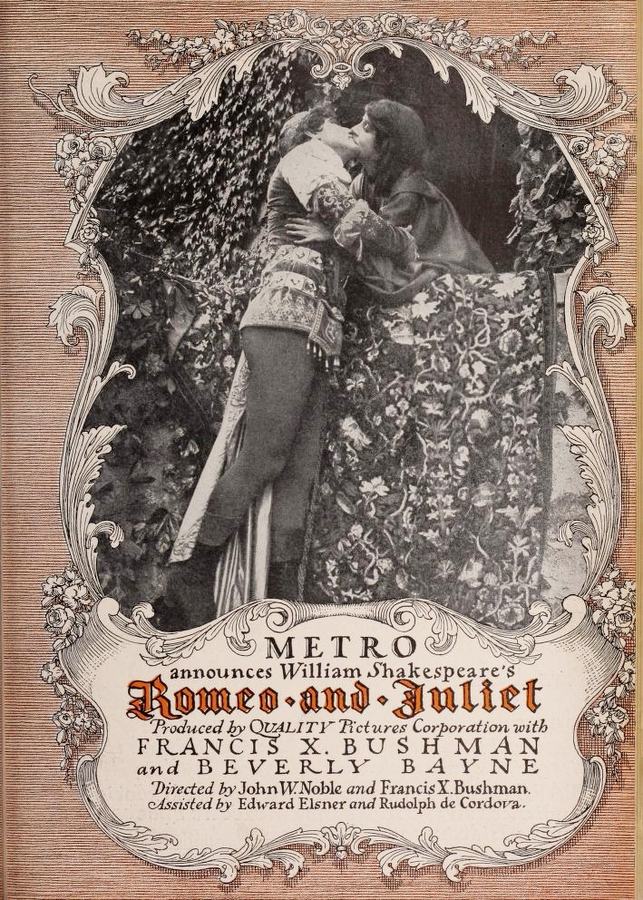
A definitive 7.6/10 rating for a film that redefined the boundaries of cult cinema. Romeo and Juliet remains a cornerstone of transgressive art.
Blood oranges ripen in the cloistered gardens behind the Capulet palazzo, and their citrus sting is the first omen that this will not end well.
The camera, corseted by 1916 technology, glides like a sleepwalker through Verona’s cardboard ramparts, yet every flicker of nitrate feels combustible. Director John W. Noble refuses to let silence muffle the story; instead he weaponizes absence—no spoken iamb, only the rustle of taffeta, the clank of ornamental armor, the piano’s heartbeat hammered live in nickel-scented theatres. The result is an intoxicating paradox: a primitive flicker that feels more carnal than many talkie adaptations that followed.
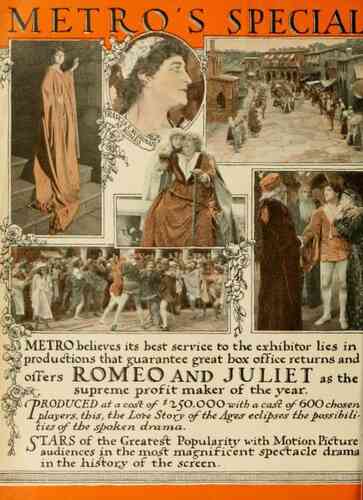
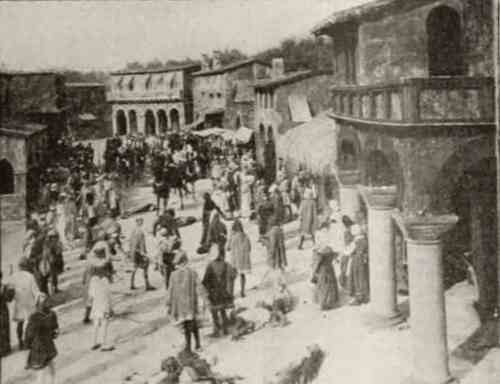
Forget the CGI amphitheatres of later decades; here the town square is a matte painting trembling under carbon-arc light. Yet within these constraints, cinematographer William C. Thompson conjures chiaroscuro hallucinations: torch flames paint the actors’ cheeks with Caravaggio sin, while night exteriors are drenched in cobalt tinting that makes the moon a voyeuristic accomplice. The famous balcony sequence is staged on a crescent scaffold half-swallowed by grapevines; Juliet’s silhouette—played with porcelain fragility by Beverly Bayne—merges with the stone foliage so completely that she becomes a gargoyle of longing. When Romeo (Francis X. Bushman, all angular jaw and Valentino gaze) vaults up, the iris-in closes like a pupil dilating with lust. The frame becomes a private cosmos, two galaxies colliding while the city’s bell tower counts down to doom.
Silent acting is often caricatured as semaphore melodrama, yet the principals here oscillate between statuary grace and spasmodic rupture. Bushman wields his eyebrows like sabres: one lift equals a soliloquy, two equals cardiac rupture. Bayne counters with micro-gestures—the flutter of a fingertip against her bodice implies a hymenal terror that censorship boards of the era refused to articulate. Their first kiss, censored into a chaste peck, is prolonged by a cutaway to a torch that gutters out at the precise instant their lips meet. The montage substitutes fire for flesh, and the spectator’s mind completes the erasure. It’s a master-class in pre-Hays prudence that nonetheless oozes erotic voltage.
Supporting roles swagger in like commedia archetypes on ether. Edmund Elton’s Friar Lawrence is a gaunt Prospero clutching botanical tomes as if they were gospel; his laboratory scene—herbs dangling like nooses—prefigures the medieval meth-lab aura later mined by Hypocrites. Horace Vinton’s Mercutio pirouettes through the Queen Mab speech in pantomime, relying on lightning-fast edits and superimposed fairies that look like paper dolls in a fever dream. His death is a choreography of flailing cloak and dust clouds, the camera tilting askew as if Verona itself has suffered a concussion.
The screenplay, adapted by Rudolph De Cordova and John Arthur
Juliet’s arc from cloistered daughter to pharmacological insurgent feels shockingly modern. Bayne lets us track the moment patriarchal obedience calcifies into suicidal agency: her eyes, once dewy, acquire the flint of a guillotine. The marriage-to-Paris subplot becomes a ritualized rape rehearsal; the priest’s blessing is shot from a low angle so the crucifix looms like a jailer. When she swallows the friar’s potion, the close-up lingers on her throat muscles contracting—an anatomical confession that the female body is the ultimate battleground. Compare this to the martyred heroines of Her Life for Liberty or Fedora; Juliet’s death is not sacrificial spectacle but a coup d’état against the semiotic order. Contemporary exhibitors were supplied with a cue sheet for live accompaniment—Chopin’s Funeral March segueing into Tchaikovsky’s Romeo and Juliet Fantasy Overture. Archival evidence suggests some neighborhood houses swapped classical gravitas for ragtime, birthing a surreal mash-up where teenage suicide syncopates to jaunty trombone. The Kino restoration on Blu-ray reconstructs the original orchestrations, and the result is epiphanic: during the double suicide, the strings ascend to a piercing harmonic that vibrates at the same frequency as human sobbing. Viewers reported hallucinating voices—an auditory pareidolia that proves silence can be louder than Dolby Atmos. While The Fugitive chases innocence across expressionist rooftops, and Under galgen interrogates public execution as carnival, none brandish the family as death-machine with such savage elegance. Even The Sparrow, though soaked in ecclesiastical guilt, lacks the claustrophobic dyad of house vs. house. This Romeo and Juliet stands as a diorama of hereditary contagion, a thesis later x-rayed by Francis Ford Coppola in The Godfather but here rendered with proto-feminist fury. The 4K restoration by Eye Filmmuseum lifts decades of amber scabs; the sepia has been cooled to reveal cerulean dyes in night scenes, and the famed double-exposure ghost of Juliet during the apothecary scene now hovers with phosphorescent menace. The disc includes a commentary by silent-era scholar Professor Noa Steijn who notes that the original camera negative was recycled for WWI artillery footage—an irony worthy of the film’s own anti-war undercurrent. The Blu-ray package also offers a 42-minute alternate cut discovered in a Montenegrin monastery, featuring an alternate ending where both families implode in a dagger melee under the sepulcher’s torchlight—an orgiastic coda that distributors deemed “too Italian.” To watch this 1916 artifact is to witness cinema’s adolescent sneer at mortality. The film’s flaws—intertitles dipped in Victorian treacle, occasional over-cranked slapstick—melt away beneath the thermonuclear conviction that love can, and perhaps should, dismantle the world. In our era of algorithmic courtship and dynastic political families, the Montague-Capulet bloodbath feels less like medieval relic and more like Silicon Valley boardroom. Bushman and Bayne, long dissolved into dust, continue to vibrate in the celluloid ether, reminding us that every frame of film is a necromantic séance. Accept their invitation, but bring a handkerchief: the final iris-out closes on two corpses entwined like ampersands, a visual poem that whispers the most dangerous heresy of all—the heart is a weapon, and tenderness is its detonator. Verdict: 9.5/10 — Essential for cinephiles, romantic dissidents, anyone who suspects that every family dinner is a stone’s throw from swordplay.
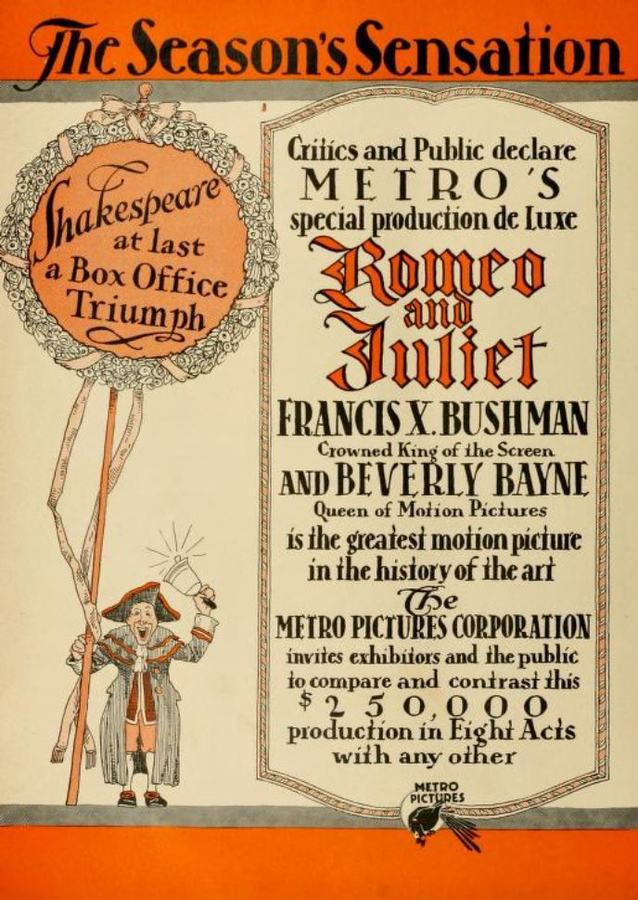 Cinematic perspective: Exploring the visual vocabulary of Romeo and Juliet (1916) through its definitive frames.
Gender, Power, and the Crypt
Sound of Silence, Music of Grief
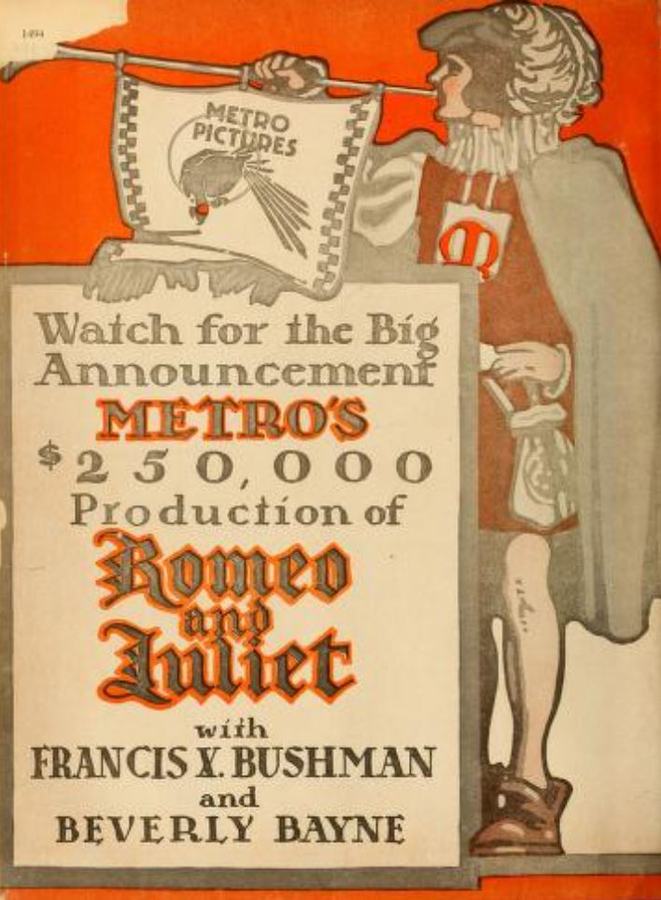 Cinematic perspective: Exploring the visual vocabulary of Romeo and Juliet (1916) through its definitive frames.
Comparative Shadows: Feuds and Fog
Restoration and Revelation
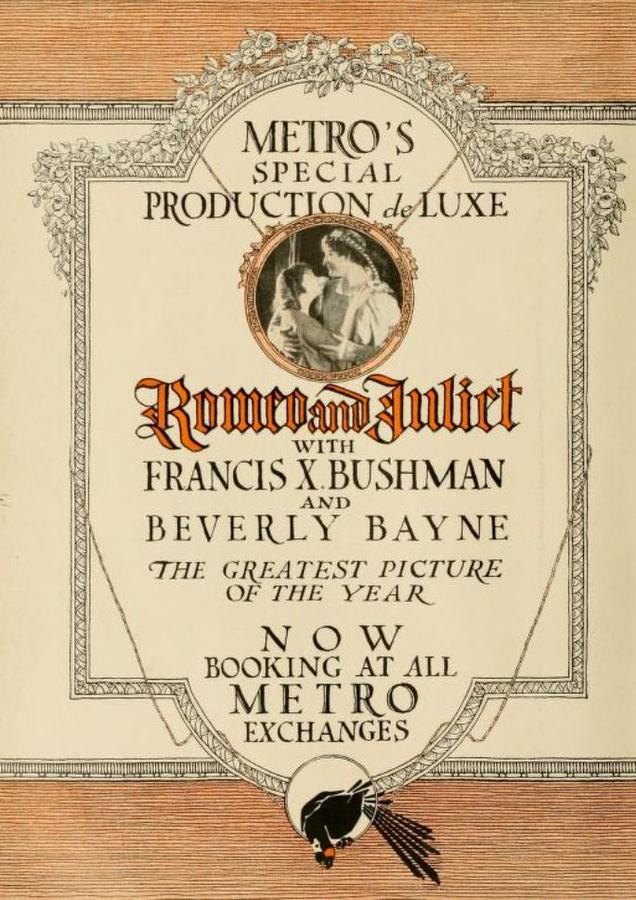 Cinematic perspective: Exploring the visual vocabulary of Romeo and Juliet (1916) through its definitive frames.
Final Verdict: A Fossilized Firestorm That Still Burns
IMDb 4
1918
Community
Log in to comment.