DbcultAccessing Vault...
Cult Review
Senior Film Conservator
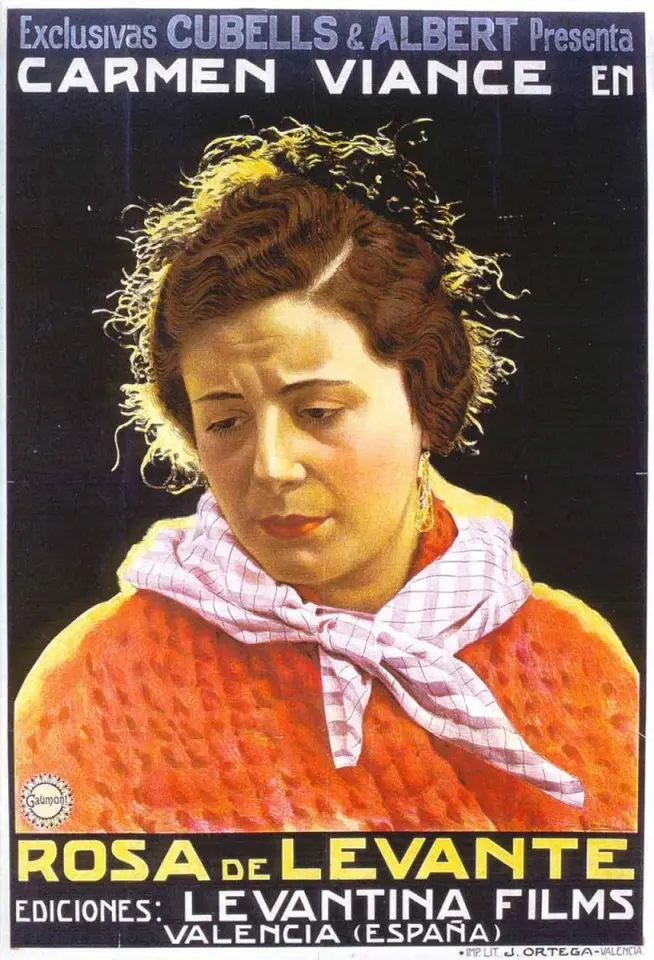
Is Rosa de Levante a lost treasure of the silent era or merely a relic of regional nostalgia? Short answer: It is a visually arresting piece of cultural history that rewards patient viewers, though it lacks the narrative punch of its international contemporaries.
This film is for the dedicated cinephile interested in the evolution of Spanish national identity and the preservation of silent-era aesthetics. It is emphatically not for those who demand high-octane pacing or modernized storytelling tropes.
1) This film works because it captures the specific light and atmosphere of the Spanish coast with a naturalism that was rare for 1926, grounding the melodrama in a tangible sense of place.
2) This film fails because the pacing often grinds to a halt during the second act, favoring repetitive scenic shots over necessary character development.
3) You should watch it if you want to see the foundational work of Mario Roncoroni and appreciate how early cinema utilized regional landscapes as characters in their own right.
In Rosa de Levante, the Mediterranean is not just a backdrop. It is a suffocating, beautiful force that dictates the lives of everyone on screen. Director Mario Roncoroni utilizes the natural light of the Levant to create a visual texture that feels almost tactile.
Consider the scene where the camera pans across the salt marshes. The way the light reflects off the water doesn't just look pretty; it emphasizes the isolation of the characters. It feels heavy. It feels real.
Unlike the more stylized sets of The Oath of Stephan Huller, Roncoroni leans into the dirt and the sun. This isn't a studio-bound fantasy. It is an early attempt at what we might now call location-driven storytelling.
The framing is often static, but within those frames, the movement of the wind and the sea provides a kinetic energy that the script sometimes lacks. It is a quiet triumph of cinematography over narrative.
Elisa Ruiz Romero carries the emotional weight of the film with a performance that avoids the histrionics common in the mid-20s. Her face is a map of suppressed longing. In the moments where she interacts with Carmen Viance, there is a subtle power dynamic that speaks volumes without a single intertitle.
One specific moment stands out: Rosa stands by a doorway, her shadow stretching across the floor, watching the men depart. There is no weeping. There is just a steady, unrelenting gaze. It’s effective. But it’s also heartbreaking.
Compare this to the more overt emotionality found in A Boy of Flanders. While that film aims for the throat, Rosa de Levante aims for the gut. It is a more restrained, perhaps more adult, form of silent acting.
The supporting cast, including Gaspar Campos and Rafael Hurtado, provide a solid, if somewhat archetypal, foundation. They represent the 'old world'—the rigid structures of masculinity and tradition that Rosa must navigate.
If we are being honest, the middle forty minutes of this film are a slog. The writers, Miñana and Miranda, seem more interested in the 'costumbrismo' (the depiction of local customs) than in moving the plot forward. We see a lot of fishing. We see a lot of walking.
For a modern viewer accustomed to the narrative efficiency of something like The Chauffeur, this can be frustrating. The film lingers. It meanders. It refuses to hurry.
However, this slowness is also where the film finds its soul. By forcing the audience to sit in the boredom of the characters' daily lives, the eventual outbursts of drama feel more earned. It’s a gamble that doesn't always pay off, but I respect the commitment to the rhythm of the region.
The intertitles are sparse. This is a film that trusts its images. While that’s commendable, a few more beats of dialogue might have helped clarify the shifting loyalties in the final act.
Yes, Rosa de Levante is worth watching if you are a student of film history or have a specific interest in Spanish cultural heritage. It offers a rare window into a specific time and place that has largely vanished from the screen. For the casual viewer, however, the lack of narrative momentum may make it a difficult sit.
Pros:
- Exquisite location-based cinematography.
- A nuanced, restrained lead performance by Elisa Ruiz Romero.
- Authentic representation of 1920s Levantine culture.
- Strong thematic exploration of class and tradition.
Cons:
- Glacial pacing in the second act.
- Predictable melodramatic beats.
- Sparse character development for the supporting cast.
- Audio-visual restoration quality can be inconsistent depending on the source.
Mario Roncoroni’s direction is surprisingly modern in its restraint. He doesn't rely on the heavy-handed symbolism found in films like Miarka, the Child of the Bear. Instead, he allows the environment to dictate the tone. The film feels dusty. It feels hot. It feels inevitable.
The tone is one of melancholic resignation. Even the moments of joy are tempered by the knowledge that the characters are bound by their circumstances. This creates a cohesive, if somewhat somber, viewing experience.
The editing, while standard for the time, occasionally uses cross-cutting between the sea and the domestic sphere to highlight the divide between the world of men and the world of women. It’s a simple technique, but it works.
Rosa de Levante is a fascinating, if flawed, experiment in regionalist cinema. It’s a film that prioritizes 'being there' over 'doing things.' It works. But it’s flawed. The camera lingers too long on the sea. The characters sometimes feel like statues. Yet, there is a haunting beauty in its stillness that remains long after the final frame.
"A meditation on the weight of the sun and the salt, Rosa de Levante is a silent poem that occasionally forgets to move, but never fails to see."
In the pantheon of Spanish silent cinema, it holds a respectable, if not top-tier, position. It lacks the raw power of the avant-garde experiments that would follow in the late 20s, but it possesses a grounded honesty that is entirely its own. If you have the time, let it wash over you. Just don't expect it to hurry.
IMDb —
1916
Community
Log in to comment.