DbcultAccessing Vault...
5.6/10
Senior Film Conservator
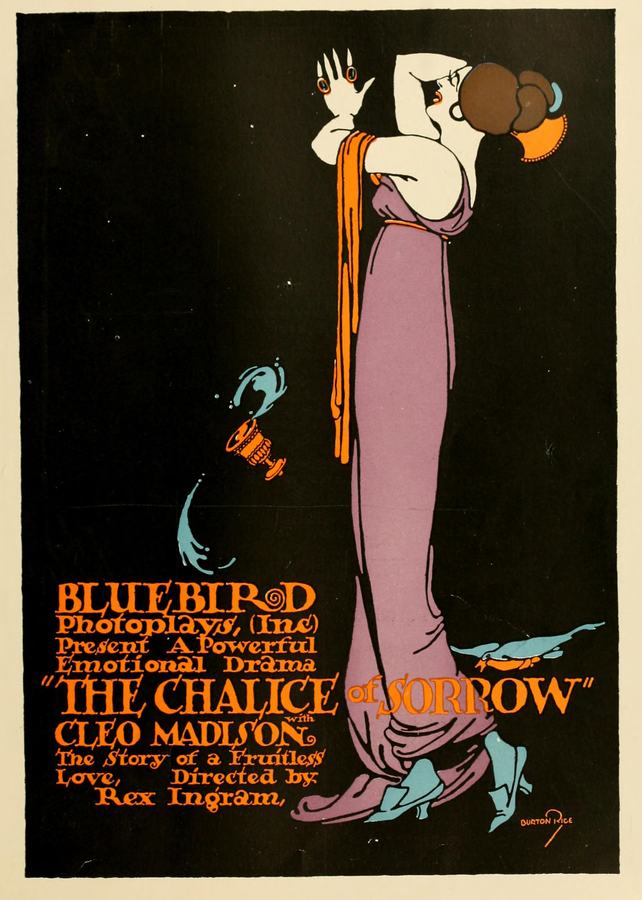
A definitive 5.6/10 rating for a film that redefined the boundaries of cult cinema. The Chalice of Sorrow remains a cornerstone of transgressive art.
There are silents that whisper; The Chalice of Sorrow howls. From its first iris-in on the gilded proscenium of Mexico City’s Teatro Principal, Rex Ingram engineers a moral vertigo that never quite rights itself. Lorelei—Cleo Madison in the role that should have catapulted her beyond the gravitational pull of Universal’s backlot—materialises as Carmen not merely to sing but to infect. Each downward portamento feels like a fingernail dragged along a fresco, revealing the damp plaster beneath pigment: the city itself is flaking, and the governor who owns every waking hour of its citizens intends to own her vibrato as well.
Howard Crampton’s Sarpina stalks frames like a gargoyle granted furlough, all shoulder-padding and predatory stillness. Watch the way Ingram blocks him against cathedral grids—baroque spiral columns echoing the iron grillwork soon to cage Clifford—so that power, faith, and incarceration collapse into one architectural shudder. Meanwhile Jack Holt’s Marion Leslie, equal parts Pygmalion and penitent, chips at stone that will outlast both their bodies, unknowingly sculpting his own sepulchral effigy. The sculptor’s mallet becomes metronome to the opera house’s coloratura, a percussive counter-rhythm underscoring how art and politics share the same arterial pulse.
The forged letter—Sarpina’s masterstroke—arrives on parchment whose fibres seem almost septic. Ingram inserts an extreme insert: the inkwell’s surface tension quivers like mercury moments before the quill slices it. That micro-becoming mirrors the larger rupture about to cleave Lorelei’s trust. When she reads the counterfeit lines implicating Leslie and Isable in carnal collusion, Madison’s eyelids perform a semaphore of disbelief: flutter, freeze, then slam shut like cathedral doors against plague. The moment is silent yet deafening; intertitles unnecessary when a face so precisely orchestrates the collapse of an inner cosmos.
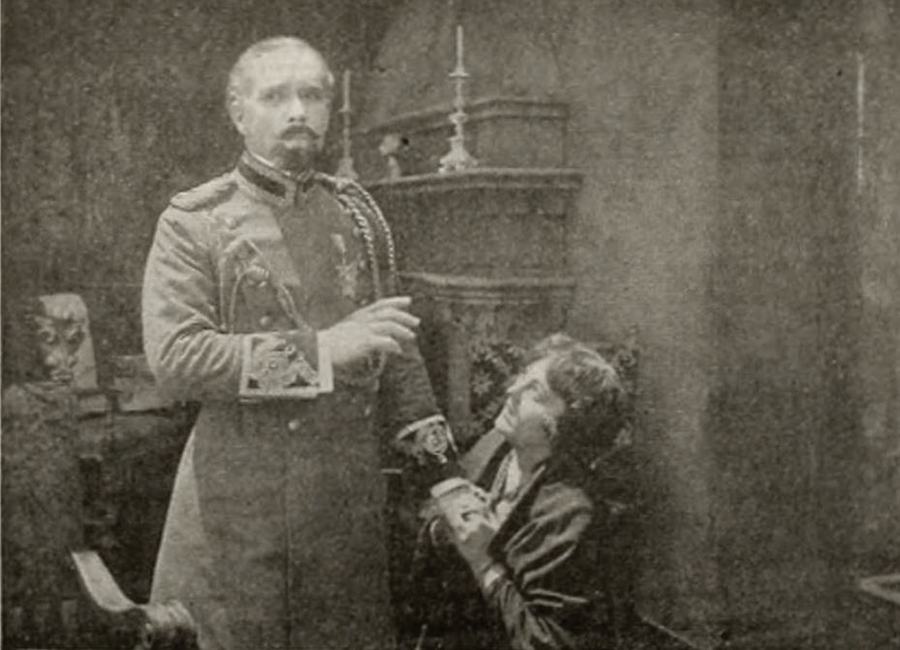
“Silent film is not absence of voice but apotheosis of gesture,” critic Miriam Vale once wrote. Ingram proves her thesis by letting Madison’s shoulders do the screaming.
Leslie’s interrogation transpires in the cathedral’s subterranean ossuary, candle-smoke writhing like soul-matter escaping marrow. Sarpina’s henchmen employ a rope twist that evokes later Tyranny of the Mad Czar floggings yet predates them by seven years, suggesting Ingram’s influence seeped eastward. Each pull of the rope is cross-cut with Lorelei’s opera-house performance above: her arms flung wide in ecstatic habanera while below her lover’s arms are nearly yanked from their sockets. The montage is theological farce—crucifixion and transfiguration sharing a split-reel.
Lorelei’s bargain—one night with Sarpina in exchange for two passports and blank cartridges—plays like a savage parody of American Beauty’s transactional eroticism, only here the stakes are literal life. Note Ingram’s sardonic touch: the passports are bound with red tape the exact shade of later blood. When dawn’s first light reveals Leslie prostrate, apparently lifeless, the camera lingers on the singer’s hand still clutching those visas, now soggy with dew and grief. Bureaucracy, it turns out, is the true chalice; everyone drinks, everyone chokes.
Isable Clifford’s role as Madonna-model offers a counter-myth: woman as conduit rather than catalyst. Rhea Haines plays her with down-cast luminosity, eyes that seem always to apologise for occupying space. Yet her complicity in the escape plot upends the virgin-sinner binary Lorelei embodies. Ingram positions both women under the same vaulted light—one in operatic crimson, the other in sculptural blue—so that colour theory becomes moral spectroscopy. Their eventual mutual silence in the penultimate reel feels less like rivalry than shared recognition: patriarchy allows them only two masks, whore or Madonna, and both are strangling.
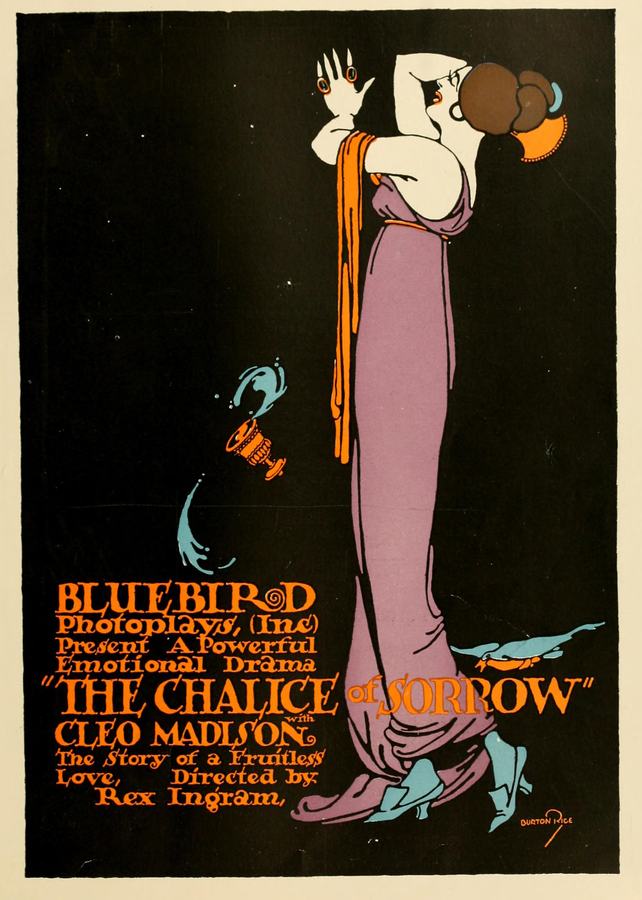
Lorelei’s stabbing of Sarpina occurs off-screen; we witness only the stagger, the candle tipping, wax bleeding across flagstones like sanctified lava. Ingram withholds the penetrative image because the true violence is psychological: the instant Lorelei realises she has become what she despised—trading flesh for mercy, murder for love. When she exits the governor’s apartments, the corridor elongates via a tracking shot that anticipates German strassenfilme; walls lean inward, ceiling compress, the very architecture exhales guilt.
History would call it justifiable homicide; the camera calls it original sin.
Students of the director’s later La falena will recognise the same chiaroscuro moralism: protagonists who mistake passion for ethics, lovers who seduce themselves into damnation. Where La falena’s countess poisons with perfume, Lorelei murders with steel; both films suggest sensuality is merely politics conducted by other means. Likewise the sibling loyalty motif resurfaces in Her Husband’s Wife, though there the rescue is bloodless, almost comedically so. Ingram returned again and again to the price of collateral devotion, as if trying to solve an equation whose variables always sum to tragedy.
Cleo Madison’s legacy rests largely on this single role. Watch her transition from coquette to assassin: the hips that once sashay in seguidilla now propel her like a rail-spike toward destiny. Jack Holt, usually pegged as stalwart leading man, here permits vulnerability to seep through granite composure; his scream—silent yet unmistakably shrill—rings louder than any orchestral cue. Among supporting players, Wedgwood Nowell’s Consul Clifford exudes a bookish rectitude that makes his imprisonment feel like civility itself shackled. And Albert MacQuarrie’s Pietro, eyes forever half-apologetic, embodies the banality of henchmen who know complicity is survival.
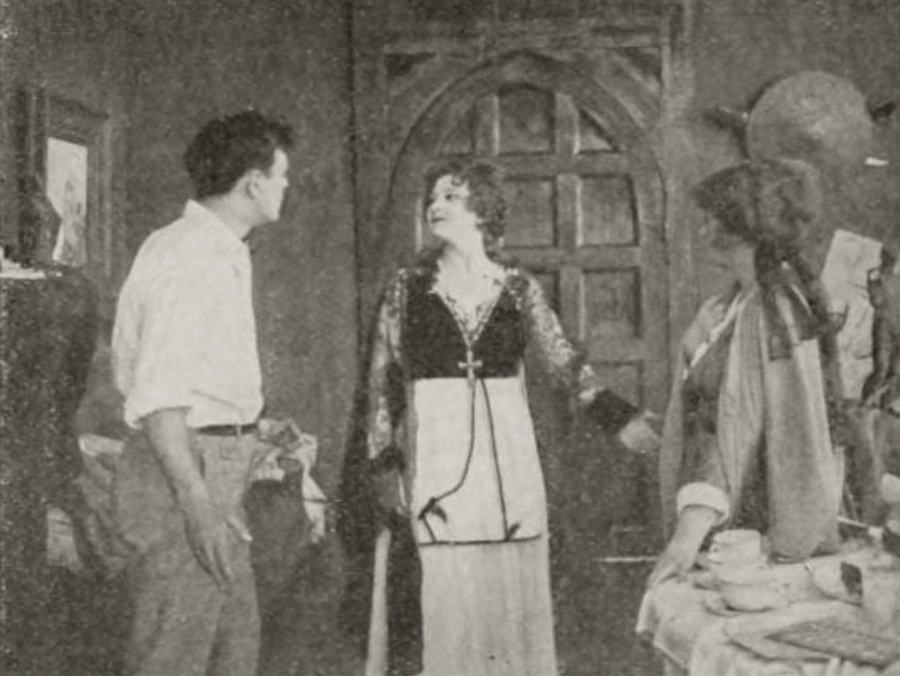
Ingram collaborated with cinematographer John F. Seitz (years before Double Indemnity) to birth images that smoulder rather than gleam. Note the candlelit tableau when Lorelei signs her pact: face half-illumined, half-eclipsed by shadow shaped like a communion wafer. Or the final two-shot—Lorelei draped over Leslie’s corpse, sky bleeding from cobalt to rust—achieved by timing the outdoor shoot across the 6 a.m. golden hour, a phrase not yet coined but already instinctively weaponised. Grain structure in the surviving 35mm print (Library of Congress 2018 restoration) resembles brushed pewter, each scratch a scar witnesses earned.
Contemporary Moving Picture World praised the film’s “tempestuous emotional geography” yet chided its “Latin excess,” a coded phrase signalling discomfort with racialised sexuality. Modern scholars resuscitate the movie as proto-feminist noir, though such labels feel procrustean. Ingram’s heroines refuse category; they act, then accept the abyss. In an era when Protea II peddled spy spectacle and Romeo and Juliet traded on Shakespearean brand recognition, Chalice risked everything on moral ambiguity and paid the price—box-office mediocrity, prints shelved, stars scattered.
Because every frame interrogates the same diseased transaction still oozing through modern corridors: power demanding flesh, love forced to barter, complicity masked as chivalry. Because MeToo revelations make Lorelei’s dagger feel less like melodrama and more like delayed justice. Because the chalice is no relic; we sip from it each time we mute outrage in exchange for access. Ingram merely distilled the bitter vintage into visual poetry, then left us holding the empty cup.
A 4K restoration premiered at Pordenone 2022, accompanied by a new score blending Mexican son jarocho strings with atonal drones—an aural correlative to the story’s cultural clash. Streaming rights currently rotate between Criterion Channel and Kino Cult; check regional availability. Bootlegs circulate but colour grading skews toward nicotine; avoid anything under 6GB file size if you crave the candle-drip textures described above.
Masterpiece status: affirmed. Not because it consoles, but because it cauterises. Enter expecting catharsis and you’ll exit scorched; enter prepared to interrogate your own silent bargains and you may yet leave enlightened. The chalice spills; the sorrow sticks. Drink anyway.

IMDb —
1917
Community
Log in to comment.