DbcultAccessing Vault...
Cult Review
Senior Film Conservator
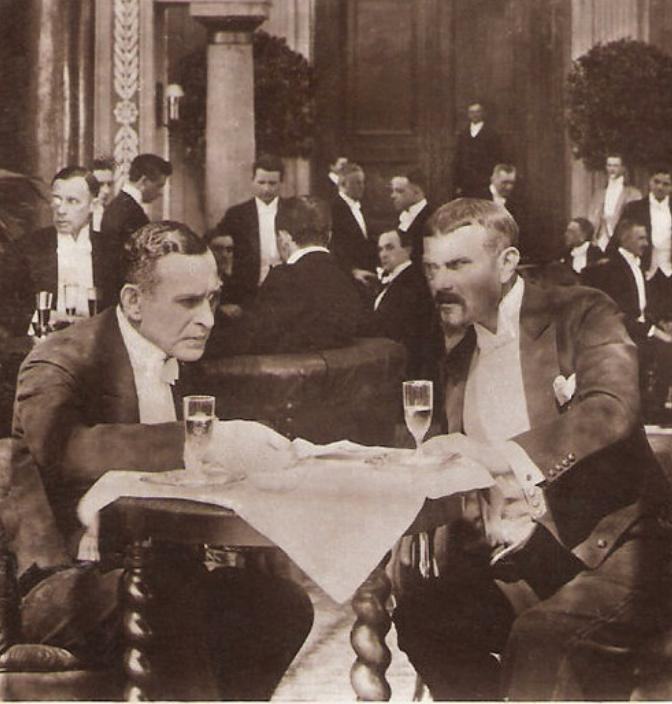
Stepping back into the cinematic annals of 1918, we encounter Mitternacht, a German silent film that, even a century later, retains a haunting resonance. Penned by the prodigious Ewald André Dupont, this picture isn't just a historical artifact; it's a testament to the nascent power of storytelling through moving images, a psychological thriller that masterfully navigates the treacherous waters of suspicion and domestic intrigue. In an era often overlooked by casual film enthusiasts, Dupont's work, much like its contemporaries such as The Marble Heart, showcases an impressive sophistication in narrative construction and character development, proving that early cinema was far from simplistic.
The film immediately thrusts us into a chilling scenario: the second wife of Attorney General Trevor is discovered brutally murdered within the confines of his personal safe. The sheer audacity and intimacy of the crime are shocking enough, but the discovery of a ring bearing the initials 'DG' alongside the victim quickly and tragically implicates Donald Gordon, the fiancé of Trevor's own daughter. This setup is a stroke of narrative genius, instantly creating a vortex of familial betrayal, legal entanglement, and deeply personal anguish. It's a premise that would feel at home in a modern psychological thriller, yet it's executed with the distinct visual language and dramatic flair characteristic of the silent era.
What truly elevates Mitternacht beyond a mere whodunit is its profound exploration of suspicion. The film doesn't just present a mystery; it immerses the viewer in the corrosive effects of doubt, both on the accused and on those who love him. Eberhard Wrede, as Attorney General Trevor, delivers a performance imbued with a quiet torment, his facial expressions and body language conveying a man grappling with unthinkable horror and the agonizing possibility of his future son-in-law's guilt. Wilhelm Diegelmann, Maria Pospichil, and Martin Lübbert contribute to this ensemble, each portraying characters caught in the unfolding tragedy with nuanced, albeit exaggerated by modern standards, silent film acting. These performances, though relying on grand gestures and expressive pantomime, are remarkably effective in conveying complex emotions without a single spoken word.
The pacing of Mitternacht is another highlight. Dupont, even as a writer here, clearly understood the rhythm of visual storytelling. The initial discovery is swift and impactful, immediately drawing the audience into the unfolding drama. Subsequent scenes meticulously build tension, allowing the weight of the accusation to settle upon Donald Gordon, played by a compelling Karl Beckersachs. His struggle to prove his innocence, against seemingly insurmountable evidence, forms the emotional core of the film. The narrative avoids stagnation, constantly introducing new clues, red herrings, and character interactions that propel the plot forward, keeping the audience engaged and guessing. This dynamic movement is a hallmark of good thrillers, whether silent or sound, and Dupont's script demonstrates an early mastery of this craft.
While Ewald André Dupont is credited as the writer for Mitternacht, his influence on the overall cinematic vision undoubtedly extends beyond the mere words on a page. His later directorial efforts, such as the renowned Variety (1925), showcased his profound understanding of visual composition, psychological depth, and the intricate interplay of light and shadow. Even in this earlier work, one can discern the seeds of his distinctive style. The way the plot is structured, the emphasis on character motivation, and the dramatic reveals all point to a storyteller with a keen eye for cinematic impact. It's not just about what happens, but how it feels to the characters, and by extension, to the audience. This psychological realism, even in a silent film, is what gives Mitternacht its enduring power.
The film’s exploration of justice and its potential miscarriages is particularly poignant. Donald Gordon finds himself trapped in a legal system that, despite its best intentions, is swayed by circumstantial evidence. This theme resonates strongly, reminding us of other films of the era that delved into legal quandaries and the fragility of innocence, such as The Guilty Man. The dramatic tension arises not just from identifying the true culprit, but from the agonizing process of clearing a name, a process fraught with peril and emotional toll. The cast, including Reinhold Schünzel, Erich Rahn, Max Landa, and Olga Wojan, collectively contributes to this atmosphere of high stakes and personal drama, each character playing a vital role in the intricate dance of accusation and defense.
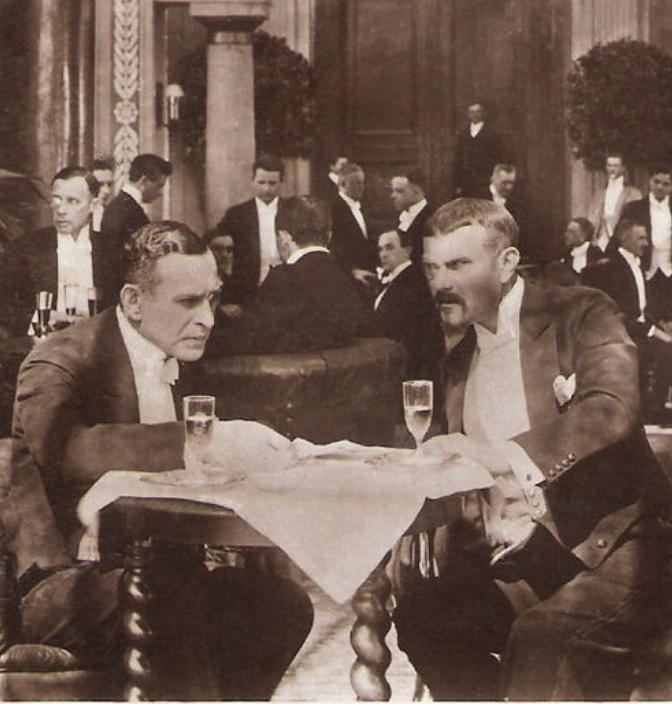
Silent films, by their very nature, necessitated a heightened reliance on visual storytelling. Mitternacht excels in this regard, utilizing expressive cinematography and mise-en-scène to convey mood, character, and plot points. The use of close-ups to capture the anguish on an actor's face, the stark contrast of light and shadow to emphasize danger or mystery, and the deliberate blocking of characters to illustrate power dynamics are all employed with remarkable skill. While specific directorial credits for this film might be less emphasized in early cinema records, the visual execution clearly serves Dupont's complex narrative. The setting within the Attorney General's home, for instance, transforms from a symbol of order and authority into a labyrinth of suspicion, mirroring the internal turmoil of its inhabitants.
Comparing it to other thrillers of its time, like Fantomas: The Man in Black or The Black Box, Mitternacht distinguishes itself by focusing less on overt action and more on psychological suspense. The horror isn't in a phantom criminal or a gadget-laden mystery, but in the insidious creep of doubt within a trusted circle. This is a film that understands the power of the unspoken, the weight of a glance, and the terror of being wrongly accused. The collective performances of Adolf Paul, Hugo Werner-Kahle, Anneliese Halbe, Leopold von Ledebur, Margarete Ferida, and Heinrich Peer, though perhaps in smaller roles, build a credible world around the central conflict, enhancing the film's immersive quality.
The enduring appeal of Mitternacht lies in its timeless themes: betrayal, justice, and the search for truth amidst deception. It's a reminder that compelling narratives transcend technological limitations. Dupont’s script, brought to life by a dedicated cast, crafted a piece of cinema that could hold its own against many a modern thriller in terms of pure narrative engagement. While the stylistic conventions of silent film might require a slight adjustment for contemporary viewers, the emotional core and intellectual challenge of the mystery remain as potent as ever. This isn't just a film to be studied for its historical significance; it's a film to be experienced for its dramatic power.
One could draw parallels to the intricate plotting seen in detective stories of the era, where every detail, every misplaced object, held immense significance. The 'DG' ring, for instance, serves as a classic MacGuffin, driving the initial suspicion and setting the entire convoluted plot in motion. The unraveling of this mystery requires careful observation and deduction, much like the audience engagement demanded by films such as The Microscope Mystery. However, Mitternacht adds a layer of personal tragedy that makes the stakes feel incredibly high, transforming a simple investigation into a desperate fight for a man's reputation and freedom, and perhaps, his very life.
The film's exploration of domestic betrayal is particularly sharp. The idea that such a heinous crime could occur within the most secure and private space of a high-ranking official's home speaks volumes about the vulnerability of even the most powerful individuals. This subversion of expected safety creates a pervasive sense of unease, a feeling that no one is truly safe, and that appearances can be profoundly deceiving. This theme of hidden darkness within respectable facades is a recurring motif in many early dramas and thrillers, often reflecting societal anxieties of the time. The contrast between Attorney General Trevor's public standing and the private horror he faces is a powerful dramatic engine.
Mitternacht stands as a compelling example of early German cinema's ability to craft sophisticated and engaging narratives. It’s a testament to Ewald André Dupont’s skill as a writer, laying the groundwork for a film that is both intellectually stimulating and emotionally gripping. The performances, though belonging to a different acting tradition, effectively convey the high drama and personal stakes involved. For those willing to delve into the rich history of film, this silent thriller offers a rewarding experience, a window into a time when stories were told with expressive faces, dramatic lighting, and the universal language of human emotion.
It’s a stark reminder that the foundational elements of suspense and character-driven drama were firmly established long before the advent of synchronized sound. The film doesn't just entertain; it invites contemplation on the nature of truth, the burden of proof, and the destructive power of a well-placed lie. In an era where cinematic language was still being invented, Mitternacht contributes significantly to the lexicon of the thriller genre, demonstrating a profound understanding of how to build and release tension without relying on dialogue. It’s a quiet triumph, a film that continues to speak volumes from the silent depths of its past, urging us to look closer, to question assumptions, and to appreciate the intricate artistry of its creation. The rich tapestry of characters, from the accused to the accusers, from the heartbroken father to the determined investigators, all contribute to a narrative that feels both expansive and intimately personal. It’s a film that lingers, much like a shadow at midnight, long after the credits roll.
IMDb 6.4
1933
Community
Log in to comment.