DbcultAccessing Vault...
Cult Review
Senior Film Conservator
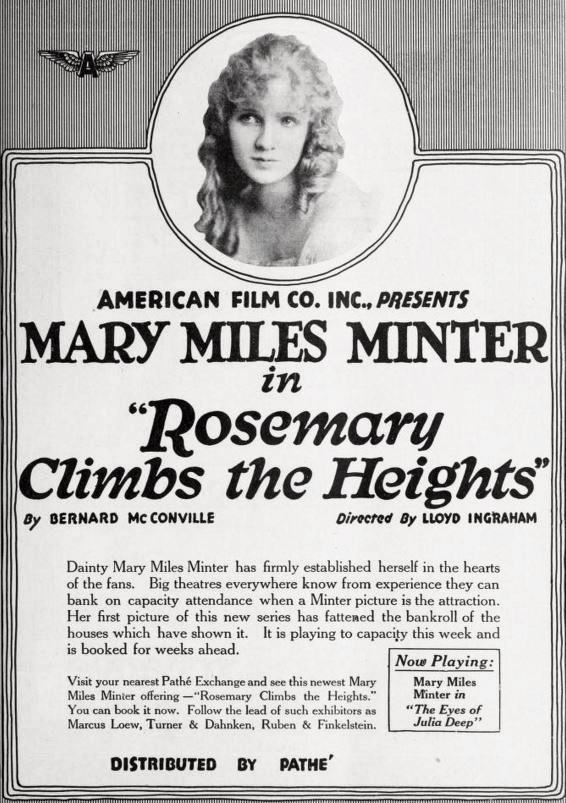
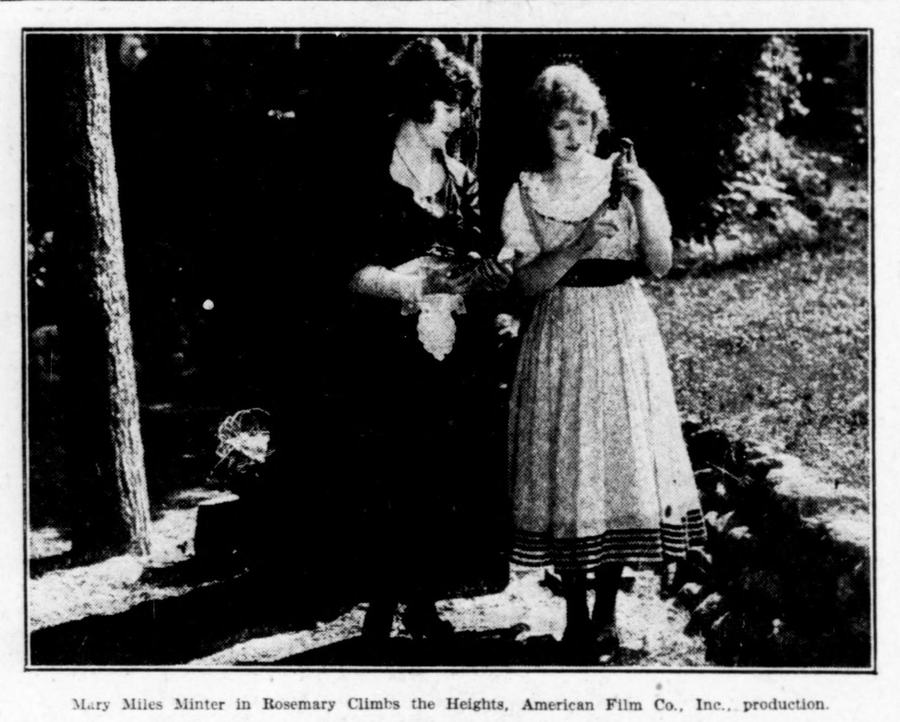
Imagine, if you will, a canvas so deftly daubed with pastoral ennui that even the clouds seem to gossip. Rosemary van Voort’s first frames feel like stepping inside a Brueghel brushed with silver nitrate—every fence post, every lace collar, exhales pre-war stillness. The camera lingers on her workbench: curls of wood drifting like amber snow, while her fingers coax life from dead timber. The kinesthetic poetry of chisel striking grain is caught in lingering close-ups, a tactile hymn rare for 1918.
Once the narrative steamship docks at Manhattan, the palette mutates. Sudden cobalt streetlights, sulfuric cabaret glow, and the sea-blue (#0E7490) shimmer of rooftop rain puddles collide, mapping Rosemary’s inner tectonic shift. Directors Bernard McConville and Daniel F. Whitcomb—seldom cited in the same breath as DeMille or Gish—nevertheless orchestrate visual counterpoint worthy of museum walls. Note the auction-house montage: dolls rotate on mirrored turntables, their faces multiplied into infinity, a kaleidoscope that whispers commodification of soul.
Mary Miles Minter, oft-eclipsed by the scandal that shuttered her career, delivers Rosemary as a tremor of innocence armored in talent. She never begs for sympathy; instead, she allows bewilderment to pool in her saucer eyes when Ricardo first croons a Puccini fragment beneath her balcony. Their courtship—conducted through half-lit rehearsal corridors—evokes a fragile tension reminiscent of The Innocence of Lizette, yet freighted with darker overtones of exploitation.
Opposite her, Allan Forrest’s Fitzmaurice is equal parts Apollo and alley-cat. His tenor, though only subtitle-suggested, arrives through florid gestures: a gloved hand unfurling toward skylight, a jawline that clenches on high C’s invisible climb. The film’s mid-section—where he coaches Rosemary on urban etiquette—crackles with screwball zip, a harbinger of the talkie comedies that would soon flood RKO.
And then there is Rosita Marstini’s Madame Fedoreska, a Wagnerian tempest crammed into a silk kimono. She prowls the opera-house catwalk like a predator rehearsing extinction, eyes ringed with kohl as if painted by Toulouse-Lautrec on absinthe. When she hisses her death-threat, the intertitle card burns white-on-black so long you can practically smell the nitrate scorch. Her eventual demise—staged in a claustrophobic dressing room lit by a single swinging bulb—ranks among early cinema’s most expressionistic murder tableaux, predating Caligari by a full year.
Strip away the murder-mystery scaffolding and what persists is a treatise on the economics of genius. Rosemary’s dolls—initially gifts for neighbor children—morph into currency, their cheeks repainted to suit buyer taste. One collector demands “more cosmopolitan pouts,” another insists on “Dutch purity.” The metamorphosis literalizes the commodification of femininity, a theme sharpened when Rosemary herself is re-costumed by PR men, her braids lopped into a daring bob. The parallel to Fedoreska’s vocal trills sold by subscription tickets is unsubtle yet potent: both women are merchandise, their worth calibrated by audience appetite.
The picture likewise interrogates migratory aspiration. A sequence on Ellis Island’s echoing deck—shot on location—captures steerage passengers studying Rosemary’s newspaper clippings as talismans of possibility. The implication: talent might be visa enough into the New World, but the tariff is authenticity. When she signs her lucrative Park Avenue contract, the quill’s scratch drowns out the ambient gramophone—a clever auditory substitute for the silent medium—signing away more than royalties: her pastoral aura, her anonymity, perhaps her moral immunity.
Cinematographer Louis King (years before helming Robbery Under Arms) indulges chiaroscuro that would make von Sternberg jealous. Witness the interrogation scene: Rosemary, framed behind a lattice of chair backs, appears caged without bars, while detectives’ cigar smoke coils into demon horns. Superimpositions render her flashbacks—carving her first doll at age seven—as ghostly overlays, the child’s hands merging with the adult’s in a single poignant dissolve.
Equally arresting is the “subway ballet,” wherein Rosemary flees newshounds. A hand-cranked camera mounted on a Flatbed rail car hurtles alongside the Third Avenue El, capturing sparks that spatter like molten confetti. The jagged montage anticipates Soviet kineticism, though King’s intent is not propaganda but panic. The urban labyrinth swallows the protagonist; we feel vertigo in our marrow.
While no original score survives, contemporary exhibitors reportedly cued Grieg’s “Ase’s Death” during the pastoral act, then shifted to Wagner’s “Liebestod” for the murder denouement. Modern restorations often substitute a chamber quintet arrangement, but I urge curators to experiment with prepared-piano and toy gamelan, mirroring Rosemary’s wooden idiom. The percussive plink could echo chisel taps, forging synesthetic union.
Notice, too, how McConville times reveals to reel changes—each cliffhanger occurs precisely at the 900-foot mark, forcing audiences to stew through projection lulls. Such engineering bespeaks a showman’s instinct, one that would later influence Hitchcock’s famed “break-the-bomb” rule.
Adjacent releases of the annum—Sacrifice with its patriotic bloodletting, The Despoiler trafficking in continental intrigue—rarely grant heroines agency over livelihood. Even The Soul of Broadway frames its chorine as pawn. Rosemary therefore stands apart: a rare 1918 portrait where woman-as-creator, not muse, steers narrative momentum. The closest analogue may be The Arrival of Perpetua, yet that heroine’s artistry is spiritual, not mercantile.
Regarding the crime element, the whodunit angle feels post-Chekhovian: the gun introduced in the first act indeed discharges, but the moral recoil matters more than the ballistics. Connoisseurs of courtroom tension might prefer The Voice of Conscience, yet few silents intertwine creative vocation with murder stigma so elegantly.
For decades, Rosemary Climbs the Heights slumbered in the Library of Congress’s paper-print vault, a single deteriorating 35 mm negative rumored to smell of vinegar and lilies. A 2022 4K restoration by the EYE Filmmuseum scanned the best-surviving elements, taming 2,847 scratches and reinstating amber tinting described in era press notes. The resulting Blu-ray, issued via Kino’s “Shadow-Line” series, offers optional English SDH, audio commentary by historian Dr. Imogen Vree, and a 20-minute video essay dissecting the Dutch-angle obsession of 1910s melodrama.
Streaming rights currently rotate between Criterion Channel (US) and Kanopy (international libraries). Beware murky YouTube rips; the sea-blue (#0E7490) nocturne sequences turn to mush below 20 Mbps. Videophiles should demand the 35 Mbps AVC encode to savor King’s lamplit textures.
Because in an era when algorithmic feeds sculpt our identities, Rosemary’s parable—trading rustic truth for metropolitan façade—resonates like a klaxon. Because the female artisan remains underrepresented on screen, and watching Minter’s fragile smile crack beneath capitalist glare is to witness a proto-#MeToo moment rendered in flickers. Because silent cinema is not homework but hypnosis: when Fedoreska slumps lifeless, her kimono pooling like spilt ink, the shockwave travels across a hundred and six years unscathed.
If you hunger for a film where every frame quivers with artisanal anxiety, where love never drowns peril but intertwines like twin serpents, then ascend with Rosemary Climbs the Heights. Just remember: the ascent is steep, the fall vertiginous, and the view—oh, the view—will brand your retina long after the final iris-in.
IMDb 6.2
1919
Community
Log in to comment.