DbcultAccessing Vault...
Cult Review
Senior Film Conservator
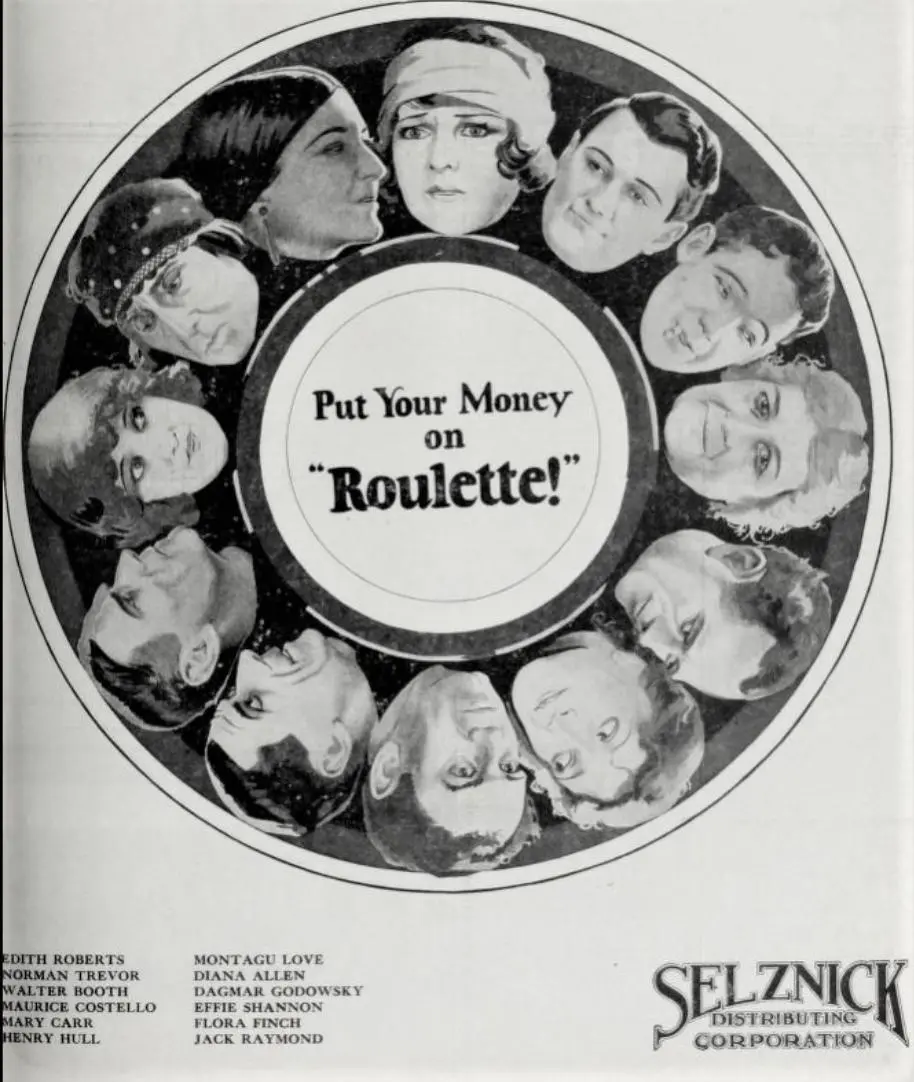
In the pantheon of early American cinema, few motifs carry the heavy symbolic weight of the gambling den. It is a space where the American Dream is both accelerated and annihilated, a microcosm of the volatile social mobility of the 1920s. Roulette (1924), a film that has often been eclipsed by more bombastic contemporaries, offers a searing, if melodramatic, critique of this environment. It is a narrative that begins with a death and ends with a marriage, yet the emotional journey between these two pillars of human experience is fraught with the tension of the wager.
The film opens with a sequence that establishes the brutal finality of the game. Lois Carrington’s father, a man whose life is evidently measured in chips and cards, collapses mid-play. This isn't just a physical death; it is the erasure of Lois’s social standing. Enter John Tralee. In a performance that fluctuates between a benefactor's warmth and a predator's chill, Tralee assumes guardianship of the orphaned Lois. The script, penned by the trio of Lewis Allen Browne, Gerald C. Duffy, and William MacHarg, cleverly explores the ambiguity of Tralee’s kindness. Is he a man seeking redemption for a life of vice, or is he merely investing in a more sophisticated asset?
Tralee educates Lois, providing her with the polish of the upper crust, yet his motives remain tethered to the green felt of the table. He uses her as a 'decoy'—a term that resonates with the era's anxieties regarding the 'New Woman' and her place in the public sphere. Lois is not merely a resident of his home; she is a functional component of his business model. This dynamic mirrors the thematic concerns found in The Evil Thereof, where the corruption of innocence is presented as an inevitable byproduct of urban capitalist greed.
When Henry Hull enters the frame as Peter Marineaux, the film shifts from a domestic drama into a psychological thriller. Hull, a performer known for his later versatility, brings a grounded, almost modern intensity to Peter. His attraction to Lois is immediate but poisoned by the environment in which they meet. In the 1920s, the gambling joint was the antithesis of the Victorian parlor; it was a place where every smile was scrutinized for a hidden motive. When Peter loses, his first instinct is not to blame chance, but to blame the woman. This reflects a pervasive cinematic trope of the era—the woman as the architect of male ruin, a theme explored with varying degrees of nuance in films like The Misleading Lady.
The chemistry between Hull and the female lead (a role shared in the credits by notable names like Edith Roberts and Dagmar Godowsky) is the engine that drives the second act. The accusation of cheating is not just a financial dispute; it is a profound betrayal of the romantic ideal. Peter’s suspicion forces Lois into a corner where her only remaining currency is her own personhood.
The central conceit of Roulette reaches its zenith when Lois offers herself as payment for Peter’s losses. It is a moment of shocking vulnerability and defiance. By commodifying herself, she forces the men in her life to acknowledge the transactional nature of their 'protection' and 'love.' Tralee’s objection to this arrangement is less about morality and more about property rights. The subsequent game—where both the money and the woman are the stakes—is one of the most harrowing representations of patriarchal control in silent cinema. It lacks the sweeping historical scale of The Birth of a Nation, but it possesses an intimate, suffocating horror that is perhaps more relatable to the modern viewer.
The tension in this scene is palpable. The cinematography focuses on the spinning wheel, a blur of black and red that represents the chaos Lois is attempting to tame. In a subversive twist, Lois takes control of the mechanism. She rigs the wheel, not to help Tralee win, but to ensure Peter’s victory. This act of 'cheating' is her first true moment of agency. She chooses her master, effectively using the tools of her oppression to secure a future that, while still confined by the institution of marriage, offers an escape from the gambling den’s toxicity.
To understand Roulette, one must look at how its contemporaries handled the intersection of luck and morality. In The Border Legion, the wilderness provides a backdrop for moral testing, whereas here, the urban interior serves as the crucible. The film’s focus on the 'ward' relationship also brings to mind Her Reckoning, where the social cost of a woman's survival is tallied in reputation and blood. Unlike the more whimsical The Girl of My Dreams, Roulette refuses to sugarcoat the power dynamics at play, even as it moves toward a seemingly happy resolution.
The casting of Maurice Costello and Montagu Love adds a layer of prestige to the production. Love, in particular, with his commanding presence, reinforces the sense of an inescapable masculine world. These are men who navigate life with the certainty of those who own the house, while the women are left to navigate the margins. The inclusion of Flora Finch, a veteran of the Vitagraph comedies, provides a brief, perhaps unintentional, contrast to the heavy drama, reminding the audience of the theatrical roots from which this cinematic realism emerged.
Visually, the film utilizes the chiaroscuro lighting typical of the mid-20s, though it lacks the expressionistic extremes of European cinema like Revelj. Instead, it favors a crisp, American clarity that emphasizes the textures of the gambling hall—the velvet, the smoke, the glint of the wheel. The editing by the uncredited masters of the era keeps the pace brisk, ensuring that the 1500-word complexity of its themes is delivered in a digestible, rhythmic sequence of shots. The 'tell' in the actors' eyes, specifically during the final roulette spin, compensates for the lack of dialogue, conveying a world of terror and hope in a single glance.
The narrative structure of Roulette also invites comparison to the 'man-wronged' narratives like Life Story of John Lee, or The Man They Could Not Hang. However, where John Lee is a victim of the legal system, Lois is a victim of a social system that treats her as a dividend. Her 'crime'—rigging the wheel—is an act of poetic justice that the film frames as a moral necessity. It is a fascinating subversion of the 'honest' hero trope; in this world, honesty is a luxury the disenfranchised cannot afford.
Ultimately, Roulette stands as a testament to the sophistication of 1920s storytelling. It avoids the simplistic moralizing of early shorts like A Studio Rube or the broad slapstick of The Man from Mexico. Instead, it occupies a space of domestic noir, anticipating the darker themes that would dominate cinema in the decades to follow. It asks a question that remains relevant: in a game rigged against you, is the only way to win to break the rules?
The marriage that concludes the film is often viewed by modern critics as a 'cop-out,' a way to satisfy the censors and the audience's desire for a happy ending. However, seen through the lens of 1924, it is a strategic alliance. Lois has secured her safety. While she may have traded one master for another, she did so on her own terms, using her knowledge of the 'game' to pivot into a position of relative security. This nuance makes the film a compelling companion piece to Lombardi, Ltd., which also deals with the intersection of business and personal desire.
As we look back on this silent gem, we see a cast that represented the height of their craft. From Effie Shannon's seasoned presence to the rugged reliability of Norman Trevor, the ensemble creates a world that feels lived-in and dangerous. Even minor characters contribute to the atmosphere of a society on the brink of a crash—a crash that would eventually mirror the literal collapse of the gambling houses themselves in the coming decade. Roulette is more than a story about a game of chance; it is a story about the calculated risks of survival in a world that views human life as just another stake on the table.
For those interested in the evolution of the crime drama, this film provides a vital link between the stage melodramas of the 19th century and the hard-boiled realism of the 1930s. It is a cinematic gamble that pays off in emotional depth and historical resonance.
IMDb —
1917
Community
Log in to comment.