DbcultAccessing Vault...
Cult Review
Senior Film Conservator
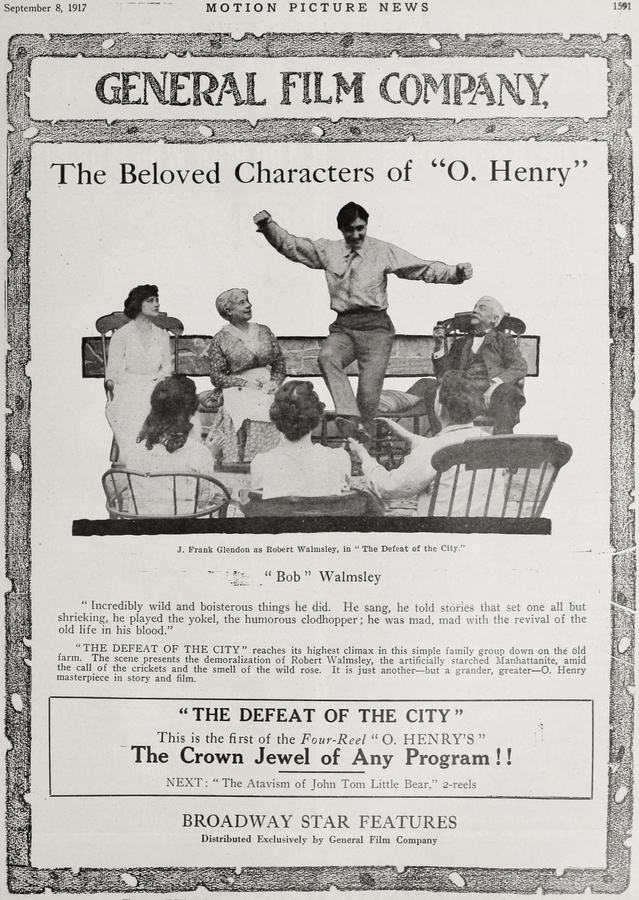
In the annals of early cinema, few narratives capture the intricate dance between aspiration and authenticity with the quiet power of The Defeat of the City. This cinematic gem, born from the narrative prowess of O. Henry and adapted for the screen by William B. Courtney, delves into a deeply human conflict: the struggle to reconcile a carefully constructed public persona with the irreducible core of one's true self. It's a story that resonates with timeless relevance, speaking to anyone who has ever felt the pressure to conform to societal expectations, especially those imposed by the glittering, yet often superficial, demands of metropolitan life.
Our protagonist, Robert Walmsley, portrayed with a compelling blend of ambition and underlying vulnerability by Frank Chapman, stands as a testament to the American dream, or at least its early 20th-century iteration. After six arduous years navigating the labyrinthine corridors of urban commerce and society, Walmsley has achieved what many would deem the ultimate trifecta of success: immense fortune, widespread public recognition, and, perhaps most symbolically, the hand of Alice Van Der Pool. Agnes Ayres, in her portrayal of Alice, embodies an almost ethereal quality, described with a poetic precision as "a daughter of the old burghers, high and cool and white and inaccessible." This description isn't merely physical; it speaks volumes about her social standing, her perceived emotional distance, and the almost aspirational quality she represents for Robert. She is not just a woman; she is a trophy, a final, gleaming embellishment on Robert's meticulously crafted edifice of urban triumph. He has, in his own estimation, reached the pinnacle of happiness and achievement, believing that the city has granted him all he could ever desire.
This initial setup immediately establishes a tension that will simmer beneath the surface. Robert's success, while outwardly impressive, feels almost too perfect, too complete. It hints at a carefully curated existence, one where the raw edges of his past might have been deliberately smoothed over or concealed. This narrative thread, exploring the psychological weight of maintaining a façade, finds echoes in other films of the era that grappled with identity and social climbing, though perhaps with less subtlety. One might consider the internal struggles of characters in films like The Social Secretary, where outward appearances and societal roles dictate much of the personal drama. However, The Defeat of the City distinguishes itself by making the internal collapse of the façade the central conflict, rather than an external revelation.
The catalyst for this profound introspection arrives not as a dramatic external event, but as a humble, unassuming letter. A missive from Robert's mother, filled with the simple, unvarnished details of farm life—the rhythms of nature, the mundane gossip of a small community—inadvertently shatters the illusion of his urban invincibility. It is a tangible link to a past Robert has, perhaps unconsciously, sought to bury under layers of metropolitan polish. Alice, observing this letter, expresses a genuine curiosity, prevailing upon Robert to take her for a visit to his ancestral farm. This request, seemingly innocuous, plunges Robert into an abyss of anxiety. He is not merely apprehensive; he is "dismayed at the prospect," consumed by the fear that Alice, with her refined sensibilities and "high and cool and white and inaccessible" demeanor, will be utterly repulsed by the perceived crudeness of his rural origins. He dreads the unmasking, the revelation of his "atavism," a primal fear that his true self, unadorned by city graces, will be found wanting.
This moment is crucial. It highlights the profound disconnect between Robert's perceived identity and his authentic roots. The city has not just provided him with wealth and status; it has, in his mind, reshaped him, offering a new skin, a new way of being. The farm represents not just a place, but a former self, one he believes is incompatible with his current life and, more importantly, with his sophisticated wife. His fear is not just of Alice's judgment, but of the judgment of the self he has worked so hard to become. The screenplay, under the guidance of Courtney and O. Henry's original narrative, expertly uses this simple plot device to initiate a deep psychological unraveling.
Upon their arrival at the farm, Robert's fears manifest in a desperate, almost pathetic display of overcompensation. He launches into a series of "ridiculous capers," an exaggerated performance of rurality, perhaps hoping to pre-empt Alice's imagined disgust with a self-deprecating caricature. He becomes a clown in his own home, a man so terrified of being seen as "crude" that he embraces a performative crudeness. This scene, though brief in description, is ripe with tragicomic potential and would have been a fascinating moment for Frank Chapman to explore the depths of his character's insecurity. Agnes Ayres, as Alice, plays her part with remarkable restraint, observing Robert's frantic antics with an unnerving "silent and immovable" composure. Her stillness is a powerful counterpoint to his agitated performance, creating a palpable tension that underscores Robert's growing discomfort.
The silence from Alice is more damning than any verbal condemnation. It forces Robert to confront the artificiality of his actions. He is not just performing for her; he is performing for himself, attempting to control a narrative that is rapidly slipping from his grasp. This dynamic echoes the anxieties of many characters in silent cinema, where gestures and expressions carried immense weight. One might draw parallels to the performative aspects of identity seen in films like The Actress' Redemption, where public perception and theatricality often blur the lines of true character. However, Walmsley's "capers" are not for an audience, but for a single, critical observer, making his humiliation intensely personal. Mrs. Fisher and J. Frank Glendon, likely playing supporting roles as members of the rural household, would have been silent witnesses to this spectacle, their presence amplifying Robert's self-consciousness.
The turning point arrives when Alice, without a word, ascends to her room. This simple act, devoid of accusation, is enough to shatter Robert's carefully constructed composure. He is suddenly, profoundly aware of his disgrace, feeling "unmasked by his own actions." The vivid imagery used in the plot summary—"all the polish, the poise, the form that the city has given him has fallen from him like an ill-fitting mantle at the first breath of a country breeze"—is a masterful stroke of prose, perfectly encapsulating the abrupt and total collapse of his urban identity. It's a moment of stark, painful self-recognition, where the artifice he has painstakingly built over six years crumbles into dust. He grows quiet, the frantic energy of his performance draining away, replaced by a profound sense of vulnerability and shame.
This psychological nakedness is the true "defeat of the city" – not a literal overthrow, but the defeat of the city's influence over his authentic self. It’s a liberation, albeit a painful one, from the tyranny of external validation. The film, through this internal drama, touches upon themes of class anxiety and the performativity of social status, issues that were particularly resonant in an era of rapid industrialization and shifting social landscapes. The tension between the "old burghers" represented by Alice and the self-made man from the farm is subtly explored, not as an insurmountable barrier, but as a psychological hurdle for Robert.
Resigned to his fate, Robert follows Alice upstairs, anticipating a harsh judgment, the "rigid lines that a Van Der Pool would draw." He expects condemnation, a confirmation of his fears that his true, rural self is unworthy of his sophisticated wife. This expectation speaks volumes about his internalized classism and the rigid social hierarchies he believes Alice represents. He finds her standing at the window, silhouetted against the encroaching twilight, a scene pregnant with symbolic weight. Twilight, a liminal space between day and night, perfectly mirrors the liminal state of their relationship and Robert's identity. He silently takes his place beside her, awaiting the pronouncement of his sentence.
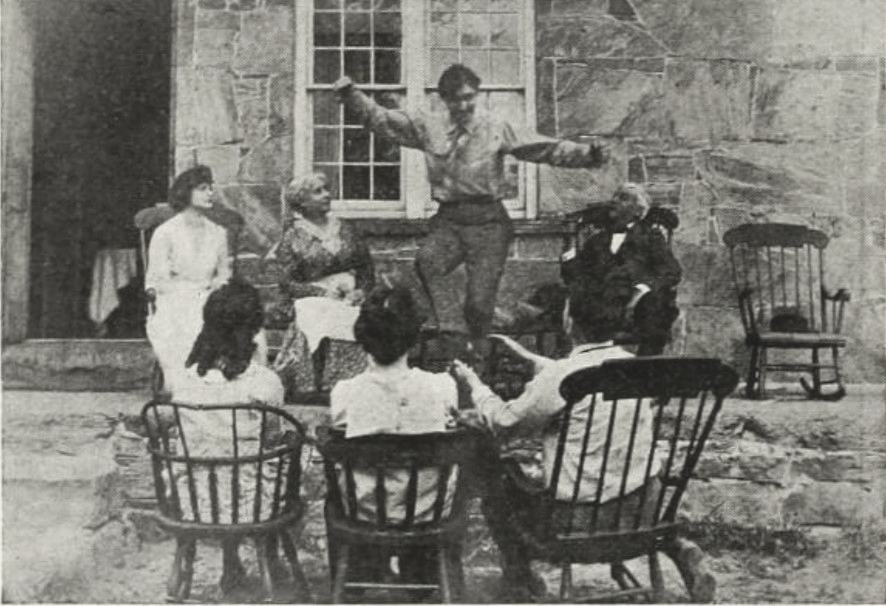
Then, Alice speaks. Her voice, initially described as "cool, calm," seems to confirm his worst fears: "Robert," she begins, "I thought I married a gentleman." The words hang in the air, a sword of Damocles poised above his head. Yet, in a breathtaking narrative twist, one that elevates the film beyond a simple morality play, Alice steps closer to him. "But," she continues, her voice softening, her words carrying the weight of revelation, "I find that I have married something better, a man. Bob, dear, kiss me, won't you?"
This denouement is nothing short of brilliant. It subverts not only Robert's expectations but also the audience's. Alice, far from being the cold, inaccessible arbiter of urban propriety, reveals a depth of character and a profound appreciation for authenticity. Her declaration is a powerful affirmation of Robert's true self, a rejection of the superficial "gentleman" persona in favor of the genuine "man" beneath. It is a moment of radical acceptance, where love transcends social pretense and embraces vulnerability. This transformation of Alice's character arc is pivotal; she moves from an object of Robert's ambition to an agent of his liberation. It’s a theme that resonates with films where characters find unexpected depth in partners, challenging societal norms, much like the quiet strength found in relationships depicted in Eternal Love, though in a very different context of social challenge.
The Defeat of the City, while ostensibly a simple tale of a man’s journey from city to country, is in fact a sophisticated exploration of identity, self-acceptance, and the true meaning of love. O. Henry's signature blend of irony and human insight is palpable throughout, brought to life by William B. Courtney's sensitive adaptation. The film argues that true success lies not in the accumulation of wealth or status, nor in the meticulous crafting of a public image, but in the courage to be oneself, flaws and all. The "defeat" of the city is not a literal collapse of urbanism, but the vanquishing of its power to dictate one's sense of self-worth.
The performances, particularly from Frank Chapman as the anxious Robert and Agnes Ayres as the surprisingly insightful Alice, would have been key to conveying these nuanced emotional shifts in the silent era. Chapman's physical comedy in the farm scene, followed by his quiet despair, and Ayres's initial inscrutability giving way to tender acceptance, would have been powerful cinematic moments. The film's strength lies in its refusal to offer a simplistic resolution. It doesn't demonize the city or romanticize the country; instead, it uses them as backdrops for a deeply personal psychological drama. The farm, initially a source of dread, becomes the crucible where Robert's true self is forged anew, and where Alice's true character is revealed.
In an age increasingly preoccupied with external markers of success, The Defeat of the City offers a refreshing and enduring message. It reminds us that the most profound victories are often internal, won not on the battlefields of commerce or social climbing, but in the quiet chambers of the heart. It's a humanist triumph, celebrating the messy, imperfect reality of human nature over the polished, artificial perfection demanded by society. This makes it a compelling watch even today, inviting audiences to reflect on their own "mantles" and the "country breezes" that might reveal their authentic selves. The film suggests that true partnership is built on recognizing and loving that authentic self, rather than the curated image.
The narrative, though concise, packs an emotional punch that many longer, more complex films struggle to achieve. It’s a testament to the power of well-crafted storytelling and character development, even within the confines of early filmmaking. The film's exploration of identity and self-acceptance could be seen as a precursor to later, more elaborate psychological dramas, demonstrating that silent cinema was far from simplistic in its thematic ambitions. It stands as a powerful reminder that sometimes, the greatest defeat we face is the one we impose upon ourselves by denying our true nature, and the greatest victory is found in the acceptance of it, both by ourselves and by those we love. While films like A Man's Prerogative might explore societal roles, The Defeat of the City drills down into the internal struggle of accepting one's origins. It’s a poignant and subtly revolutionary film that deserves renewed appreciation for its timeless insights into the human condition.
The brilliance of William B. Courtney's adaptation, working from O. Henry's original story, lies in its ability to translate a nuanced psychological journey into visual storytelling. Silent films often relied heavily on exaggerated gestures and intertitles, but the described plot suggests a delicate balance. The contrast between Robert's frantic "capers" and Alice's "silent and immovable" observation would have been a masterclass in visual irony. The choice of setting – the bustling, anonymous city versus the intimate, revealing farm – is a classic trope, yet here it feels fresh due to the unexpected resolution. The farm is not just a place; it's a mirror reflecting Robert's deepest insecurities and ultimately, his genuine self.
Agnes Ayres, a prominent actress of her time, brings Alice Van Der Pool to life with a quiet power. Her initial portrayal as "high and cool and white and inaccessible" sets up a formidable barrier that Robert must overcome, or rather, that she must choose to dismantle. Her transformation from an emblem of unattainable urban sophistication to a woman who values authentic masculinity ("something better, a man") is the emotional core of the film's resolution. It’s a testament to Ayres’s ability to convey complex emotional shifts through subtle expressions and body language, essential skills in the silent era. Frank Chapman’s Robert Walmsley navigates a wide emotional spectrum, from triumphant urbanite to fearful country boy, and finally to a man humbled yet accepted. This arc demands considerable range, and it’s intriguing to imagine how Chapman would have physically embodied Robert's descent into self-doubt and subsequent relief.
The film’s thematic concerns about identity and societal pressures are universal. While specific to its time, the underlying conflict of being true to oneself versus conforming to external expectations remains profoundly relevant. This is what gives The Defeat of the City its enduring power. It doesn't preach; it explores. It doesn't condemn; it understands. It’s a subtle critique of the very ideals of success that many pursue, suggesting that sometimes, the most valuable treasure is found not in what we gain, but in what we are willing to shed. The ending, with Alice's tender affirmation, is not just a happy resolution, but a profound statement about the nature of love and acceptance, echoing the sentiment that true connection sees beyond superficialities. This nuanced approach differentiates it from more overtly moralizing tales of the period, offering a more psychologically rich experience.
In conclusion, The Defeat of the City stands as a compelling example of early cinema’s capacity for deep psychological insight and subtle social commentary. Its exploration of identity, authenticity, and the transformative power of genuine human connection makes it a timeless piece. It reminds us that the true measure of a man, or a woman, is not found in the accolades of the city, but in the unvarnished truth of the self, embraced and loved for what it truly is.

IMDb 5.5
1917
Community
Log in to comment.