DbcultAccessing Vault...
Cult Review
Senior Film Conservator
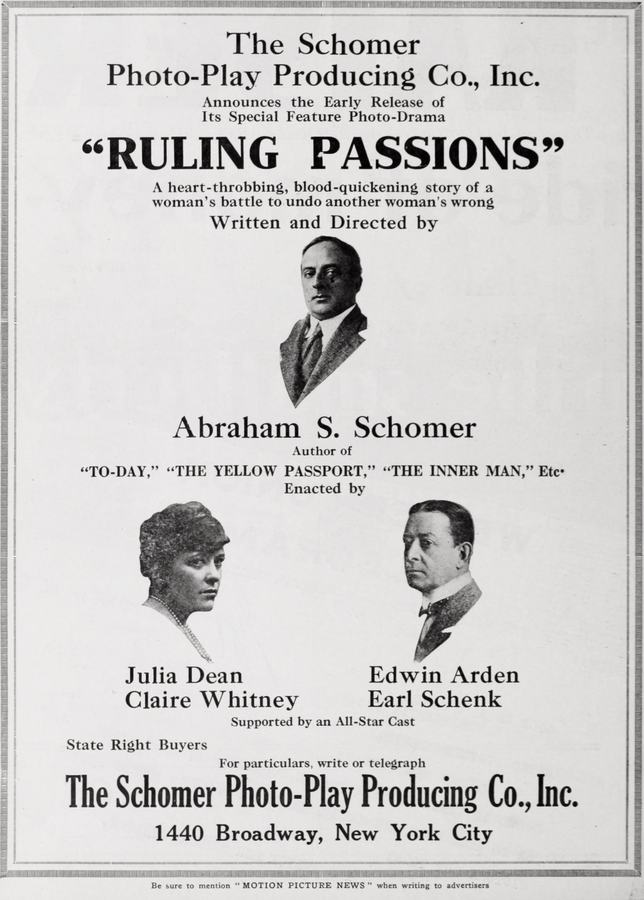
In the annals of silent cinema, few works capture the jagged intersection of personal trauma and social standing as poignantly as the 1918 production Ruling Passions. Directed with a keen eye for the burgeoning language of the screen, this film stands as a testament to the era's fascination with the 'nervous breakdown'—a then-novel clinical concept that served as a fertile ground for exploring the fragility of the male ego. Unlike the broad strokes often found in contemporaneous works like The Birth of Character, Ruling Passions opts for a claustrophobic, psychological intensity that feels startlingly modern.
Edwin Arden, in one of his most demanding roles, portrays John Walton not merely as a villain of circumstance, but as a man consumed by the very flames he ignited to warm his pride. His performance is a masterclass in physical storytelling; the way his shoulders hunch under the weight of imagined slights, and the erratic, almost predatory movement of his eyes, conveys a depth of malice that dialogue would only dilute. When we compare his descent into misanthropy with the thematic arcs found in The Woman and the Law, we see a shift from external legalistic conflict to an internal, spiritual warfare.
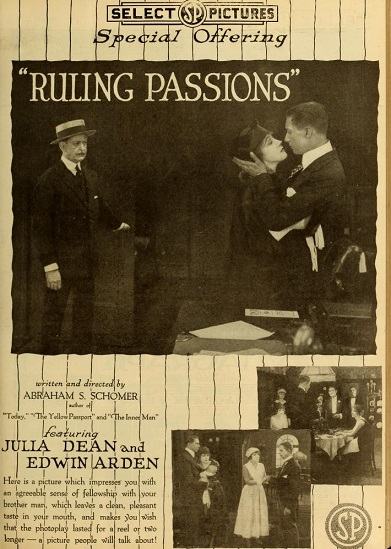
The film’s prologue establishes Walton as a titan of industry, yet his wealth is a hollow shell. The narrative structure, penned by the erudite Abraham S. Schomer, utilizes the butler, Lew (played with subtle grace by Doan Borrup), as a modern-day Greek chorus. Through Lew, we learn of the original sin: Walton’s act of kindness toward Alexander Vernon. This sequence is vital, as it subverts the trope of the 'born-evil' antagonist. Walton was once a man of immense capacity for love, a detail that makes his subsequent transformation into a vengeful hermit all the more tragic. It mirrors the psychological complexity often sought in films like Rablélek, where the soul is portrayed as a prisoner of its own past decisions.
Julia Dean’s Eveline Roland is far from the passive 'angel in the house' often seen in 1910s melodrama. She enters the Walton estate not just as a nurse, but as a psychological strategist. Her patience is not a sign of weakness but a tactical maneuver against Walton’s outbursts. In a world where films like To the Death focused on the visceral finality of conflict, Ruling Passions suggests that the most profound victories are won through empathy and the slow dismantling of an opponent's trauma.
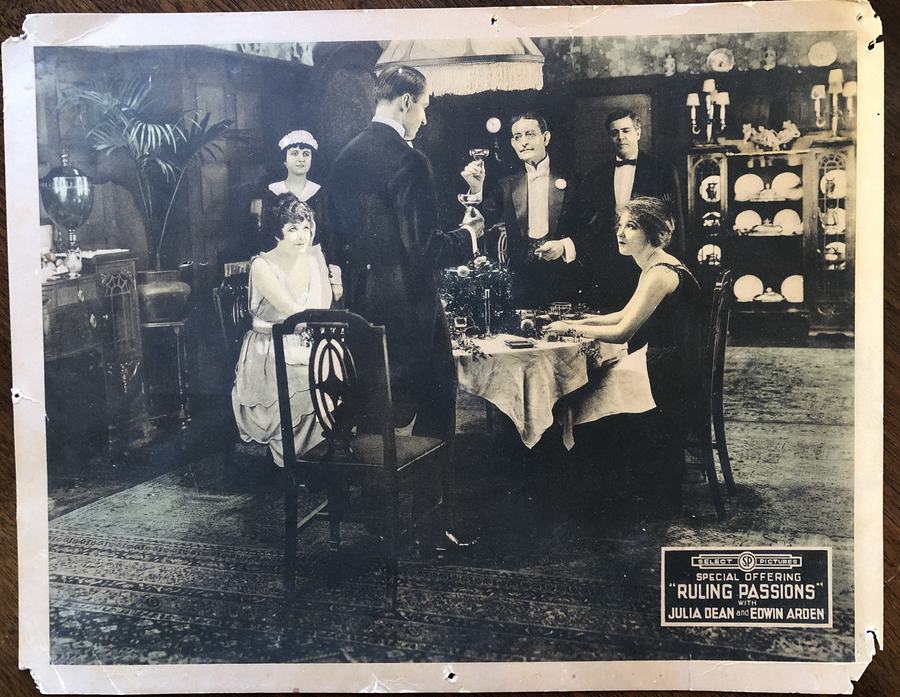
The chemistry—or rather, the friction—between Dean and Arden provides the film's kinetic energy. Eveline’s discovery of Walton’s past love for Louise Palmer (Julia Dean in a dual role, or Claire Whitney, depending on the archival cut’s emphasis) adds a layer of Hitchcockian obsession to the proceedings. The visual motif of the 'lost woman' haunting the halls of the mansion is executed with a sophistication that rivals the atmospheric depth of The Leap of Despair. The cinematography uses shadows to delineate Walton’s fractured psyche, often placing him in half-light to symbolize his state of moral purgatory.
Abraham S. Schomer’s screenplay is a marvel of economy and emotional resonance. He understands that in a silent medium, the 'ruling passion' must be visible. The transition from Walton’s desire for revenge to his ultimate forgiveness is not a sudden, unearned leap. It is a slow erosion of his defenses. This pacing is a significant departure from the episodic nature of One Wonderful Night or the grandiosity of The Photo-Drama of Creation. Schomer focuses on the intimate, the domestic, and the psychological, proving that the human heart is a landscape as vast as any biblical epic.
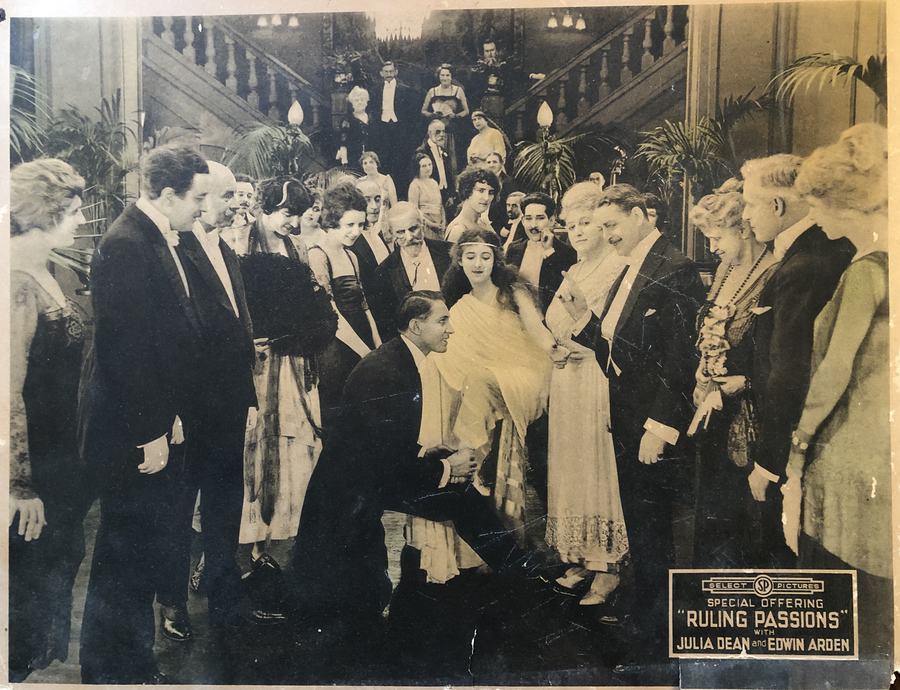
The film also touches upon the socio-economic anxieties of the time. Walton’s success as a millionaire is portrayed as both a blessing and a curse—a theme explored with less nuance in Filling His Own Shoes. In Ruling Passions, wealth is the amplifier of his misery. It allows him to isolate himself, to wallow in his resentment without the necessity of social interaction. This isolation is his prison, and Eveline is the only one capable of picking the lock. The contrast between the cold, opulent interiors of the Walton mansion and the brief, warm flashbacks of his time with Alexander Vernon highlights the sensory deprivation of a life lived for spite.
When evaluating Ruling Passions against the backdrop of its peers, one cannot ignore its stylistic maturity. While Moora Neya, or The Message of the Spear relied on exoticism and external action, Ruling Passions remains firmly rooted in the domestic sphere, finding its 'spear' in the sharp words and cold glances of its protagonist. It shares a certain DNA with The House of Temperley in its exploration of male honor, but it discards the pugilistic physical combat for a more grueling emotional endurance test.
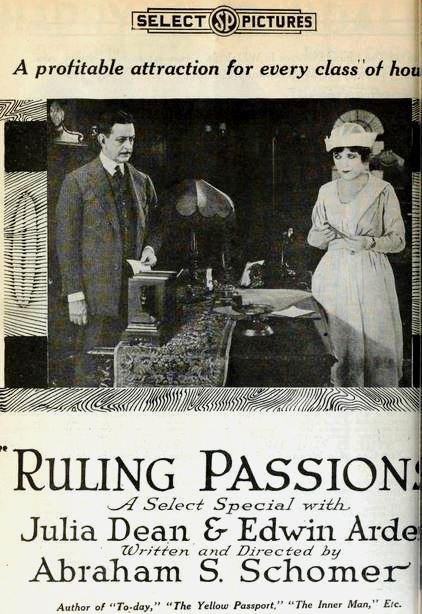
Furthermore, the film’s redemptive arc offers a fascinating counterpoint to When It Strikes Home. Both films deal with the repercussions of past actions, but Ruling Passions is more optimistic about the possibility of human change. It suggests that even the most calcified heart can be softened if the 'nurse'—be it a literal professional or a metaphorical force of love—is persistent enough. This optimism is perhaps what distinguishes it most from the grittier realism of On the Fighting Line, which was preoccupied with the literal wars of the era rather than the figurative ones within the soul.
The use of lighting in the third act is particularly noteworthy. As Walton begins to forgive, the lighting transitions from high-contrast, harsh shadows to a softer, more diffused glow. This visual metaphor for enlightenment is a hallmark of sophisticated silent direction. It reminds one of the pastoral beauty found in Paradise Garden, though here the 'garden' is the reclaimed sanity of the protagonist. The final union between Walton and Eveline is not merely a romantic trope; it is a symbolic merger of strength and sensitivity, power and empathy.
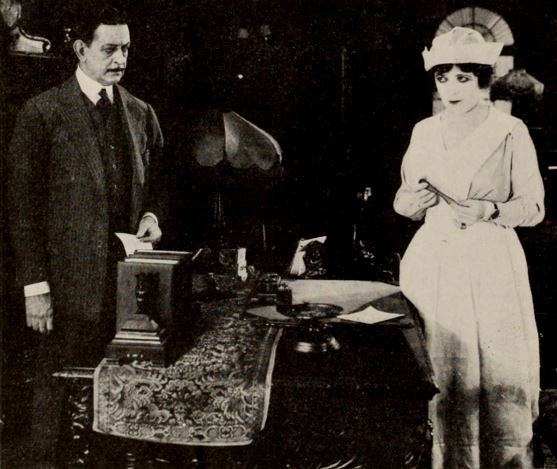
In the broader spectrum of 1918 cinema, which included the ruggedness of American Game Trails and the whimsicality of The Studio Girl, Ruling Passions occupies a unique space as a 'chamber drama' that feels as expansive as any outdoor adventure. It treats the domestic space as a battlefield where the stakes are nothing less than the protagonist's humanity. The film’s legacy is its insistence that we are not defined by the betrayals we suffer, but by our capacity to transcend them.
Ruling Passions is a film that demands to be revisited, not just as a historical curiosity, but as a vibrant piece of storytelling. It captures a moment in time when cinema was discovering its ability to look inward. Edwin Arden’s performance remains a haunting reminder of the power of the silent screen to convey the most complex of human emotions. The film’s resolution, while perhaps tidier than modern audiences are accustomed to, carries a profound emotional weight because it is earned through the grueling psychological work of its characters.
As we look back at the diverse output of 1918, from the moral lessons of The Birth of Character to the high-stakes drama of Ruling Passions, it becomes clear that the 'ruling passions' of the era were a desire for understanding, a quest for peace after the turmoil of the Great War, and an unwavering belief in the transformative power of the human spirit. This film is a shining example of that spirit, rendered in flickering light and shadow, reminding us that the greatest victory one can achieve is over oneself.
Final Verdict: A Cinematic Rebirth
Ruling Passions is an essential watch for any connoisseur of silent film, offering a rare blend of psychological depth and emotional catharsis that remains resonant over a century later.
IMDb —
1932
Community
Log in to comment.