DbcultAccessing Vault...
7/10
Senior Film Conservator
A definitive 7/10 rating for a film that redefined the boundaries of cult cinema. Find the King remains a cornerstone of transgressive art.
Is Find the King worth watching today? Short answer: yes, but only if you have a deep-seated appreciation for the frantic, unpolished rhythms of early silent comedy. This film is for the cinematic historian and the Edward Everett Horton completionist; it is emphatically not for those who require narrative cohesion or high-definition spectacle to remain engaged.
This film works because of Edward Everett Horton’s impeccable ability to look like a man perpetually on the verge of a nervous breakdown.
This film fails because its internal logic is so thin that the gags often feel like they are happening in a vacuum rather than driving a story forward.
You should watch it if you want to see the DNA of modern situational comedy being formed through sweat, falling over, and exaggerated facial expressions.
Yes, Find the King is worth watching for anyone interested in the evolution of the 'nervous' comedic archetype. While it lacks the polished grace of a Keaton or the emotional resonance of a Chaplin, it provides a fascinating look at the high-energy shorts that filled theaters in the early 20s. It is a loud film for a silent one. The performances are big, the stakes are absurdly low, and the runtime is mercifully short enough to prevent the thin premise from wearing out its welcome.
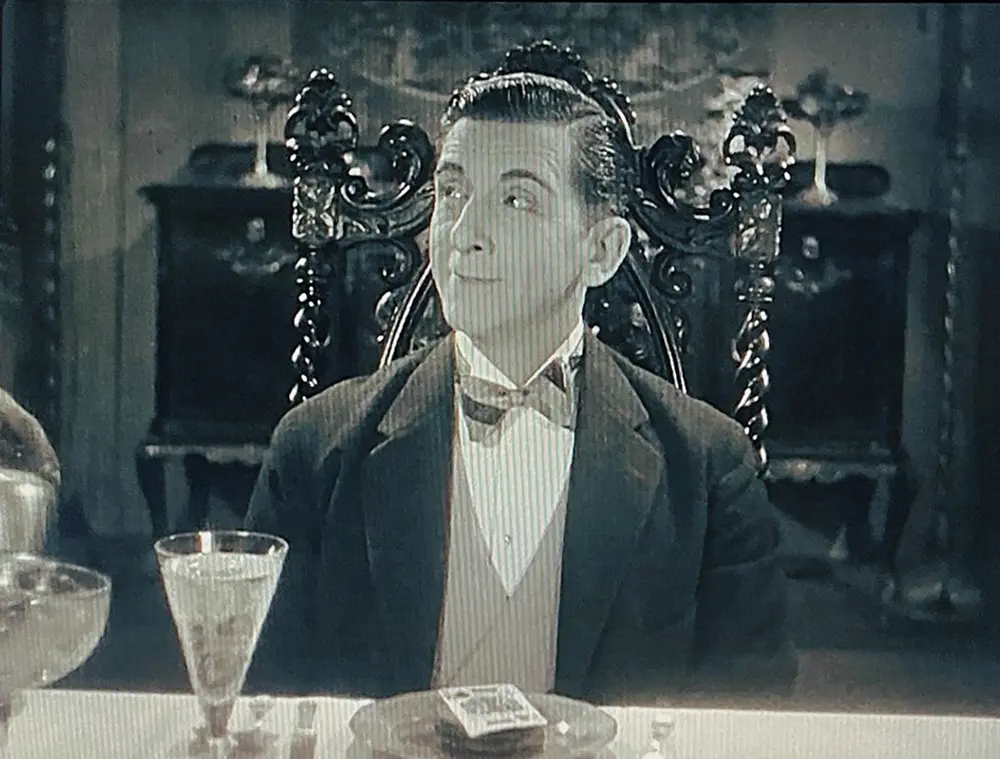
Edward Everett Horton is the gravitational center of this chaotic orbit. Long before he became the quintessential fussy sidekick in the 1930s, he was honing a very specific brand of comedic anxiety here. In one specific scene, Horton’s character realizes he is in the wrong room, and his reaction isn't a simple shock; it’s a tiered collapse of confidence. His eyes dart, his chin recedes, and his entire body seems to apologize for existing. It is a masterclass in physical nuance that outshines the broader slapstick of his costars.
Earl Mohan and Jack Raymond provide the necessary foils, but they often feel like they are operating in a different movie—one that is much louder and less clever. The contrast is jarring. Mohan’s performance is built on broad strokes, while Horton is painting with a fine-tipped brush. This creates a tonal friction that keeps the viewer off-balance. It is not always pleasant, but it is certainly never boring.
Nicholas T. Barrows directs with a heavy hand on the throttle. There is very little 'air' in Find the King. Every frame is packed with movement, often to its detriment. Compared to contemporary works like Chickens or even the more structured Mark It Paid, Find the King feels like a series of sketches that were stitched together in a fever dream. The writing team, including Thomas J. Crizer and James D. Davis, seems more interested in the mechanics of a gag than the motivation of a character.
Take, for example, the sequence involving the 'search' for the King. It lacks the geographic clarity that made the great silent comedies work. In a Buster Keaton film, you always know where the protagonist is in relation to the danger. Here, characters seem to teleport from one room to another as the plot demands. It’s messy. It’s clunky. But it has a raw, unrefined energy that is undeniably infectious.
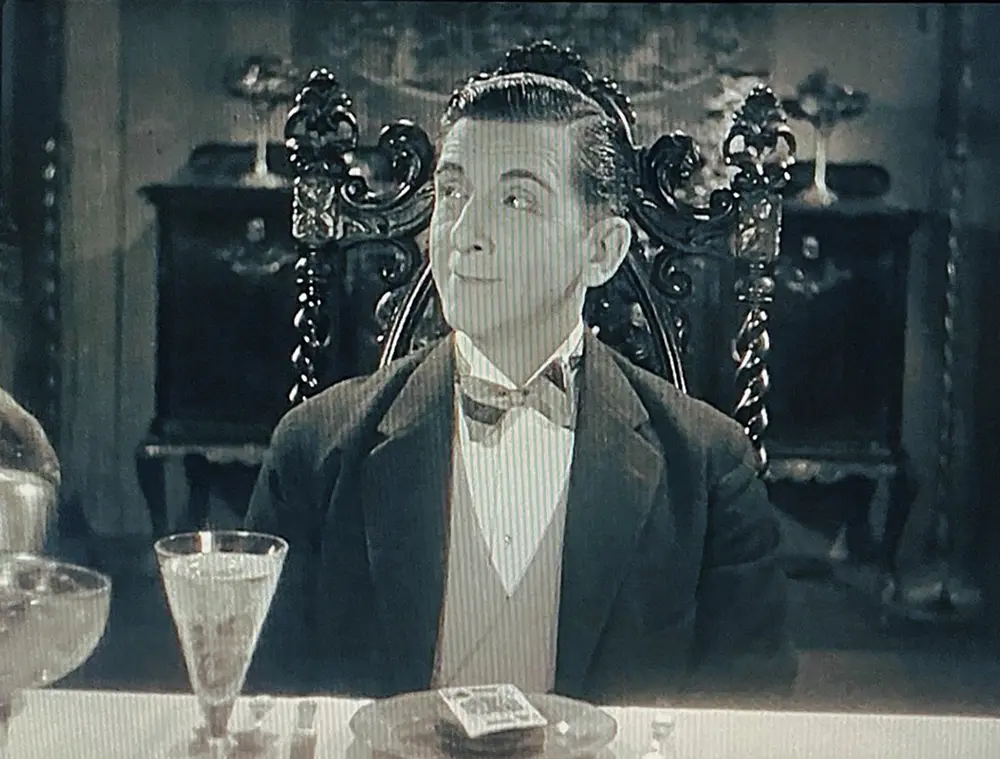
The cinematography is functional, yet it lacks the artistic ambition seen in dramas of the same period like Satan's Rhapsody. The lighting is flat, designed to ensure that every pratfall is visible rather than to create atmosphere. However, there is a certain charm in the set design. The interiors feel lived-in and slightly claustrophobic, which heightens the sense of frantic energy when the chasing begins. It’s a blue-collar production through and through.
One surprisingly effective shot involves a wide-angle view of a hallway where characters emerge from multiple doors simultaneously. It’s a classic farce setup, but the timing required to pull it off in a single take is impressive. It reminds the viewer that despite the 'low-brow' reputation of these shorts, the technical execution required a high level of discipline. It’s a choreographed dance of idiocy.
When looking at Find the King alongside other films from the era, such as Crossed Wires, you can see the divide between high-concept comedy and pure slapstick. Find the King falls firmly into the latter. It doesn't have the satirical bite of some of its contemporaries, nor the technical wizardry of The Lost City. It is a film that knows exactly what it is: a distraction. It doesn't aim for the stars; it aims for the funny bone.
There is a brutal simplicity to the humor here. A man falls. A man gets hit. A man is confused. It’s primal. In an age where we analyze comedy through layers of irony and meta-commentary, there is something refreshing about a film that just wants to see someone get stuck in a door. It’s honest work. But it’s flawed work.
Pros:
- Exceptional physical performance by Horton.
- High-energy pacing that prevents boredom.
- A fascinating historical look at 1920s comedic tropes.
- Short runtime makes it an easy watch.
Cons:
- Lack of narrative depth or character growth.
- Redundant gags that overstay their welcome.
- Flat cinematography that lacks visual flair.
- Tonal inconsistency between the lead and the ensemble.
While Find the King isn't discussed with the same reverence as Nathan der Weise or even adventure serials like Thundergate, its influence is felt in the DNA of the sitcom. The 'nervous man in a high-pressure situation' is a trope that has been recycled for a century, and Horton was one of its primary architects. To watch this film is to watch the birth of a specific kind of American humor—one based on the fragility of social status.
The writers Barrows, Crizer, and Davis were the unsung laborers of the studio system. They produced content at a breakneck pace, and while not everything they touched turned to gold, they understood the mechanics of a laugh. This film is a testament to that industrial approach to art. It is a product, yes, but it’s a product made with a clear understanding of its audience.
Find the King is a chaotic, messy, and occasionally brilliant piece of silent comedy. It is held together by the sheer willpower of Edward Everett Horton’s performance. Without him, it would be a forgettable relic of a bygone era. With him, it becomes a fascinating character study wrapped in the skin of a slapstick short. It isn't a masterpiece, but it is a vital piece of the comedic puzzle. Watch it for the history, stay for the double-takes, and forgive it for its lack of focus. It’s a loud, silly, and strangely endearing mess.
IMDb 5.7
1931
Community
Log in to comment.