Is Rustler by Proxy worth watching today? Short answer: yes, but with significant caveats that place it firmly in the category of historical curiosity rather than essential viewing. This film is undeniably for the dedicated silent film enthusiast, the Western genre historian, or anyone with a keen interest in the peculiar narrative choices of early 20th-century cinema.
It is emphatically not for the casual viewer seeking modern pacing, nuanced character development, or a consistently engaging plot. If you approach it with the right expectations, however, there are genuine, if modest, rewards to be found in its dusty frames.
This film works because of its surprisingly inventive (if flawed) central premise and the raw, unpolished energy of its lead performances.
This film fails because of its often simplistic character motivations, a pacing that oscillates between plodding and abrupt, and a narrative resolution that feels more convenient than earned.
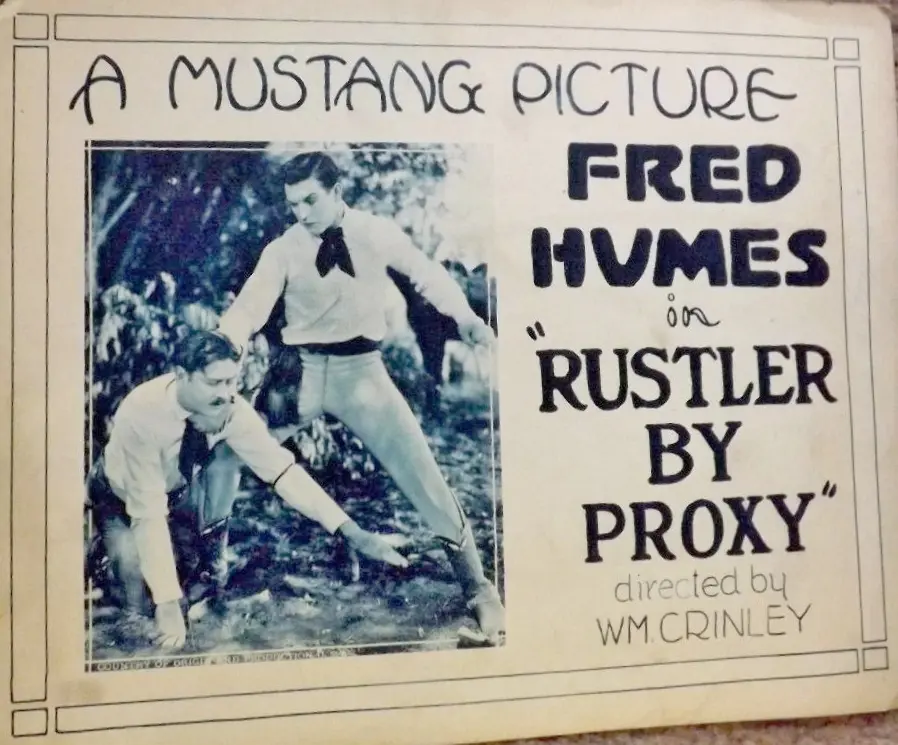
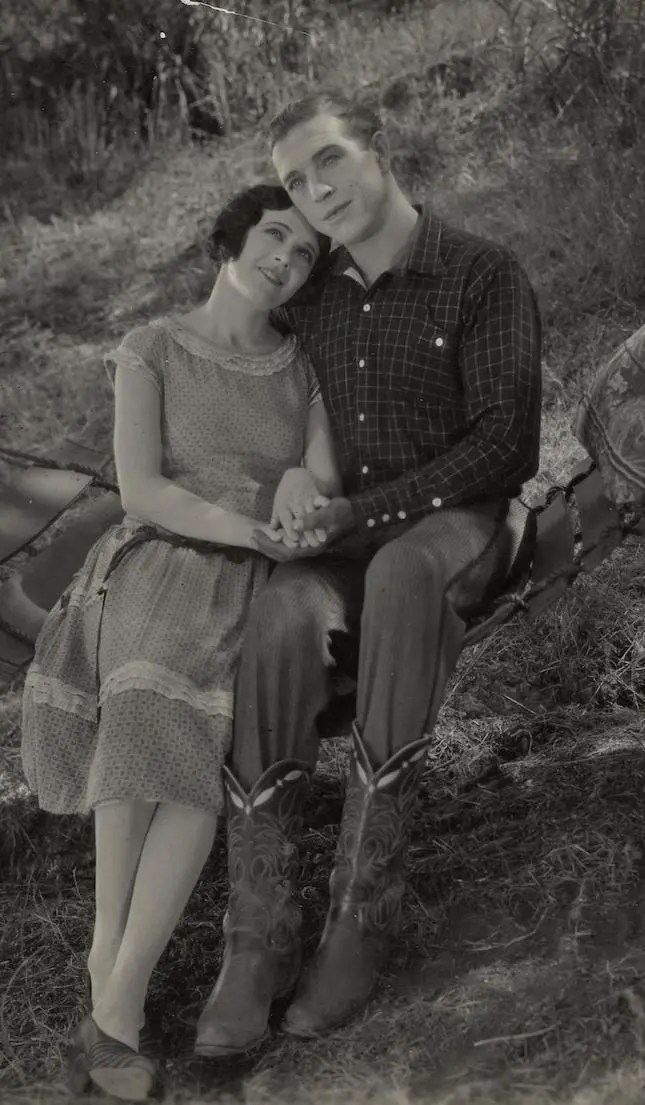
Scene from Rustler by Proxy
Cinematic perspective: Exploring the visual vocabulary of Rustler by Proxy (1926) through its definitive frames.
You should watch it if you appreciate the foundational elements of the Western genre, enjoy dissecting the storytelling conventions of the 1920s, or are simply curious about how a film tackles themes of rebellion and redemption with a limited budget and a clear moral compass.
A Peculiar Rebellion: The Plot of 'Rustler by Proxy'
At its heart, Rustler by Proxy is a fascinating exploration of youthful rebellion against paternalistic control. Betty Allen, played with spirited defiance by Velma Connor, isn't just a damsel in distress; she's an active agent, albeit a misguided one, in her own destiny. Her desire for 'finery' isn't mere vanity, but a yearning for a life beyond the dusty confines of her stepfather's ranch, a life she imagines her city sisters lead.
The central conceit—allowing one's own horses to be rustled to fund a wardrobe—is audaciously original for its time. It’s a morally grey area that elevates Betty beyond a one-dimensional heroine. She’s not just a victim; she’s a schemer, willing to bend the rules, even break them, to achieve her goals. This immediately sets the film apart from many contemporary Westerns where protagonists were often paragons of virtue.
This act of self-sabotage, however, has unintended consequences, primarily the framing of the upright Jack Preston (Edmund Cobb). This dramatic irony forms the backbone of the conflict, allowing for the classic Western tropes of pursuit, suspicion, and eventual vindication. The plot, while driven by Betty's initial selfish act, quickly expands to encompass broader themes of justice and honor.
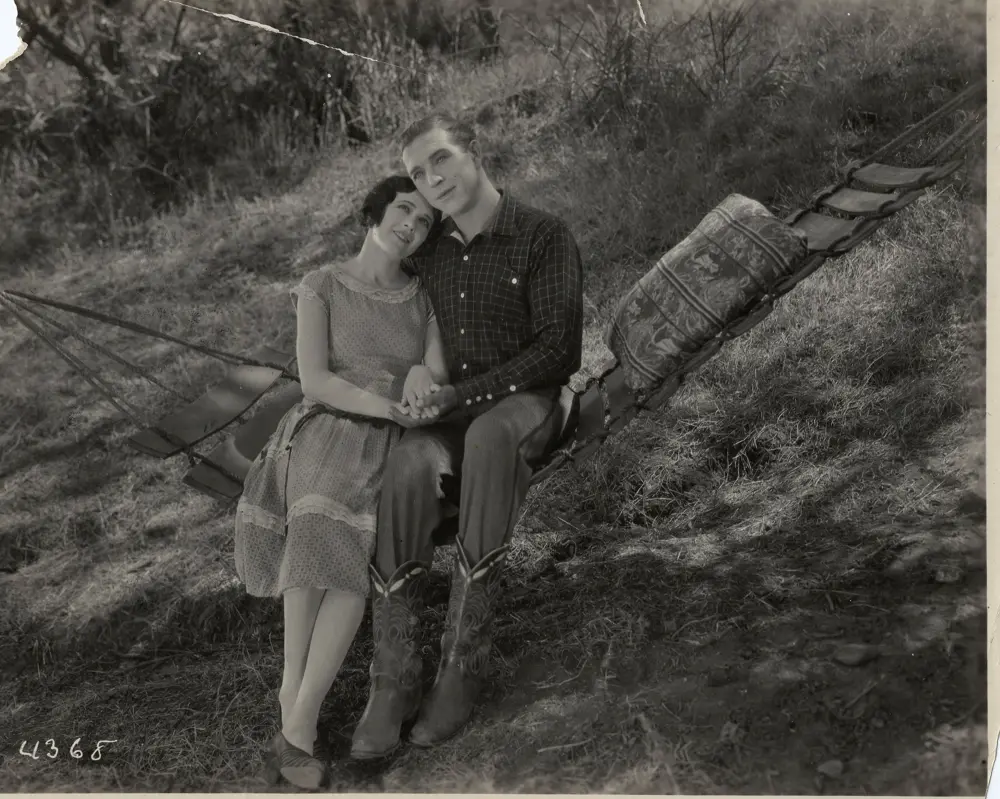
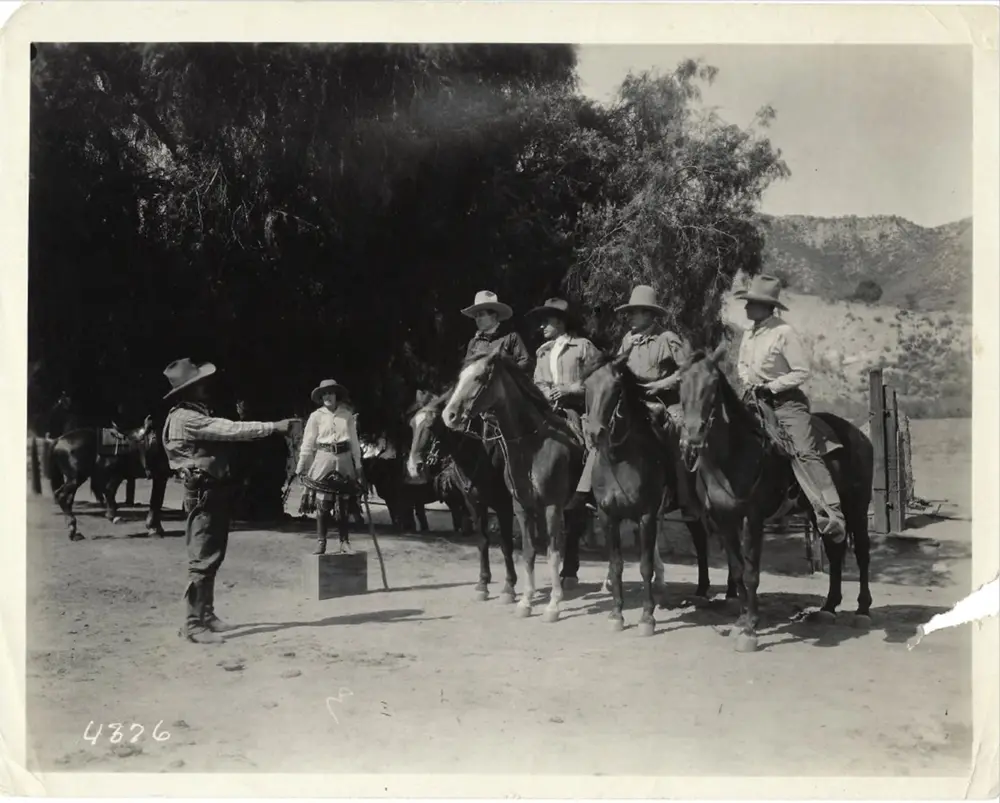
Scene from Rustler by Proxy
Cinematic perspective: Exploring the visual vocabulary of Rustler by Proxy (1926) through its definitive frames.
The villain, whose name is unfortunately lost to the sands of time in the synopsis but whose actions are clear, serves as a catalyst for both the rustling and the romantic complications. His attempts to 'make love' to Betty, likely a euphemism for coercion or unwanted advances in a silent film context, provide the necessary dramatic tension and justification for the hero's intervention. It's a plot that, despite its quirks, builds a surprisingly solid framework for a silent Western.
Performances: Frontier Fervor and Folly
The acting in Rustler by Proxy, typical of its era, often leans into broad gestures and exaggerated facial expressions, yet within these conventions, certain performances shine. Velma Connor as Betty Allen is undoubtedly the film's beating heart. She imbues Betty with a restless energy and a palpable sense of frustration that transcends the often simplistic intertitles. Her expressions vacillate between steely determination and genuine anguish, particularly as her scheme unravels.
Connor’s portrayal of Betty's internal conflict—the guilt over framing Jack versus her stubborn desire for independence—is surprisingly effective. There's a scene where she watches Jack Preston being unjustly accused, and her subtle hesitations, her downturned gaze, speak volumes without a single word. It’s a performance that gives Betty more dimension than the script initially suggests.
Edmund Cobb, a prolific Western actor, plays Jack Preston with the stoic heroism expected of the genre. Cobb's Preston is the embodiment of frontier integrity. He’s the strong, silent type, quick with a lasso and quicker with a punch when needed. While his character isn't given the same moral complexity as Betty, Cobb’s physical presence and earnest demeanor make him a convincing anchor of virtue in a morally murky narrative. His 'cowboy beatings' are delivered with a satisfying, if theatrical, force.
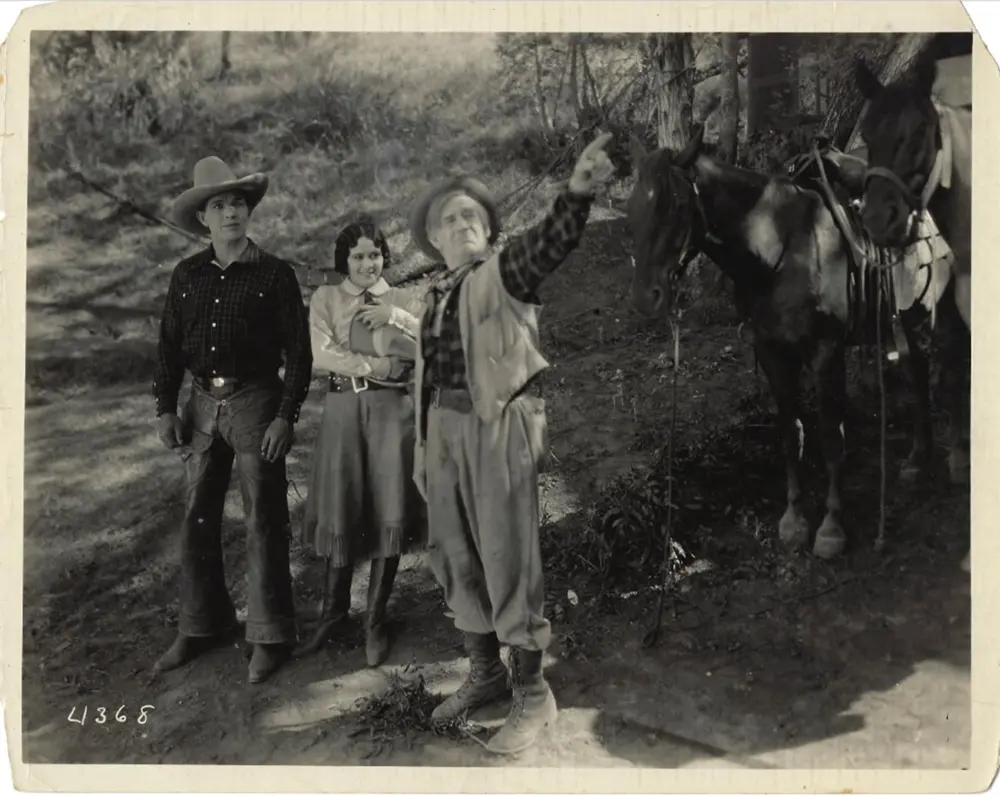
Scene from Rustler by Proxy
Cinematic perspective: Exploring the visual vocabulary of Rustler by Proxy (1926) through its definitive frames.
Fred Humes, in the role of the unnamed villain, is suitably menacing. His performance relies heavily on sneers and aggressive posturing, effectively conveying his character's nefarious intentions. While his character is a clear archetype, Humes commits to the role, ensuring that the audience has a clear antagonist to root against. The dynamic between Connor, Cobb, and Humes is what truly drives the film’s emotional (and physical) conflicts, even if some of the nuances are lost to time.
Direction and Cinematography: Capturing the Dust and Drama
William David Ball, credited as one of the writers, also likely had a hand in the overall vision, though specific directorial credits for such early films can be fluid. The direction of Rustler by Proxy is workmanlike, focusing on clear storytelling and effective action sequences rather than stylistic flourishes. The camera work is largely static, serving to capture the performances and the narrative beats without drawing undue attention to itself.
However, there are moments where the cinematography transcends its utilitarian function. The wide shots of the Western landscape, while not on the epic scale of later John Ford films, effectively establish the expansive, untamed environment in which these human dramas unfold. These vistas remind the audience of the vastness and isolation of the frontier, a silent character in itself.
The action sequences, particularly the horse chases and the aforementioned cowboy beatings, are competently staged. They possess a raw energy that is characteristic of early Westerns. There’s a palpable sense of speed during the rustling scenes, achieved through dynamic editing and the sheer thrill of seeing horses thunder across the screen. While not groundbreaking, the visual storytelling is clear and propulsive enough to keep the audience engaged.
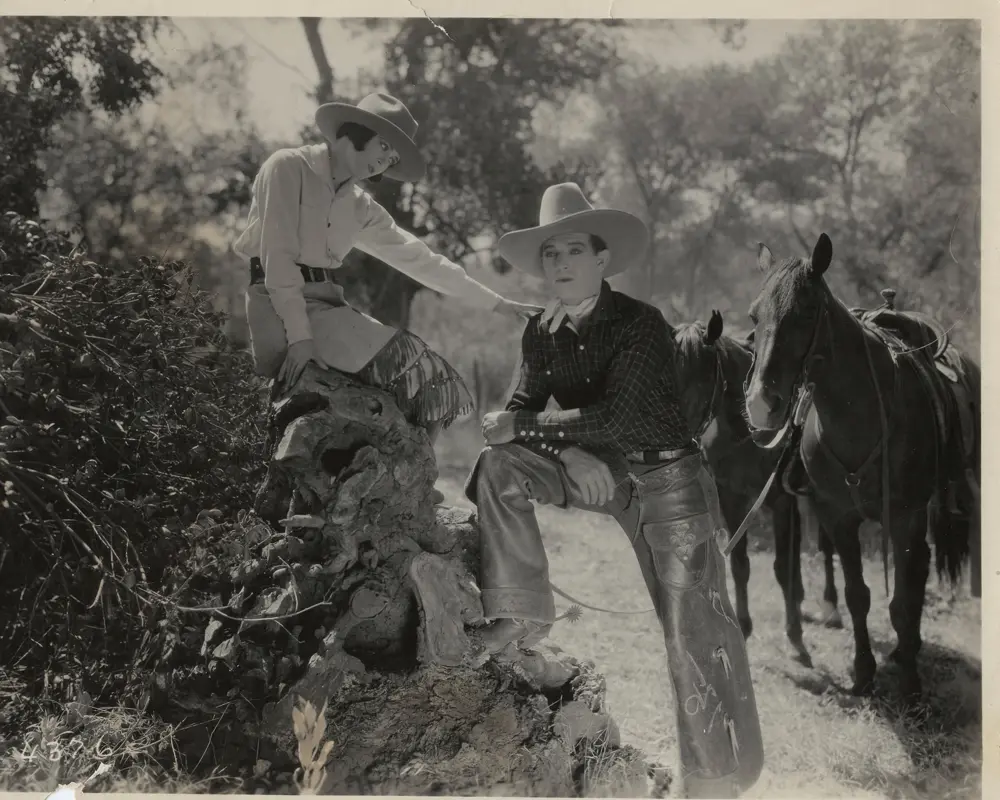
Scene from Rustler by Proxy
Cinematic perspective: Exploring the visual vocabulary of Rustler by Proxy (1926) through its definitive frames.
One particularly effective directorial choice is the way guilt is visually implied through Betty’s reactions. When Jack Preston is confronted, the camera often cuts to Betty, allowing her internal turmoil to be expressed through her body language and facial contortions. This reliance on visual cues, rather than excessive intertitles, demonstrates a nascent understanding of cinematic storytelling that moves beyond mere stage play on film. It's a small detail, but it speaks to a deliberate effort to use the medium effectively, even with its limitations.
Pacing and Tone: Uneven Trails
The pacing of Rustler by Proxy is, in true silent film fashion, a mixed bag. Early sequences establishing Betty's discontent and her stepfather's stubbornness can feel a little drawn out, relying on repetitive gestures and intertitles to convey simple ideas. This is a common hurdle for modern viewers approaching silent cinema, where the rhythm of storytelling was vastly different.
However, once the rustling plot is set in motion and Jack Preston becomes entangled, the pace quickens considerably. The film shifts gears into a more traditional Western adventure, complete with chases, confrontations, and dramatic reveals. The action sequences, though brief, are punchy and provide a welcome jolt of energy, preventing the film from becoming overly languid.
The tone oscillates between melodrama and straightforward adventure. Betty's personal struggle and the injustice meted out to Jack fall squarely into melodramatic territory, designed to elicit strong emotional responses. Yet, the overall feel is grounded in the rugged realism often associated with early Westerns, where the stakes felt tangible and the consequences immediate. This blend, while not always seamless, gives the film a unique flavor.
Scene from Rustler by Proxy
Cinematic perspective: Exploring the visual vocabulary of Rustler by Proxy (1926) through its definitive frames.
The final act, with the stepfather's convenient change of heart and the inevitable romantic conclusion, feels somewhat rushed, almost as if the filmmakers realized they needed to tie up all loose ends quickly. This abrupt resolution, though standard for the period, undermines some of the earlier, more complex character motivations. It works. But it’s flawed. The West was never simple, and neither is this film's narrative journey.
Themes: Autonomy, Guilt, and Justice
Rustler by Proxy, beneath its genre conventions, grapples with surprisingly potent themes. Betty's desire for 'finery' is less about superficiality and more about autonomy. Her stepfather's refusal to allow her to spend her own money as she pleases is a direct assault on her independence. Her desperate scheme, however ill-conceived, is an act of rebellion, a misguided attempt to seize control of her own life and finances.
The theme of guilt is central to Betty's arc. Her initial resolve to profit from the rustling slowly erodes as she witnesses the fallout, particularly the unjust accusation against Jack Preston. This internal struggle is one of the film's strongest elements, hinting at a moral compass that, while temporarily lost, is ultimately capable of steering her back towards righteousness. It’s a compelling, if not fully explored, journey of self-discovery.
Justice, or the lack thereof, drives much of the narrative. Jack Preston's unearned suffering highlights the fragility of justice on the frontier and the ease with which reputation can be tarnished. The eventual resolution, where the true villain is punished and Jack is exonerated, reaffirms a traditional sense of moral order. However, the stepfather's sudden enlightenment feels less like earned character development and more like narrative expediency, designed to deliver a happy ending.
One could argue that the film's most unconventional observation is that the true villain isn't just the rustler, but the restrictive societal norms that push Betty to such desperate measures. Her desire for 'city finery' is a symbol of a larger yearning for freedom and self-expression, a struggle that resonates even today. The film, perhaps inadvertently, critiques the limitations placed upon women in this era, even if its ultimate resolution sees Betty find liberation through traditional means: marriage and paternal approval.
Is this film worth watching?
Yes, for specific audiences. It is a valuable piece of silent film history. It showcases early Western storytelling. It offers a glimpse into 1920s filmmaking techniques. It’s particularly interesting for those studying gender roles in early cinema. However, it requires patience. Modern viewers may find its pacing slow. The acting style is dated. The plot is simple, despite its unique premise. It is not for everyone.
Key Takeaways
Best for: Silent film historians, Western genre enthusiasts, and those interested in early cinematic portrayals of female agency.
Not for: Viewers seeking fast-paced action, complex psychological drama, or modern production values.
Standout element: Betty Allen's morally ambiguous, self-orchestrated rustling scheme, which is remarkably bold for a protagonist of the era.
Biggest flaw: A somewhat rushed and overly convenient resolution to the stepfather's character arc, undermining earlier dramatic tension.
Pros and Cons
Pros:
Original Premise: Betty's unique plan to fund her desires is a refreshing twist.
Velma Connor's Performance: She brings surprising depth and spirit to Betty Allen.
Historical Value: A fascinating artifact of early Western cinema and societal norms.
Competent Action: The chase and fight scenes, though brief, are engaging.
Themes of Autonomy: Explores a woman's struggle for independence in a restrictive environment.
Cons:
Uneven Pacing: Some sections drag, while others feel too abrupt.
Simplistic Character Arcs: Particularly the stepfather's sudden change of heart.
Melodramatic Elements: Can feel over-the-top by modern standards.
Dated Conventions: Requires an appreciation for silent film acting and storytelling.
Limited Nuance: The villain is largely one-dimensional, serving a purely functional role.
Verdict
Rustler by Proxy is not a lost classic, nor is it a film that will resonate with a broad contemporary audience without significant context. What it is, however, is a surprisingly engaging and historically significant silent Western that dares to give its heroine a morally complex, if ultimately conventional, journey. It’s a film that asks us to look beyond the surface-level simplicity of its plot and appreciate the nascent cinematic language at play.
For those willing to invest in its unique rhythm and appreciate its place in film history, there’s a genuine charm to be found. Velma Connor’s spirited performance alone makes it worth a look for silent film aficionados. While it may not stand alongside the towering achievements of its era, its peculiar premise and a glimpse into early attempts at female agency make Rustler by Proxy a worthwhile, if niche, viewing experience. It's a testament to the enduring appeal of the Western genre, even in its most unconventional forms, and a reminder that even early cinema could tackle themes with a surprising amount of grit and personality.