DbcultAccessing Vault...
Cult Review
Senior Film Conservator
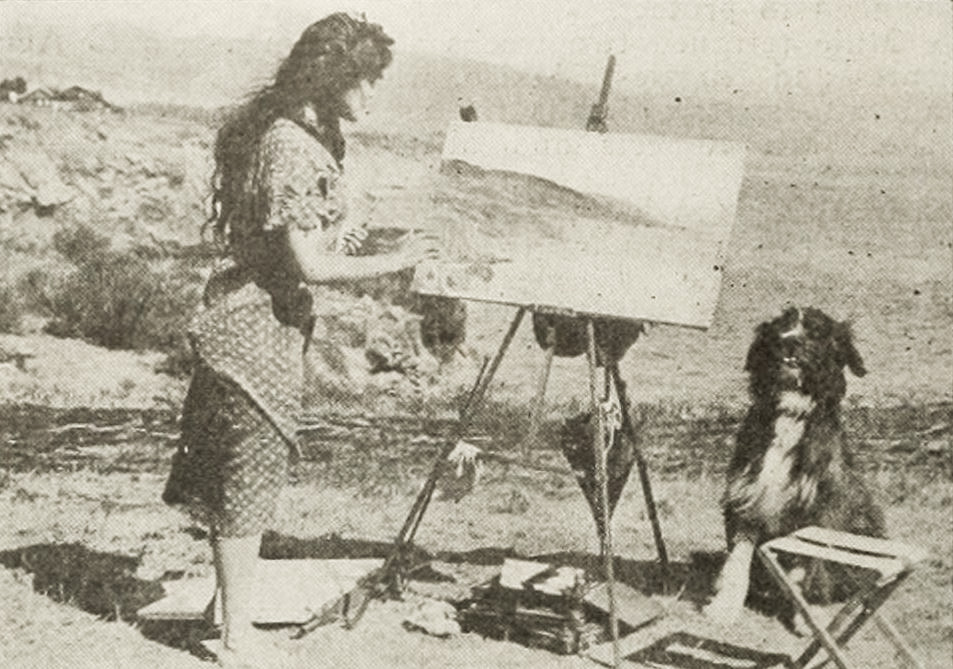
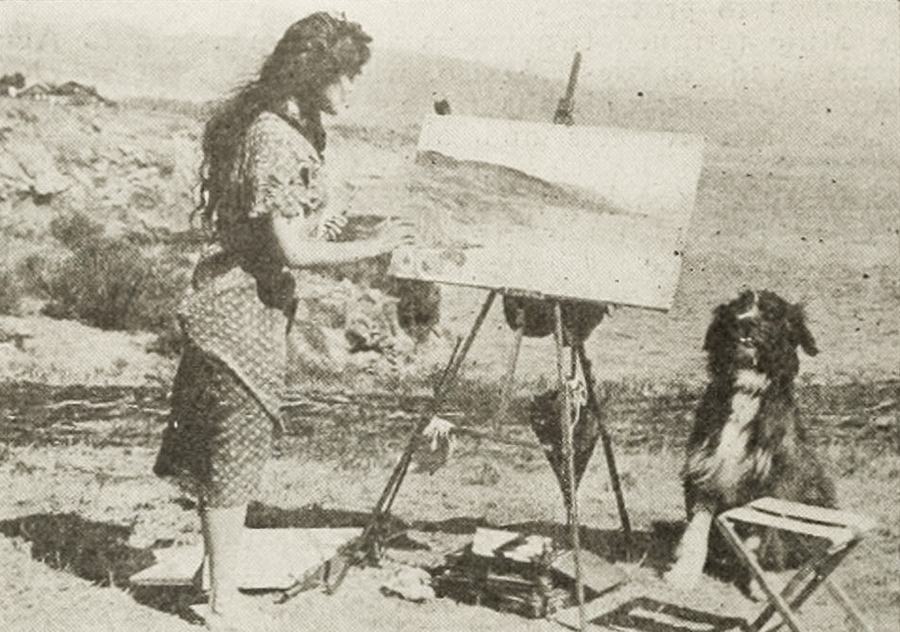
Laguna, California, is not merely a geographic coordinate in The Pursuit of the Phantom; it is a living, breathing entity that shapes the film’s emotional architecture. The cinematographer frames the cliffs with a reverence that rivals the grand vistas of Glacier National Park, allowing the audience to feel the salt‑laden wind as if it were a tactile brushstroke. The black‑and‑white palette, though limited, is suffused with a chiaroscuro that renders the sea both a source of inspiration and an ominous mirror reflecting the characters’ inner turmoil.
Richard Alden, portrayed by Courtenay Foote, embodies the archetype of the solitary creator whose quest for beauty is inseparable from his yearning for connection. His opening scenes—sitting on a weather‑worn rock, palette in hand—are shot in lingering close‑ups that emphasize the intensity of his gaze. Alden’s silence is profound; he communicates through the cadence of his brush, each sweep of pigment echoing the rhythm of his heartbeat. The film subtly suggests that his artistic obsession is both a sanctuary and a prison, a duality that will later inform his response to loss.
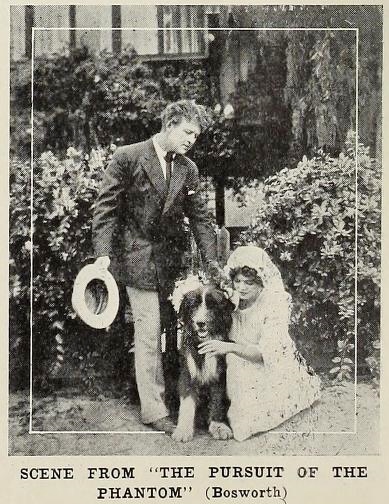
The young lady from the city, whose name remains deliberately ambiguous, arrives like a gust of modernity, her attire a stark contrast to the breezy, linen garments of the locals. Myrtle Stedman imbues the role with a fragile optimism that feels both contemporary and timeless. Their romance unfolds through a series of intercut scenes: a shared sketchbook, a fleeting kiss beneath a lighthouse, and a quiet moment where Alden reads poetry aloud while the tide rolls in. The sprite—Rhea Haines—observes from the dunes, her presence hinted at through fleeting silhouettes and the occasional glimmer of sea‑foam in the background.
Rhea Haines’s character operates on the threshold between the natural and the supernatural. She is described in the intertitles as “the little elfin sprite, a waif of the beach,” a description that conjures folklore while grounding her in the film’s visual language. The sprite’s interventions—whispering wind, a sudden gust that lifts a lover’s hat—serve as narrative devices that elevate the romance to mythic proportions. In doing so, the film aligns itself with the romantic tradition of works like Les Misérables, where personal love is interwoven with larger, almost metaphysical forces.
The entrance of the young millionaire—played by Emmett J. Flynn—introduces a stark thematic counterpoint: the allure of material prosperity versus the purity of artistic devotion. His polished carriage, the gleam of his cufflinks, and the confident tilt of his hat all signal a world of power that threatens to eclipse the humble beauty of Laguna’s shoreline. The millionaire’s proposition to the city‑born woman is delivered with a suave cadence, promising a life unshackled from the constraints of poverty and uncertainty.
She accepts, and the narrative pivots dramatically. The departure is filmed from a high angle, the yacht’s sails silhouetted against a bruised sunset, a visual metaphor for the fading of Alden’s dream. The sprite watches, her expression shifting from mischievous delight to a solemn, almost prophetic sorrow.
Following the abandonment, Alden’s world collapses into a monochrome of grief. The camera lingers on his empty studio, the paintbrushes abandoned on a table, the canvases left unfinished—each a testament to a creative spirit stalled by heartache. In a sequence reminiscent of the melancholy of The Life and Passion of Christ, Alden wanders the cliffs at night, the moon casting a cold, silver light that seems to mock his yearning.
It is at this nadir that the sprite, now matured into a woman, re‑enters the story. Her transformation is signaled by a subtle change in costume—a flowing dress of sea‑green that mirrors the ocean’s depth. She offers Alden a cryptic counsel, urging him to look beyond the immediate loss and to consider the larger tapestry of existence. Her words, though delivered in silent intertitles, resonate with a philosophical weight that recalls the moral inquiries of The Black Chancellor.
The second act of the film fast‑forwards several years, revealing the offspring of the two rival men: the millionaire’s son, a polished gentleman accustomed to privilege, and Alden’s daughter, a spirited young artist inheriting her father’s sensitivity. Their unexpected meeting—at an art exhibition where Alden’s late works are displayed—acts as a narrative fulcrum. The daughter, portrayed by Helen Wolcott, recognizes a familiar longing in the son’s eyes, a yearning that mirrors her father’s original quest.
Through a series of dialogues (again, conveyed through intertitles), the younger generation confronts the unresolved tensions of their parents. The son confesses his own dissatisfaction with wealth, while the daughter speaks of the enduring power of love to transcend material constraints. Their mutual acknowledgment paves the way for a reconciliation that not only heals the wounds of the past but also redefines the notion of “happiness” that the film has been interrogating since its opening.
From a formalist perspective, The Pursuit of the Phantom showcases several pioneering techniques for its era. The use of cross‑cutting between the cliffs and the bustling city underscores the dichotomy between nature and civilization. The film also employs an early form of deep focus, allowing foreground actors to remain sharply rendered while the turbulent sea recedes in soft focus—a visual cue that the characters’ emotional states are anchored in the present while the future remains hazy.
Lighting plays a crucial role: the climactic reunion scene is bathed in a warm, amber glow that subtly references the dark orange #C2410C, creating an atmosphere of hopeful resolution. In contrast, the moments of isolation are rendered in cooler, sea‑blue #0E7490 tones, evoking the melancholy of the ocean’s depths.
When placed alongside contemporaneous works such as Les amours de la reine Élisabeth and The Corbett‑Fitzsimmons Fight, this film stands out for its lyrical ambition rather than its spectacle. While the latter two rely on grand historical narratives or sporting drama, The Pursuit of the Phantom delves into the interiority of its protagonists, offering a meditation on art, love, and the inexorable pull of destiny.
Courtenay Foote’s portrayal of Alden is a masterclass in restrained expressiveness. He conveys anguish without the need for exaggerated gestures, a testament to the silent era’s demand for nuanced physicality. Myrtle Stedman’s brief but impactful presence infuses the film with a fleeting, bittersweet charm, while Emmett J. Flynn’s embodiment of the millionaire exudes a charismatic menace that feels both timeless and eerily contemporary.
Rhea Haines, as the sprite‑turned‑woman, offers perhaps the most intriguing performance. Her ability to shift from mischievous imp to solemn guide is achieved through subtle changes in posture and gaze, allowing the audience to sense an otherworldly wisdom without resorting to melodramatic exposition.
At its core, the film interrogates the concept of the “phantom”—a spectral ideal that each character chases, whether it be artistic perfection, romantic fulfillment, or financial security. Alden’s pursuit of the perfect seascape mirrors his pursuit of love; the millionaire’s chase after the woman represents a desire to possess the intangible; the sprite’s guidance suggests that the true phantom may be an internal compass pointing toward authenticity.
The narrative suggests that the phantom is not a destination but a process, a perpetual motion that propels individuals forward. This aligns with the philosophical underpinnings found in early twentieth‑century literature, where the journey often outweighs the arrival.
Though The Pursuit of the Phantom has not achieved the same renown as D.W. Griffith’s epics, its influence can be traced in later works that explore the intersection of art and romance, such as The Keys to Happiness. The film’s subtle use of symbolism—particularly the recurring motif of the sea—prefigures the visual language employed by later silent auteurs like F.W. Murnau.
Moreover, the film’s treatment of generational reconciliation anticipates narrative structures seen in mid‑century melodramas, where the sins of the parents are examined through the eyes of their children. In this sense, the film serves as a bridge between the early experimental period of cinema and the more narrative‑driven productions of the 1920s.
In an era when many silent films have been lost to time, The Pursuit of the Phantom endures as a lyrical testament to the human condition. Its elegant interplay of visual poetry, thematic depth, and nuanced performances offers a rich tapestry that rewards repeated viewings. For scholars of early cinema, enthusiasts of romantic drama, and anyone fascinated by the way art reflects life, this film remains an essential, albeit under‑celebrated, piece of the cinematic mosaic.
“The sea, the cliffs, the love that ebbs and flows—each is a phantom we chase, yet each also reveals the shore upon which we stand.”
For further reading on related silent era masterpieces, explore the following titles: From the Manger to the Cross, Les Misérables, and The Life and Death of King Richard III.

IMDb —
1917
Community
Log in to comment.