DbcultAccessing Vault...
8.6/10
Senior Film Conservator
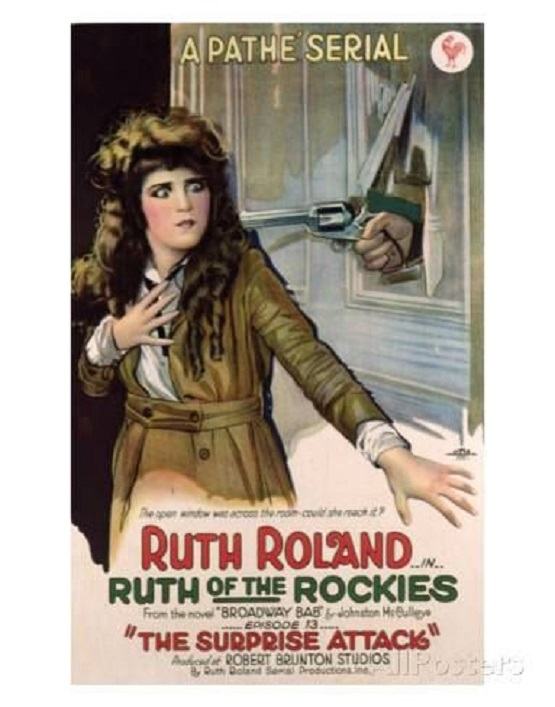
A definitive 8.6/10 rating for a film that redefined the boundaries of cult cinema. Ruth of the Rockies remains a cornerstone of transgressive art.
The first image that singes itself into memory is a woman’s boot heel grinding against oxidized rail steel while locomotive steam billows upward like the ghost of every promise America forgot to keep. Director Edward Laemmle lets the camera linger until the metal glows amber, a tell-tale heart beneath Ruth Roland’s resolute stride. In that hinge-moment, Ruth of the Rockies declares its true currency: not the contraband diamonds but the chasm between owning and belonging.
Silent-era Westerns usually trade in moral legibility—white hats, black hearts—but screenwriters Johnston McCulley and Frances Guihan scribble their ethics on canyon walls where shadows shift every hour. Our protagonist has no pedigree, no kin, only a hunger so ferocious it feels ancestral. When she pries open the thief’s trunk she isn’t looting; she is repossessing centuries of plundered femininity, stuffing gemstones into hemline folds the way soldiers pack cartridges. Each glinting facet becomes a ballot cast against patriarchal ledger books.
Herbert Heyes’ antagonist—credited only as “The Proprietor”—oozes the languid arrogance of a man who believes scenery exists for his silhouette. Watch how he removes his gloves: one finger at a time, as though peeling a fruit he intends to savor. Yet the performance never topples into mustache-twirling; instead he exudes the bureaucratic chill of a tax assessor, valuing lives the way one tabulates overdue interest. That banality makes the hunt unnerving—we are not pursued by monstrosity but by middle-management.
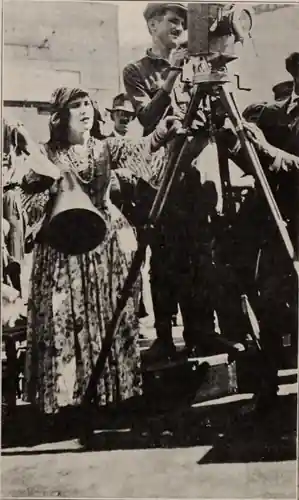
Ruth Roland answers with a body that speaks fluent frontier: shoulders squared like ridgepoles, gait loose enough to absorb recoil. In close-ups her pupils dilate until iris vanishes—two eclipses communicating that she has already mapped contingencies the way scouts chart waterholes. The performance is silent yet polyglot; watch her left thumb worry the inside of her index finger—every pulse beats “not yet, not yet.”
Freedom, the film insists, is not a jurisdiction you reach but a lexicon you invent syllable by perilous syllable.
Visually, the picture weaponizes chiaroscuro the way noir would two decades later. George Robinson’s cinematographer eye carves night scenes into tungsten shards: a campfire becomes a citrine furnace, faces half-buried in obsidian. Compare this to The Silent Mystery where darkness merely cloaks; here it testifies, exposing cheekbone, rifle barrel, the moral ligaments beneath.
McCulley’s plotting spirals rather than advances—each new mesa reframes the moral arithmetic. In one bravura sequence Ruth trades a single diamond for a Colt .45, then barters the pistol for a Stetson, the hat for passage, the passage for information—an ontological shell game suggesting identity itself circulates like scrip. The narrative refuses equilibrium; every gain seeds its own erasure, a Möbius strip Western audiences weaned on linear vengeance may find vertiginous.
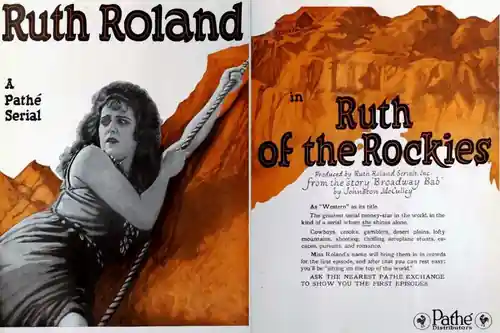
The supporting ensemble operates like a pocket cosmos. Edward Hennes’ railroad bull embodies petit-bourgeois resentment—he enforces law because capital won’t let him own anything else. Al Hoxie’s lanky cowpoke functions as chorus and counterweight, dispensing laconic wisdom through a mouthful of spruce toothpick. Their dialectics—resentment versus resignation—form the moral trellis on which Ruth’s rebellion climbs toward sunlight.
Gender politics simmer beneath every mesquite branch. When Ruth dons schoolroom gingham to evade detection, the camera observes male gazes ricocheting off her like poorly aimed bullets; she weaponizes their condescension, asking pupils to spell “restitution,” a word none of the townsmen could articulate without choking. Compare this masquerade to the flapper hijinks of I’ll Get Him Yet; here drag is not comedic respite but insurgent camouflage.
The film’s geographic psyche deserves cartographic reverence. Laemmle shot on location from New Mexico’s copper quarries to Colorado’s quartz cliffs, letting altitude dictate dramaturgy. Thinner air thins dialogue—intertitles shrink to haiku—and actors move as if through mercury. The landscape is neither backdrop nor antagonist but escrow officer, holding deeds to every future these characters will never inhabit.
Sound, though absent, manifests through negative space. Listen to the percussive clatter of hooves on basalt or the hush when wind abandons a canyon—the aural vacuum feels ecclesiastical. Contemporary viewers jaded by Dolby thunder may rediscover the muscular imagination silence demands; you will swear you hear diamond dust sift across pine needles even though no soundtrack exists.
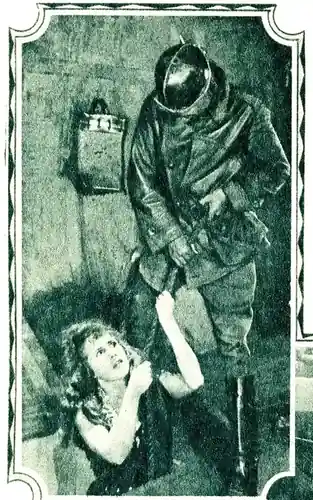
The climax—that ore-crusher scene—deserves mythic annotation. Ruth empties the gems into the crusher’s iron maw, gears groaning like Leviathan with gastritis. Metal pulverizes carbon into stardust; she inhales the fallout, letting wealth permeate alveoli, a communion where body and capital achieve horrific synthesis. Heyes arrives too late, kneels in the detritus, and weeps—not for loss of riches but for the vertiginous proof that some freedoms cannot be embezzled.
One cannot discuss this picture without invoking its present absence. Only two of the original seven reels survive, archived in a climate-controlled vault in Turin. The rest succumbed to nitrate rot, studio neglect, the general contempt visited upon serial Westerns once talkies swaggered in. Yet lacunae amplify resonance; the missing footage becomes Rorschach blot inviting projection, a participatory cinema predating video-game open worlds. Each spectator stitches gutters between fragments, making authorship communal.
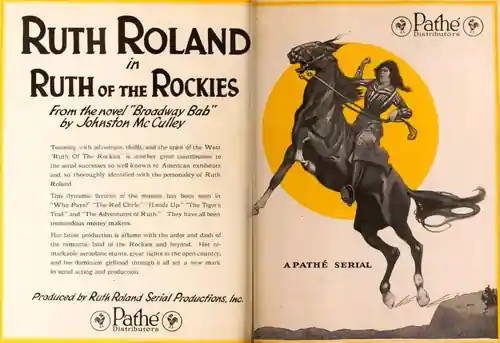
Restorationists at Cineteca Nazionale paired extant reels with continuity scripts, production stills, even a shot-by-shot novelization from Photoplay. Animated matte overlays indicate lost sequences—ghostly silhouettes moving across sepia postcards of 1920 Durango. Purists may bridle, yet this palimpsest approach mirrors the film’s obsession with erasure and rebirth. We are not watching a relic but a resurrection, celluloid and mythology braided like barbed-wire rosary.
Comparative contextualization illuminates its radicalism. Where The Prodigal Son moralizes through biblical restitution, and The Unattainable gilds class mobility with matrimony, Ruth of the Rockies offers no nuptial payoff, no patriarchal pardon. The heroine exits astride a ridgeback mare, diamonds atomized inside her lungs, riding toward a horizon that refuses to calcify into sunset. It is the rare Western that believes the frontier does not end in ocean or census but in metabolism.
Contemporary parallels proliferate. Think of Uncut Gems’ adrenaline nihilism or Nomadland’s veneration of itinerancy—this 1920 trailblazer anticipated both. Its thesis—that wealth is a circulatory system poisoning every ventricle it visits—feels ripped from post-2008 headlines. When Ruth exhales diamond dust, she prefigures microplastic particulate swirling through our bloodstreams a century later. History, the film whispers, is just another bandit chasing trinkets across an ungovernable range.
Caveats? A few. The film’s racial grammar carries the era’s pathologies: Navajo traders function as noble-exotic utility, and a Chinese rail-worker appears merely to impart cryptic wisdom before vanishing. These tropes grate, yet they also expose settler mythology’s scaffolding. By foregrounding such types without redeeming them, the movie inadvertently deconstructs its own imperial gaze.
Pace may daunt viewers weaned on kinetic cutting; Laemmle favors tableau holds where dust motes orbit heads like miniature planets. But patience yields tonal mesmerism akin to late Tarkovsky, albeit with more six-shooters. Let your optic nerve adjust, and you will discern micro-storms in Roland’s irises, whole barometric shifts of intent.
Should you seek it? The short answer: pursue any archive willing to risk projection. The longer answer: pursuit mirrors the film’s own dialectic—value emerges not in acquisition but in chase, in the oxygen burned, the synapses scorched. Even fragments detonate enough cinephilic shrapnel to lodge inside your own hidden trunk, waiting for the day you pry it open and head westward, certain someone will follow, unsure whether you want them to catch you.
There, beneath the projector’s stroboscopic heartbeat, you may finally grasp what Ruth learned on that wind-scoured ridge: liberation is not a gemstone you clutch but a scatter pattern you become, glinting briefly in stranger’s lungs before settling into the loam of stories we tell to survive the next mile, the next reel, the next gulp of merciless, magnificent air.
IMDb —
1918
Community
Log in to comment.