DbcultAccessing Vault...
5.3/10
Senior Film Conservator
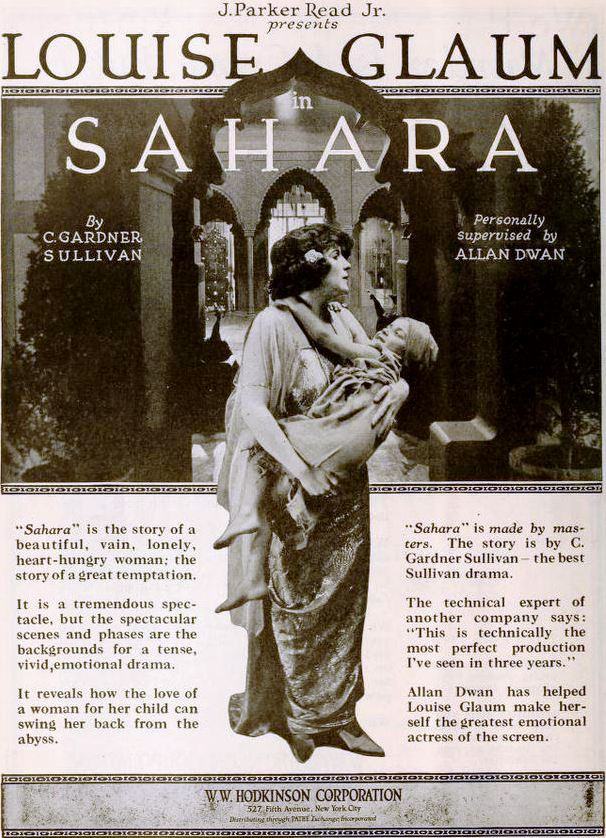
A definitive 5.3/10 rating for a film that redefined the boundaries of cult cinema. Sahara remains a cornerstone of transgressive art.
The year 1919, a period still reeling from the Great War's echoes, saw the silver screen often grappling with themes of morality, sacrifice, and the enduring human spirit. Amidst this cinematic landscape emerged Sahara, a powerful melodrama penned by the prolific C. Gardner Sullivan, a narrative that plunges into the tumultuous depths of a woman's heart torn between glittering Parisian superficiality and the harsh, unforgiving realities of love and consequence. This film, a silent-era gem, offers far more than a simple morality tale; it’s a profound exploration of human fallibility, the corrosive nature of discontent, and the arduous, often painful, path to atonement.
Our journey begins in the vibrant, intoxicating world of Parisian music halls, where Mignon, portrayed with captivating intensity by the inimitable Louise Glaum, reigns supreme as a celebrated star. Her life is a dazzling mosaic of applause, adoration, and the ephemeral pleasures of celebrity. Yet, this glittering facade belies a yearning for something more conventional, a desire she seemingly fulfills by marrying John Stanley, a young American civil engineer brought to life by the earnest Matt Moore. Their union, initially a bridge between two disparate worlds, soon faces its ultimate test when John is suddenly dispatched to the desolate, unforgiving expanse of the Sahara for an engineering project. Mignon, accustomed to the effervescent charm of urban life, finds herself abruptly transplanted into a stark, silent world, a move that forms the crucible of her ensuing spiritual and emotional crisis.
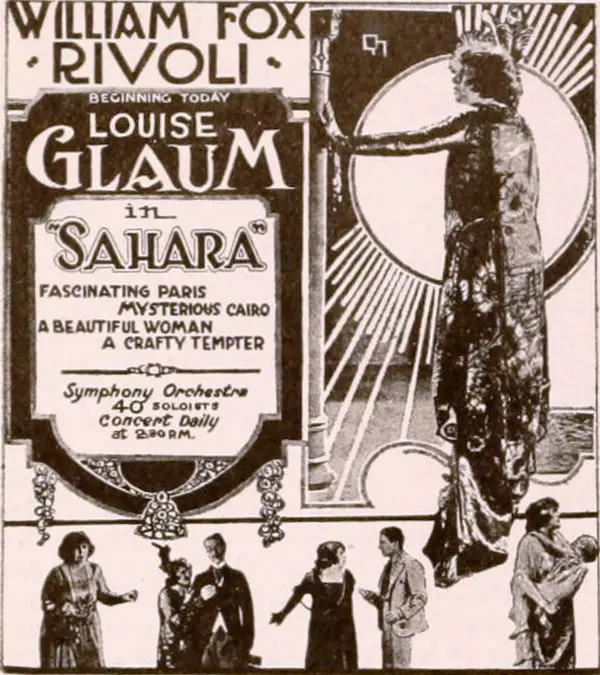
The contrast between Mignon's former life and her new desert existence is painted with stark, almost brutal clarity. The Sahara, far from being a mere backdrop, becomes an active antagonist, its vast, indifferent beauty mirroring the growing void within Mignon's soul. She is a creature of light and sound, plunged into a realm of sand and silence. The initial novelty gives way to profound discontent, a gnawing dissatisfaction that slowly erodes the foundations of her marriage and motherhood. This is not merely a tale of a woman who cannot adapt; it's a poignant depiction of a spirit accustomed to superficial stimulation struggling to find depth in simplicity, a theme that resonates even today. One might draw parallels to the internal conflicts faced by characters in films such as The Heart of Lady Alaine, where societal expectations and personal desires often pull protagonists in agonizingly different directions.
Months of this arid existence breed a profound sense of isolation and regret. The lure of her past life, the promise of ease and adoration, proves irresistible. It is at this critical juncture that Baron Alexis, a Russian nobleman portrayed with a compelling blend of charm and menace by Nigel De Brulier, enters the narrative. He represents everything Mignon believes she has lost: luxury, excitement, and a sense of belonging to a world of sophistication. Her decision to abandon John and her young son for the Baron’s opulent embrace in Cairo is the film’s central act of transgression, a choice that reverberates with tragic consequences for all involved. This betrayal, driven by a yearning for an idealized past, establishes the film's core exploration of moral accountability.
Mignon’s departure shatters John Stanley. The desert, once merely a workplace, now becomes a symbol of his desolate heart. His descent into drug addiction is depicted with a raw, unflinching realism that was daring for its time, highlighting the profound emotional wreckage left in Mignon's wake. Matt Moore’s portrayal here is particularly poignant, conveying a sense of profound loss and quiet desperation that speaks volumes without a single uttered word. The film doesn't shy away from showing the devastating ripple effect of Mignon's choices, extending beyond John to their innocent son, who is forced to endure the consequences of parental abandonment and poverty. This harrowing period in the narrative serves as a stark reminder of the film's commitment to portraying the grim realities of human suffering, much like the somber introspection found in films such as Der letzte Tag, which often explored the darker facets of human experience.
The wheel of fortune, however, turns with cruel irony. Mignon, enjoying her life of ease with Baron Alexis, eventually encounters John and their son, now reduced to abject beggars in the very city where she revels in luxury. This harrowing confrontation is the film's emotional crescendo, a moment of searing recognition that pierces through Mignon's self-imposed delusion. The sight of her loved ones in such dire straits ignites a powerful, long-dormant spark of remorse within her. Louise Glaum masterfully conveys this seismic shift, transforming from a woman of detached elegance to one consumed by guilt and a desperate yearning for redemption. It’s a performance that speaks to the profound depth of human emotion, a silent scream of regret that reverberates through the screen.

Filled with an overwhelming sense of atonement, Mignon makes the arduous journey back to the desert, returning to the very landscape she once despised, now as a penitent. Her mission is clear: to nurse John back to health, to mend the wounds she inflicted. This act of self-sacrifice, a profound reversal of her earlier abandonment, underscores the film's central theme of redemption. The slow, painstaking process of John's recovery is depicted with tender realism, highlighting the physical and emotional toll of addiction and the restorative power of unwavering care. The reconciliation between husband and wife is not instantaneous or facile; it's a hard-won victory, built on forgiveness, understanding, and shared suffering. The family's eventual rediscovery of happiness together in the desert, the very place that once symbolized Mignon's despair, offers a powerful, if somewhat idealized, message of hope and the possibility of renewal, even after profound transgressions. This narrative arc of a woman facing profound moral choices echoes the dilemmas explored in films like Should a Woman Tell?, where societal expectations clash violently with personal desires, and When Love Is Blind, which also delves into the consequences of emotional missteps.
The enduring power of Sahara rests heavily on the shoulders of its lead performers. Louise Glaum, a star known for her vampish roles, delivers a performance of remarkable depth and nuance. Her Mignon is not a caricature of villainy, but a complex woman grappling with her desires, her past, and ultimately, her conscience. Glaum's expressive eyes and subtle gestures convey a universe of internal conflict, from the initial frivolity to the agonizing remorse and eventual quiet strength. She commands the screen, drawing the audience into Mignon's tumultuous inner world without uttering a single word. Her transformation throughout the film is utterly believable, making Mignon's journey from a self-absorbed socialite to a dedicated caregiver truly compelling.
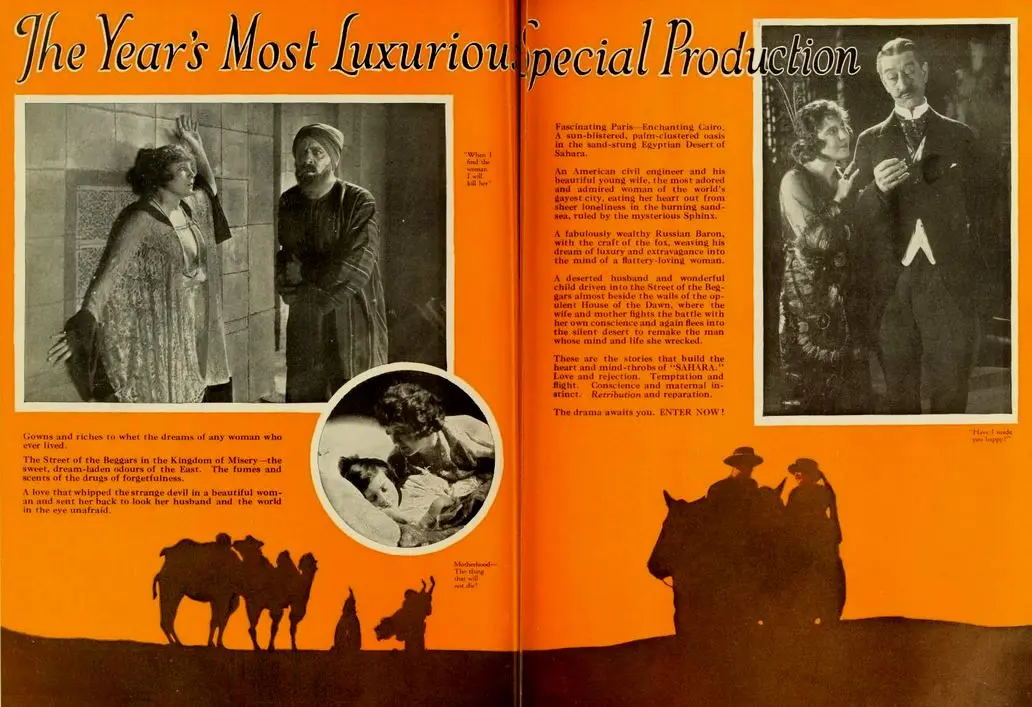
Matt Moore, as John Stanley, provides a stoic counterpoint to Glaum's passionate portrayal. His suffering is internal, etched onto his face with a quiet dignity that makes his character deeply sympathetic. Moore’s ability to convey heartbreak, despair, and eventual fragile hope through subtle shifts in posture and gaze is a testament to his skill as a silent film actor. The scenes depicting his addiction are particularly harrowing, made all the more effective by Moore’s understated yet powerful performance. The supporting cast, including Nigel De Brulier as the suave but manipulative Baron Alexis, and the contributions of Edwin Stevens, Ernest Pasque, and the young Pat Moore as the son, all contribute to the film’s robust emotional landscape. De Brulier, in particular, embodies the seductive danger that tempts Mignon away from her responsibilities, his aristocratic bearing perfectly suiting the role of a man who offers superficial grandeur.
The narrative craftsmanship of C. Gardner Sullivan is evident throughout Sahara. Sullivan, a prolific writer of the silent era, understood the dramatic potential of stark contrasts and moral dilemmas. His script deftly navigates the complex emotional terrain, allowing for both the grand theatricality of melodrama and moments of intimate, heartbreaking truth. The pacing ensures that Mignon’s journey feels both inevitable and profoundly personal, building steadily towards its cathartic conclusion. Sullivan's ability to weave a compelling story that explores the human condition, even within the conventions of early cinema, is a highlight of this production. One might consider his work here alongside other morally complex narratives of the era, such as What Money Can't Buy, which also explores the true cost of choices beyond material wealth.

Beyond the performances and writing, the film's utilization of the desert setting is nothing short of masterful. The cinematography captures the vastness and desolation of the Sahara, transforming it from a mere location into a character unto itself. The sweeping dunes, the harsh sunlight, and the endless horizon all serve to amplify Mignon’s isolation and the enormity of John’s suffering. The desert acts as both a prison and, ultimately, a place of spiritual purification, a crucible where Mignon must confront her true self. This powerful use of environment to reflect internal states is a hallmark of effective visual storytelling, elevating the film beyond a simple domestic drama to something more profound and symbolic. The visual poetry of the Sahara's stark beauty is unforgettable, a testament to the silent era's often overlooked skill in visual narrative.
Sahara is a film rich with thematic resonance. It probes the destructive nature of materialism and superficiality, contrasting them with the enduring values of family, loyalty, and sacrifice. Mignon’s journey is a cautionary tale about the perils of pursuing transient pleasures over profound connections. Yet, it is also a story of hope, demonstrating that even after profound mistakes, redemption is possible through genuine remorse and selfless action. The film’s exploration of addiction, though presented through the lens of early cinema, retains a stark authenticity, highlighting the devastating impact it has on individuals and families. This nuanced portrayal of human frailty and resilience ensures that Sahara remains relevant, its moral questions timeless.
In an era where films often leaned heavily into clear-cut heroes and villains, Sahara dares to present a protagonist who is deeply flawed, yet ultimately capable of profound transformation. It challenges the audience to empathize with Mignon's struggles, even as they condemn her choices. The film’s conclusion, while offering a sense of resolution, does not erase the pain and suffering that preceded it, instead suggesting that true happiness is often forged in the fires of adversity and earned through profound sacrifice. This makes Sahara a far more complex and rewarding viewing experience than many of its contemporaries, placing it alongside other silent dramas that sought to explore the intricate tapestry of human morality, such as The Shadow of a Doubt or A Fool's Paradise, both of which also delve into the consequences of personal failings and misguided choices.
Ultimately, Sahara stands as a compelling testament to the power of silent cinema. It is a film that uses its visual language, its expressive performances, and its expertly crafted narrative to tell a story that is both grand in scope and intimately human. For those interested in the evolution of melodrama, the artistry of Louise Glaum, or the evocative use of setting in film, Sahara offers a rich and rewarding experience. It reminds us that the human heart, even when led astray by vanity and discontent, possesses an enduring capacity for love, remorse, and ultimately, redemption. Its enduring themes and powerful performances ensure its place as a significant contribution to the cinematic heritage of the early 20th century. It’s a film that deserves to be rediscovered and appreciated for its timeless portrayal of the human spirit's capacity for both profound error and profound grace.
IMDb 5.9
1925
Community
Log in to comment.