DbcultAccessing Vault...
Cult Review
Senior Film Conservator
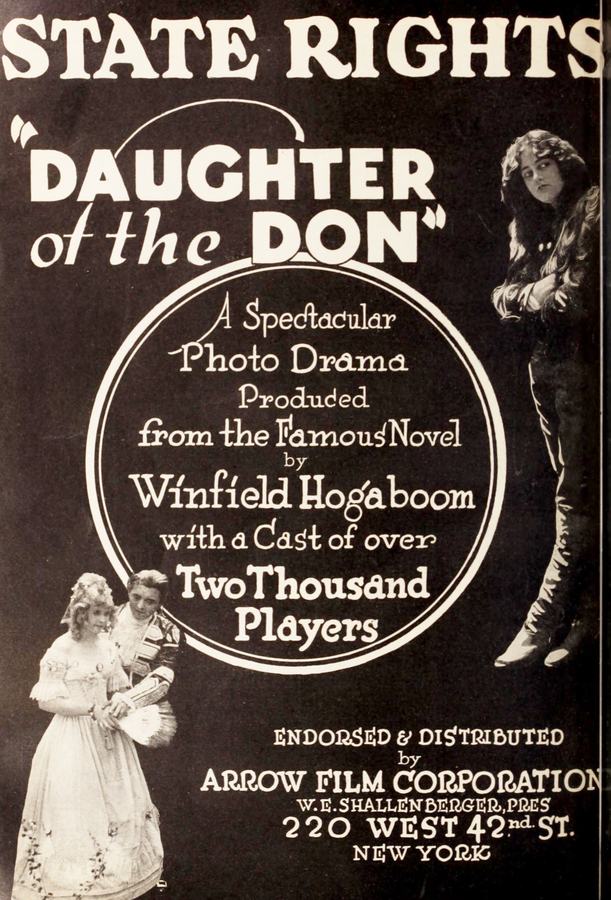
Stepping back into the cinematic annals of 1916, we encounter The Daughter of the Don, a silent film that, despite the passage of over a century, still resonates with a certain historical grandeur and a foundational romanticism. Directed by Winfield Hogaboom, a name perhaps less emblazoned in the pantheon of early cinema but whose narrative craftsmanship is evident here, this picture transports us to a pivotal moment in Californian history: the year 1846. It's a period fraught with tension, where the pastoral existence of the Spanish-speaking Californios collides with the expansionist ambitions of the American military. This backdrop isn't merely scenery; it's a crucible in which personal destinies are forged and tested, a testament to the era's dramatic potential.
At the heart of this unfolding drama lies an archetypal romance, a narrative engine that drives much of the film's emotional weight. Lieutenant Nelson, portrayed with a stoic yet earnest demeanor by Hallam Cooley, embodies the American presence – a figure of duty and burgeoning affection. His counterpart is Ysabel Hernandez, the titular daughter of a Californian don, brought to life with vivacity and conviction by Marie McKeen. Their initial connection, a tender spark amidst a landscape poised for conflict, serves as a poignant reminder of humanity's capacity for connection even across dividing lines. This nascent love story, however, is not allowed the luxury of an uncomplicated trajectory. The brewing storm of warfare between the Americans and the Californians quickly engulfs their personal world, forcing them into opposing factions, a classic tragic setup that silent cinema often leveraged for maximum emotional impact.
Ysabel's transformation is, arguably, the most compelling element of The Daughter of the Don. Faced with the stark reality of her homeland under siege, she refuses to remain a passive observer. In a bold act of defiance and loyalty, she sheds the traditional attire and expectations of her gender, donning men's dress to join Pico's Californian army. This act of cross-dressing is more than a mere plot device; it's a powerful statement of agency, a visual metaphor for her unwavering commitment to her people and her heritage. Her subsequent distinction through exceptional horsemanship elevates her beyond a simple romantic interest, positioning her as a warrior in her own right. This portrayal of a strong, active female protagonist, defying societal norms to fight for what she believes in, might draw interesting parallels to other films of the era exploring female resilience, though perhaps less directly martial, like Merely Mary Ann or even the more overtly adventurous The Spartan Girl. It speaks to a nascent exploration of female strength in early cinematic narratives, often framed within the context of historical or social upheaval.
The film meticulously charts the ebb and flow of the conflict, depicting the 'many shifts of fortune' that characterize protracted warfare. These sequences, while perhaps lacking the visceral realism of modern combat films, would have relied heavily on dramatic staging, dynamic intertitles, and the expressive physicality of the actors to convey the intensity of battle. The culmination in the final battle for Los Angeles serves as the narrative's dramatic zenith. Here, the personal and the political violently intersect when Lieutenant Nelson narrowly avoids killing Ysabel, a moment of profound irony and tragic potential. This near-fatal encounter underscores the brutal indifference of war, which threatens to obliterate individual affections and identities in its relentless churn. Such moments highlight the film's ambition to imbue its historical conflict with deep personal stakes, making the grand sweep of history feel intimately tied to the fates of its central characters.
No epic drama is complete without a compelling antagonist, and The Daughter of the Don delivers with Holliday, the 'treacherous Englishman.' Portrayed by William Ehfe with a suitable air of villainy, Holliday is not merely a force of opposition but an instigator, whose 'deceptions helped to start the hostilities.' This character adds a layer of moral complexity, suggesting that the conflict isn't solely a clash of nations but also a product of individual perfidy and manipulation. His eventual act of kidnapping Ysabel and her brother's fiancée, a classic trope of the damsel-in-distress narrative, serves to consolidate the scattered threads of the plot. It shifts the focus from the grand battlefield to a more personal, desperate struggle, providing a clear objective for our hero, Nelson, and his allies. The presence of such a clear-cut villain, whose actions are driven by malice rather than simply opposing ideologies, would have resonated strongly with audiences of the time, providing a tangible evil to be overcome. This element of direct villainy and subsequent rescue is a common thread in early adventure cinema, not dissimilar in spirit to the dramatic stakes found in something like Oliver Twist, though in a vastly different genre and context.
The climax of the film, therefore, pivots from grand-scale warfare to a more intimate rescue mission. Nelson, along with several others, embarks on a quest to liberate the abducted women. This sequence allows Hallam Cooley to showcase the more traditional heroic qualities of his character, demonstrating bravery and determination in the face of danger. The successful rescue not only brings justice to Holliday but also paves the way for the emotional resolution of the central romance. The reunion of Nelson and Ysabel, after enduring the trials of war and personal peril, provides the catharsis audiences craved. It's a narrative arc that moves from initial innocence, through conflict and separation, to ultimate reconciliation, a pattern deeply satisfying in its classical structure. The conclusion reaffirms the power of love and loyalty to transcend even the most formidable obstacles, offering a sense of hope and order restored after chaos.
Beyond the central duo, the supporting cast, including Omar Whitehead as the Don, Grant Churchill in an undisclosed but likely significant role, and Hazel Pock as the brother's fiancée, contribute to the tapestry of the narrative. In silent film, performances were often characterized by exaggerated gestures and facial expressions, a necessity for conveying emotion without spoken dialogue. One can only imagine the intensity Marie McKeen brought to Ysabel's transformation, or the brooding menace William Ehfe instilled in Holliday. The effectiveness of these portrayals would have been paramount in engaging the audience, requiring a mastery of physical acting and screen presence. The direction by Winfield Hogaboom would have been crucial in orchestrating these performances and ensuring the visual storytelling was clear and compelling, especially in the absence of spoken words. The pacing of the film, from the initial romantic interludes to the frenetic battle scenes and the final rescue, would have been a key factor in maintaining audience engagement, a delicate balance often hard to achieve in early cinema.
Thematically, The Daughter of the Don explores several enduring ideas. Loyalty to family and country is a dominant motif, particularly evident in Ysabel's drastic actions. The destructive nature of war, even when framed within a romanticized context, is undeniable, threatening to tear apart individuals and societies. The film also touches upon the clash of cultures and the inevitable changes wrought by historical shifts. California in 1846 was on the cusp of a profound transformation, and the film, however subtly, reflects this transition. It's a snapshot of a bygone era, not just in its cinematic form but in its historical setting. The portrayal of the Californios, even if through an early American cinematic lens, offers a glimpse into a culture grappling with annexation. This aspect might be subtly compared to how films like Birth of Democracy or The Land of Promise tackled large-scale societal or political shifts, albeit in different historical contexts.
From a technical standpoint, silent films like The Daughter of the Don are fascinating artifacts. The cinematography, while constrained by the technology of the time, would have aimed for clarity in storytelling and dramatic composition. The use of natural light, the framing of expansive Californian landscapes, and the staging of action sequences would have been critical. The film's reliance on intertitles to convey dialogue and exposition means that the writing, credited to Winfield Hogaboom, extends beyond the plot outline into the very language that guides the audience through the narrative. These intertitles needed to be concise, impactful, and capable of conveying character emotions and plot developments efficiently. The overall artistic impression would have been a blend of visual spectacle and textual narration, a unique form of storytelling that demands a different kind of engagement from modern audiences. It's a reminder of how much storytelling has evolved, yet how some core principles remain constant.
Ultimately, The Daughter of the Don stands as a commendable piece of early cinematic history. It's a film that, while perhaps not as widely remembered as some of its contemporaries, offers a rich tapestry of romance, historical conflict, and personal heroism. It allows us to appreciate the foundational elements of narrative cinema: compelling characters, dramatic stakes, and a resolution that satisfies the emotional journey. The film's exploration of a woman's strength in wartime, the complexities of cross-cultural romance, and the insidious nature of treachery are themes that continue to resonate in storytelling today. For those interested in the evolution of film, the depiction of American history through an early lens, or simply a well-crafted silent drama, The Daughter of the Don provides a valuable and engaging experience. It’s a testament to the enduring power of classic narratives, even without the benefit of synchronized sound or color, to capture the human spirit and its trials.
IMDb 6
1931
Community
Log in to comment.