DbcultAccessing Vault...
Cult Review
Senior Film Conservator
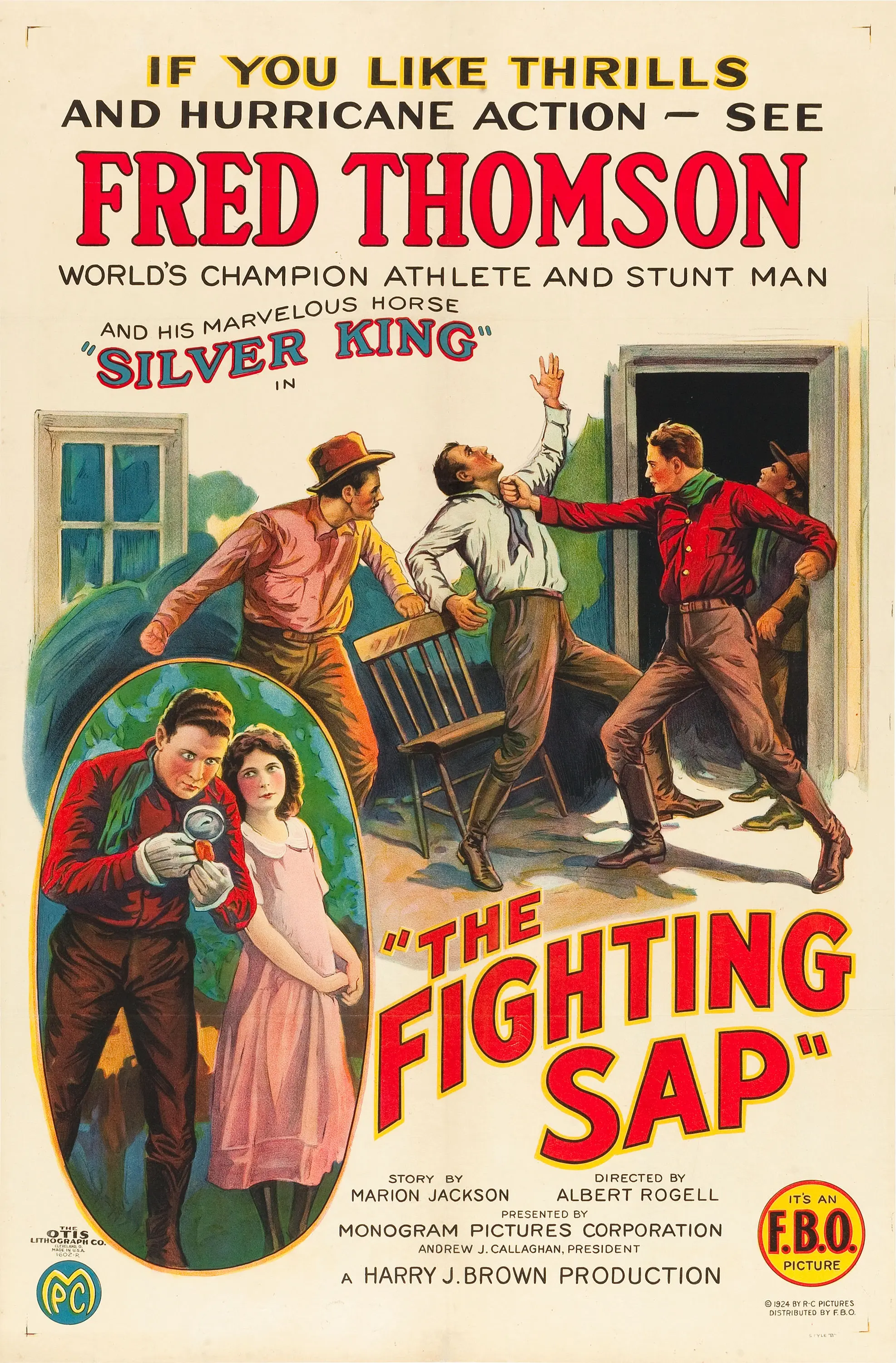
The 1924 silent feature The Fighting Sap stands as a fascinating ideological artifact from the zenith of the American Western. Directed with a kinetic energy that belies its age, the film challenges the prevailing zeitgeist of the 'rugged frontiersman' by introducing a protagonist whose primary weapon is a magnifying loupe rather than a six-shooter—at least initially. Fred Thomson, an actor whose athletic pedigree rivaled that of Douglas Fairbanks, portrays Craig Richmond with a nuanced vulnerability that was often absent in the hyper-masculine roles of the era. The film interrogates the friction between the Gilded Age's inherited wealth and the burgeoning meritocracy of scientific expertise, a theme echoed in other contemporary social dramas like The Little Church Around the Corner.
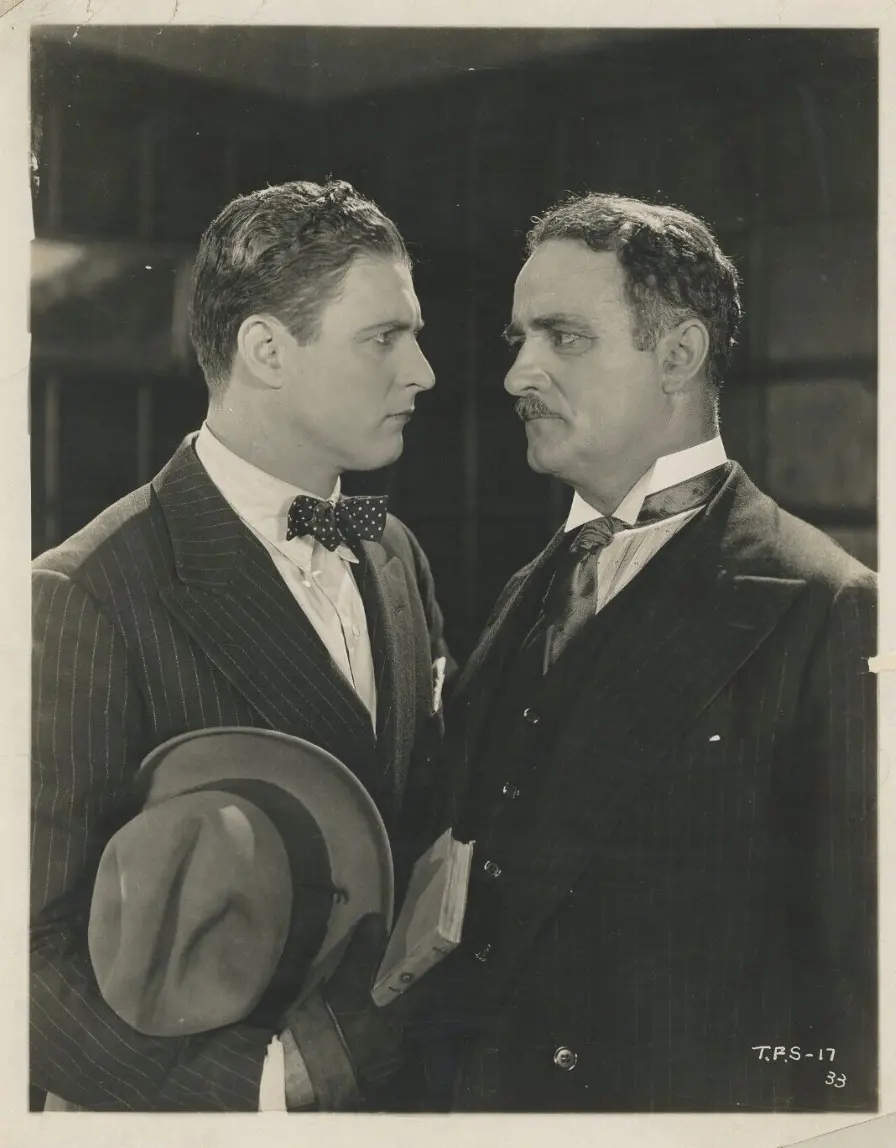
Craig’s expulsion from the domestic sphere by his father, Charles, is not merely a plot device; it is a ritualistic shedding of aristocratic comfort. The elder Richmond represents a generation that viewed intellectualism as a symptom of weakness—a 'sap' in the vernacular of the day. This intergenerational schism sets the stage for a narrative that is as much about psychological validation as it is about thwarting a criminal enterprise. The geological setting provides a perfect metaphor: the 'worthless' mine is a reflection of Craig himself—undervalued, misunderstood, but possessing a core of immense value if one only knows where to dig.
Villainy in silent cinema often veers into the hyperbolic, yet Walter Stoddard, played with a chillingly composed malice, offers a more insidious threat. His manipulation of the elder Richmond—leveraging a reputation for insanity to mask his predatory acquisitions—mirrors the sophisticated betrayals found in The Door Between. Stoddard is not a common bandit; he is a corporate vulture who employs a paramilitary force of ex-convicts. This inclusion of a criminal syndicate introduces a proto-noir element to the Western landscape, suggesting that the true dangers of the frontier are no longer wild animals or harsh weather, but the organized greed of civilized men.
The tension escalates through a series of meticulously choreographed assassination attempts. These sequences highlight Marion Jackson’s screenplay, which balances the broad strokes of action with the intricate pacing of a suspense thriller. Unlike the episodic nature of many silent shorts like An Overall Hero, The Fighting Sap maintains a cohesive narrative momentum that builds toward its claustrophobic finale. The use of the gold vault as a site of potential suffocation is a stroke of cinematic genius, transforming the object of desire—gold—into the very instrument of death.
No analysis of a Fred Thomson vehicle would be complete without acknowledging Silver King, the equine performer who often commanded as much screen presence as his human counterparts. In the landscape of 1920s cinema, the horse was more than a mode of transportation; it was a symbol of the protagonist’s harmony with the natural world. Silver King’s interventions are not merely convenient; they are integral to the film’s spatial dynamics. The horse facilitates a mobility that Craig requires to outmaneuver Stoddard’s thugs, bridging the gap between the geologist’s stationary analysis and the action star’s necessary dynamism.
This synergy between man and beast provides a tonal lightness that offsets the darker themes of betrayal and attempted homicide. It invites comparison to the whimsical yet foundational relationships seen in Playmates, though here the stakes are considerably more lethal. The cinematography captures the vastness of the mining country, using wide shots to emphasize Craig’s isolation before tightening the frame as the conspiratorial walls close in on him.
Marion Jackson’s writing deserves significant commendation for its refusal to succumb to the simplistic tropes of the 'damsel in distress.' While Hazel Keener’s role follows certain period conventions, her character is inextricably linked to the moral core of the story. The film’s exploration of class and character echoes the social stratification explored in Miss Peasant or the youth-centric anxieties of Youthful Cheaters. Jackson weaves a tapestry where the 'sap' title is reclaimed as a badge of honor, representing a new kind of modern hero who values intellect over blind force.
The lighting during the vault sequence utilizes high-contrast shadows to amplify the sense of impending doom, a technique that would later become a staple of the thriller genre. This visual sophistication elevates the film beyond the standard 'B-Western' fare of the mid-twenties. It possesses a gravitas similar to the dramatic weight found in His House in Order, yet it never loses its identity as an accessible piece of popular entertainment.
When viewed alongside international contemporaries like the Japanese pastoral drama Miyama no otome or the French social commentary of Le nabab, The Fighting Sap reveals itself as a distinctly American fable. It is a story of frontier justice filtered through the lens of industrial modernization. It lacks the exoticism of A Prisoner in the Harem, opting instead for a grounded, lithic realism that resonates with the viewer’s sense of justice.
The film’s resolution—a frantic 'house cleaning' by Craig—serves as a cathartic release for the audience. The elder Richmond’s arrival at the moment of victory is not just a reunion; it is a concession. He must acknowledge that the 'sap' he discarded is the only one capable of preserving the family legacy. This thematic arc of redemption and recognition is a timeless narrative pillar, ensuring that The Fighting Sap remains a compelling study in silent era storytelling. It is a testament to the power of the underdog and the enduring appeal of the hero who fights not because he wants to, but because his integrity leaves him no other choice.
IMDb 5.6
1924
Community
Log in to comment.