DbcultAccessing Vault...
6.6/10
Senior Film Conservator
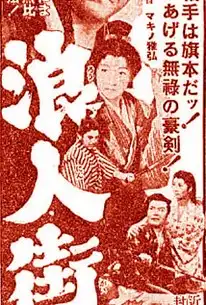
A definitive 6.6/10 rating for a film that redefined the boundaries of cult cinema. Samurai Town Story Part I remains a cornerstone of transgressive art.
Is it worth watching Samurai Town Story Part I today? If you are a casual viewer looking for a Friday night popcorn flick, the answer is a firm no. You cannot "watch" this film in the traditional sense because most of it no longer exists. However, for anyone with a passing interest in how action cinema evolved, these surviving eight minutes are mandatory viewing. This isn't just a dusty relic; it is a jolt of pure energy that explains exactly where the gritty, cynical samurai films of the 1960s came from.
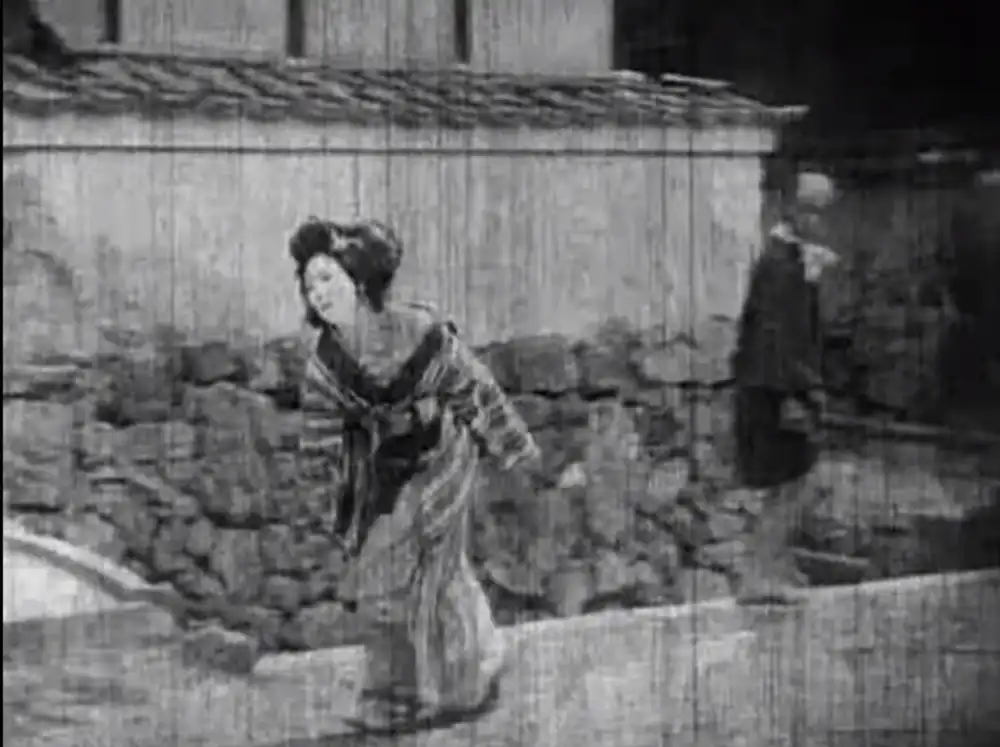
It is for the student of the frame, the lover of high-contrast black-and-white cinematography, and those who prefer their heroes flawed and filthy. It will almost certainly frustrate anyone who demands a linear narrative or a clean resolution. You are stepping into the middle of a burning building, seeing the brilliance of the architecture just before it collapses into ash.
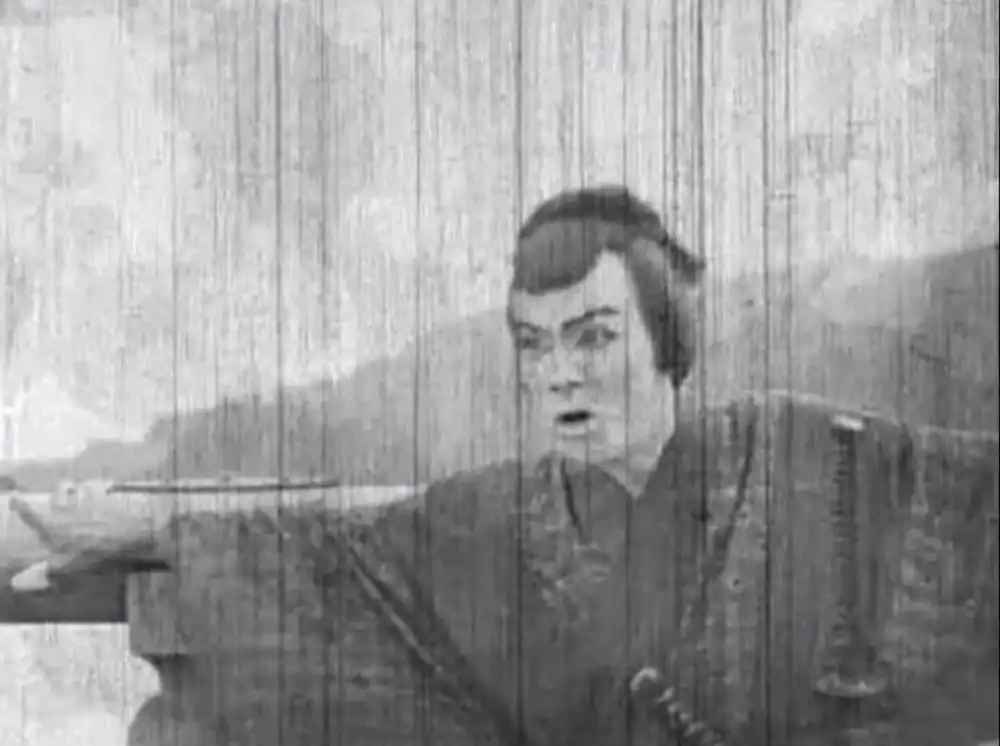
What strikes you immediately about the footage discovered and released in 2009 is the sheer lack of "movie magic" polish. In many silent films of this era, like the more stage-bound The Purple Lily, there is a certain theatrical stiffness. Not here. The ronin in Samurai Town Story Part I look like they haven't slept in a week or eaten in three days. Their kimonos are frayed, their hair is a mess, and they inhabit a world of deep shadows and dusty streets.
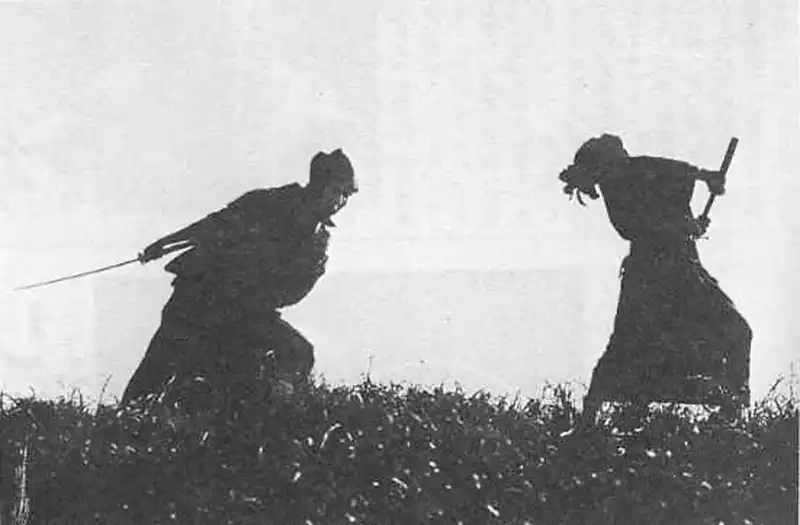
The fragments primarily focus on the tension leading up to and including the rescue of the "beautiful prey." There is a specific shot of the ronin huddled together that communicates more about their shared bond of poverty than a twenty-minute dialogue scene ever could. You can almost smell the stale sake and the damp wood of the tenements. The lighting choices are aggressive; the blacks are deep and oppressive, making the flash of a blade feel like a lightning strike.
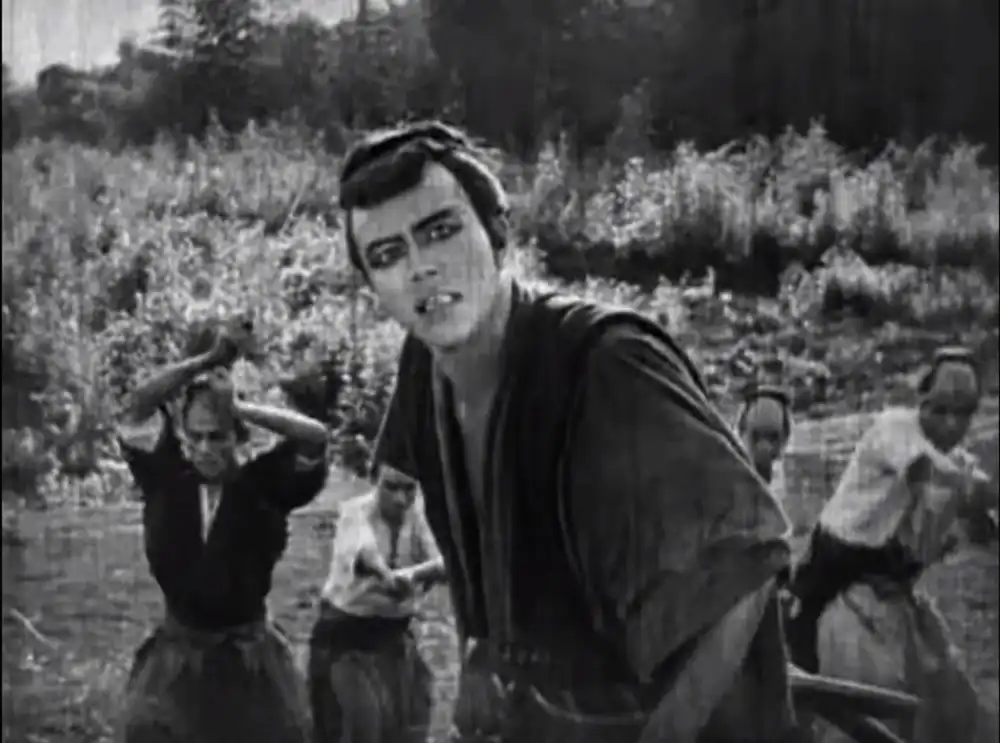
Even in these brief snippets, Yoshio Ichihara and Kôzô Kawada manage to project a weary charisma. There is no flamboyant posturing here. Instead, we see the heavy sighs and the darting eyes of men who know they are outmatched by the political power of the Hatamoto but have nothing left to lose. Unlike the stylized heroism found in Westerns of the same period, such as The Western Wallop, the movement here is jagged and desperate.
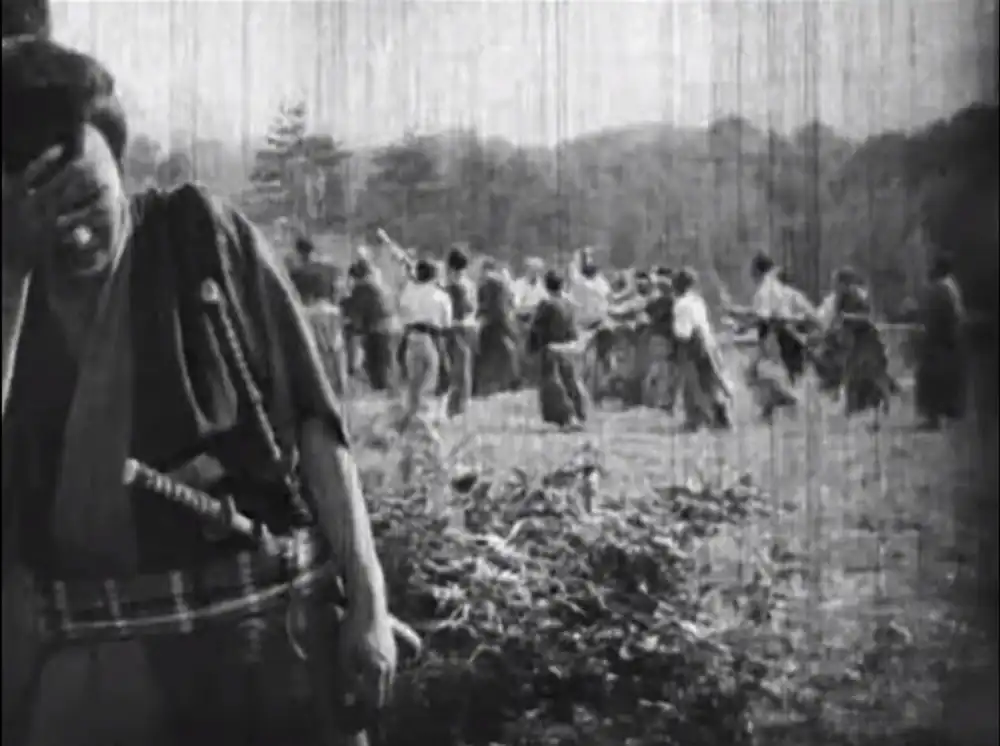
The kidnapping of the woman (played with a palpable sense of terror by the female cast members, likely Umeko Ôbayashi or Tsuyako Okajima depending on the specific cut of the fragment) isn't treated as a plot device so much as a final insult to the ronins' manhood. The way the Hatamoto characters carry themselves—stiff, arrogant, and pristine—creates a visual conflict with the fluid, messy movements of our protagonists before a single sword is even drawn.
The writing by Itarô Yamagami was revolutionary for its time because it stripped away the nobility of the samurai class. But the visual execution is what truly shocks. The editing in these eight minutes is remarkably modern. There are quick cuts during the skirmishes that feel decades ahead of their time, abandoning the long-take wide shots common in 1920s cinema for something more claustrophobic and kinetic.
One particular moment stands out: a sequence where the camera tracks low to the ground as the ronin move through a crowded alleyway. It creates a sense of being trapped, of the city itself closing in on these men. It lacks the breezy, open-air feeling of contemporary American films like King of the Saddle. This is urban noir in 18th-century Japan, filmed with the frantic heartbeat of the late 1920s.
The frustration of watching Samurai Town Story Part I lies in the "what if." We see a tonal shift in the fragment from quiet, simmering resentment to explosive violence, but we miss the connective tissue. We see the kidnapping, but the emotional stakes are something we have to infer from the actors' expressive faces. There is a strange edit about six minutes in—likely a result of the film's degradation—that jumps from a confrontation to a chase, leaving the viewer momentarily disoriented. Yet, even this glitch adds to the film’s haunting quality, as if we are watching a half-remembered dream.
The film doesn't try to be smarter than it is; it is a story about men, a woman, and the swords that stand between them. But in its simplicity, it finds a raw human truth that more "complete" films like The Show often miss in their pursuit of spectacle. The violence here isn't choreographed for beauty; it’s choreographed for survival.
To watch Samurai Town Story Part I is to mourn the loss of silent cinema's peak. It is a vital piece of the puzzle for anyone trying to understand the lineage of filmmakers like Akira Kurosawa or Masaki Kobayashi. While it is only a fragment, it contains more grit and genuine cinematic soul in eight minutes than most feature-length historical dramas manage in two hours. It is a brutal, beautiful, and brief encounter with greatness. Watch it for the craftsmanship, stay for the haunting realization that we will never see the rest of it.
IMDb 4.3
1935
Community
Log in to comment.