DbcultAccessing Vault...
4.6/10
Senior Film Conservator
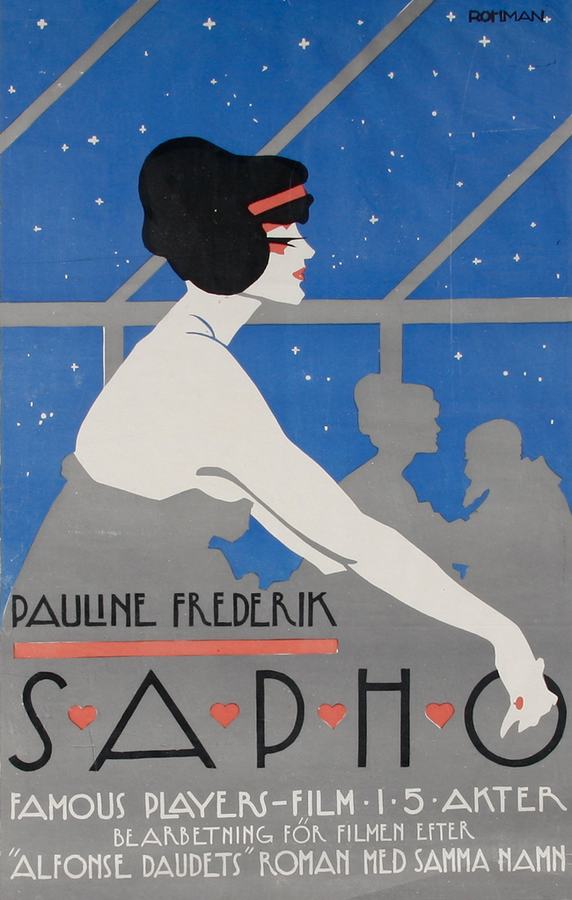
A definitive 4.6/10 rating for a film that redefined the boundaries of cult cinema. Sapho remains a cornerstone of transgressive art.
Ah, the silent era! A time when emotions were writ large on the screen, conveyed through the balletic grace of actors and the evocative power of light and shadow. To revisit a cinematic artifact like Sapho from 1917 is to embark on a journey not merely into a bygone cinematic style but into a profound exploration of human nature, societal strictures, and the relentless pursuit of identity. This isn't just a film; it's a testament to the dramatic potency of early storytelling, anchored by the magnetic presence of Pauline Frederick, whose performance as the titular character transcends the limitations of its medium.
At its heart, Sapho is a narrative of transformation and the often-brutal cost of social mobility. We are introduced to Fanny Legrand, a mere wisp of a girl, whose existence is circumscribed by the squalor of Parisian slums and the daily grind of selling flowers. Her father, a humble coachman, can offer little more than a roof over their heads, making her few sous a vital contribution to their survival. This initial depiction is crucial; it establishes a stark contrast to the glittering world she is destined to inhabit, highlighting the chasm between her origins and her aspirations. It's a classic rags-to-riches, or rather, rags-to-notoriety tale, but one imbued with a tragic realism that prevents it from ever feeling saccharine.
The catalyst for Fanny's metamorphosis arrives in the form of Caoudal, a sculptor of considerable renown. His artistic eye, honed by years of seeking beauty in its myriad forms, discerns in the young flower-seller a raw, untamed allure. His invitation to pose for him isn't merely a professional proposition; it's an opening of a portal to a world Fanny never knew existed. The opulence of his studio, a sanctuary of aesthetic indulgence, awakens in her a dormant appreciation for beauty, a sensual awakening that rapidly blossoms into an insatiable desire for the finer things in life. This pivotal moment is a fascinating study in the objectification and elevation of women in art, a theme echoed in other films of the era where women's bodies and personas became canvases for male creativity. One might draw parallels to the way women were portrayed as objects of desire and artistic inspiration in films like The Love Girl, though Sapho delves deeper into the psychological impact on the muse herself.
Fanny, now rebranding herself as Sapho – a name resonating with ancient poetic passion and perhaps, a hint of scandalous notoriety – quickly becomes the most sought-after model in Paris. Her life transforms into a whirlwind of admiration, luxury, and the fleeting affections of men. She is content, for a time, to bask in this gilded cage of adulation, reveling in the attention of Caoudal and her coterie of admirers. But Sapho's heart, though accustomed to transient affections, yearns for something more, or perhaps, simply something different. Her attention shifts from the sculptor to Dejoie, the poet, whose verses elevate her beauty to legendary status, further cementing her fame. Yet, the poet's age soon becomes a barrier to the young Sapho's craving for vibrant, youthful companionship, a poignant reminder of the ephemeral nature of her relationships.
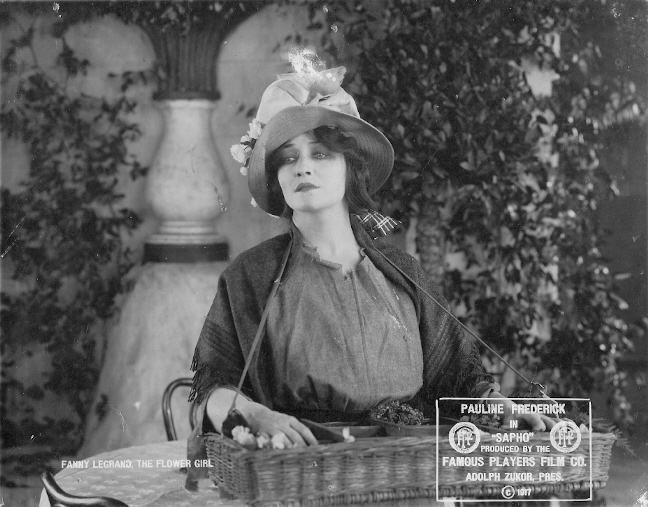
Enter Flamant, a handsome young engraver, who captures Sapho's capricious affections. This relationship, however, introduces a new layer of complexity and consequence. Flamant, utterly smitten, finds himself unable to keep pace with Sapho's extravagant tastes. His devotion, coupled with his financial inadequacy, drives him to desperate measures: forgery. This act of criminal folly, undertaken out of a misguided desire to please his demanding lover, leads to his inevitable arrest. The scene of the gendarmes taking Flamant away, juxtaposed with Sapho receiving an invitation to a ball, is a masterclass in dramatic irony, starkly illustrating the chasm between her seemingly charmed life and the devastating repercussions for those caught in her orbit. It's a powerful moment that underscores the moral ambiguity of Sapho's character – is she oblivious, selfish, or simply a product of a society that rewards beauty and punishes financial weakness? This theme of legal consequence stemming from moral compromise is a recurring motif in cinema, seen in films like According to Law, which often explored the harsh realities of justice in a world of social disparity.
The ball, of course, is where destiny intervenes once more. As 'Sapho,' the celebrated muse, she encounters Jean Gaussin, a young student whose earnest gaze penetrates the layers of her persona. Their connection is immediate and profound, a rare instance of mutual, genuine affection. It is with Jean that Sapho begins to glimpse the possibility of a different life, one rooted in sincere love and the cultivation of her 'better side.' Frederick's portrayal here is particularly nuanced, showing Sapho's vulnerability and her yearning for a purer existence, a stark contrast to the worldly detachment she has cultivated. She is learning, perhaps for the first time, to love not merely to be admired.
But the past, as is often the case in such narratives, is not easily shed. Jean, through an unfortunate accident, stumbles upon the truth of Sapho's former life, her history as a celebrated model and the mistress of several men. This revelation shatters his idealized vision of her, marking the "beginning of the end" for their burgeoning romance. The film brilliantly captures the societal hypocrisy of the era: a woman's past, no matter how distant or how shaped by circumstance, could irrevocably taint her reputation and disqualify her from a respectable future. Jean, despite his love, is ultimately bound by the societal expectations of his time, unable to reconcile his feelings with the perceived stain on Sapho's character. This tragic separation, driven by societal judgment and personal disillusionment, reminds one of the harsh realities faced by women in films such as The Other's Sins or even Satan's Rhapsody, where past transgressions often dictated future happiness.
The resolution of their love story is heartbreakingly realistic. Jean, succumbing to societal pressure and his own internal conflict, marries a simple country girl, choosing a life of conventional purity over the complex, passionate love he shared with Sapho. For Sapho, however, this rejection serves as a final turning point. Rather than revert to her former life of transient affections and artistic exploitation, she chooses a path of self-sacrificing service. Her decision to become a Red Cross nurse is not merely an act of penance but a profound redefinition of her identity. It is a powerful statement of agency, a refusal to be defined by her past or by the men in her life. She consecrates the remainder of her life to noble work, finding a redemption that transcends romantic love and societal approval.
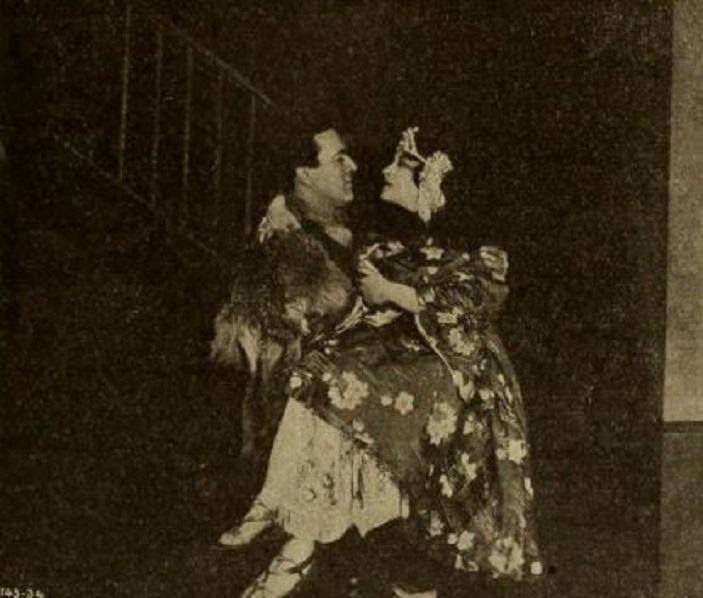
Pauline Frederick's performance as Sapho is nothing short of extraordinary. In an era where melodrama could easily tip into caricature, Frederick imbues Sapho with a captivating blend of vulnerability, resilience, and sensual allure. Her facial expressions, her gestures, her very posture convey a spectrum of emotions, from the wide-eyed wonder of the impoverished flower-seller to the sophisticated detachment of the celebrated muse, and finally, to the quiet dignity of the Red Cross nurse. She navigates Sapho's complex emotional landscape with a subtle power that draws the audience deep into her character's inner turmoil and triumphs. Her ability to convey such depth without spoken dialogue underscores the mastery of silent film acting, placing her among the greats of the period.
The supporting cast, including Howard Davies as Jean Gaussin and Pedro de Cordoba as Caoudal, provide solid foundations for Frederick's star turn. Davies portrays Jean's youthful idealism and subsequent disillusionment with conviction, making his internal conflict palpable. De Cordoba brings an air of cultured authority to Caoudal, effectively representing the artistic world that first elevates Sapho. Hugh Ford's direction is competent, utilizing the visual language of silent cinema to good effect. The film's cinematography, while typical of its time, effectively uses close-ups to emphasize emotional states and broader shots to establish the opulent (or squalid) settings. The visual storytelling is clear, concise, and effectively conveys the narrative's emotional beats.
The enduring appeal of Sapho lies in its timeless themes. It explores the perennial struggle between love and societal expectations, the intoxicating allure of beauty and fame, and the possibility of redemption through self-sacrifice. Based on Alphonse Daudet's novel, the film carries the weight of a literary classic, translated effectively into the nascent cinematic language. Daudet's work often explored social realism and moral dilemmas, a sensibility that permeates this adaptation. One could compare it to other literary adaptations of the era, such as Il processo Clémenceau, also based on a Daudet novel, in its exploration of character and societal judgment.
The film also provides a window into the social mores of the early 20th century, particularly concerning women's roles and reputations. Sapho's journey, from exploited flower-seller to celebrated muse to outcast lover and finally to selfless nurse, is a powerful critique of a society that simultaneously valorizes and condemns female beauty and independence. Her ultimate choice to dedicate her life to service, rather than retreat into bitterness or despair, elevates the narrative beyond a mere cautionary tale into one of profound personal growth and moral fortitude. It’s a testament to the strength of character that can emerge from adversity, even when confronted with the crushing weight of public opinion and personal heartbreak, a resilience sometimes mirrored in films like Samson or The Victoria Cross, albeit through different narrative lenses.
In conclusion, Sapho (1917) remains a compelling and emotionally resonant film. It’s a powerful showcase for Pauline Frederick’s talents, a thoughtful adaptation of classic literature, and a valuable historical document of early cinema. It reminds us that even in an age without synchronized sound, the power of human emotion, complex character arcs, and societal commentary could be conveyed with an intensity that still grips audiences over a century later. It’s a film that asks profound questions about identity, love, and the possibility of redemption, leaving an indelible mark long after the final fade to black.

IMDb 5.3
1931
Community
Log in to comment.