DbcultAccessing Vault...
Cult Review
Senior Film Conservator
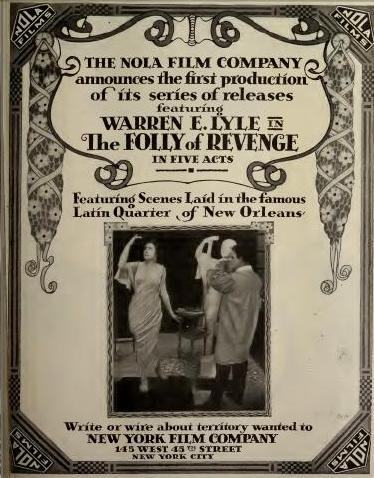
Stepping into the annals of early cinema, one occasionally unearths a gem whose narrative complexity and emotional resonance transcend the limitations of its era. Such is the case with "The Folly of Revenge," a silent film that, despite its vintage, delivers a potent and surprisingly nuanced exploration of human passion, artistic integrity, devastating betrayal, and the corrosive nature of vengeance. This isn't just a simple morality play; it's a sprawling epic, a testament to the power of visual storytelling, that pulls you into a maelstrom of human failings and ultimate redemption. It’s a film that demands more than just passive viewing; it invites contemplation on the cyclical nature of hatred and the profound grace found in relinquishing its grip.
The narrative unfurls in the evocative Latin Quarter of New Orleans, a setting ripe with artistic fervor and shadowy undercurrents. Here, we encounter Antonio Bordiga, a sculptor whose soul yearns for an elusive muse. Tasked with a commission by the affluent, yet morally bankrupt, William Baker, Antonio finds his creative wellspring dry, his chisel idle. This initial stagnation sets the stage for a profound transformation. His artistic block isn't merely a professional hurdle; it's a reflection of a deeper spiritual void, a yearning for an ideal beauty that transcends mere aesthetics. The film subtly suggests that true art springs from the soul, from profound connection, a theme that will echo throughout Antonio's journey.
A pivotal moment arrives one sun-drenched afternoon when Antonio, gazing from his studio window, witnesses a distressing scene: a young woman subjected to an unwanted embrace. His swift intervention isn't just an act of chivalry; it's an awakening. In her, he discovers not only a captivating physical form but a luminous spirit that ignites his dormant artistic fire. She agrees to pose, and what begins as a professional arrangement swiftly blossoms into a deeply personal connection. The creation of the statue becomes a metaphor for their burgeoning love, a labor imbued with shared glances, unspoken promises, and the quiet blossoming of affection. Leatrice Joy, in her portrayal of the model, conveys a delicate strength and an ethereal beauty that justifies Antonio's immediate enchantment. Her expressions, even in the silent medium, speak volumes of innocence and burgeoning love. The camera lingers on her, emphasizing her role as both artistic inspiration and emotional anchor.
Their idyllic world, however, is not destined for tranquility. The return of William Baker to check on the statue's progress shatters their nascent happiness. The model's horrified recognition of Baker as her assailant transforms the narrative from a romance into a tragedy. Antonio's refusal to sell his masterpiece to the very man who defiled his beloved is a powerful declaration of principle, a rejection of wealth in favor of honor. This act of defiance, noble as it is, inadvertently triggers Baker's malevolent wrath. Warren E. Lyle, as Baker, embodies the entitled villain with chilling conviction. His subtle sneers and predatory gaze effectively communicate a character devoid of moral compass, driven solely by ego and desire for possession. One might draw a parallel here to the unbridled ambition seen in The Plunderer, where wealth and power often lead to moral decay.
Baker’s subsequent act of kidnapping Antonio’s wife is a cruel twist of fate, a calculated strike that plunges the sculptor into an abyss of despair. The film handles the wife's eventual "winning over" by Baker with a delicate, yet heartbreaking, touch. It's not a sudden surrender but a gradual erosion of spirit, a testament to the psychological toll of prolonged captivity and isolation. This sequence, though silent, conveys the insidious nature of Baker's villainy, far more terrifying than overt physical violence. Antonio's subsequent abandonment of hope, his placement of their daughter in a convent, and his transformation into a wandering gypsy underscore the profound trauma he endures. His journey mirrors a descent into a personal wilderness, a stripping away of his former identity, much like characters in some of the more dramatic silent epics such as The Convict Hero, where protagonists are forced into new, often harsh, existences.
The wife’s suicide, communicated through a desperate, belated note, serves as a gut-wrenching punctuation mark to this phase of the tragedy. It's a moment of profound loss, not just for Antonio, but for the audience, who have witnessed the destruction of an innocent life and a beautiful love story. The futility of Antonio’s desperate attempts to save her only amplifies the pathos, leaving him with an unquenchable thirst for vengeance.
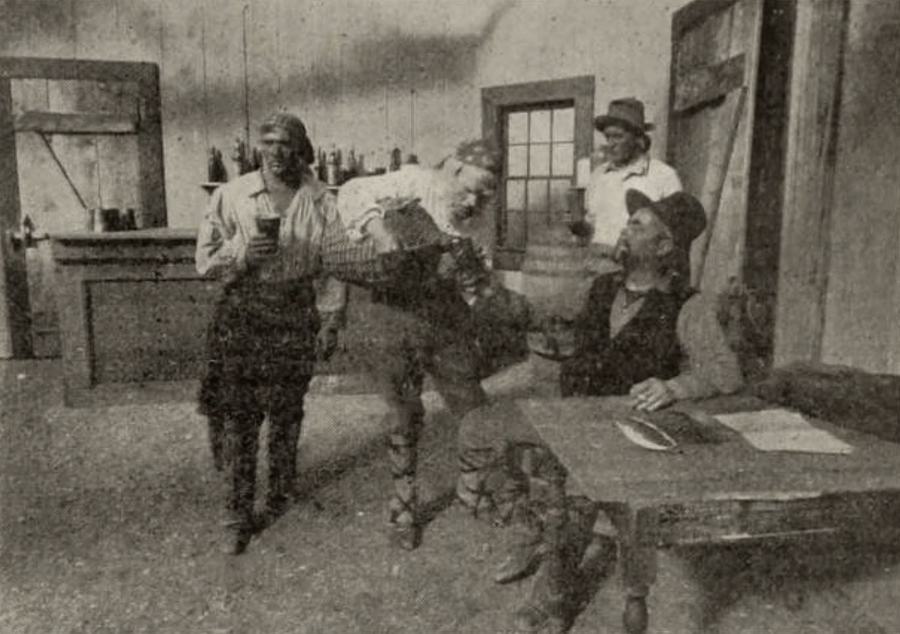
Years later, fate orchestrates a chilling reunion in the stark, unforgiving landscape of the mountains. The accidental encounter between Antonio and Baker ignites a fierce, primal struggle that nearly claims Antonio's life. This brutal confrontation, witnessed by Antonio's adopted gypsy family, fuels his rage to an incandescent pitch. The film expertly uses the visual contrast between the artist's former gentle life and his current rugged existence to highlight the transformative, destructive power of unaddressed grief and festering hatred. His pact with the gypsy chief, an oath to exact a "wife for a wife" retribution, marks the definitive turning point in Antonio's moral descent. He becomes a man consumed, his purpose narrowed to a singular, destructive goal.
The irony, however, is deliciously cruel. The gypsy chief, mistaking Antonio's now seventeen-year-old daughter for Baker's wife at a house party, kidnaps her instead. This narrative twist is a masterstroke, elevating the film beyond a simple revenge tale into a profound exploration of unintended consequences and the perils of blind retribution. The audience is privy to the impending horror, creating an unbearable tension as Antonio, oblivious, prepares poisoned wine for his perceived enemy. The scene where Antonio, on the brink of committing an unspeakable act, learns the true identity of his intended victim, is a powerful moment of cinematic suspense and emotional upheaval. The realization, delivered with frantic urgency, must have been truly impactful in its original silent presentation, relying on intense facial expressions and rapid cuts to convey the shock and terror. It's a narrative device that could easily feel melodramatic, but here it serves a vital purpose: to bring Antonio to the precipice of his own folly.
His frenzied dash to the gypsy hut, his desperate act of saving his daughter from the poisoned draught, is a visceral depiction of a father's love triumphing over a vengeful obsession. The subsequent confrontation with Baker outside the hut is the climax Antonio has yearned for, a moment of raw, unbridled fury where he begins to strangle his tormentor. But it is his daughter, the innocent victim of this protracted feud, who becomes the unexpected voice of reason and grace. Her plea, to "leave vengeance in the hands of God," is the moral fulcrum upon which the entire narrative pivots. It’s a powerful argument for forgiveness, for breaking the cycle of violence that has consumed her father's life. This moment echoes the spiritual awakening often found in films that explore profound personal transformation, such as The Victory of Conscience, where characters must choose between earthly desires and higher moral principles.
Antonio’s eventual capitulation to his daughter’s wisdom is a testament to the enduring power of familial love and the redemptive potential of forgiveness. It’s a hard-won peace, not one easily given, but earned through immense suffering and near-catastrophe. The ending, with Antonio's daughter marrying a young military captain and finding happiness, offers a sense of closure and hope, suggesting that while wounds may linger, healing is possible and new beginnings can flourish from the ashes of past tragedies. This resolution is not overly saccharine; rather, it feels like a genuine release from the heavy burden of the past.
Leatrice Joy, as the pivotal female figure, delivers a performance of remarkable depth and sensitivity. Her initial portrayal of innocence and artistic inspiration gives way to a heartbreaking depiction of a spirit broken by captivity, only to re-emerge as a beacon of moral clarity in the film's climax. Her ability to convey such a wide range of emotions without spoken dialogue is a testament to her skill as a silent film actress. Warren E. Lyle, as Baker, is equally compelling in his villainy, crafting a character whose malevolence feels both sophisticated and deeply personal. He avoids caricature, instead presenting a figure whose actions, while deplorable, are driven by a twisted sense of entitlement and possessiveness.
The direction, presumably by an uncredited hand given the available information, effectively utilizes the visual language of silent cinema. The framing of shots, the interplay of light and shadow, and the use of expressive intertitles all contribute to the film’s dramatic impact. The contrast between the romantic, sun-drenched Latin Quarter and the stark, mountainous landscapes later in the film provides a powerful visual metaphor for Antonio’s internal journey from love and artistry to bitterness and vengeance. The kinetic energy of the fight scenes and the frantic pace of the rescue sequence are particularly well-executed, building tension effectively without needing a single word.
The film’s thematic richness is perhaps its strongest asset. It delves into universal questions of justice, morality, the destructive nature of unchecked anger, and the redemptive power of forgiveness. It posits that true strength lies not in exacting vengeance, but in transcending the urge for it. The narrative skillfully avoids simplifying these complex ideas, instead allowing the characters' agonizing choices and their consequences to speak for themselves. This thematic depth allows "The Folly of Revenge" to resonate even with modern audiences, proving that fundamental human struggles are timeless, regardless of the cinematic medium.
While "The Folly of Revenge" might not be as widely discussed as some other silent era masterpieces, its intricate plot and profound moral lessons make it a compelling subject for rediscovery. It stands as a powerful example of how early filmmakers, even with nascent technology, could craft emotionally resonant and thematically complex narratives. It reminds us that storytelling, at its core, is about exploring the human condition, our triumphs and our failures, our capacity for both immense love and devastating cruelty. The film's message about the self-destructive nature of vengeance, and the ultimate peace found in letting go, remains as pertinent today as it was a century ago. It’s a cinematic lesson that transcends generations and technological advancements.
In an age where quick cuts and explicit dialogue often dominate, revisiting a film like "The Folly of Revenge" offers a refreshing reminder of the power of visual nuance, of performances that communicate through gesture and gaze, and of narratives that unfold with a deliberate, impactful pace. It’s a film that, despite its title, ultimately celebrates the triumph of compassion over cruelty, and the enduring strength of the human spirit to choose a path of peace, even after enduring unimaginable torment. If you're looking to explore the rich tapestry of early cinema, and to witness a story that grapples with profound moral dilemmas, then "The Folly of Revenge" offers a truly rewarding, albeit emotionally intense, experience. Its enduring power lies in its ability to provoke thought and stir the soul, proving that some stories, and some lessons, are truly timeless.
The journey of Antonio, from an artist seeking beauty to a man consumed by a thirst for retribution, and finally to one who finds solace in forgiveness, is a masterclass in character development. It’s a narrative arc that speaks to the very core of what it means to be human, grappling with the darkest impulses and finding light in the most unexpected places. This film, far from being a mere historical curiosity, is a vibrant, living piece of cinematic art that continues to resonate with powerful truths about our shared human experience.
IMDb 6
1931
Community
Log in to comment.