DbcultAccessing Vault...
5.6/10
Senior Film Conservator
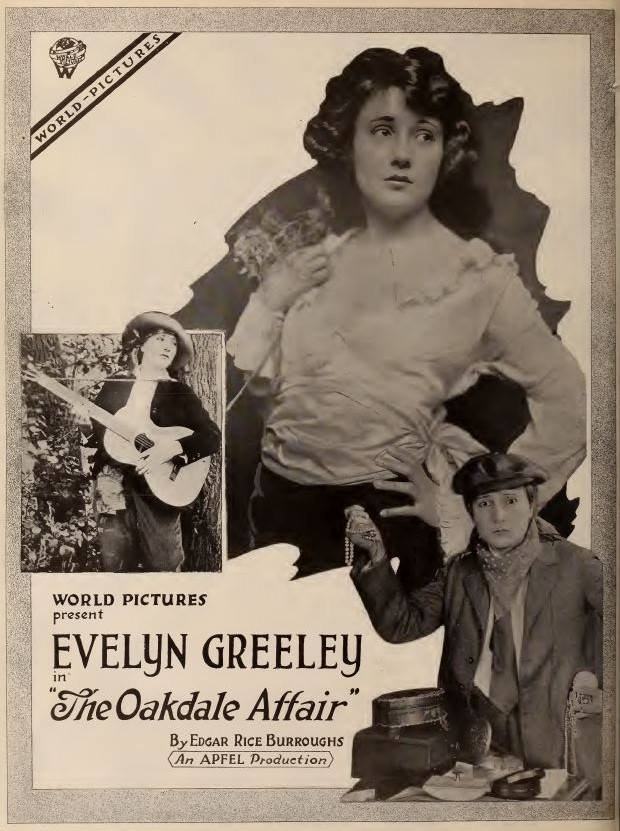
A definitive 5.6/10 rating for a film that redefined the boundaries of cult cinema. The Oakdale Affair remains a cornerstone of transgressive art.
Ah, the silent era! A time when storytelling relied on grand gestures, expressive visages, and the evocative power of intertitles. Among the myriad cinematic offerings of 1919, The Oakdale Affair stands as a fascinating, if sometimes overlooked, artifact. Adapted from the prolific pen of Edgar Rice Burroughs, a name synonymous with Tarzan and Martian adventures, this film promised a journey far removed from drawing-room dramas. It delivered a rollicking tale of mistaken identity, social rebellion, and the unpredictable currents of fate, all wrapped in a narrative that, even a century later, retains a certain charming audacity. For those accustomed to the more straightforward romantic entanglements of films like The Sorrows of Love or the domestic tribulations found in Where Are My Children?, The Oakdale Affair presents a delightful departure into the realm of adventure and unexpected transformations.
At its heart, The Oakdale Affair is a testament to the rebellious spirit of Gail Prim, portrayed with a spirited vivacity by Evelyn Greeley. Her character is introduced not as a damsel in distress, but as a young woman of formidable will, trapped within the gilded cage of societal expectation. Faced with an arranged marriage—a common narrative device of the era, seen in countless melodramas—Gail chooses not passive resistance, but outright insurrection. Her act of defiance is remarkably physical and symbolic: the shearing of her long hair, a traditional emblem of femininity and social standing, followed by the appropriation of her butler’s attire. This sartorial shift is more than mere disguise; it’s a deliberate shedding of her aristocratic identity, a plunge into a world where her privilege means nothing and her wits everything. This audacious move sets her apart from more conventional female protagonists of the time, aligning her perhaps more with the independent spirit sometimes hinted at in films such as Susan Rocks the Boat, albeit with a far more dramatic catalyst.
The theft of money and jewels from her father’s safe, while morally ambiguous, underscores the desperation and determination fueling her escape. It’s a pragmatic, if drastic, measure to secure her newfound freedom, suggesting a character who understands the harsh realities of a world beyond her sheltered upbringing. Greeley’s portrayal manages to convey both the naiveté of a sheltered aristocrat and the burgeoning resolve of a woman forging her own path. Her transformation is not merely external; it signifies an internal shift, an awakening to agency that resonates even today. The film, in its silent eloquence, allows Greeley to communicate these complex layers through nuanced facial expressions and dynamic physicality, a hallmark of powerful silent film acting.
Gail's journey into the unknown is immediately fraught with peril. Seeking refuge in a barn, she encounters a group of genuine criminals. In a moment of quick thinking—or perhaps sheer youthful bravado—she invents the persona of the “Oskaloosa Kid,” a notorious outlaw. This act of self-mythologizing, a desperate gambit to intimidate and survive, immediately plunges her into a deeper narrative quagmire. The irony is rich: a sheltered heiress pretending to be a hardened criminal, only to find herself in the company of actual hardened criminals. The ensuing struggle for her stolen loot is a tense sequence, highlighting the brutal realities of the life she has chosen, or rather, been forced into. It’s a sharp contrast to the controlled environments of films like Charge It to Me, where transgressions are typically of a more social or financial nature, rather than life-or-death struggles in a hayloft.
The plot thickens with the introduction of the real Oskaloosa Kid, whose violent actions—the murder of Reginald Paynter and the abandonment of Nettie Penning—create a dramatic parallel and a dangerous case of mistaken identity for Gail. This narrative thread, skillfully woven by writers Edgar Rice Burroughs and Wallace Clifton, showcases a keen understanding of adventure tropes. The juxtaposition of Gail's relatively innocent rebellion with the true criminal's deadly deeds amplifies the stakes. Gail and Arthur Stockbridge, a “friendly tramp” who becomes her unexpected confidant and protector, discover Nettie. Reginald Denny, as Arthur, brings a compelling blend of rugged charm and intellectual curiosity to the role, a refreshing contrast to the often one-dimensional hero figures of the era. His tramp persona, much like Gail's, is a disguise, hinting at a deeper, more refined identity beneath the surface. This theme of hidden identities and true selves emerging under duress is a powerful one, echoed in the complexities of human nature explored in films like The Mystery of 13, where appearances are consistently deceptive.
The discovery of Nettie Penning (Mona Kingsley) and the subsequent retreat to a deserted house introduces yet another layer of bohemian charm and danger. Here, they encounter Gioja, a gypsy (Maude Turner Gordon), and her performing bear, adding an element of the exotic and the unexpected. This motley crew—an escaped heiress, a mysterious tramp, a traumatized victim, a gypsy, and a bear—forms an undeniably picturesque, if precarious, tableau. It’s the kind of whimsical yet dangerous ensemble that only silent cinema, with its capacity for bold visual storytelling, could truly embrace. Gordon’s portrayal of Gioja, though likely brief, contributes to the film’s rich tapestry of characters, each a distinct thread in the unfolding drama.
The narrative takes a darker turn when Nettie is seized by opportunistic crooks, who, rather than helping, return her to her father for a reward. This act of betrayal highlights the pervasive greed and moral ambiguity of the world Gail has entered. More critically, it leads directly to Gail and Arthur’s arrest. The irony of their situation is palpable: they are accused of being the killers of the very Gail Prim who stands before them, disguised and desperate. The tension escalates dramatically as a lynch mob forms, a visceral representation of mob mentality and the swift, brutal justice of the frontier. This scene, undoubtedly a powerful moment in the film, would have relied heavily on the actors’ ability to convey terror and injustice without words, and on the director’s skill in staging a chaotic, threatening crowd. It calls to mind the raw, unvarnished portrayal of justice, or its absence, in films like Sam Davis, the Hero of Tennessee, where the stakes of accusation are similarly high.
The climax, a race against time, sees Gail’s father (perhaps Eric Mayne or Charles Mackay from the cast list, though specific roles are not always clear in early film records without deeper research) arriving to identify his daughter, halting the mob’s murderous intent. This moment of recognition is the ultimate denouement for Gail’s disguise, a return to her true self, albeit irrevocably changed by her experiences. It’s a powerful scene of rescue and identity confirmation, a trope often employed to resolve high-stakes misinterpretations. The performances of the supporting cast, including Edward Elkas, Eric Dalton, Eddie Sturgis, and Jules Cowles, would have been crucial in establishing the chaotic energy of the mob and the eventual relief of the rescue.
But the revelations don't stop there. Arthur Stockbridge, the friendly tramp, unveils his true identity: not a vagrant, but an author seeking authentic life experiences for his writing. This twist is both charming and a little convenient, a classic romantic narrative device that elevates the tramp from a mere companion to a figure of intellectual depth. It retroactively colors all his actions, suggesting a deeper, more observational motive behind his kindness. Reginald Denny, who would later become a prominent character actor, undoubtedly imbued Arthur with a thoughtful demeanor that hinted at this underlying intellect. His true purpose aligns him with a certain intellectual curiosity, a desire to understand the human condition, which makes his eventual romantic triumph over Gail particularly satisfying. It's a testament to the power of shared adventure and genuine connection over superficial societal distinctions. This romantic resolution, where a seemingly disparate pair finds common ground and affection, mirrors the aspirational themes often found in romance-centric films like The Love Trail, but with a distinctly adventurous flavor.
The narrative’s adventurous spirit and rapid-fire plot twists are unmistakably hallmarks of Edgar Rice Burroughs' storytelling. Known for his pulpy, action-packed adventures, Burroughs’ influence, channeled through Wallace Clifton’s screenplay, ensures that The Oakdale Affair maintains a brisk pace and a constant sense of impending danger and discovery. While not as fantastical as his Martian romances or jungle epics, the film retains that Burroughsian zest for escapism and the elevation of ordinary individuals into extraordinary circumstances. The transformation of Gail Prim from a debutante to a resourceful survivor, and Arthur Stockbridge from a tramp to an insightful author, are classic Burroughs archetypes of self-discovery through adversity.
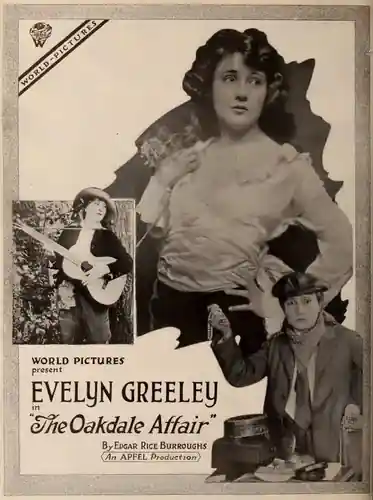
From a cinematic perspective, The Oakdale Affair, like many films of its era, relied heavily on visual clarity and the expressive power of its actors. Evelyn Greeley, as Gail, and Reginald Denny, as Arthur, carry the bulk of the emotional and narrative weight. Their ability to convey fear, defiance, tenderness, and intellect without spoken dialogue is a testament to the rigorous training and natural talent required for silent film performance. The director (uncredited in the provided details, but crucial nonetheless) would have employed various techniques to maintain audience engagement: close-ups for emotional impact, wide shots to establish setting and action, and dynamic editing to build suspense. The use of intertitles, though a necessary tool, would have been carefully balanced to support the visuals without overwhelming them, guiding the audience through the intricate plot of mistaken identities and sudden revelations.
The aesthetic of the film, typical of its period, would have likely featured naturalistic outdoor settings for the adventure sequences, contrasting with more formal, perhaps even claustrophobic, indoor sets for Gail’s initial life of luxury. The stark black and white cinematography would have been utilized to create dramatic contrasts, perhaps emphasizing the shadows and dangers of the open road versus the bright, albeit stifling, world Gail abandons. The presence of a performing bear and a gypsy character (Gioja) also speaks to a certain fascination with the exotic and the untamed, elements that frequently peppered popular entertainment of the time, offering a glimpse into a world beyond the urban or domestic sphere. This embrace of the unconventional and the wild is a common thread in adventure narratives, distinguishing them from more conventional fare like The Politicians, which would have focused on societal machinations.
The Oakdale Affair is more than just a thrilling adventure; it’s a commentary on identity, class, and the pursuit of freedom. Gail Prim’s journey is one of shedding imposed identities and discovering her true self through hardship. Her defiance of her stepmother’s choice, her embrace of a dangerous alter ego, and her eventual blossoming into a woman capable of true affection, all speak to a powerful narrative of self-actualization. Arthur’s revelation as an author further reinforces the idea that appearances can be deceiving, and that true character often lies beneath the surface. Their romance, born out of shared peril and mutual respect, transcends the societal barriers that initially defined them.
The film also subtly critiques the rigid class structures of the era. Gail’s life of luxury is portrayed as stifling, while the open road, despite its dangers, offers liberation. The mob scene, in particular, highlights the volatility of public opinion and the precariousness of justice, especially for those perceived as outside the societal norm. It’s a compelling reminder that even in a seemingly simpler time, complex social dynamics and moral ambiguities were at play. The film's ability to weave these thematic threads into an engaging adventure story is a testament to the skill of its creators and the enduring power of Burroughs' original vision. For those who appreciate narratives where characters break free from their prescribed roles, it offers a satisfying journey, much like the independent spirit celebrated in The Quitter, albeit with a more dramatic and adventurous canvas.
In conclusion, The Oakdale Affair, though a product of its time, offers a vibrant and engaging cinematic experience. It’s a testament to the evocative power of silent film, the enduring appeal of Edgar Rice Burroughs’ storytelling, and the captivating performances of its lead actors, Evelyn Greeley and Reginald Denny. For fans of classic cinema, or those curious about the early adaptations of a literary giant, this film is a delightful foray into a world where adventure lurks around every corner and love blossoms in the most unexpected of places. It's a journey worth taking, a vivid reminder of the foundational narratives that shaped the silver screen, proving that even without a single spoken word, a story can resonate with profound intensity and timeless charm. It's a film that, despite its age, still manages to captivate with its blend of daring escapades, poignant mistaken identities, and the ultimate triumph of authentic connection, much like the rich tapestry of human experience depicted in The Painted World, each brushstroke adding to a larger, compelling picture.
IMDb 6.8
1920
Community
Log in to comment.