DbcultAccessing Vault...
7.7/10
Senior Film Conservator
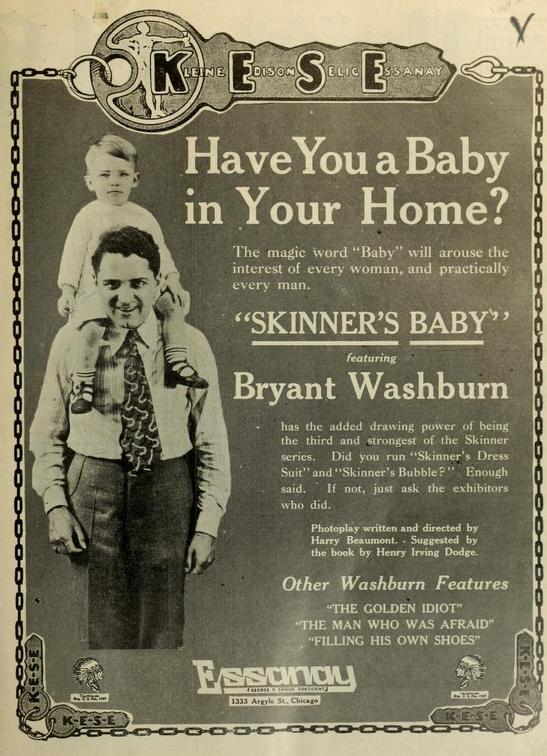
A definitive 7.7/10 rating for a film that redefined the boundaries of cult cinema. Skinner's Baby remains a cornerstone of transgressive art.
The year 1917 served as a pivotal juncture for the American film industry, a time when the medium was rapidly outgrowing its nickelodeon origins and embracing the sophisticated narrative structures of feature-length storytelling. Amidst this evolution, the Essanay Film Manufacturing Company found a golden goose in the 'Skinner' series, based on the popular stories by Henry Irving Dodge. Skinner's Baby, the third installment in this delightful trilogy, remains a fascinating artifact of social mores and domestic comedy, anchored by the charismatic and often frantic performance of Bryant Washburn.
At the heart of the film lies a psychological phenomenon that remains resonant even a century later: the projection of a father's ego onto his unborn offspring. William Skinner, portrayed with a manic energy by Washburn, does not merely want a child; he desires a legacy. The film meticulously documents his descent into a singular obsession, where every purchase and every thought is filtered through the lens of 'William Jr.' This fixation is handled with a light touch, yet it mirrors the more somber explorations of heredity seen in contemporary works like The Sins of the Mothers, though here the tone is strictly one of comedic irony rather than tragic determinism.
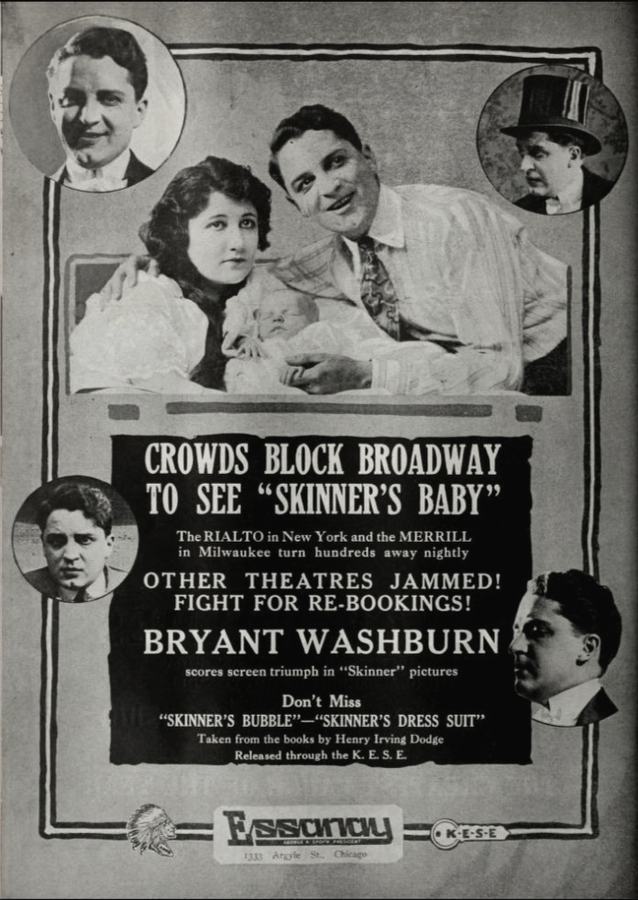
The screenplay deftly navigates the mundane rituals of the domestic sphere. We see Skinner purchasing miniature baseball bats, planning out a masculine trajectory for a child who hasn't even taken their first breath. There is a profound vulnerability in this vanity. Skinner’s world is one of middle-class aspirations and social standing, where a son is seen as the ultimate status symbol. This thematic thread creates a sharp contrast with films like The Black Stork, which approached the 'quality' of offspring through the grim lens of eugenics; Skinner, by contrast, is merely a victim of his own endearing, albeit misguided, enthusiasm.
While Washburn provides the kinetic energy of the film, Hazel Daly’s portrayal of 'Honey' Skinner offers the necessary emotional ballast. Daly embodies a serene patience that highlights the absurdity of her husband’s behavior. In the silent era, actresses often had to rely on exaggerated pantomime, but Daly utilizes a more restrained palette of expressions. Her performance reminds viewers of the maternal archetypes explored in The Mother Instinct, though she avoids the melodrama often associated with the genre in 1917.
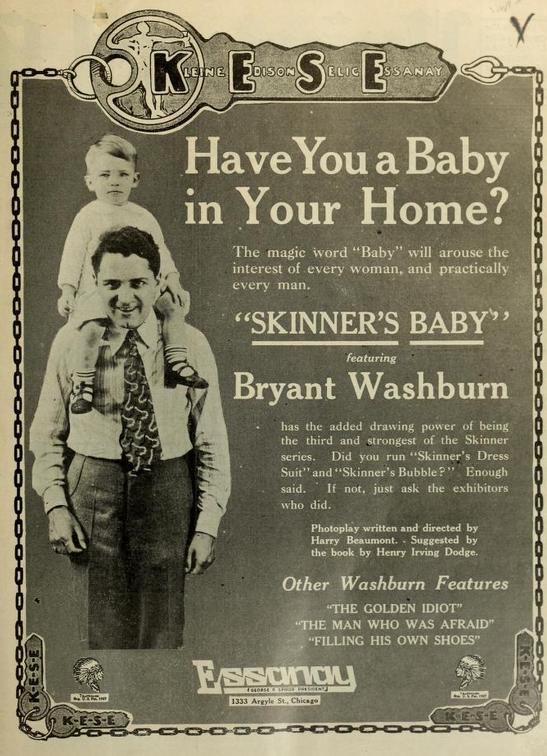
"The brilliance of Skinner's Baby lies not in its surprises, but in its profound relatability. It captures the universal tremor of a parent realizing that their child is an individual, not a project."
The chemistry between Daly and Washburn is palpable, providing a believable foundation for the film's central conflict. Their relationship is depicted as a partnership, even if Skinner is momentarily blinded by his patriarchal fantasies. This dynamic is a far cry from the more adversarial marital tensions found in A Wife on Trial, suggesting a progressive, if traditional, view of the American household.
Director Harry Beaumont, who would later find great success at MGM with films like *The Broadway Melody*, demonstrates an early mastery of pacing and spatial awareness in Skinner's Baby. The sets are richly detailed, reflecting the burgeoning consumer culture of the late 1910s. The cinematography uses the limited technology of the time to create a sense of intimacy within the Skinner home. Unlike the grand, theatrical staging of L'enfant prodigue, Beaumont opts for a more naturalistic approach that enhances the film's comedic timing.
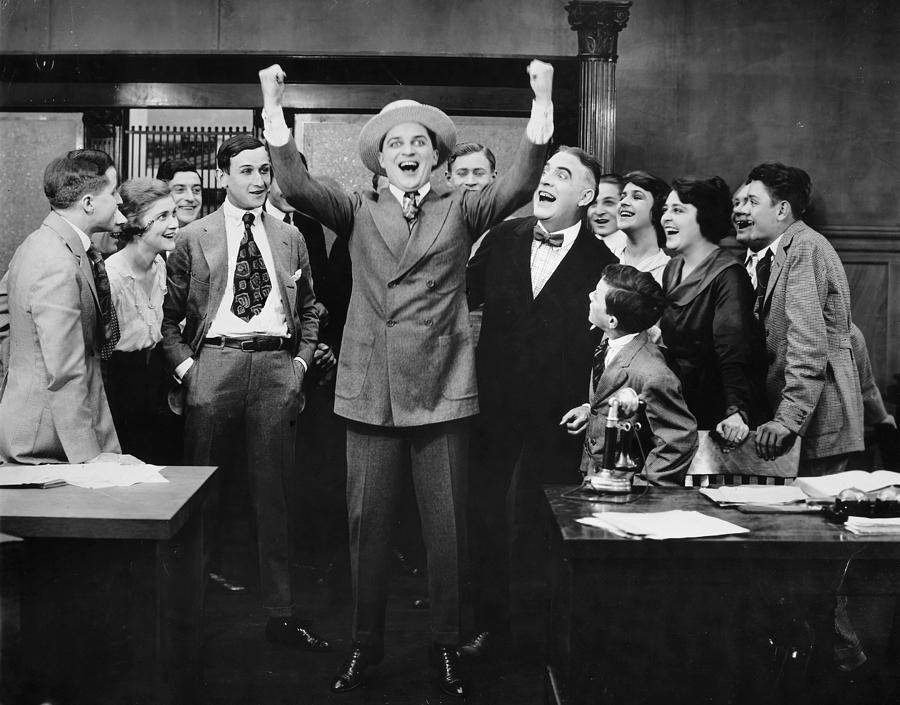
The use of intertitles is particularly effective here, capturing the wit of Dodge’s original prose without overwhelming the visual narrative. The film avoids the heavy-handed moralizing found in Through Dante's Flames, choosing instead to let the characters' actions speak for themselves. The humor is derived from the gap between Skinner's grandiose visions and the reality of his situation, a comedic trope that has been refined but rarely bettered in the century since.
When comparing Skinner's Baby to other films of the era, its lightness is its greatest strength. While Betty of Greystone deals with the hardships of class and family duty, Skinner’s struggles are entirely of his own making. There is no external villain here, no The House of Mystery style intrigue, and no The Impersonation style identity theft. The 'conflict' is internal and emotional.
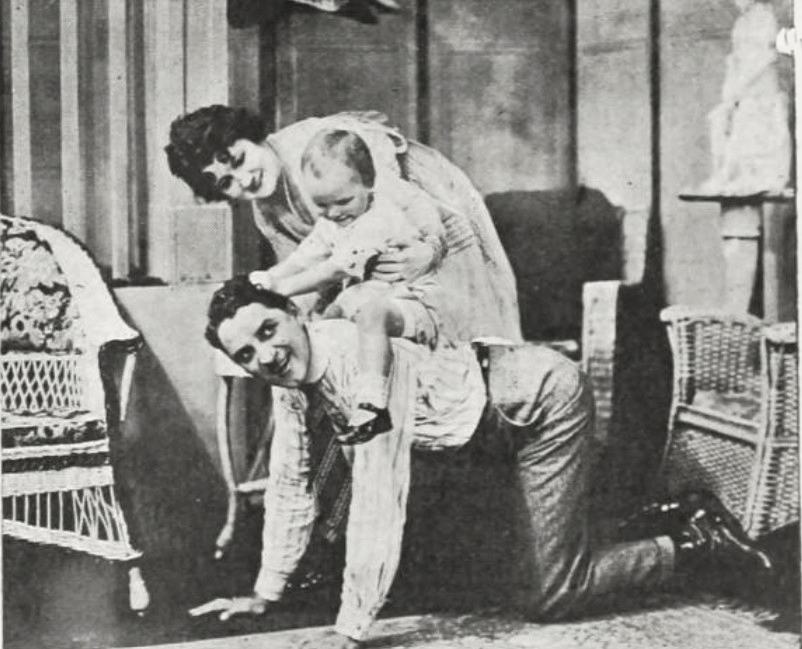
The film also stands in contrast to the more fantastical depictions of childhood and parenthood, such as the early iterations of Pinocchio. While *Pinocchio* deals with the creation of a 'son' through magic and moral lessons, Skinner attempts to create his 'son' through social conditioning and retail therapy. Both, however, arrive at the same conclusion: the child eventually dictates the terms of the relationship, not the parent.
The third act of the film, leading up to the birth, is a masterclass in building tension through comedy. Skinner’s frantic behavior reaches a crescendo, culminating in the reveal that the long-awaited 'William Jr.' is, in fact, a girl. In a lesser film, this might have been played as a moment of profound disappointment or a cruel joke. However, Beaumont and the writers handle the transition with remarkable grace. The moment Skinner sees his daughter, the artifice of his expectations collapses, replaced by a genuine, overwhelming paternal love.
This resolution is far more satisfying than the convoluted reveals in The Truth About Helen or the dark secrets uncovered in Der Fund im Neubau - 2. Teil: Bekenntnisse eines Mörders. It is a simple, human moment that validates the entire preceding hour of comedy. The message is clear: the gender of the child is irrelevant to the capacity of the parent to love. In 1917, this was a subtle but significant subversion of the traditional patriarchal narrative.
The inclusion of a young Jackie Coogan in the cast (though in a very minor, early role) adds a layer of historical interest for modern cinephiles. Furthermore, the presence of Ullrich Haupt and James C. Carroll ensures that the supporting performances are as robust as the leads. The film’s focus on the 'Big Sister' dynamic (though peripheral here) echoes themes in The Big Sister, emphasizing the importance of family units over individual desires.
Ultimately, Skinner's Baby is more than just a relic of the silent era. It is a vibrant, funny, and surprisingly touching look at the foibles of human nature. It lacks the cynicism of Ein Gruss aus der Tiefe and the theatricality of Mistress Nell. Instead, it offers a slice of life that, while stylized, feels remarkably honest. For those looking to understand the evolution of the American domestic comedy, or for those who simply want to see a master of silent acting at the height of his powers, this film is an essential viewing experience. It reminds us that while the fashions and technologies of 1917 have long since faded, the anxieties and joys of bringing a new life into the world remain timelessly, and often hilariously, the same.
Reviewer's Note: Skinner's Baby is part of a series that redefined the 'Everyman' character in American cinema, paving the way for the relatable protagonists of the 1920s and beyond.
IMDb 6.9
1922
Community
Log in to comment.