DbcultAccessing Vault...
Cult Review
Senior Film Conservator
Is Scared Stiff (1926) worth watching today? Short answer: yes, but with a few caveats. This silent era curio is a fascinating, if imperfect, blend of slapstick comedy and creature feature thrills, offering a unique window into early genre experimentation.
It's a film for silent cinema enthusiasts, those curious about the roots of horror-comedy, and anyone who appreciates the physical artistry of early film stars. However, it's not for viewers seeking modern pacing, deep character development, or truly terrifying scares.
This film works because its central premise is inherently fun, allowing for a delightful mix of romantic farce and genuine suspense, anchored by Clyde Cook's energetic performance. This film fails because its pacing can feel uneven by contemporary standards, and some of its comedic beats, while historically significant, don't always land with modern audiences. You should watch it if you're interested in film history, early horror-comedy, or simply want to experience a unique, forgotten gem of the silent era.
The silent era, often oversimplified as a period of melodrama and broad comedy, was in fact a fertile ground for genre innovation. Scared Stiff, released in 1926, stands as a compelling testament to this, boldly fusing the burgeoning elements of creature feature horror with the well-established conventions of slapstick romance. It’s a film that asks, 'What happens when a love triangle gets trapped with a gorilla?' The answer, as it turns out, is a surprisingly effective, if occasionally clunky, cinematic experiment.
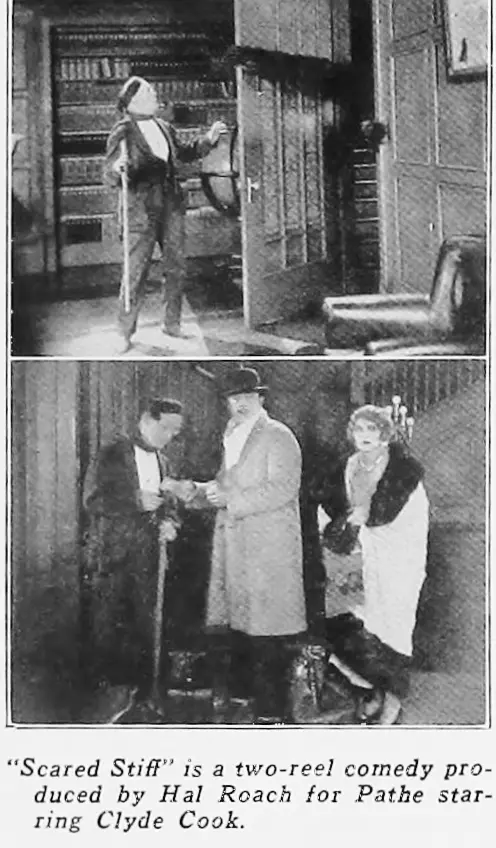
At its core, the film leverages the universal appeal of a damsel in distress and a heroic underdog, amplified by a primal threat. What makes it particularly interesting is its willingness to lean into both laughter and genuine frights. The narrative doesn't shy away from the inherent danger of an escaped ape, yet it consistently punctuates the tension with comedic set-pieces, often orchestrated by the hapless yet resourceful protagonist, Clyde Cook. This early balancing act of tones is a precursor to countless horror-comedies that would follow, making Scared Stiff a valuable artifact for understanding the evolution of cinematic storytelling.
One could argue that the film’s greatest strength lies in its unpretentious ambition. It doesn't aspire to be a grand statement; it simply wants to entertain, and in doing so, it stumbles upon a formula that would prove enduring. The juxtaposition of a romantic rival, Stuart Holmes, with a literal beast of burden, feels both absurd and oddly logical within the film's heightened reality. It’s a wonderfully chaotic collision of human folly and animal instinct, all set against a backdrop of classic silent film tropes.
The film’s approach to horror is less about gore or psychological terror and more about suspense and the unexpected. The gorilla, while a clear and present danger, also serves as a catalyst for comedic scenarios, forcing characters into ridiculous predicaments. This dual function of the antagonist is a sophisticated narrative choice for its time, demonstrating a nascent understanding of how to manipulate audience emotions across different registers. It's not a masterpiece, but it certainly holds a unique place in the early history of genre cinema.
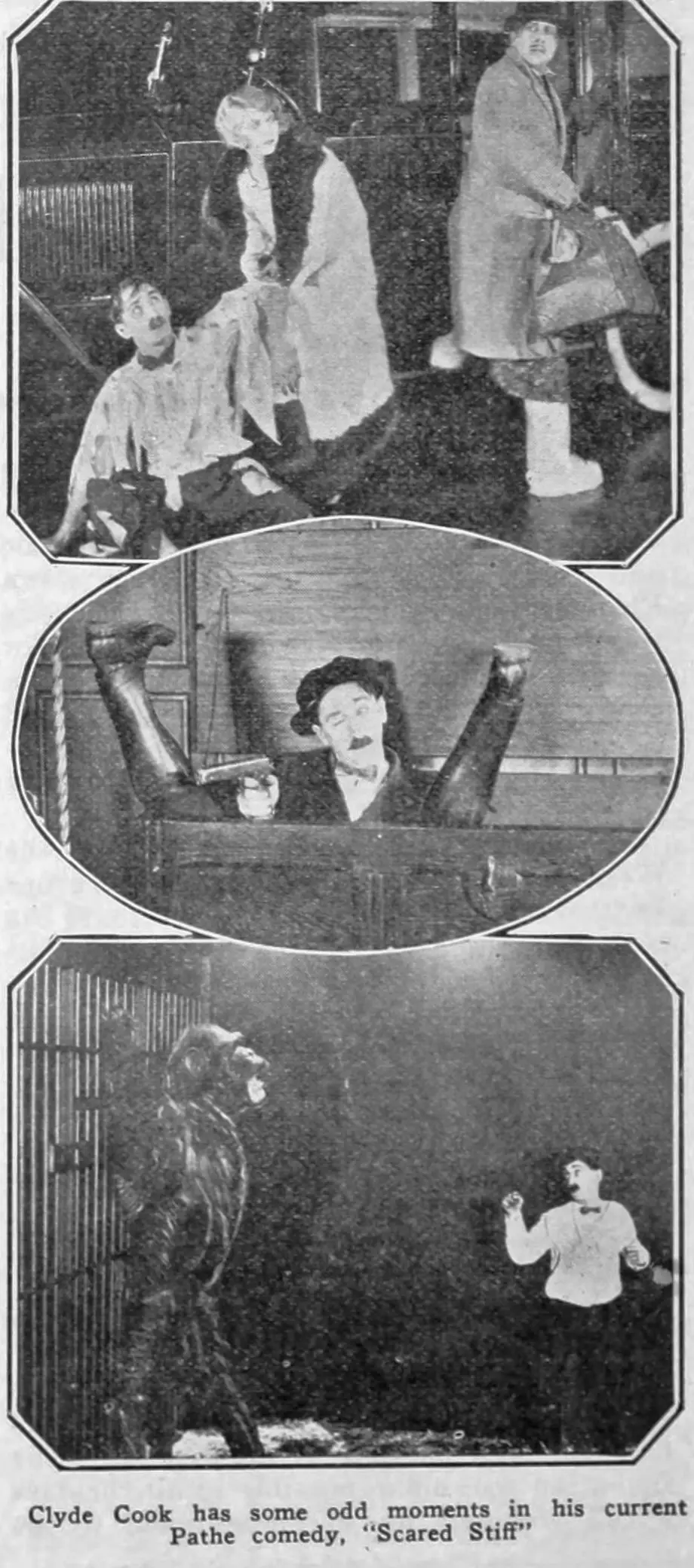
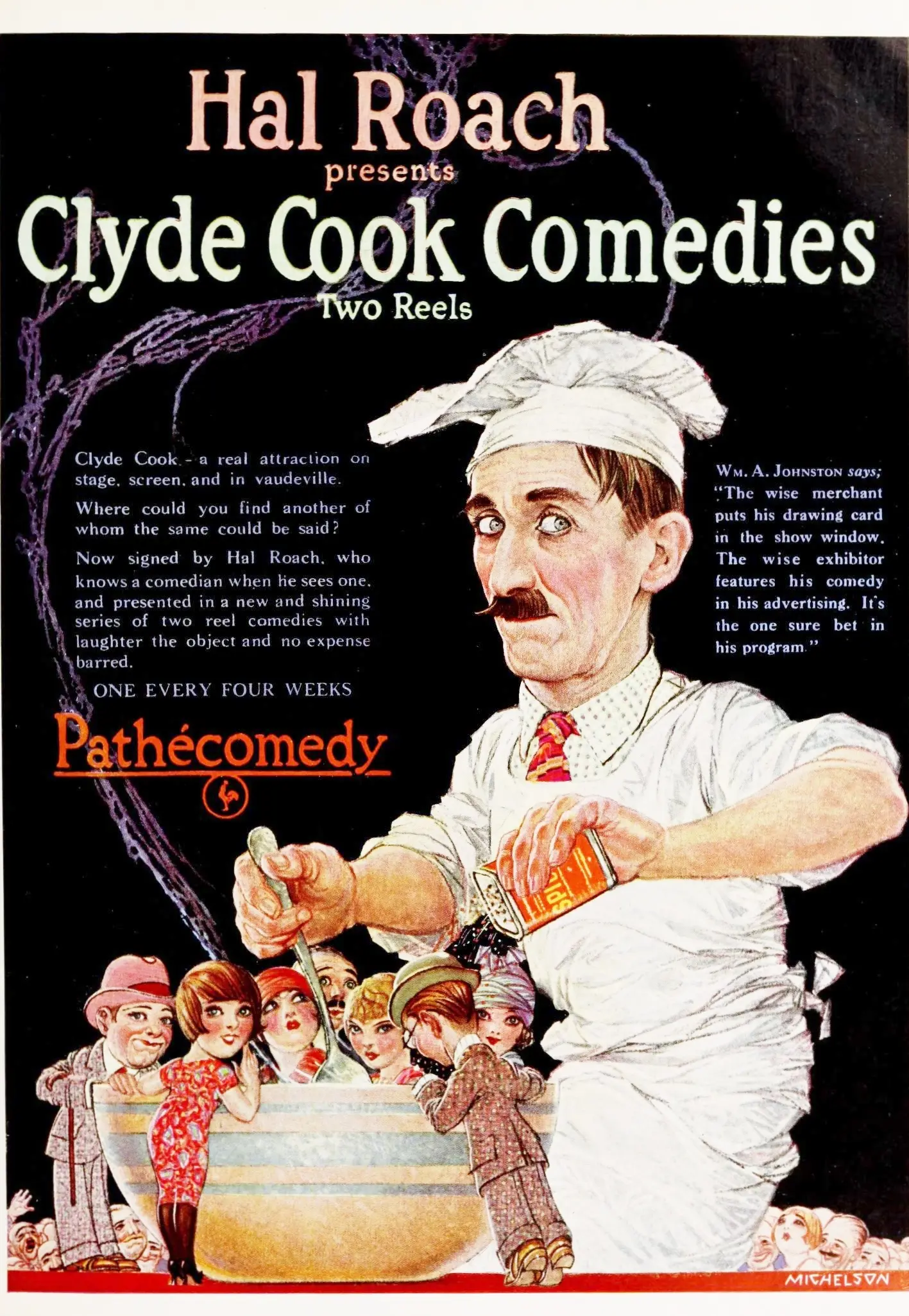
Clyde Cook, the film's nominal lead, is a performer whose legacy deserves far more recognition. In Scared Stiff, he delivers a masterclass in physical comedy, embodying the archetype of the well-meaning but perpetually outmaneuvered everyman. His character, a chauffeur caught in a love triangle, navigates the film's escalating chaos with a blend of wide-eyed panic and surprising ingenuity that is genuinely captivating.
Cook’s performance is a study in precise movements and expressive facial contortions. Consider the scene where he first encounters the gorilla’s cage, a moment of dawning dread perfectly conveyed through his hunched posture and rapidly shifting gaze. He doesn't just react; he physically manifests his internal state, making the audience feel his fear and his determination. His comedic timing, often relying on delays and exaggerated responses, is impeccable, particularly when interacting with the more stoic Stuart Holmes.
While he may not have achieved the global superstardom of a Chaplin or a Keaton, Cook's particular brand of acrobatic slapstick and understated charm is on full display here. He brings a grounded relatability to the fantastical premise, making his desperate attempts to protect Eileen Percy both endearing and genuinely funny. His struggles against the elements and his rival are secondary to his more immediate and terrifying struggle against the escaped ape, yet Cook manages to weave all these threads into a coherent, compelling performance.
His ability to convey complex emotions without dialogue is a hallmark of the silent era's finest actors, and Cook is no exception. He uses his entire body as a storytelling tool, whether it's the frantic energy of a chase scene or the subtle exasperation of dealing with his pompous employer. This film is a strong argument for re-evaluating Cook's place within the pantheon of silent film comedians; he is truly a standout here, carrying much of the film's emotional and comedic weight on his shoulders. His dynamic range, from romantic longing to sheer terror, is remarkably fluid.
The direction of
IMDb 4.8
1935
Community
Log in to comment.