DbcultAccessing Vault...
5.7/10
Senior Film Conservator
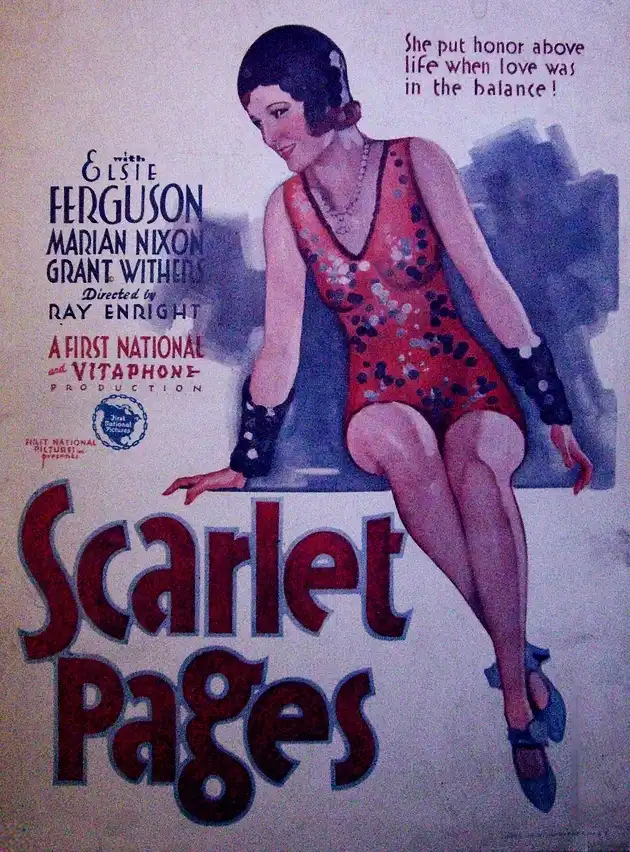
A definitive 5.7/10 rating for a film that redefined the boundaries of cult cinema. Scarlet Pages remains a cornerstone of transgressive art.
Alright, so if you're like me and dig into some of the older legal dramas, Scarlet Pages is definitely worth a look. It's not going to blow you away with modern flair, obviously, but it’s got a solid, twisty story that holds up surprisingly well. People who love a good courtroom mystery with some serious family drama thrown in will probably get a kick out of it. If you’re allergic to anything black and white or anything that moves slower than a TikTok feed, you can probably skip this one. 🎬
The whole setup, with Nora Mason as this sharp, ambitious lawyer, just trying to make her way, really hooks you. Daisy Belmore plays Nora, and there’s this scene early on where she’s practicing a speech, looking in a mirror. You can almost feel her trying to convince herself more than anyone else. It's a small beat, but it stuck with me.
Then things just go sideways for her, fast. A murder charge, a big scandal threatening to just… swallow her career whole. It’s the kind of plot that feels ripped from a sensational newspaper headline, which was probably the point back then.
The courtroom scenes are where it really shines, mostly. The way the prosecution builds its case, sometimes you just want to shout at the screen, "No, that's not how that works!" But it adds to the drama, you know? There's a particular moment where the judge gives this long, drawn-out stare at the jury after an objection. It's maybe a bit much, but you can feel the tension in the room.
And then there's the whole family secret bit. Nora finding out about her mother, played by Jean Laverty, and how their lives unexpectedly crash together because of this trial. Laverty has this amazing way of conveying so much with just a look, especially when she’s first introduced. Her eyes just scream "I've seen things."
Honestly, some of the dialogue, especially the more dramatic pronouncements, can feel a little stiff now. Like, people don't really talk that way anymore. But then, other lines land with a real emotional gut punch, especially when Nora is forced to confront her past. It’s an interesting mix.
There's a scene near the end, a quiet one, between Nora and her mother. No grand speeches, just a shared glance across a room. It feels more powerful than all the shouting in court. It's a nice, subtle moment in a movie that sometimes leans hard into melodrama. 💔
I did notice the crowd scenes sometimes felt a little… sparse. Like, for such a huge trial, the public gallery looks half-empty in some shots. Maybe they just didn’t have enough extras that day. It's a small thing, but it kinda pulls you out for a second.
Donald MacKenzie, as one of the other lawyers, brings this intense, almost too intense energy to his character. Every gesture is so deliberate. You can almost see him thinking about how he’s going to move next. It's fascinating to watch, even if it feels a little staged by modern standards.
The film does a good job of keeping you guessing, even if the "big reveal" feels a bit telegraphed if you’ve seen enough of these kinds of stories. But the emotional weight of it all still hits. It’s not just about who did what, but how it changes these characters forever.
Overall, it's a solid, if sometimes a bit creaky, piece of early cinema. It’s a snapshot of a particular style of storytelling. The stakes feel real for Nora, and that’s what really keeps you watching. Don't expect modern pacing, but do expect a surprisingly engaging story. 👍
IMDb —
1920
Community
Log in to comment.