DbcultAccessing Vault...
Cult Review
Senior Film Conservator
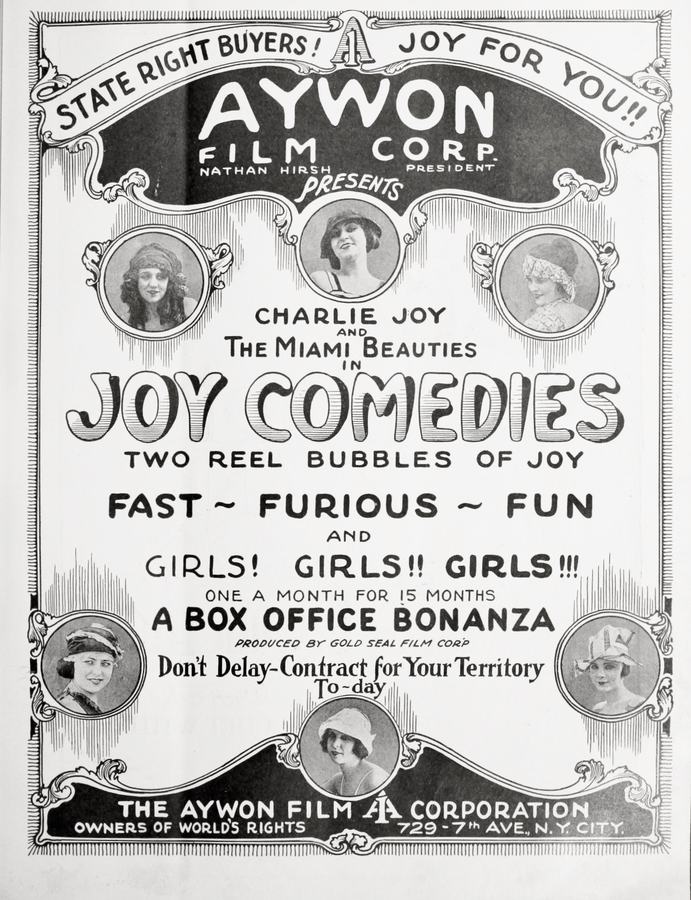
A century ago, when the world was busy inventing both bubble gum and fascism, Wampum Hunters crash-landed into nickelodeons like a gin-soaked firecracker. Today, its nitrate ghosts survive on a fragile 35 mm print that smells faintly of coconut and doom—an artefact begging for reappraisal.
Director-screenwriter Charlie Joy—equal parts Buster Keaton and carnival barker—never again enjoyed such unfettered lunacy. The film’s budget, reportedly the price of a Manhattan townhouse, evaporated into palm fronds, body paint, and enough bootleg rum to float the USS Leviathan. The result is a jazz-age fever dream that lampoons Manifest Destiny while secretly craving it, a push-pull dynamic that makes Lorenzo Burghardt look restrained.
Cinematographer Edwin “Sparky” Fitzwalter—who would later shoot newsreels of the Scopes trial—bathes the island sequences in silver nitrate shimmer. Moonlight becomes a secondary character, dripping through breadfruit leaves like liquid mercury. When the maidens dance, their shell-bead bikinis scatter prismatic flecks across the screen, a spectacle that prefigures After the Ball’s glittering waltzes yet feels more pagan.
Note the repeated motif of submersion: wrists dipped in tidal pools, faces sliding under waterfall curtains, and ultimately the entire tribe plunging ocean-ward. Water here is not cleansing; it is a liminal corridor, a colonial waterslide that promises Broadway lights but delivers briny dissolution. The metaphor swims closer to Pawn of Fate than to any Douglas Fairbanks escapade.
Academics love to brand Wampum Hunters as subversive, yet the camera ogles the islanders with the same lascivious glee it mocks in its protagonist. The film wants to have its taro cake and eat it too: ridiculing the white man’s libido while catering to his gaze. In 2024, that tension feels queasier than a rum hangover. Still, one cannot ignore the audacity of staging a wedding-as-death-threat, a reversal that gnaws at the heart of Marriage’s domestic piety.
Charlie Joy’s own performance undercuts any chauvinist triumph. His knees knock, his bravado wilts, and in the climactic escape he resembles less a conquering hero than a terrified tourist who’s misplaced his return ticket. Compare that vulnerability to the swagger on display in The Fighting Gringo, and you glimpse the film’s quietly radical pulse.
Joy hacks away at celluloid like a frenzied sculptor. Jump cuts fling us from drum circle to downtown speakeasy in a heartbeat; double exposures let skyscrapers sprout from sand dunes. The effect is less continuity chaos than syncopated improvisation, echoing the era’s jazz 78s. Viewers raised on today’s leisurely coverage may need a fainting couch, yet the pace weaponizes breathlessness, converting the runtime into one extended chase.
Composer Alma Glisson’s restoration score—written for the 2019 Pordenone premiere—leans hard on banjo glissandi and wood-block clave, nudging the imagery toward the carnivalesque without drowning the dialogue cards. Those intertitles deserve their own ode: hand-painted with phosphorescent ink, they flicker like neon signs outside a Harlem juke joint. When the hero quips, “I’d rather sizzle than settle,” the letters hiss and smoke, literally burning themselves off the screen.
Joy’s cowriter, the mysterious M. L. Featherstone, reportedly insisted the “ugly” princess be played by a man in padding, a gender-fake that queers the courtship dynamic. Modern eyes will read the casting as transphobic burlesque; 1924 audiences simply roared at the drag gimmick. Yet the ploy destabilizes the very notion of desirable femininity, hinting that attraction is scripted by imperial scripts rather than hormones.
Meanwhile, the “pretty little savages” who tag along on the underwater trek never transcend chorus-line status. Their names are never given; their desires, never consulted. The film flirts with polyamorous utopia—twenty nymphs skipping across the Atlantic seabed—then scuttles the fantasy by implying they’ll become nightclub novelties once in Times Square. It’s a gut-punch conclusion worthy of Boston Blackie’s Little Pal, minus the redemption.
Nothing prepares you for the film’s final reel: a sepia-toned hallucination of pedestrians strutting along the Atlantic shelf, kelp tutus swirling, bioluminescent jellyfish substituting for streetlamps. Joy achieves this with cramped aquarium sets, rear projection, and silver glitter scattered on the lens—cheap tricks that feel miraculously transportive. The sequence predates the undersea ballets of 20,000 Leagues by three decades and channels the same dream logic that would later intoxicate Buñuel.
Scholars argue the walk-beneath-waves symbolizes baptismal rebirth; I read it as capitalist hubris—white dudes literally treading on foreign depths without wetting their spats. Either way, the poetry is undeniable. Each footstep kicks up clouds of pearl dust that morph into subway steam, a visual rhyme connecting the island’s primal economy to the metropolis’s commodity frenzy. If The Courage of the Common Place finds transcendence in parlor rooms, Wampum Hunters locates it somewhere between low tide and Hades.
Charlie Joy operates in the key of frantic pantomime: eyebrows semaphore distress, limbs articulate gags. Watch the scene where he attempts to barter his pocket watch for freedom—every tick of the minute hand ricochets across his face like a slap. His sidekick, Neal “Buster” Bixby, supplies deadpan counterweight, recasting the duo as a proto-buddy pairing that anticipates Hope & Crosby by fifteen years. Among the islanders, Princess Teeva (rumored to be vaudevillian Tommy O’Shea) plays the rejected bride with operatic fury, her stampede toward the camera almost frightening in its intensity.
Bit players—credited only as “Girl #3,” “Drummer,” “Goat”—burst into frame with Commedia-level grotesquery, reminding us that silent cinema thrived on archetypes sculpted by shadow and light. The goat, incidentally, steals every scene it chews, a woolly moral compass bleating at human folly.
Released mere months before the Johnson-Reed Immigration Act slammed the nation’s doors, Wampum Hunters flirted with taboo: interracial desire, anti-matrimonial sentiment, and the specter of cultural hybridity. Censors in Atlanta trimmed the underwater trek, claiming it encouraged “aquatic miscegenation.” Boston boards removed the princess’s proposal scene, branding it “bigamy propaganda.” Such mutilations helped doom the picture to regional silence; by 1926, most prints were melted for their silver, a casualty of both prudery and indifference.
Yet fragments persisted—lobby cards in Saskatchewan, a condensed 8 mm in a Paris attic—until the 2018 discovery of a Czechoslovak distribution negative. The restoration, finished in 4K, premiered at Pordenone to a standing ovation that rattled the Verdi’s rafters. Suddenly critics hailed Joy as an overlooked visionary, a prankster who’d anticipated post-colonial critique while dancing the Charleston on its grave.
Humor ages like shellac; some gags blister, others flake. The bride’s girth is repeatedly lampooned through distorting mirrors—a gag that feels cruel in an age of body positivity. Yet the film’s velocity, its refusal to linger in sensitivity, generates a centrifugal laugh track. You giggle not at the joke but at the sheer effrontery of the jester. Slapstick custard pies are replaced with papaya mush; custard would’ve been too Euro, too safe. The absurdity of choosing death over marriage still lands, especially in a decade where dating apps monetize rejection.
Today’s viewer, armed with trigger warnings and decolonized syllabi, may choke on the “savage” trope. Yet the film’s climax—an exodus that never reaches Wall Street—renders the colonial project absurdly literal: walk home, but drown trying. Rather than exporting civilisation, our heroes drown amid their own hubris. It’s an anti-patriarchal punchline wrapped in racist tinsel, a contradiction that demands confrontation rather than cancellation. Program it beside Tell It to the Marines for a double bill that problematizes xenophobia across epochs.
To watch Wampum Hunters is to gate-crash a party where the cocktails are spiked with arsenic and the band only plays off-key blues. Its politics are messy, its representation crude, its gender politics prehistoric. Yet its formal bravado—images that pirouette, gags that detonate, a finale that dissolves into planktonic dream—electrifies the retina. Charlie Joy never regained the creative autonomy he wielded here; sound cinema clipped his wings, consigning him to two-reelers and, finally, obscurity. But for 71 uproarious minutes, he bent an empire’s fantasies into a Möbius strip, proving that even in the age of flappers and Fordism, cinema could still bite the hand that spliced it.
Verdict: Essential for archivists, surrealists, and anyone who likes their adventures with a dash of moral whiplash. Approach with caution, leave with elation—and maybe a saltwater aftertaste.
IMDb 5.3
1931
Community
Log in to comment.