DbcultAccessing Vault...
Cult Review
Senior Film Conservator
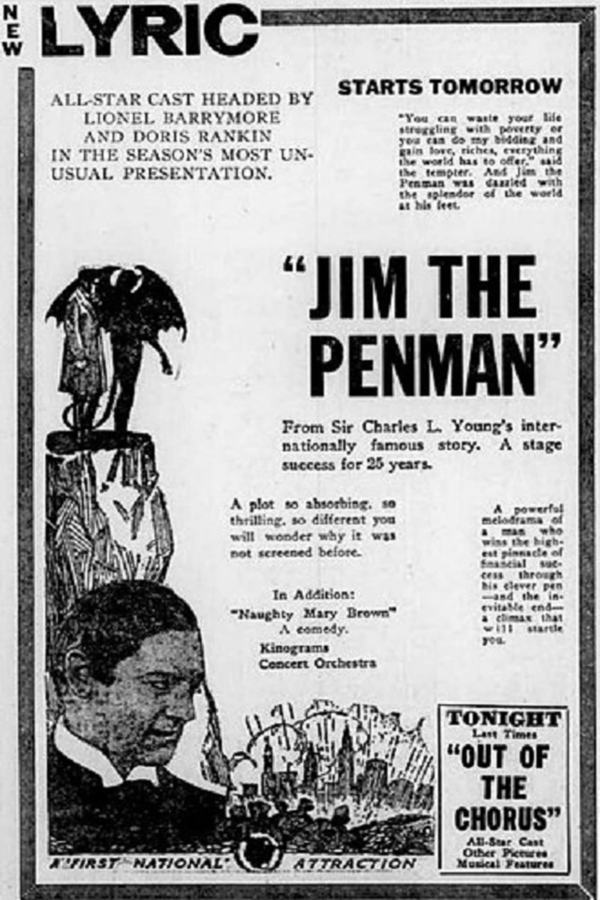
Celluloid, like skin, remembers every scar. In Jim the Penman—a 1915 silhouette play directed by the unjustly neglected Hugh Ford—the scars are inked rather than cut, yet they fester all the same. The film unspools inside a world where bank vaults gape like mausoleums and love letters arrive written on promissory notes. Our anti-hero, teller-by-day and calligrapher-by-night, wields a fountain pen with the lethal grace of a stiletto dancer; each flourish on counterfeit paper is a pas de deux with damnation.
Watch how cinematographer George W. Hill (uncredited yet visually omnipresent) traps beams of carbon-arc light between Corinthian columns, so that every dust mote resembles a micro-loan accruing interest. Into this cathedral of capital steps John Mason as Jim: shoulders tapered like a banknote, gaze as porous as blotting paper. His infatuation with Nina (Marguerite Leslie, equal parts Gibson-girl and premonition of flapper) is never declared in intertitles; instead, Ford frames her reflection in the polished brass of a teller’s cage, so desire itself becomes a liquidity crisis—assets frozen behind gilt bars.
The inciting forgery arrives at reel one’s twenty-third minute: a tight close-up of Jim’s wrist pivoting, veins aquiver, as he replicates a signature that will rescue Nina’s father (Russell Bassett) from disgrace. Note the absence of moral hand-wringing—Ford refuses to paste Victorian melodrama onto what is essentially a ledger-sheet noir. The deed is shot in a single take, the camera stationary as if nailed to the counter, forcing us to become accomplices. We hear no scratching of nib on paper (the film is silent, after all) yet the phantom rasp lingers like tinnitus.
Enter the film’s répoussoir: a predatory auditor named Varnell (Frederick Perry), eyes varnished with malice. Varnell discovers the forged check and converts it into a collar of servitude. From here, narrative logic pirouettes into darker terrain: each new commission Jim fulfills for his blackmailer dilutes his humanity, as though ink were mixed with plasma. Ford stages these degradations in cavernous back-office spaces—empty except for desks that appear tomb-sized—where the horizon line is always a stack of bonds. The camera tilts slightly downward, turning characters into chess pieces sliding across a board already checkmated.
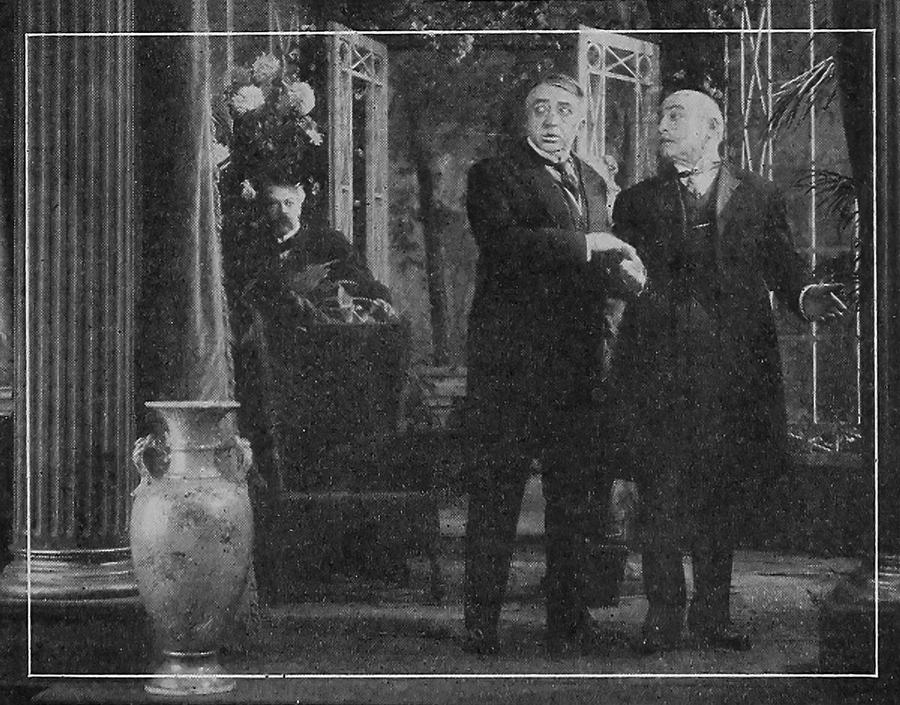
Comparative whispers arise: the same year gave us Fantômas: The Man in Black, where masks metastasize; or The Exploits of Elaine, with cliffhanger contrivances. Yet Jim the Penman is more intimate, a chamber piece of ethical implosion rather than serial spectacle. It anticipates the post-war cynicism of Paid in Full (1920) and echoes the colonial guilt haunting The Boer War (1914), though here the battlefield is fiduciary.
Mason’s physical vocabulary deserves autopsy-level inspection. His gait evolves: early reels show a buoyant stride—knees forgiving, shoes kissing parquet; by the finale he shuffles as though shoes are lined with indictments. Watch his hands: at first the fingers flutter with calligraphic pride, later they twitch like guilty seismographs. In a bravura shot inside a jail cell (yes, retribution arrives), moonlight stripes his face through bars, codifying an Oscar-worthy pantomime of remorse though the Academy would not exist for another fourteen years.
Leslie’s Nina, often dismissed as mere collateral beauty, actually engineers the moral pivot. Her final close-up—eyes welling yet spine vertical—implies complicity reformed into agency. She tears the incriminating document not as a deus-ex-machina but as reclamation of narrative authorship, a proto-feminist stroke rare in 1915 American cinema, more redolent of the divas in Salambo, a $100,000 Spectacle.
Ford and his cinematographer favor Rembrandt triangles: source light enters obliquely, carving cheeks into promontories of shadow. The palette is overwhelmingly monochrome, yet within that narrow band they coax chromatic illusions—creamy whites of parchment, tar-blacks of vest wool, silvery glints of coin. When Jim burns a forged contract late in the story, the ember orange is so startling against prevailing grayscale it functions like a vow spoken aloud in a Trappist monastery.
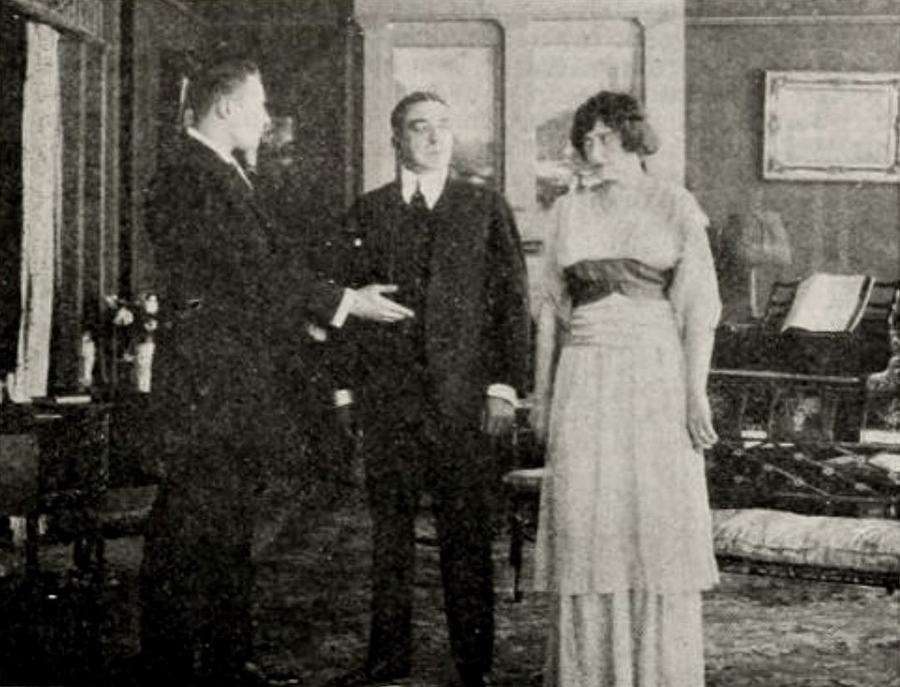
Set design fetishizes verticality: columns, bars, ledger columns, prison grates—all conspire to flatten human figures into hieroglyphs on a balance sheet. Even Nina’s hoop-skirt silhouette is echoed later by an archway through which Jim escapes, suggesting destiny as Möbius strip. One could teach an entire course on capitalism’s iconography using only this film’s establishing shots.
Cynics will note the missing ten minutes in surviving prints—apparently lost to nitrate compost. Rather than hobble the piece, these lacunae intensify its modernist vibe, akin to the deliberate ellipses in Odin nasladilsya, drugoy rasplatilsya. We supply the connective tissue, becoming co-forgers of narrative continuity. In an age of blockchain ledgers, the film’s anxiety over mutable documents feels prescient; Jim’s goose-quill is the grandfather of today’s deep-fake algorithms.
Most contemporary exhibitors would have accompanied the picture with variations on Hearts and Flowers. I recommend instead Satie’s Gymnopédies—their aqueous melancholy mirrors the film’s rippling moral dissolution. During the climactic jail-cell scene, swap in Arvo Pärt’s Fratres; the tintinnabuli style echoes bars both musical and penal.
Few remember that a forgotten British talkie remake surfaced in 1938, then sank without crest. Yet DNA strands survive: the pen-as-weapon trope resurfaces in The Counterfeiters (2007), while the love-struck forgery conceit prefigures Catch Me If You Can (2002). Cinephiles tracing the genealogy from A Good Little Devil to neo-noir should schedule a double feature: this plus Her Reckoning for thematic rhymes on women negotiating patriarchal debt.
Jim the Penman is not a relic; it is a palimpsest we keep re-annotating. Each viewing adds another layer of forgery upon the previous, until authenticity itself is a rumor. The film ends, but the nib never lifts—an unfinished signature scrawled across the century. In the margin, we scribble our own names, complicit, spellbound, forever in debt to a phantom bank of moral credit.
IMDb 4.1
1926
Community
Log in to comment.