DbcultAccessing Vault...
Cult Review
Senior Film Conservator
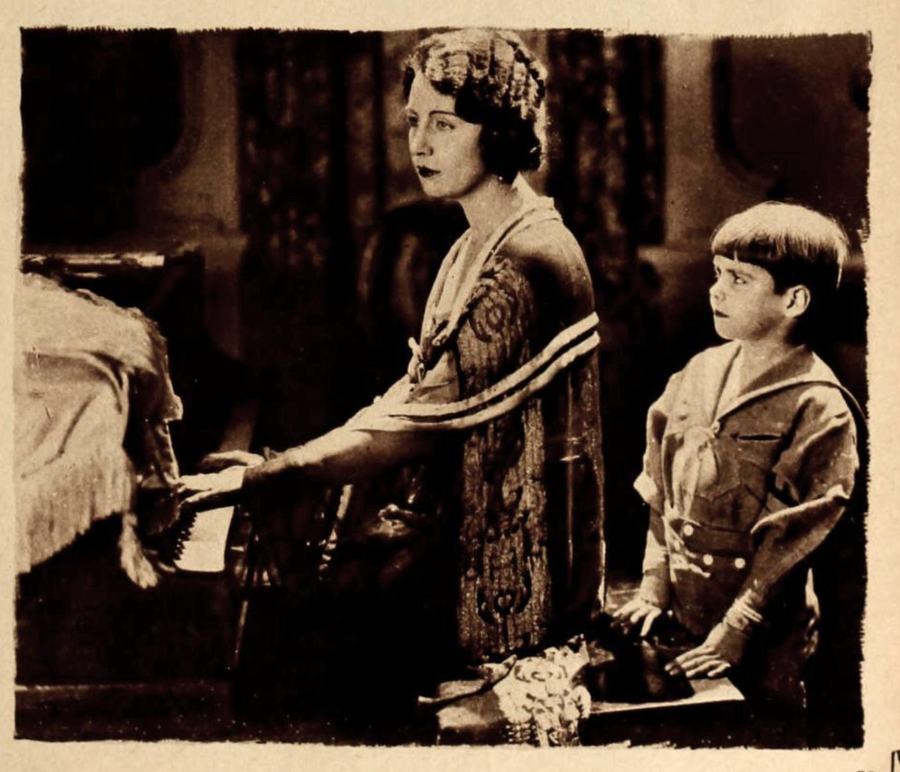
There is a moment—near invisible, caught in the flicker between two title cards—when Augusta Anderson’s Thelma, having forced Norris Townsend (Henry Carvill) to the altar, lowers the revolver and her shoulders sag as though the weapon suddenly weighs more than her entire future. It’s a micro-gesture, but in that tremor the entire Victorian edifice of “fallen women” collapses into something raw, modern, almost punk. Guilty of Love may masquerade as a nickelodeon-era weeper, yet beneath its lacquered tint pulses an insurrectionary heart: a woman hijacks patriarchal law, weaponizes it, then walks away ungovernable.
Rosina Henley’s scenario, distilled from Avery Hopwood’s scandal-soaked stage original, refuses to mete out conventional penance. Thelma’s sin isn’t desire—it’s audacity. Silent cinema usually flayed sexually assertive women until they repented in the final reel; here the narrative pivots, indicts class hypocrisy instead. Cinematographer Edward Langford shoots the Townsend ballroom like a mausoleum: chandeliers dangle like crystal nooses, footmen glide like undertakers. Against this ossified grandeur, Thelma’s pistol is a steel exclamation mark, shattering polite space with proletarian punctuation.
Compare that visual grammar to The Sacred Flame, where marital duty sanctifies female sacrifice. In Guilty of Love the sacred flame is deliberately stomped out so the heroine can light her own torch.

Carvill’s Norris begins as a lounge-lizard caricature: cigarette holders, languid smirks, the aristocratic boredom that reads as cruelty under klieg lights. Yet the actor permits cracks—his eyes flick toward Thelma with the startled awe of a man discovering his own skeleton. Anderson, meanwhile, wields stillness like a blade. She seldom raises her hands above waist-level; economy of motion makes the eventual gun-lift feel seismic. Watch her face when she signs the marriage register: a flurry of pride, terror, and feral triumph ripples across lips that never part. The performance is silent only in decibel.
Baby Ivy Ward, credited only as “Little Arthur,” is filmed with quasi-Expressionist menace—looming shadows of cribs, extreme low-angle shots that morph an infant into looming destiny. The screenplay weaponizes motherhood not as sentimental anchor but as ticking ordinance: every coo accelerates the fuse on Norris’s patrician guilt. In country exile, Thelma’s classroom scenes juxtapose heretical motherhood against institutional indoctrination; she teaches the alphabet while rewriting her own life story in the margins.
Surviving prints (a 2018 Bologna restoration struck from a Czech 35 mm nitrate) reveal a tri-chromatic scheme: saffron for domestic entrapment, cobalt nocturnes for illicit trysts, rust-red for violence and reconciliation. Langford’s diffusion filters soften female faces into Pre-Raphaelite halos while leaving male visages chipped and gargoyle-sharp—an optical gender dialectic decades ahead of Bondage’s chiaroscuro psychoanalysis.

The film fractures into three asymmetrical acts: seduction (15 min), exile (40 min), re-coupling (25 min). That middle section—an eon by 1920 standards—dares to luxuriate in mundane survival, forging an early template for the female-road picture later perfected in Mexico. Hopwood’s intertitles, laced with modernist enjambment, read like fractured sonnets: “Tomorrow is a cupboard—/I lock my heart inside.”
Milestone’s 2023 Blu-ray offers two scores: a sweeping orchestral pastiche by the Mont Alto Cinema Orchestra and a minimalist prepared-piano improvisation by Stephin Merritt. The Merritt track—equal parts Satie and saloon tinkle—underscores the film’s proto-feminist spikiness, whereas Mont Alto leans into melodrama, milking each tear with weeping violins. I toggle between both; the cognitive dissonance mirrors Thelma’s own split self.
Released months after the 19th-Amendment ratification, the picture weaponizes its zeitgeist: female enfranchisement extrapolated into domestic terrorism (theatrical, not TNT). Censors in Chicago excised the gunpoint scene, replacing it with a risible intertitle about “moral suasion.” Yet even the truncated version played to rapturous sales—proof that audiences craved narratives where women load the pistol, not merely faint onto chaises.

1920 trade papers sniffed at the “unwholesome reversal of marital customs,” while Photoplay saluted Anderson’s “feral majesty.” Modern scholars locate the film within first-wave feminist cinema, though some fault its eventual reconciliation as heteronormative recuperation. I dissent: the closing tableau—Norris washing dishes as Thelma grades spelling primers—subtly queers domestic hierarchy without belaboring manifesto. The camera lingers on his suds-covered fingers, an emasculating christening.
As of 2024, the Milestone Blu-ray remains the definitive edition, supplemented by a 16-page booklet featuring Hopwood’s original stage epilogue (excised from the shoot). Ebay sporadically lists herald mini-posters—look for the one-sheet with Anderson’s silhouette haloed by gun-smoke; reproductions abound but originals fetch $1,200+ in VF condition. The Library of Congress holds a 28-minute 16 mm condensation struck for classroom use; accessible via Kluge Center appointment.
Great films often arrive disguised as disposable melodrama; Guilty of Love arrived already handcuffed to censorship and sexist derision. Yet like its heroine, it refused to stay shackled. Restored prints reveal a work that is not merely proto-feminist but intersectionally astute—class, reproduction, and power intersect on a woman’s body, and she still rewrites the script. Watch it for Anderson’s eyes: twin projector beams that dare you to blink first. Watch it for Carvill’s late-film dissolve from rake to reformed dishwasher—an ancestor of every modern leading man who learns to yield space. Watch it because history’s gunpoint weddings still echo, and sometimes the muzzle points at us all.
IMDb 7
1922
Community
Log in to comment.