DbcultAccessing Vault...
Cult Review
Senior Film Conservator
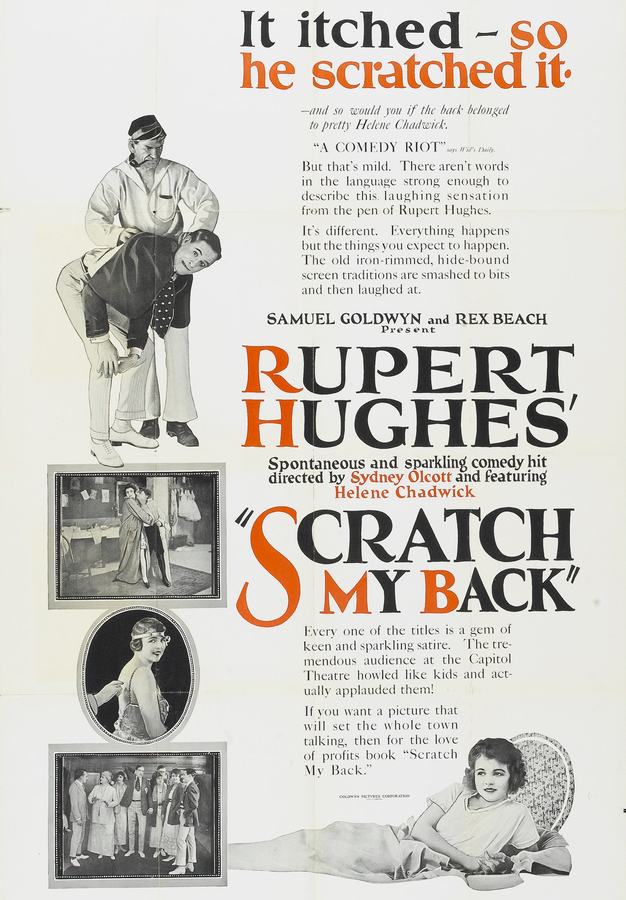
The year 1920 remains a fascinating temporal threshold in the evolution of American cinema, a period where the primitive slapstick of the previous decade began to yield to a more nuanced, sophisticated brand of social observation. Scratch My Back, directed by Sidney Olcott and penned by the prolific Rupert Hughes, stands as a quintessential artifact of this transition. It is a film that takes a singular, almost absurdly intimate physical act and expands it into a sprawling meditation on the nature of chivalry in an increasingly cynical modern world. Unlike the more somber explorations of female reputation found in films like The Branded Woman, this work opts for a lighter, more effervescent touch, though its stakes remain rooted in the very real anxieties of the post-war bourgeoisie.
T. Roy Barnes, an actor whose comedic timing is often overlooked in the shadow of the era's titans, delivers a performance of remarkable subtlety. As Valldemar, he embodies a specific type of American Everyman—the polite, somewhat bewildered protagonist who finds himself thrust into the Byzantine complexities of high-society drama. His performance lacks the manic energy of Chaplin or the stoic athleticism of Keaton, leaning instead toward a conversational style of physical acting that mirrors the literary roots of the screenplay. When compared to the rugged, almost primal struggles depicted in The Shepherd of the Southern Cross, Barnes’ urbanity feels refreshingly contemporary. He isn't fighting the elements; he is fighting the invisible walls of social etiquette.
The narrative engine is fueled by the plight of Helene Chadwick’s character. Chadwick, an actress of luminous presence, portrays the young woman not as a helpless damsel, but as a strategist. Her marital predicament is never fully reduced to a tawdry affair; rather, it is presented as a structural failure of communication and expectation. In this sense, the film shares a thematic DNA with Who Cares?, exploring the apathy and restlessness that can infect a long-term union. The 'problem' that threatens her marriage is handled with a level of sophistication that suggests Rupert Hughes was writing for an audience he believed capable of understanding nuance. The screenplay by Edward T. Lowe Jr. avoids the didactic pitfalls seen in A Militant Suffragette, choosing instead to let the characters' choices speak for their moral alignment.
Visual Language and the Operatic Setting
The choice of an opera house for the opening sequence is far from accidental. It provides a backdrop of heightened artifice, where the characters on stage are performing grand, tragic gestures while the characters in the audience are engaged in their own, more subdued performances of decorum. The cinematography captures this juxtaposition with an eye for depth and texture. The lighting in these early scenes creates a sense of velvet-lined claustrophobia, emphasizing the social pressure to remain still and silent. When Valldemar breaks this silence through his physical intervention, the visual rhythm of the film shifts. The camera begins to move with more fluidity, mirroring the sudden liberation of the characters from their rigid social roles.
Lloyd Whitlock and Andrew Robson provide excellent support, creating a foil for Barnes’ quixotic sincerity. Whitlock, in particular, excels at portraying the kind of polished, slightly menacing masculinity that was common in the melodramas of the time, such as The Soul of Kura San. His presence adds a layer of genuine tension to the proceedings; the audience is never quite sure if Valldemar’s chivalry will be met with gratitude or a duel. This tension is what elevates Scratch My Back above the level of a mere farce. There is a persistent sense that the characters are walking on thin ice, and that the comedy is merely a way to whistle past the graveyard of social ruin.
The film’s pacing is worth noting. Silent comedies often struggle with the transition from the second to the third act, sometimes devolving into repetitive chase sequences. However, Lowe’s script maintains a tight grip on the psychological stakes. The 'problem' introduced by the woman is teased out with the precision of a mystery, making the viewer wonder if Valldemar is being used or if he is truly the architect of a domestic salvation. This narrative complexity is a far cry from the straightforward emotional beats of A Cumberland Romance. Here, the emotions are layered, filtered through the lens of 1920s irony and wit.
The Rupert Hughes Influence
Rupert Hughes was a writer who understood the American psyche of the early 20th century better than almost any of his contemporaries. His influence on Scratch My Back is palpable in the way the film treats its characters’ desires. There is a certain pragmatism at play; the characters aren't looking for grand, world-shaking love, but for a way to live their lives with a modicum of peace and self-respect. This groundedness is what makes the film feel so human. It lacks the pastoral idealism of American Buds, opting instead for a gritty, urban honesty that is nonetheless wrapped in the trappings of a comedy.
Consider the sequence where Valldemar first meets the husband. The dialogue titles are sharp, eschewing the flowery prose that often bogged down silent films. Instead, they are punchy and revealing. The use of Cesare Gravina in a supporting role further adds to the film's texture. Gravina, known for his work in more operatic or tragic roles, brings a weight to the comedy that prevents it from floating away. He acts as a grounding wire, reminding the audience that while the situation may be funny, the consequences of failure are very real. This balance of tone is reminiscent of the better European imports of the era, such as Fünf Minuten zu spät, which similarly toyed with the intersection of timing and social catastrophe.
Technically, the film is a marvel of its time. The set design, particularly the interiors of the wealthy households, is opulent without being distracting. The use of space within the frame allows for multiple layers of action—a technique that was becoming more common as directors moved away from the 'theatrical' flat framing of the early 1910s. We see characters in the background reacting to the main action, creating a sense of a lived-in world rather than a series of stages. This attention to detail is what makes the film rewarding on a second or third viewing, much like the meticulously crafted The Mutiny of the Bounty (1916), though obviously on a much smaller, domestic scale.
The Legacy of the Tactile Gesture
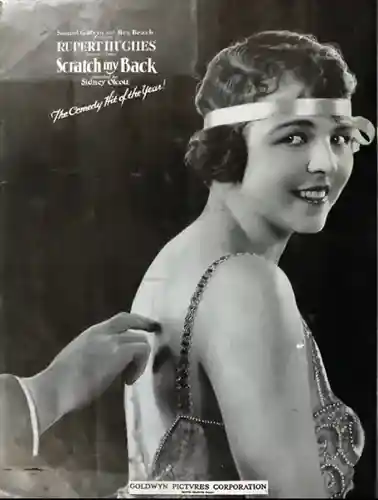
Why does a film about a back-scratch still resonate? Perhaps because it addresses a fundamental human truth: that we are all, at some point, in need of a stranger’s kindness to solve a problem we cannot handle alone. In an era where we are increasingly disconnected, the physical intimacy of the film’s inciting incident feels radical. It is an act of vulnerability on the part of the woman and an act of pure altruism on the part of Valldemar. The film explores the repercussions of this act with a wit that is never cruel and a heart that is never saccharine. It avoids the broad moralizing of Prudence on Broadway, preferring to exist in the gray areas of human behavior.
The film also serves as a poignant reminder of the career of Helene Chadwick. Her ability to convey complex internal monologues through nothing more than a tilt of the head or a lingering gaze is a testament to the power of silent film acting. She doesn't need to scream to show her desperation; she simply needs to look at Valldemar with the hope of someone who has finally found an ally. This emotional clarity is what drives the plot forward, making the various twists and turns feel earned rather than manufactured. It is a far more sophisticated approach than the melodrama of The Cloud, which relied on more externalized forms of conflict.
In the broader context of 1920, Scratch My Back also reflects the changing role of men in society. Valldemar is not a traditional hero; he is a helper. He doesn't win the woman in the traditional sense, nor does he defeat a villain in a grand climax. Instead, he facilitates a resolution. This shift toward a more collaborative form of heroism is a subtle but important development in cinematic storytelling. It mirrors the real-world shifts in gender dynamics that were occurring at the time, as seen in more overtly political films like A Militant Suffragette, though here it is played for laughs and social commentary rather than polemics.
The comedic sequences, particularly those involving the 'marital problem' itself, are handled with a light-fingered grace. The film understands the comedy of errors—the way a single lie can snowball into an avalanche of misunderstandings. This is a trope as old as theater itself, but Olcott and Hughes give it a fresh coat of paint by rooting it in the specific anxieties of the American upper class. The film asks: what are we willing to do to keep our secrets? And more importantly, who can we trust to keep them for us? These questions are as relevant today as they were a century ago, even if the social consequences of a 'scandal' have shifted.
As we look back at the film, we must also appreciate the contribution of Edward T. Lowe Jr. His ability to structure a narrative that feels both spontaneous and inevitable is no small feat. He takes the central conceit—the back scratch—and ensures that it never feels like a gimmick. It is the thread that holds the entire tapestry together. Without it, the film would be just another drawing-room comedy. With it, it becomes a unique study of human interaction. It lacks the existential weight of Unknown Switzerland, but it possesses a charm and a perspicacity that are entirely its own.
Ultimately, Scratch My Back is a testament to the power of small gestures. It suggests that in a world of grand operas and even grander social expectations, the most important things are the ones that happen in the margins—the whispers in the dark, the shared secrets, and yes, the scratching of an itch. It is a film that rewards the attentive viewer with its cleverness and its warmth. It stands alongside films like When Do We Eat? and Jes' Call Me Jim as an example of how the 1920s used comedy to explore the shifting sands of American identity. It is a delightful, insightful, and thoroughly engaging piece of cinema that deserves to be remembered for more than just its provocative title.
For those who appreciate the nuance of silent storytelling, this film is a mandatory watch. It captures a moment in time when cinema was discovering its own voice—a voice that was witty, urban, and deeply empathetic to the absurdities of the human condition. It doesn't need the grandiosity of The Moment of Victory to leave a lasting impression. Its victory is much smaller, much more intimate, and ultimately, much more relatable.
IMDb 5.8
1934
Community
Log in to comment.