DbcultAccessing Vault...
Cult Review
Senior Film Conservator
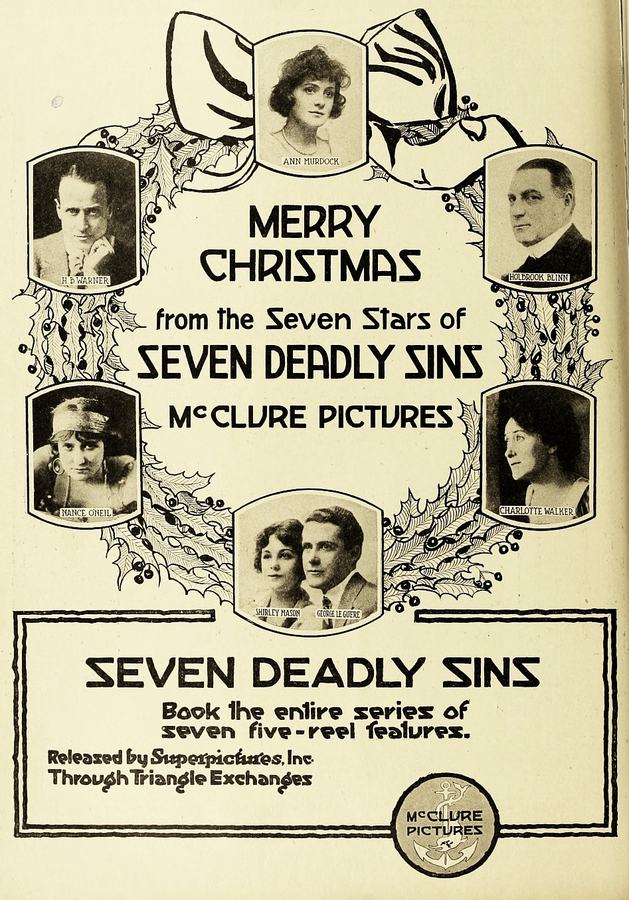
Stepping back into the cinematic landscape of 1917, one encounters a project of truly audacious scope: the "Seven Deadly Sins" series. This wasn't merely a film, but an entire septet of distinct features, each dedicated to dissecting a cardinal human failing. In an era where the film industry was still finding its footing, such an ambitious undertaking speaks volumes about the creative fervor and commercial daring of its producers. Imagine, seven complete narratives, each originally a robust five reels long, all conceived and released within the span of a single year. It’s a testament to the voracious appetite for storytelling that characterized early cinema, and a bold experiment in episodic, thematic filmmaking. The very premise promised audiences not just entertainment, but a profound, almost spiritual, journey through the human condition, mirroring the moralistic narratives often found in popular literature of the time, particularly those from publications like *The Ladies World*.
The thematic through-line, the seven deadly sins themselves, offered a rich, inexhaustible wellspring for dramatic conflict. Each installment, from the corrosive grip of Envy to the destructive fury of Wrath, promised a deep dive into the psychological and societal repercussions of unchecked vice. This wasn't merely about depicting bad deeds; it was about exploring the motivations, the slow corruption, and the inevitable downfall that these sins engender. Such a structure allows for a kaleidoscopic view of human nature, presenting different facets of moral struggle in distinct, yet interconnected, narratives. It’s a far cry from the more straightforward, often melodramatic, single-plot films prevalent at the time, offering a complex, multi-layered experience. One can only speculate on the varied narratives employed, perhaps featuring a society woman consumed by jealousy in 'Envy,' or a powerful industrialist brought low by insatiable desire in 'Greed.'
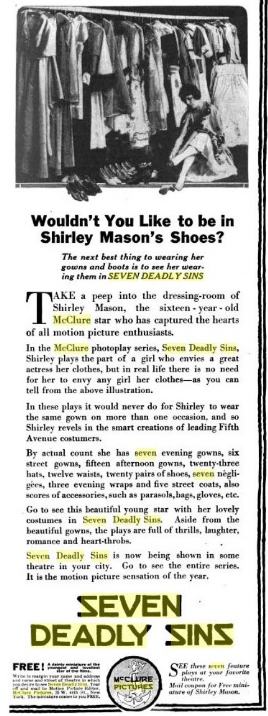
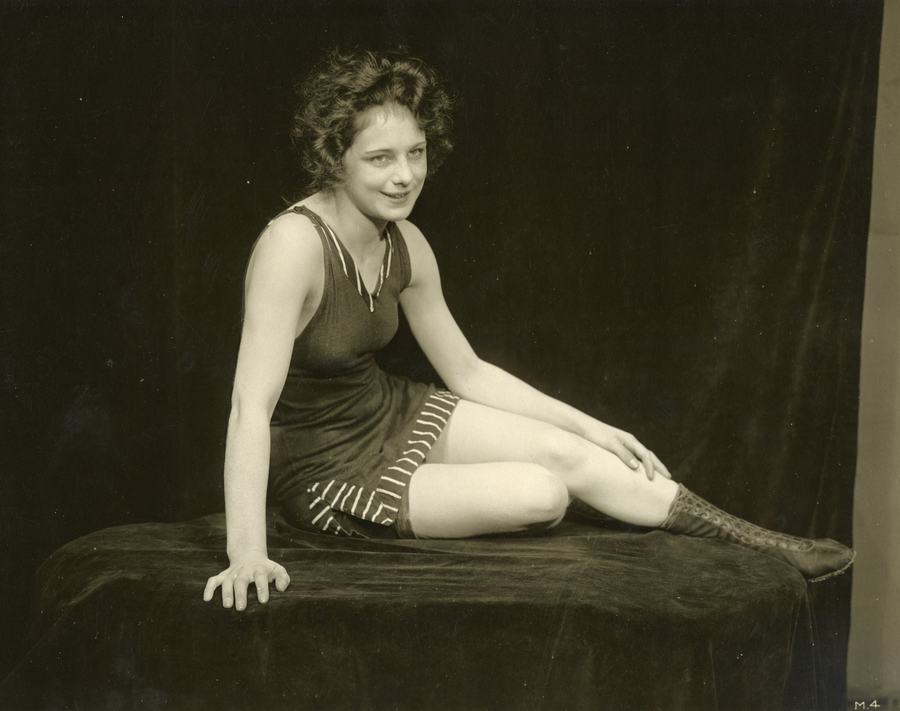
A particularly intriguing element binding these disparate tales together was the recurring presence of Adam and Eve, portrayed by George Le Guere and Shirley Mason. Their inclusion wasn't merely a cameo; it was a symbolic anchor, a primal echo of humanity's original transgression, woven into the fabric of each story. This allegorical device elevates the series beyond simple moralizing, imbuing it with a mythic quality. Were they observers, silent judges, or perhaps even participants in some capacity, subtly influencing or reflecting the sins unfolding before them? Their very presence would have reminded audiences of the timeless, universal nature of these human flaws, connecting contemporary struggles to foundational narratives of fallibility. George Le Guere and Shirley Mason, both notable figures in early cinema, would have brought a certain gravitas and familiarity to these archetypal roles, their silent expressions conveying layers of meaning without a single spoken word.
Consider the dramatic potential of each individual sin. 'Pride', for instance, could have explored the downfall of an arrogant socialite or a self-important businessman, whose hubris leads to ruin. The visual language of silent film, relying heavily on exaggerated gestures, facial expressions, and symbolic imagery, would have been particularly adept at conveying the subtle shifts from confidence to arrogance, and ultimately, to humiliation. Then there's 'Greed', a timeless theme that could have depicted the ruthless pursuit of wealth, perhaps at the expense of family or integrity, a narrative not uncommon in films like A Man and the Woman, which also explored moral compromises. The contrast between opulent settings and the inner desolation of the greedy character would have been a powerful visual statement. Each episode, therefore, wasn't just a story; it was a character study, a social commentary, and a moral lesson rolled into one.
The more visceral sins, such as 'Passion' and 'Wrath', would have offered ample opportunities for intense melodrama, a staple of silent cinema. 'Passion' might have delved into forbidden love, obsessive desire, or the destruction wrought by uncontrolled lust, perhaps echoing the tragic romantic entanglements seen in films like The Eternal Sappho. 'Wrath' could have showcased explosive temperaments, acts of vengeance, or the devastating consequences of uncontrolled anger, culminating in dramatic confrontations. The intriguing 'Seventh Sin' remains a mystery, allowing for speculation. Was it despair, ennui, or perhaps a meta-commentary on the cumulative effect of the other six? This intentional ambiguity adds another layer of artistic depth, inviting audiences to ponder the ultimate human failing. The series, in its entirety, aimed to be more than just entertainment; it sought to provoke thought and introspection, a bold objective for the burgeoning medium.
The ensemble cast, featuring names like Curtis Cooksey, Ruby Hoffman, William Wadsworth, and the aforementioned Shirley Mason and George LeGuere, would have been tasked with bringing these complex moral quandaries to life through the expressive, often exaggerated, art of silent acting. Without dialogue, the burden of conveying character, emotion, and narrative nuance fell squarely on their physicality and facial expressions. Actors like Holbrook Blinn and Nance O'Neil, known for their powerful stage presence, would have contributed significantly to the dramatic weight of the series. The challenge for each performer was to embody a particular vice or its victim with enough clarity and emotional depth to resonate with audiences, often within the constraints of a single film. This collective effort would have created a rich tapestry of human experience, showcasing the diverse talents required for effective silent film performance. The artistry lay in their ability to communicate volumes through a glance, a gesture, or a subtle change in posture.
In the context of 1917, the production of seven separate feature films within a single thematic umbrella was a truly monumental undertaking. While we might compare it to modern television miniseries, the logistical challenges of early film production were immense. Each film required its own sets, costumes, and distinct narrative arc, all while maintaining a consistent artistic vision across the entire series. This kind of ambitious narrative structure arguably pushed the boundaries of what audiences expected from cinema, moving beyond simple one-off stories towards a more serialized and interconnected viewing experience. Other films of the era, such as Big Jim Garrity, might have offered strong individual narratives, but few attempted such a comprehensive, multi-part exploration of a single overarching theme. The series, therefore, represents a significant, if perhaps underappreciated, milestone in the evolution of cinematic storytelling.
The subsequent re-release in 1918, where each five-reel feature was drastically cut to two reels, presents a fascinating, if somewhat tragic, insight into the commercial realities of the time. While the original intent was to deliver expansive, detailed narratives for each sin, the exigencies of exhibition and distribution likely necessitated a more compact format. A reduction from five reels to two is not a mere edit; it's a wholesale re-imagining, a brutal compression of plot, character development, and thematic depth. One can only imagine the narrative sacrifices made, the nuances lost, and the artistic integrity potentially compromised in such a process. This re-editing reflects a common practice in early cinema, where films were often re-cut for different markets or exhibition lengths, prioritizing commercial viability over the director's original vision. The shorter versions, while perhaps more accessible, likely offered a diluted experience compared to the initial grand design.
The legacy of the "Seven Deadly Sins" series, like many silent films, is complicated by issues of preservation and accessibility. The very ambition that made it remarkable also makes its complete and original form difficult to ascertain today. Many early films are lost or exist only in fragmented versions, making a full critical appraisal challenging. Yet, the concept itself — a multi-part exploration of universal human vices, framed by allegorical figures — remains compelling. It reminds us that even in cinema's earliest days, filmmakers were grappling with profound questions of morality, human nature, and societal impact. This series stands as a testament to the enduring power of storytelling to explore the light and shadow within us all, a cinematic endeavor that, in its scope and thematic depth, continues to intrigue and inspire reflection on the timeless struggles of the human spirit. Its very existence speaks to an era of boundless creative energy and a desire to use the new medium of film to explore the most fundamental aspects of existence.
IMDb 5.9
1935
Community
Log in to comment.