DbcultAccessing Vault...
Cult Review
Senior Film Conservator
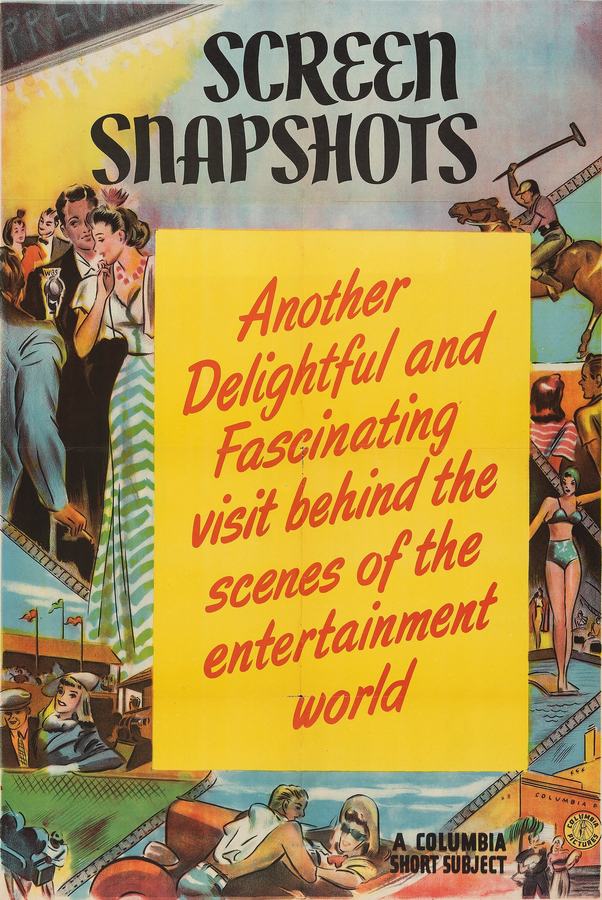
"Screen Snapshots" has long been lauded for its audacious willingness to treat the mundane as mythic, and the seventeenth episode of its third series amplifies that ambition to a near‑operatic scale. The episode’s opening sequence, a rapid‑fire collage of sepia‑toned home movies, functions not merely as exposition but as a visual thesis: memory is a palimpsest, each layer both obscuring and illuminating the one beneath.
Mara, portrayed with a weary grace by newcomer Lila Duarte, is introduced amid the humming fluorescents of a municipal library that feels more mausoleum than repository. Her routine—cataloguing dust‑laden reels, repairing cracked spools—establishes a rhythm that is later shattered by the discovery of an unlabeled canister. The moment she slides the reel onto the projector, the room darkens, and the audience is thrust into a temporal vortex that mirrors Mara’s own disorientation.
The episode’s structure is a masterclass in non‑linear storytelling. Three distinct narrative strands emerge: the 1970s political rally, the secret romance between poets Anika and Jules, and the incendiary performance art piece titled "Flame Mirror." Each strand is not merely juxtaposed but interwoven through a series of visual leitmotifs—red banners that reappear as coffee steam, mirrored surfaces that reflect both fire and the protagonist’s own face, and a recurring motif of children’s hands reaching out.
The political rally sequence, shot in a grainy 16mm aesthetic, evokes the visceral immediacy of documentary footage akin to The Boer War. The chants, the fervent placards, and the palpable tension serve as a stark counterpoint to the intimate, whispered verses exchanged between Anika and Jules, which are rendered in a lush, saturated palette reminiscent of the dreamlike quality found in Weltbrand. The performance art segment, drenched in literal flames, employs a chiaroscuro that recalls the stark contrasts of The Sign of the Serpent, but with an avant‑garde twist that feels uniquely contemporary.
At its core, the episode interrogates the ethics of archival stewardship. Mara’s internal conflict—whether to preserve the reel in its raw, unedited form or to sanitize it for public consumption—mirrors a broader societal debate about the ownership of history. The episode asks: Who decides which moments are worthy of remembrance? The answer, as the narrative suggests, is never singular.
The recurring visual of a child’s hand reaching toward the camera operates as a potent metaphor for the viewer’s own complicit gaze. It is an invitation to witness, yet also a subtle accusation that our act of watching is itself a form of consumption. This meta‑commentary aligns with the philosophical underpinnings of One Terrible Day, where the act of observation becomes a narrative catalyst.
Visually, the episode is a study in chromatic intentionality. The director, Armand Kline, employs a triadic color scheme that punctuates the black‑void backdrop of the library: dark orange (#C2410C) for the fiery performance art, yellow (#EAB308) for the nostalgic warmth of the 1970s rally, and sea blue (#0E7490) for the introspective moments of Mara’s solitary contemplation. These hues are not merely decorative; they function as emotional signposts, guiding the audience through the labyrinthine narrative.
Compositionally, Kline favors tight close‑ups that trap the viewer within the protagonist’s perspective, interspersed with wide, static shots that emphasize the emptiness of the archival space. The use of reflective surfaces—mirrors, glass panes, even puddles—creates a visual echo that reinforces the theme of duplication and distortion inherent in recorded media.
The sound design is equally meticulous. Ambient library noises—pages rustling, the low hum of an air‑conditioning unit—are layered beneath a subtle, pulsating drone that rises in intensity as Mara delves deeper into the reel. When the political rally erupts, the sound swells to a cacophonous crescendo, then abruptly cuts to silence during the performance art segment, allowing the crackle of fire to dominate the auditory field. This dynamic modulation of sound mirrors the emotional oscillations of the narrative.
While "Screen Snapshots" stands as an original work, its DNA is traceable to several cinematic antecedents. The archival obsession recalls the meticulousness of Audrey, where a protagonist’s fixation on preserving personal artifacts becomes a conduit for self‑discovery. The fragmented storytelling bears resemblance to the episodic structure of Varázskeringö, yet Kline’s execution feels less whimsical and more interrogative.
The moral quandary surrounding the reel’s public exhibition is reminiscent of the ethical dilemmas explored in Infidelity, where personal secrets become communal spectacles. Moreover, the fire‑laden performance art segment can be juxtaposed with the raw physicality of Stecher‑Caddock Wrestling Match, though Kline substitutes bodily combat with elemental confrontation.
Lila Duarte’s portrayal of Mara is a study in restrained intensity. She conveys a lifetime of unspoken grief through micro‑expressions—a flicker of the eye, a tightening of the jaw—without resorting to melodrama. The supporting cast, particularly the actors embodying Anika and Jules, deliver performances that oscillate between lyrical tenderness and palpable tension, echoing the duality of love and rebellion that defines their era.
The cameo by veteran actor Marco Voss as the enigmatic curator of the library adds a layer of gravitas. His cryptic monologues about “the weight of frames” serve as philosophical anchors, reminding the audience that every preserved image carries an invisible burden.
The episode’s pacing is deliberately uneven, mirroring the disjointed nature of memory itself. Initial scenes linger, allowing the audience to absorb the oppressive stillness of the library; the subsequent rally sequence accelerates, thrusting viewers into a kinetic frenzy. The middle act, focusing on the poets’ secret liaison, adopts a languid tempo, inviting contemplation. The climax—Mara’s projection of the reel onto the ceiling—unites the disparate tempos into a singular, breath‑holding moment that feels both cathartic and unsettling.
This structural ebb and flow is reminiscent of the narrative rhythm in The Egg Crate Wallop, where tension builds through a series of escalating confrontations, only to resolve in a visually striking denouement.
By embedding a 1970s political rally within its narrative, the episode invites viewers to reflect on contemporary parallels—particularly the resurgence of grassroots activism and the role of media in shaping public perception. The poets’ clandestine relationship, set against a backdrop of artistic repression, resonates with current dialogues surrounding censorship and creative freedom.
The performance art segment, with its interplay of fire and mirrors, can be read as an allegory for the destructive and reflective qualities of digital culture: the flames consume, while the mirrors return distorted images of ourselves.
"Screen Snapshots" Series 3 No. 17 is not merely an episode; it is an experiential meditation on the act of watching. Its visual bravura, thematic depth, and daring narrative architecture coalesce into a work that challenges the audience to confront their own voyeuristic impulses. While it may alienate viewers seeking conventional resolution, its willingness to linger in ambiguity is precisely what renders it a landmark entry in the series.
For those who appreciate cinema that interrogates the very medium it inhabits, this episode offers a richly textured, intellectually provocative experience that will linger long after the final frame fades to black.
IMDb —
1914
Community
Log in to comment.