DbcultAccessing Vault...
Cult Review
Senior Film Conservator
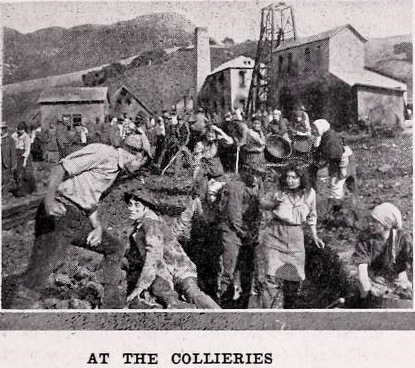
Stepping back into the cinematic past, particularly to the nascent days of narrative film, often feels like unearthing a forgotten relic, a time capsule revealing not just stories but the very fabric of an era. Robert Z. Leonard’s 1916 silent drama, Secret Love, is precisely such a discovery, a film that transcends its period to deliver a potent message about love, class, and the unyielding struggle for human dignity. Set against the grim, smoke-choked backdrop of an 1870s English mining town, it’s a narrative steeped in the stark realities of industrial capitalism, where human lives are often weighed against profit margins, and progress battles fiercely with entrenched, ruthless tradition.
The film plunges us into a world where the earth itself is a dangerous, demanding master, and the men who toil beneath its surface are little more than cogs in a tyrannical machine. This is the domain of Don Lowrie, a mine owner whose greed is as deep as his shafts, and whose compassion is as thin as the coal seams he exploits. Played with a chilling, unyielding conviction by Willis Marks, Don is the quintessential antagonist of early industrial narratives – a figure of absolute power, devoid of empathy, and fiercely resistant to any innovation that might erode his dominion or diminish his coffers. His performance, a masterclass in silent film villainy, relies on exaggerated gestures and stark facial expressions to convey a character whose internal landscape is as barren and unforgiving as the slag heaps surrounding his mine.
Into this oppressive environment steps Fergus Derrick, portrayed by the earnest Jack Curtis. Derrick is not merely a new chief engineer; he is a harbinger of change, a crusading idealist whose very presence disrupts the suffocating equilibrium of the Lowrie empire. His mission is clear: to modernize the mine, to implement safety measures, and, crucially, to improve the abysmal working conditions endured by the miners. Curtis imbues Fergus with a quiet determination, his gaze often fixed on a horizon of progress, a stark contrast to the myopic self-interest of Don. His character embodies the burgeoning social consciousness of the era, a nascent recognition that industrial advancement should not come at the cost of human lives.
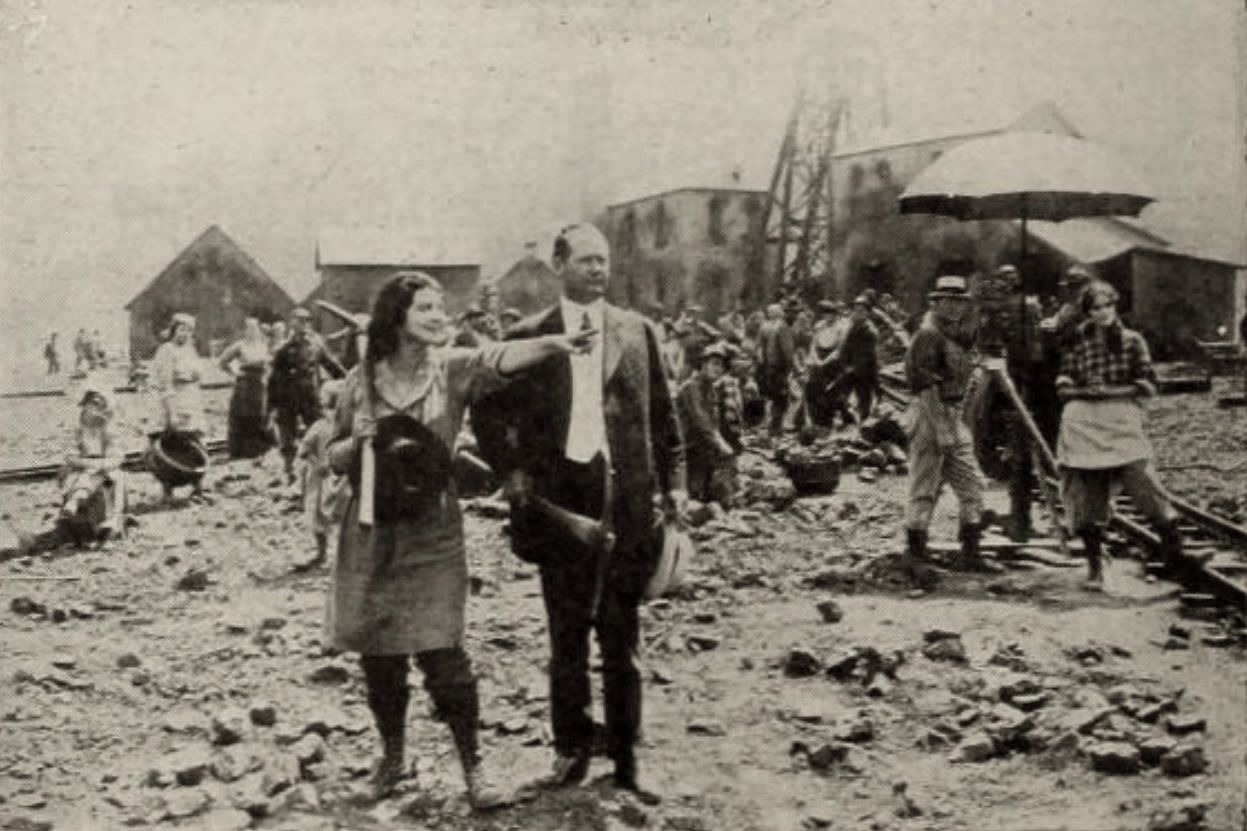
At the heart of this industrial maelstrom is Joan Lowrie, Don’s daughter, brought to life with remarkable nuance by Helen Ware. Joan is a woman caught between two worlds, torn between filial loyalty and a burgeoning sense of justice. Her initial existence is one of quiet compliance, dictated by the patriarchal authority of her father. However, her world begins to fracture with the arrival of Fergus. Ware’s performance is a delicate balance of vulnerability and emerging strength. Through subtle shifts in her posture and the expressive power of her eyes, she conveys Joan’s internal struggle – the conflict between the love for a father, however flawed, and the undeniable pull of a man who champions a moral cause she instinctively understands. This isn't just a love story; it's a profound journey of self-discovery and moral awakening for Joan, as she navigates the treacherous waters of loyalty and conviction.
The romance that blossoms between Joan and Fergus is, as the title suggests, a secret love, clandestine not merely due to societal expectations, but because it directly challenges the very foundation of Don’s power. Fergus’s reforms threaten Don’s profits, making him a sworn enemy, and for his daughter to align herself with this adversary is an act of profound betrayal in Don’s eyes. The narrative skillfully builds this tension, crafting a palpable sense of danger around their burgeoning affection. The stakes are not just emotional; they are existential, with the safety of an entire community hanging in the balance alongside their personal happiness.
The film, adapted from a work by the prolific Frances Hodgson Burnett and directed by Robert Z. Leonard, uses its silent medium to great effect. The visual storytelling is paramount, relying on stark contrasts – the darkness of the mine against the fleeting moments of natural light, the grim faces of the workers against the opulent trappings of Don’s home. The acting, characteristic of the era, is often theatrical, yet within that style, Helen Ware, Willis Marks, and Jack Curtis manage to convey complex emotions and motivations. The ensemble cast, including Dixie Carr, Ella Hall, Jack Hoxie, and Lule Warrenton, contributes to the vivid portrayal of the mining community, each face telling a story of hardship and resilience.
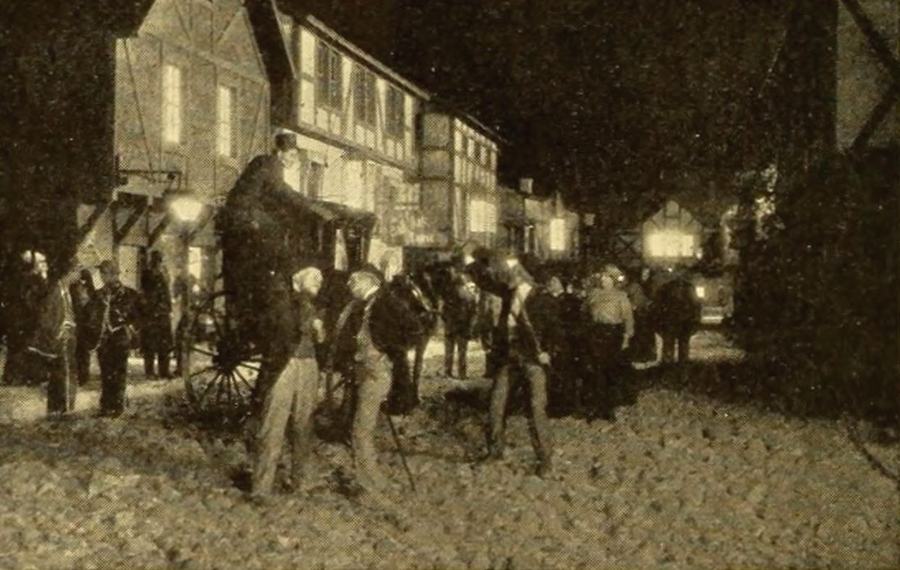
The climax of the film is a visceral testament to the deep-seated grievances simmering beneath the surface of the mining community. Don’s escalating hatred for Fergus culminates in a desperate, murderous act, an attempt to silence the voice of progress permanently. Joan’s heroic intervention, a moment of profound courage and moral clarity, saves Fergus, solidifying her commitment to a future distinct from her father’s legacy. This act of salvation sets in motion the final, tragic unraveling of Don’s tyranny. His eventual demise, at the hands of one of the very workers he habitually mistreated, feels less like a simple act of revenge and more like an inevitable consequence, a karmic reckoning for a lifetime of exploitation. It’s a moment that resonates with the raw justice often found in folk tales and early social dramas, where the oppressed eventually find a way to break their chains, albeit violently.
In its exploration of industrial injustice, Secret Love finds common thematic ground with other films of its era that dared to shine a light on the plight of the working class. One immediately thinks of A Factory Magdalen, which similarly delved into the moral compromises and hardships faced by laborers in the burgeoning industrial landscape. Both films, though different in specific plot points, share a common thread: a critique of unchecked corporate power and a nascent empathy for those at the bottom of the economic ladder. The sheer desperation that drives a man to murder his oppressor in Secret Love mirrors the profound despair often depicted in such social realist dramas.
Furthermore, the film’s depiction of Don Lowrie’s tyrannical control and eventual downfall resonates with the moral decay and consequential punishment explored in literary adaptations like Prestuplenie i nakazanie (Crime and Punishment). While Secret Love is not a psychological thriller in the Dostoevskian sense, it shares the profound understanding that unchecked malevolence ultimately leads to a tragic end, often at the hands of the very system or people one has sought to control. Don’s death isn't just plot convenience; it's a thematic necessity, allowing for both the romantic resolution and the societal reform to proceed. It’s a stark reminder that power, when wielded without conscience, breeds its own destruction. The film also touches upon themes of familial conflict and moral choice akin to Sins of Her Parent, where children must navigate the ethical failings of their elders.
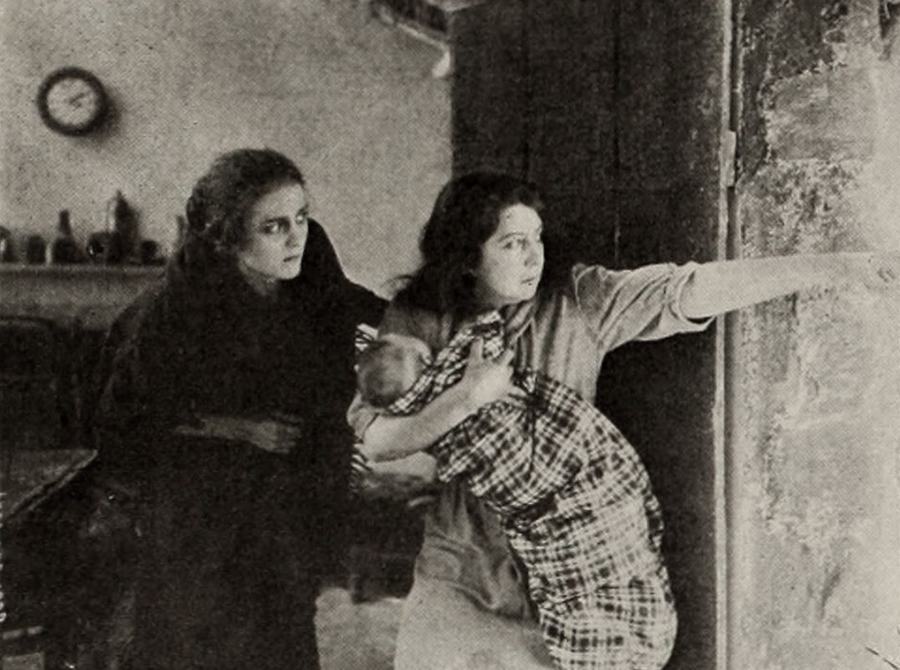
The resolution of Secret Love, with Don’s death paving the way for both Joan and Fergus’s marriage and the implementation of crucial mine improvements, might strike some modern viewers as overly convenient or even a little too tidy. However, within the conventions of early cinema, it serves as a powerful affirmation of hope and progress. It suggests that true love, when aligned with justice, possesses the transformative power to reshape not just individual lives but entire communities. The film doesn't shy away from the brutal realities of its setting, but it ultimately champions the idea that a better future is possible, built on foundations of fairness and compassion. This optimistic outlook, while perhaps idealistic, provided a vital counterpoint to the harsh realities audiences of the time were acutely aware of.
The performances, particularly Helen Ware’s Joan, are worth revisiting. Ware, a prominent stage actress who transitioned into film, brings a gravitas and emotional depth to Joan that elevates the character beyond a mere damsel in distress. Her journey from dutiful daughter to courageous activist and loving partner is the emotional anchor of the film. Similarly, Jack Curtis’s portrayal of Fergus is not a caricature of heroism but a grounded depiction of a man committed to his principles, even in the face of grave danger. The chemistry between Ware and Curtis, conveyed through stolen glances and subtle gestures, is surprisingly compelling for a film of its age, a testament to their skill in a medium still finding its voice.
Beyond the central romance and class struggle, Secret Love offers a valuable historical document, providing a glimpse into the social consciousness of the early 20th century. It reflects a growing awareness of workers' rights and the moral imperative for industrial reform, themes that remain profoundly relevant even today. The film’s depiction of the mine, while perhaps simplified by the limitations of early cinematography, still conveys a sense of claustrophobia and danger, making the urgency for change palpable. It’s a reminder that many of the battles for workplace safety and dignity were hard-won, often at great personal cost.
The narrative’s journey from conflict to resolution feels like a morality play, a fable for an industrial age. It champions the individual who dares to challenge the status quo, and it celebrates the triumph of love and justice over greed and oppression. The film's strength lies not just in its dramatic plot, but in its ability to humanize the broader social issues it tackles. It transforms abstract concepts of labor rights and corporate responsibility into a deeply personal struggle, seen through the eyes of Joan, Fergus, and even the tragically flawed Don.
In conclusion, Secret Love is far more than a historical curiosity. It’s a compelling drama that speaks to enduring human themes: the courage to love, the fight for justice, and the eternal conflict between individual conscience and societal pressures. While the stylistic conventions of silent film require a certain appreciation, the raw power of its story and the earnest performances of its cast ensure its enduring impact. It stands as a powerful testament to the early days of cinema's ability to not only entertain but also to provoke thought and advocate for a better world. For anyone interested in the evolution of film as a social commentary or simply a gripping love story set against a tumultuous backdrop, Secret Love is a truly enriching experience, a hidden gem waiting to be rediscovered by contemporary audiences. Its legacy lies not just in its historical place, but in the timeless resonance of its message: that love, when combined with a commitment to justice, can indeed move mountains – or, in this case, transform the very depths of a coal mine.
IMDb 5.6
1937
Community
Log in to comment.