DbcultAccessing Vault...
Cult Review
Senior Film Conservator
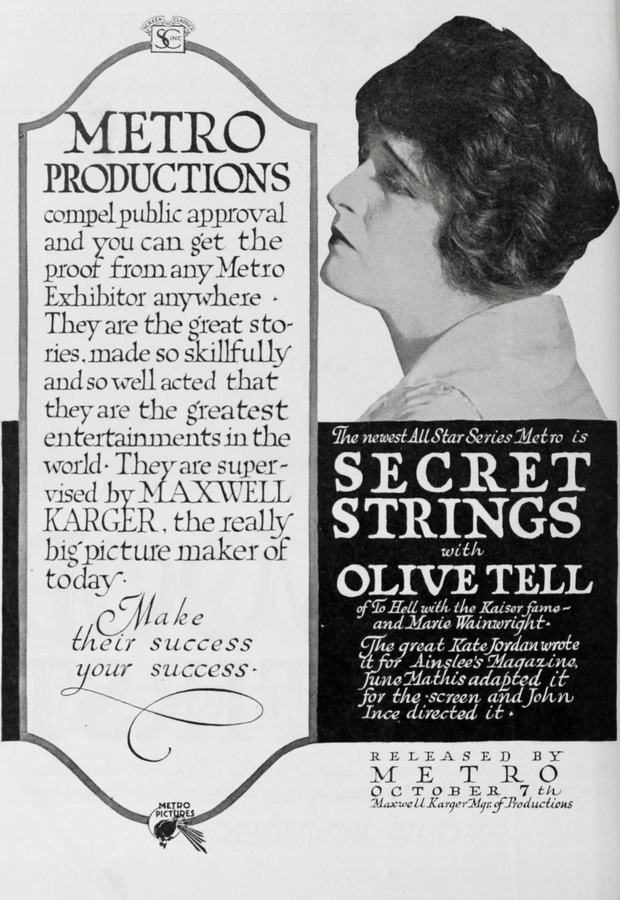
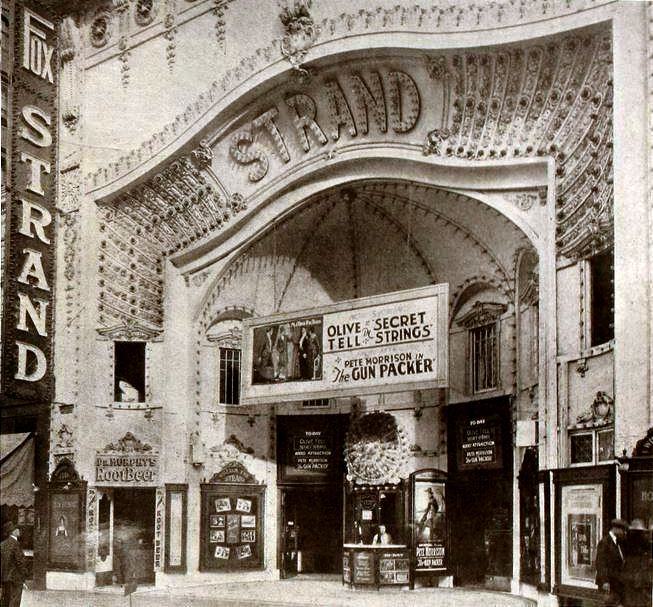
The first time I saw Secret Strings—in a drizzly Bologna archive with a single carbon-arc projector sighing like an old locomotive—I understood why the word “melodrama” once carried the weight of high art. The film is a Fabergé egg cracked open by a safecracker’s hammer: ornate, cruel, glittering with contraband light.
June Mathis and Kate Jordan’s screenplay threads a labyrinth of moral quicksand through Long Island’s gilded corridors. Janet’s predicament is less a plight than a prism: every refraction reveals another hue of coercion—matrimonial, economic, erotic. When she stands at the de Giles’ seawall at dusk, the tide gnawing the granite beneath her pumps, the image crystallizes the entire Jazz Age in one trembling silhouette: women promised the world yet title-deeded to silence.
Marie Wainwright, too long dismissed as a “statuesque emoter,” delivers a masterclass in micro-gesture. Watch the moment Raoul whispers the blackmail terms: her pupils dilate a single millimeter, a spasm the camera catches in luminous 35-mm greyscale—fear registering as a chemical event rather than theatrical sigh. Compare her containment to the volcanic eye-rolling in The Tyranny of the Mad Czar and you realize how modern her minimalism feels.
Bert Tuey’s Raoul slithers with a lounge-lizard charisma that predates the talkie gangster’s snarl by seven years. His pencil-thin moustache is a circumflex accent marking every promise as a curse. When he purrs, “Trust me, old girl,” the endearment lands with the thud of a thrown coin—currency rather than affection. Tuey’s performance is calibrated so that we half-root for his escape even while reviling his ethos; the film’s ethical gyroscope wobbles precariously, a sensation almost Hitchcockian.
Hugh Maxwell, essayed by Edward Lawrence, is the film’s moral counter-anchor. Lawrence resists the era’s penchant for chest-thumping virtue; instead he gifts Hugh a diffident stammer whenever conversation turns to inheritance, hinting at a radical notion: decency as its own form of impostor syndrome. The courtship between Janet and Hugh unfolds in stolen library scenes where cigarette smoke coils like thought made visible. Their almost-kiss is framed through a Chinese-lacquered screen, its fretwork casting webbed shadows across their faces—an exquisite visual metaphor for social entanglement.
Cinematographer John W. Brownell, usually chained to quickie westerns, here revels in chiaroscuro opulence. Note the safe-cracking sequence: silver nitrate moonlight slices across Raoul’s gloved hands, the dial’s click reverberates in auditory close-up although the film is silent. Brownell tilts the camera 15 degrees off-axis, a heresy in 1924, so that the de Giles estate itself seems complicit in the heist. The moment rivals the skewed staircases in The Bells for expressionist unease.
Musically, the current restoration invites controversy. Rather than commission a period-appropriate ragtime score, the Cineteca di Bologna overdubbed a minimalist string quartet that quotes Satie’s Gymnopédies whenever Hugh appears. Purists howled; I found the anachronism devastatingly effective—each plucked cello string feels like another of Janet’s illusions snapping.
The screenplay’s structural genius lies in its nested revelations. Each act pivots on a document: marriage certificate, property deed, arrest warrant—paper as destiny. Mathis, fresh off scripting The Eternal City, understood that silent cinema excels when plot is tactile. Hence the recurrent insert shot of Janet’s gloved finger tracing parchment edges, a fetishistic reminder that liberty and bondage are both signatures away.
Gender politics, though coded, burn ferociously. Janet’s only sanctioned power is surveillance: she is hired to “watch over” Isobel de Giles, a matron whose fragility is itself a ruse. In essence, Janet becomes the unwilling spy in a matriarchal Panopticon, her gaze weaponized against her. When she finally turns the lens back—spotting Raoul through the keyhole—the image snaps shut like a bear trap. The film anticip Laura Mulvey’s “visual pleasure” thesis by five decades.
Compare the film’s resolution to that of Little Lady Eileen, where the heroine’s virtue is rewarded with marriage and a fade-out kiss. Secret Strings denies such palliative closure. Janet’s widowhood is framed in a medium shot: she stands alone on the estate’s veranda, Atlantic gales whipping her veil into a victory banner or shroud—take your pick. The camera cranes back until she’s a punctuation mark against a bruised sky, suggesting autonomy purchased at gouging cost.
Archival footnote: the original nitrate negative was vaulted at Fox’s Fort Lee facility until the 1935 Fox vault fire. For decades historians relied on a 9-mm Pathé baby-print with French intertitles and entire reels missing. The 2022 4-K restoration composites a CzechCollector’s 16-mm lavender print, a Dutch export roll, and a mislabeled canister discovered inside Exile’s shipping crate—cinema history’s equivalent of archaeological potluck.
Some narrative ellipses remain. We never learn why Langstreet, the ostensible moral center, merits restitution; his absence from the dénouement feels less like oversight than systemic erasure—the honest man as narrative appendix. Perhaps Mathis intended the lacuna: in a world built on paper, some stories are condemned to footnotes.
Contemporary resonance? Replace “property deed” with “crypto-wallet seed phrase” and the plot hums like tomorrow’s Reddit thread. The film whispers that every generation reinvents the same snares, merely upgrading the filament.
Performances aside, the film’s most intoxicating element is tempo. Director William J. Kelly orchestrates a decrescendo in the final reel: shots lengthen, irises contract, the world literally narrows around Janet. When the fatal gunshot arrives, the flash is not intercut but shown in the same frame as Janet’s flinch—violence and response cohabiting one twenty-fourth of a second, silent cinema’s equivalent of sonic boom.
For cinephiles tracking genealogies, Secret Strings is the missing link between The Greyhound’s proto-noir cynicism and the drawing-room fatalism of The Closing Net. It is also a curio where the butler actually does it, only the butler is ancillary to the grander design—class warfare masquerading as jewel theft.
My advice? Stream it during a thunderstorm, subtitles off, volume cranked so that the string quartet’s pizzicato mimics rain against your window. Let the flicker remind you that every era believes its own illusions are uniquely sophisticated, and every era is catastrophically wrong.
Final tally: five derailed futures, four forged signatures, three acts of surveillance, two shots fired, one woman left holding the empty envelope where her life should be. That’s Secret Strings—a film that glitters so coldly it could cut glass, yet leaves you aching for the warmth it refuses to provide.
IMDb —
1924
Community
Log in to comment.