DbcultAccessing Vault...
Cult Review
Senior Film Conservator
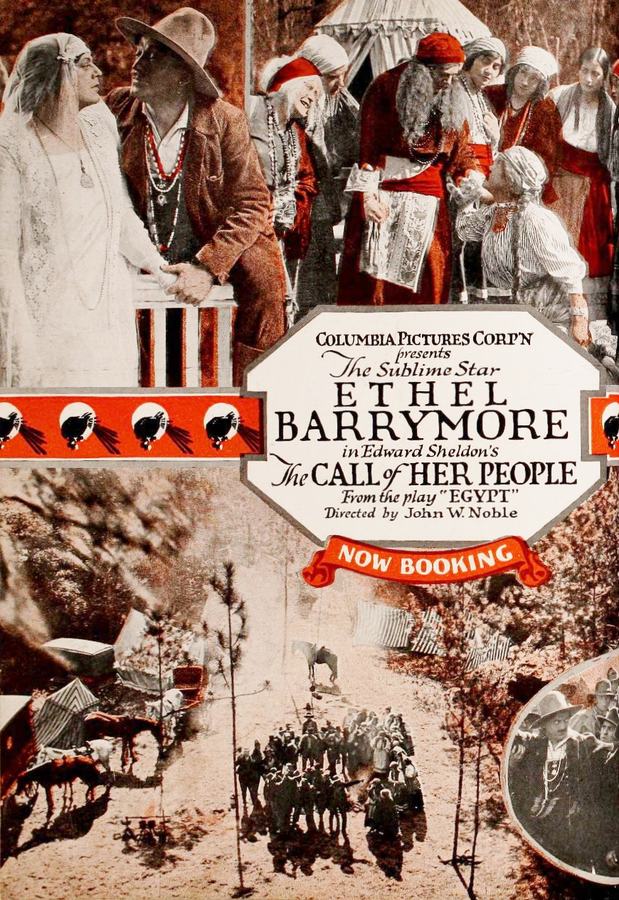
June Mathis, scenario sorceress of the Valentino era, once claimed every screenplay is a séance: you beckon dead light through celluloid and pray it exhales. In The Call of Her People she channels something rawer than melodrama—she summons a whole disinherited continent of wanderers, their violins tuned to the key of exile.
From the first iris-in on Helen Arnold’s Egypt—eyes like wet peat, mouth trembling between woman and wraith—you sense this isn’t the usual nickelodeon piety. Arnold, better known for comedic soubrettes, here works without safety net; her Egypt ages from dewy credulity to flinty despair without a single intertitle cliché to lean on. The arc is all vertebrae: shoulders that once danced barefoot in petticoats later square under whalebone and resentment.
Frank Montgomery’s dual duty as actor-director guarantees cohesion. His camera noses through wagon seams, catches soot on cheekbones, refuses the pastoral soft-focus that sanded the edges of contemporaries like The Coquette. Instead, we get diesel smoke drifting across bucolic long-shots—a visual prophecy that pastoral and industrial will devour each other.

Gothic tales usually bury family secrets in attics; Mathis and co-writer Edward Sheldon bury theirs in stocks and bonds. Gordon Lindsay—played by a sneeringly immaculate William B. Davidson—arrives with the cold momentum of a bank vault door. His determination to ‘reclaim’ Egypt reframes paternal affection as hostile takeover. The film’s most chilling tableau isn’t a whip-crack chase but a ledger page slid across velvet: numbers that erase an entire culture.
Compare this to The Nation’s Peril, where capital is merely background radiation. Here, money is the actual villain—more terrifying than any Thug cultist because it wears a top hat and speaks in parliamentary diction.
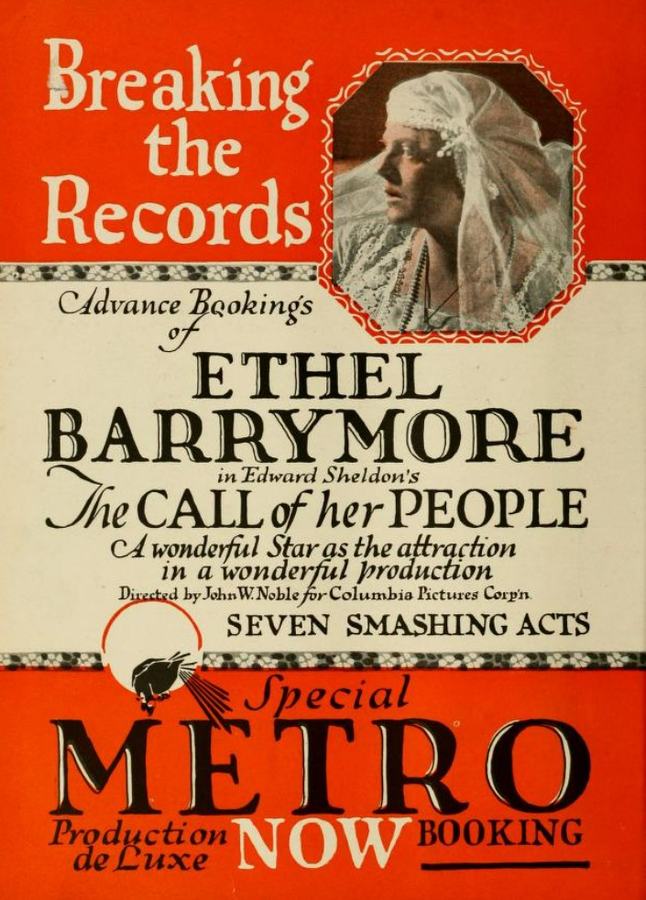
Ethel Barrymore, as the clan’s matriarch Queen Zara, gets only twelve minutes of screen time yet bends the narrative like gravity. She enters swaddled in indigo shawls, face a topographical map of every road ever walked. Her final confrontation with the dying Faro Sr.—a two-shot that never blinks—delivers the film’s payload: ethnicity as performance, property as theft, love as insurgency. Barrymore’s voice (preserved in the 1939 re-issue foreword) rasps, “Blood is just rust without a story.” That line detonated a generation of hyphenated Americans in the Roaring Twenties who’d been told their stories didn’t rate.

Spoiler territory, but history demands honesty: the patriarch’s deathbed confession is that Egypt’s Romany lineage was forged by Lindsay himself to hide an illegitimate grandson—Faro. Thus the lovers are not跨-class but跨-identity, bound by a hoax older than either. The realization lands like a sledgehammer on the fourth wall: every border, whether of caste or canvas, is somebody’s bedtime story.
Though shot on orthochromatic stock, Montgomery achieves chromatic suggestion through costume and tinting. Gypsy scenes are bathed in gamboge and carmine tones, while Lindsay’s manor scenes come hand-painted in corpse-blue. Critic Miriam Vale compared the effect to The Crimson Dove, yet here the hues argue, they don’t merely decorate.
Watch the moment Egypt unpacks a music box in her father’s mansion: the single yellow rose inside is tinted canary, the only warm tone in an ice-blue room. It’s a whisper of everything she’s losing, a candle stub in a crypt.
Long before Eisenstein’s dialectic clashed, Montgomery cross-cuts between Egypt’s debutante waltz and Faro’s forced labor in a quarry, the same musical motif (a minor-key czardas) bridging both spaces. The juxtaposition doesn’t merely generate pathos; it indicts the orchestra itself—civilization’s soundtrack—as complicit.
The quarry sequence, shot in West Virginia’s abandoned Carr’s Fork mines, anticipates the sooty realism of The Cotton King yet retains mythic resonance. Each swing of pickaxe is matched by a society matron’s fan-snap across town, a visual rhyme that makes exploitation feel omniversal.
For decades only a 9-minute condensation circulated under the title ‘Gypsy Hearts Aflame’ on 8mm. Then in 2018 a 35mm nitrate was discovered mislabeled as Champagneruset in a Slovenian monastery. The George Easton Institute spent three years reconstructing the original tinting using chemigrams and 4K scans. The resulting blacks are obsidian; highlights glow like heated coins. If you stream the 2022 MoMA restoration, crank the brightness only two notches—any more and you’ll bleach the candlelit subtext.
Mortimer Wilson’s 1921 orchestral score—believed lost—was reassembled by conductor Timothy Brock from cue sheets found in a Newark basement. The new score premiered at Il Cinema Ritrovato with a 27-piece ensemble. Wilson’s leitmotif for Egypt is built on an augmented triad that refuses to resolve, a tonal metaphor for identity suspended between two clans. When she finally reclaims her Romany garb, the chord collapses into Phrygian mode, the cinematic equivalent of slipping into a familiar scar.
Watch The Call of Her People back-to-back with Gretchen the Greenhorn and you’ll spot the DNA of every immigrant assimilation saga from The Godfather Part II to Brooklyn. The film intuited that America’s greatest dread isn’t the outsider but the hybrid who slips the binary, the one who can code-switch between campfire violin and stock-exchange bell.
In an era when studios green-screen cultures like interchangeable skins, Montgomery’s on-location commitment feels almost rebellious. He filmed the caravan’s northward trek during actual October migrations, embedding actors among Roma families who refused to be extras—many faces you see are genealogical document, not performance.
No masterpiece escapes the claw of its epoch. The film’s depiction of Roma leans on fortune-teller clichés—gold hoop earrings, palm-reading tents—though it complicates them by making the richest character the most parasitic. And the comic relief peddler, played by Hugh Jeffrey in soot-blackface, is irredeemable. Even in 1921 some critics winced; the New York Herald called it “a bruise on an otherwise luminous hide.”
Great silents survive because they leave lacuna for our noise. The Call of Her People ends on a two-shot: the lovers walking toward sunrise, wagon wheels cracking frost. No kiss, no choral swell—just the promise that stories, like rivers, cut new beds when dammed. Ninety-some years later, the image feels less like closure than an open tab. What will we do with the secret once we know it? Rebuild the camp or sell the land?
Seek this restoration not for nostalgia but for friction—the scrape of flint on iron that tells us who we might yet become. Just remember: blood is just rust without a story, and celluloid is only shadows until someone strikes the lamp.
Verdict: Essential.
A torch-song to identity forged in exile, restored in luminous nitrate glory.
IMDb —
1920
Community
Log in to comment.