DbcultAccessing Vault...
5.3/10
Senior Film Conservator
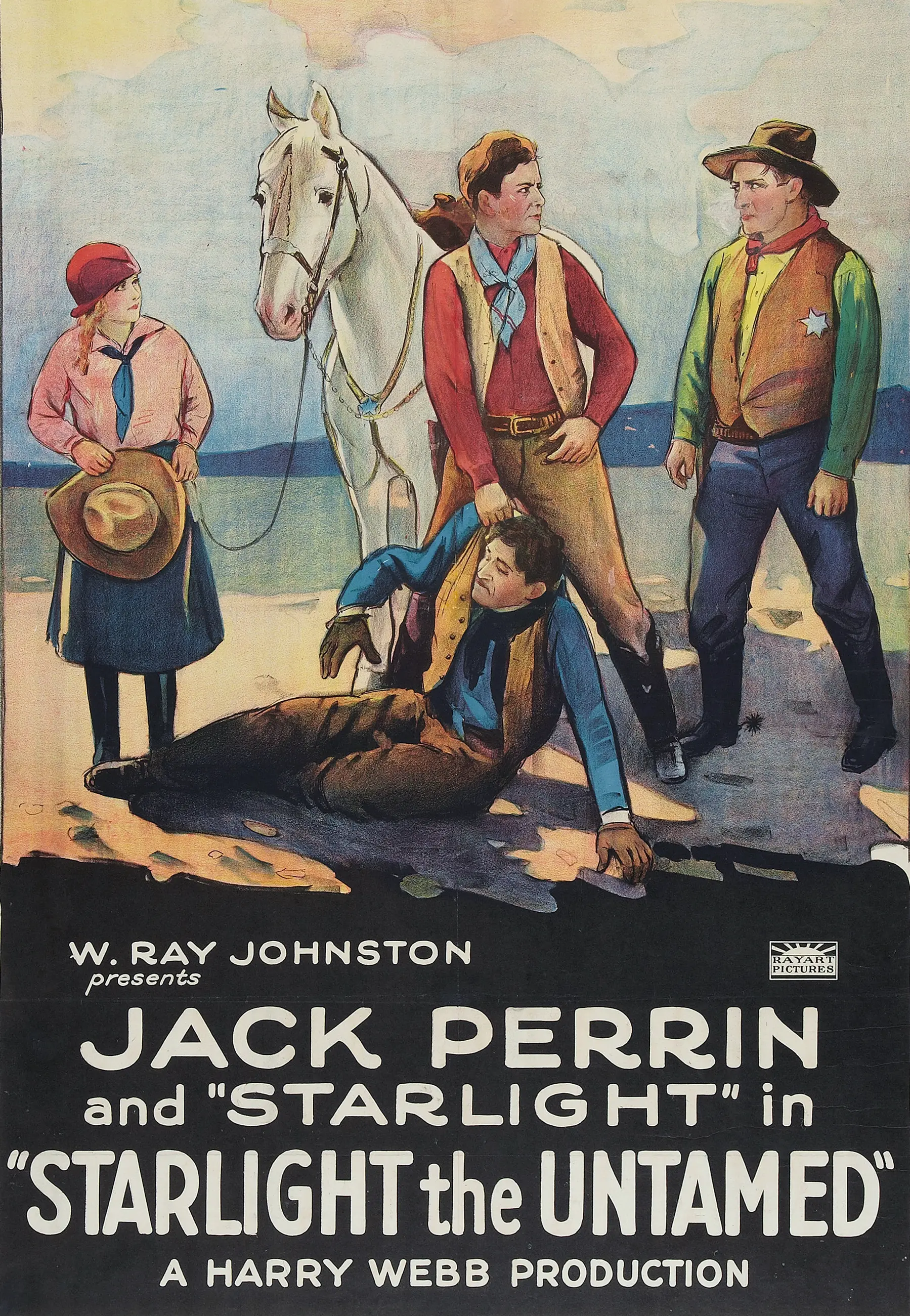
A definitive 5.3/10 rating for a film that redefined the boundaries of cult cinema. Starlight, the Untamed remains a cornerstone of transgressive art.
Is Starlight, the Untamed a forgotten masterpiece of the silent era or a relic of a bygone formula? Short answer: It is a spirited, if predictable, artifact that remains essential viewing for those who appreciate the physical artistry of early animal-led cinema. This film is for the Western completionist who finds beauty in the raw Texas landscape and the silent-era enthusiast who enjoys the 'man and his horse' subgenre. It is definitely not for viewers who require the high-stakes complexity of modern revisionist Westerns or those who cannot tolerate the deliberate pacing of 1920s storytelling.
Yes, but with caveats. You should watch this film if you want to witness the exact moment the 'B-Western' formula began to solidify into the structure that would dominate the next three decades. It is a lean, athletic piece of filmmaking that prioritizes movement over deep character psychology. If you are looking for the gritty realism of Manhattan, you won't find it here. Instead, you get a pure, unadulterated look at the frontier mythos as it was being constructed in real-time.
1) This film works because Starlight the horse exhibits a level of screen presence and 'acting' capability that often surpasses his human co-stars.
2) This film fails because the transition of Jack Barham from a pampered socialite to a rugged frontiersman is handled with a jarring lack of narrative friction.
3) You should watch it if you have an interest in the evolution of Jack Perrin’s career or the history of animal stunts in early Hollywood.
The opening act of Starlight, the Untamed sets up a fascinating contrast. Jack Barham, played with a certain stiff-jawed charm by Jack Perrin, is introduced as the pinnacle of Southern luxury. Unlike the characters in The Poor Boob, who often struggle with their own inadequacies, Barham is simply a victim of circumstance. When his wealth evaporates, the film doesn't dwell on his grief. Instead, it pushes him into the Texas sun.
The cinematography in these early scenes is functional, yet there is a distinct shift in visual language when Jack arrives in the West. The soft, filtered light of the Kentucky estate is replaced by the harsh, high-contrast shadows of the ranch. This visual transition mirrors Jack's internal hardening. However, the film misses an opportunity to show the physical toll of this change. One moment he is sipping a julep; the next, he is a competent horseman. It’s a leap of faith the audience is forced to take. It works. But it’s flawed.
The real draw here is not Perrin, but Starlight. In the 1920s, animal stars were often more bankable than their human counterparts, and this film proves why. Starlight isn't just a prop; she is a character with agency. The scene where Jack first tames her is a masterclass in silent-era choreography. There are no quick cuts or CGI enhancements here—just a man, a horse, and a dusty corral. The tension is palpable, and the bond formed feels earned in a way the human romance with Madge Carter (Josephine Hill) does not.
When Starlight is accused of being a 'varmint' who leads other horses astray, the film takes on the tone of a legal drama set on horseback. We see Starlight standing alone in the corral, looking almost mournful. It’s a testament to the editing and the horse's natural poise. This 'framed animal' trope would become a staple of films like A Circus Romance, but here it feels fresh and stakes-heavy. The horse is the emotional anchor of the entire production.
Bennett Cohen’s script follows the established beats of the 1925 Western, but it injects a level of mystery that keeps the middle act from sagging. The 'two-legged varmints'—the rustlers—are portrayed with a sneering villainy that was common for the era. Their plan to frame a horse is both ridiculous and narratively convenient, providing Jack with the perfect opportunity to prove his loyalty. The pacing here is brisk, avoiding the long, meandering sequences found in Still Waters.
The climax involves a series of chases that utilize the Texas topography effectively. The camera is often mounted on moving vehicles or horses, giving the audience a sense of speed that was revolutionary for the time. While it lacks the avant-garde experimentation of Looney Lens: Pas de deux, the film excels in its straightforward, muscular approach to action. The final confrontation is resolved not with a complex dialogue or a legal maneuver, but with physical prowess and the loyalty of a beast. It’s simple. It’s effective. It’s Western.
When placed alongside other releases of the era, Starlight, the Untamed occupies a middle ground. It lacks the psychological depth of Dämon und Mensch or the societal critique of Anita Jo. However, it possesses an honesty that many of its contemporaries lacked. There is no pretense here. The film knows it is a vehicle for Jack Perrin and a showcase for a talented horse.
Interestingly, the film shares some DNA with The Masquerader in its themes of identity and reinvention. Jack Barham is essentially masquerading as a cowboy until the moment he is forced to actually become one. This transition is the film's most compelling human element, even if it is secondary to the horse-related action. The supporting cast, including Martin Turner, provides a solid foundation, though Hill is unfortunately relegated to the 'dainty daughter' archetype that was so prevalent in early cinema.
Pros:
The stunt work is authentic and dangerous, lending a sense of real peril to the chase scenes. The chemistry between Perrin and the horse is genuine. The film serves as a perfect time capsule of 1920s Texas ranch culture.
Cons:
The plot is paper-thin and relies on several coincidences to reach its conclusion. The female characters are given very little to do other than look concerned from the sidelines. The print quality of surviving versions can be a barrier for modern audiences.
Starlight, the Untamed is a rugged, unpretentious piece of entertainment that succeeds because it understands its own strengths. It doesn't try to be a grand epic like Farkas; it is content being a high-quality B-picture. While the human drama is serviceable, the film belongs to the horse. Starlight’s performance is a reminder that before there were special effects, there was the sheer, breathtaking reality of a wild animal on screen. It’s a horse movie. Pure and simple. And in the realm of 1925 Westerns, that is more than enough to justify a viewing today.
IMDb —
1927
Community
Log in to comment.