DbcultAccessing Vault...
Cult Review
Senior Film Conservator
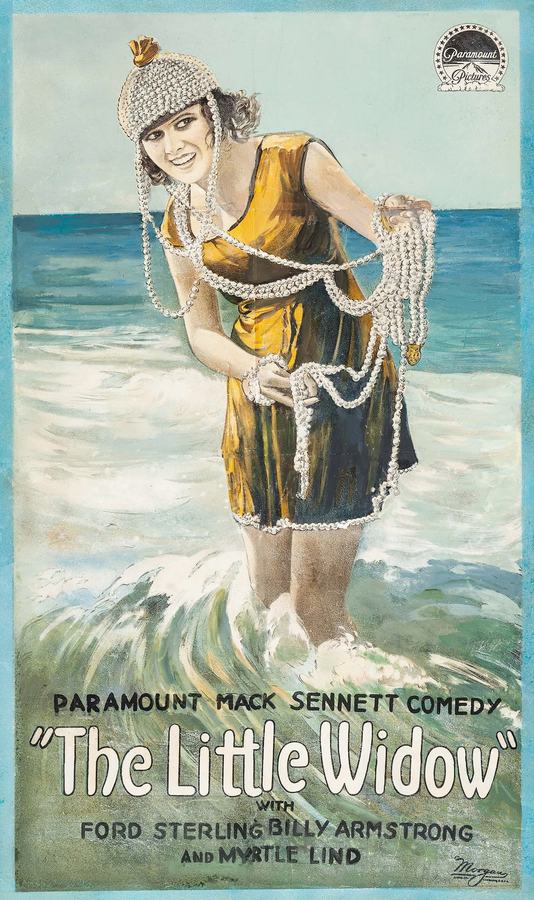
Stepping back into the nascent days of cinema, when storytelling relied solely on visual artistry and the expressive power of the human face, we encounter a delightful, if pointed, social satire titled The Little Widow. Released in 1914, this Mack Sennett-penned gem, while perhaps not as widely celebrated as some of its contemporaries, offers a fascinating glimpse into the social mores and comedic sensibilities of the era. It's a concise yet profoundly insightful narrative, masterfully capturing the intricate dance between love, ambition, and the ever-present allure of financial prosperity. The film, even in its brevity, manages to paint a vivid picture of human nature, particularly its more opportunistic facets, with a charming blend of farce and subtle critique. It reminds us that certain human predicaments, particularly those involving matters of the heart complicated by the contents of a bank account, are truly perennial.
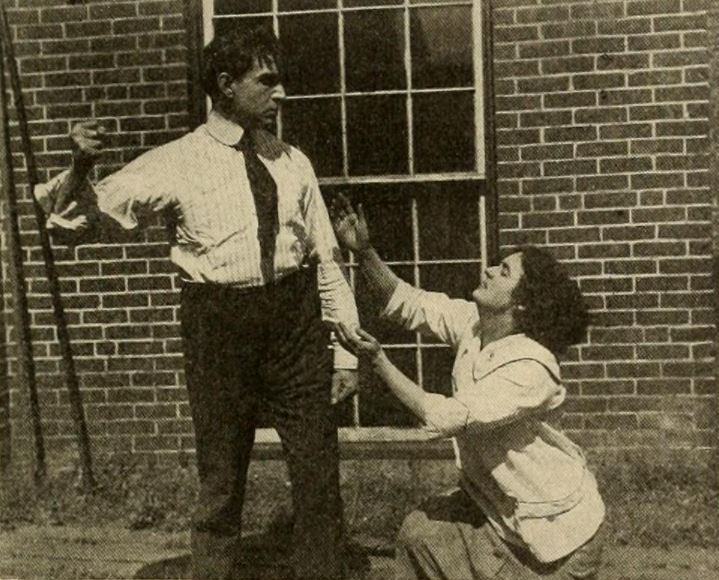
At the heart of The Little Widow lies a deliciously intricate moral quandary, presented through the predicament of a lawyer, a character whose ethical compass appears to swing wildly in response to monetary magnetism. This legal professional, portrayed with a nuanced blend of charm and calculating self-interest, initially regards his client, a recent widow, through a purely professional lens. Her bereavement is merely a case to be handled, a legal matter to be resolved. However, the revelation of her impending inheritance — a sum described as 'considerable' — acts as a sudden, potent catalyst, transforming her in his eyes from a client into a coveted matrimonial prize. The shift is immediate and stark, underscoring a prevailing societal cynicism that often valued financial security above genuine affection. This abrupt re-evaluation of his romantic priorities sets the stage for a compelling exploration of human frailty and the seductive power of wealth. The narrative skillfully navigates the lawyer's internal struggle, or perhaps, his lack thereof, as he rationalizes his burgeoning interest in the widow, all while his existing engagement to his diligent stenographer hangs precariously in the balance. This setup, inherently ripe with dramatic irony and comedic potential, allows the film to subtly comment on the transactional nature of relationships in certain societal strata of the early 20th century. The audience is invited to witness the lawyer's contortions, both emotional and logistical, as he attempts to navigate this newly complicated romantic landscape without entirely sacrificing his perceived integrity or, more importantly, his financial prospects. The film doesn't merely present a plot; it presents a mirror reflecting societal values and individual ambitions.
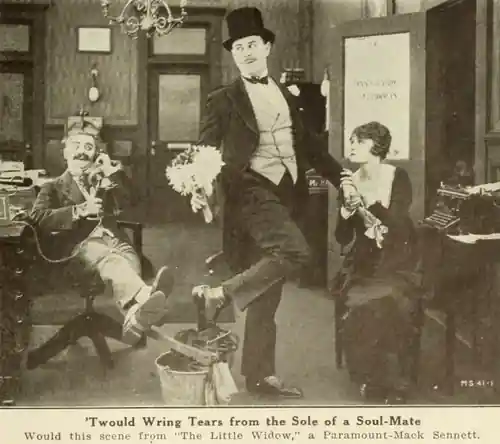
The lawyer's dilemma is compounded by the presence of his fiancée, the stenographer, a character who likely embodies earnestness and perhaps a more traditional view of commitment. Her perspective, though perhaps less central to the initial comedic thrust, adds a layer of pathos and moral grounding to the narrative. One can imagine her diligent work ethic, her quiet hopes for the future, suddenly overshadowed by the lawyer's blatant opportunism. The widow herself, likely portrayed by Fanny Kelly with an air of delicate vulnerability or perhaps a quiet strength, remains largely unaware of the machinations unfolding around her, a passive yet pivotal figure whose financial good fortune becomes the fulcrum of the entire plot. This dynamic creates a captivating tension, where the audience is privy to the lawyer's duplicity, anticipating the inevitable comedic or dramatic fallout. It's a classic comedic trope: the schemer entangled in his own web, but here infused with a particular social relevance. The film, in its silent eloquence, manages to convey the shifting tides of affection and the powerful undercurrents of material desire that often dictate human choices. The narrative, while light-hearted in its delivery, carries a sharp edge, questioning the sincerity of intentions when wealth enters the equation. It's a testament to Mack Sennett's writing prowess that such a simple premise can yield such rich thematic material.
In the silent era, the burden of conveying character and emotion fell squarely on the shoulders of the actors' physical expressions and nuanced gestures. The Little Widow undoubtedly benefited from a cast adept at this demanding art form. While specific character assignments are not detailed, one can envision Joseph Belmont bringing a captivating blend of professional polish and transparent avarice to the role of the opportunistic lawyer. His facial contortions, from feigned sympathy to thinly veiled calculation, would have been key to the film’s comedic and critical success. Fanny Kelly, likely embodying the titular widow, would have had the delicate task of portraying innocence or perhaps a burgeoning awareness, her expressions conveying a spectrum of emotions from grief to dawning hope or confusion as the lawyer's attentions shift. The success of the film hinges on her ability to be both desirable and slightly detached, a prize rather than a participant in the lawyer's scheme.
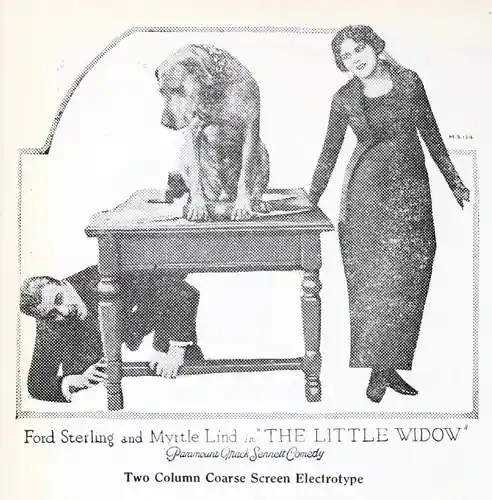
The role of the jilted stenographer, a figure of quiet dignity or perhaps simmering resentment, would have likely been handled with grace by an actress like Harriet Hammond or Myrtle Lind, their portrayals lending a poignant counterpoint to the lawyer's callousness. Their ability to convey heartbreak or betrayal through subtle movements of the eyes or a downturned mouth would have been crucial. The supporting ensemble, featuring comedic stalwarts such as Eddie Gribbon, Chester Conklin, Ford Sterling, and Kalla Pasha, would have undoubtedly injected the proceedings with their characteristic slapstick energy and exaggerated reactions, typical of Sennett’s Keystone productions. These actors, masters of physical comedy, would have provided the broader strokes of humor, perhaps as bewildered bystanders or hapless accomplices in the lawyer's convoluted plans. Even the presence of Teddy the Dog suggests moments of light-hearted diversion or perhaps even a comedic foil, a silent observer whose reactions might have mirrored the audience's own incredulity. The collective talent of Anna Marie Unholz, Billy Armstrong, and Robert Finlay would have rounded out the cast, ensuring a vibrant and dynamic comedic landscape where every glance, every gesture, contributed to the unfolding narrative. Their contributions, often in smaller but impactful roles, were vital in creating the bustling, often chaotic, world of early silent comedies.
As the sole credited writer, Mack Sennett's influence on The Little Widow is palpable. Sennett, often hailed as the 'King of Comedy,' possessed an unparalleled knack for crafting scenarios that were both uproariously funny and subtly insightful. His writing style, characterized by rapid-fire pacing, escalating absurdity, and a keen eye for human foibles, is evident in the film's premise. The central conflict – a man abandoning love for lucre – is a timeless theme, but Sennett’s genius lies in presenting it through a comedic lens, allowing the audience to laugh at the absurdity of the situation while simultaneously recognizing its underlying truth. He understood that comedy could be a potent vehicle for social commentary, gently prodding at societal hypocrisies without resorting to heavy-handed moralizing. The narrative structure, which likely builds towards a crescendo of misunderstanding and frantic attempts at damage control by the lawyer, is a hallmark of Sennett’s comedic architecture. He excels at setting up a seemingly straightforward situation and then meticulously, and hilariously, dismantling it through a series of escalating complications and farcical encounters. This approach ensures that the film is not merely a succession of gags but a coherent, albeit riotous, story with a discernible arc, culminating in a resolution that is often both satisfying and justly ironic.
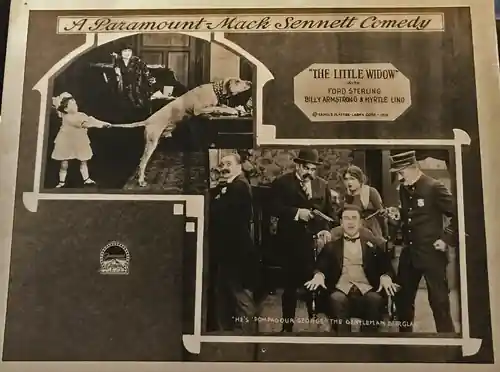
Sennett's script for The Little Widow likely demonstrates his mastery of character-driven comedy, where the humor springs naturally from the exaggerated but recognizable traits of its protagonists. The lawyer’s transparent ambition, the stenographer’s potential heartbreak, and the widow’s unwitting role as a catalyst for chaos are all elements that Sennett would have exploited to their fullest comedic potential. His ability to distill complex human motivations into visually digestible and universally understood comedic beats is what cemented his legacy. He wasn't just writing jokes; he was crafting narratives that resonated with audiences, reflecting their own experiences and observations of the human condition, albeit through a funhouse mirror. The film, therefore, stands as a testament to Sennett's enduring skill in weaving together threads of romance, social aspiration, and outright silliness into a cohesive and entertaining cinematic experience. It's a reminder that even in the early days of filmmaking, the power of a well-told story, infused with humor and heart, was paramount.
The Little Widow, despite its age, resonates with themes that remain remarkably pertinent. The tension between genuine affection and mercenary motives in relationships is a narrative wellspring that continues to be tapped by filmmakers today. The film serves as a socio-cultural artifact, offering insights into early 20th-century attitudes towards marriage, class mobility, and the perceived role of women as objects of desire or financial security. The widow, in this context, is not merely a character but a symbol of inherited wealth, inadvertently becoming a pawn in a man's game of social climbing. Her agency, or lack thereof, would have been a subtle commentary on the limited choices often available to women of the era, where marriage was frequently a primary path to financial stability. This thematic depth elevates the film beyond mere slapstick, positioning it as a thoughtful, albeit comedic, examination of human nature.
To appreciate The Little Widow fully is to immerse oneself in the unique aesthetic and narrative conventions of the silent film era. The absence of spoken dialogue mandated a heightened emphasis on visual storytelling, where every gesture, every prop, and every intertitle carried significant weight. This forced a creative ingenuity that often resulted in remarkably expressive and universally understood narratives. The film would have relied heavily on the talents of its cast to communicate the lawyer's internal conflict and the emotional repercussions of his actions. The comedic timing, the rhythm of the visual gags, and the subtle shifts in character expression were all meticulously orchestrated to elicit laughter and empathy from an audience accustomed to this particular cinematic language. It's a reminder of a time when cinema was still defining itself, experimenting with its capabilities, and laying the groundwork for the complex storytelling techniques we take for granted today. The charm of such films often lies in their simplicity, yet beneath the surface, there's a sophisticated understanding of human psychology and narrative structure. They demonstrate that profound stories don't always require elaborate special effects or complex dialogues; sometimes, a compelling premise and expressive performances are more than enough to captivate an audience.
In conclusion, The Little Widow, while a product of its time, offers a timeless reflection on the perennial dance between love and money. It's a testament to Mack Sennett's enduring comedic vision and the remarkable expressive power of silent cinema. The film’s narrative, though straightforward, is imbued with layers of social commentary, making it more than just a lighthearted farce. It's a poignant reminder that human desires, particularly those intertwined with material gain, often complicate the purest of intentions. The performances of its ensemble cast, including Fanny Kelly, Harriet Hammond, Joseph Belmont, Eddie Gribbon, Chester Conklin, and even Teddy the Dog, would have brought this tale to vivid, silent life, captivating audiences with their nuanced portrayals of ambition, affection, and the inevitable comedic chaos that ensues when the two collide. This film stands as a charming, insightful artifact, proving that some stories, and the truths they unveil, are truly immortal, continuing to entertain and provoke thought generations later. It's a small window into a grand era, offering big laughs and subtle insights that remain relevant even in our vastly different modern world.
IMDb —
1914
Community
Log in to comment.