DbcultAccessing Vault...
7.3/10
Senior Film Conservator
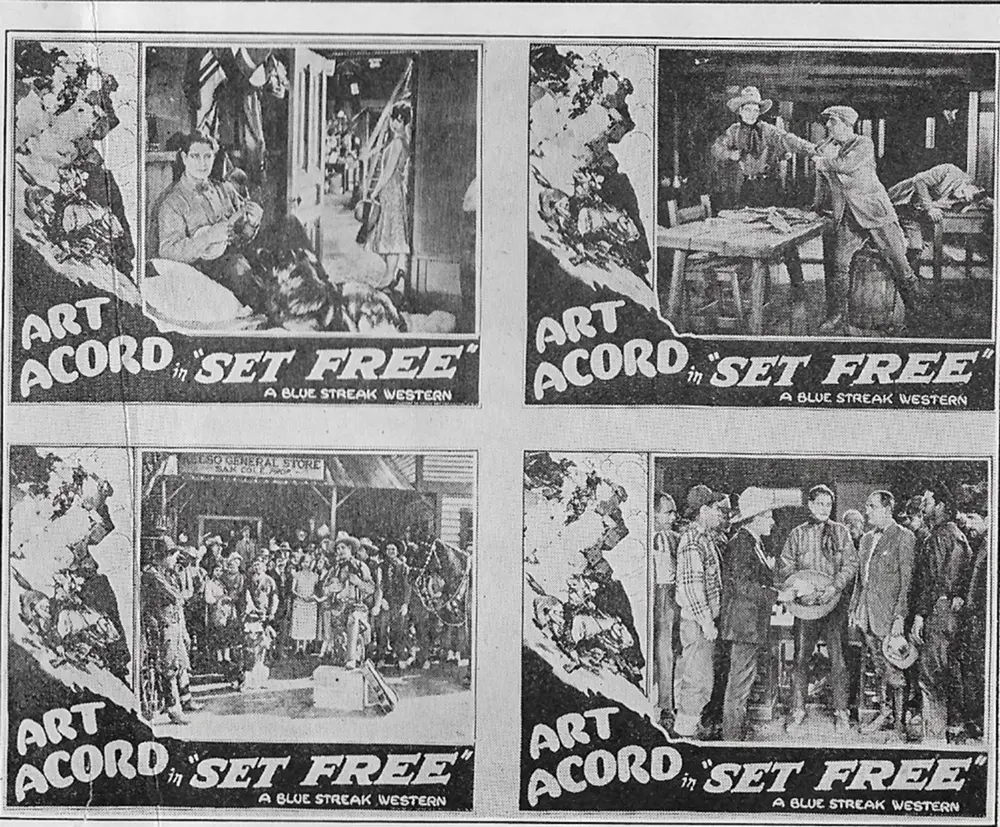
A definitive 7.3/10 rating for a film that redefined the boundaries of cult cinema. Set Free remains a cornerstone of transgressive art.
Should you invest your time in a silent Western from 1927? Short answer: yes, but only if you appreciate the physical craftsmanship of the pre-CGI era.
This film is for enthusiasts of silent-era stunt work and those who enjoy the 'animal-hero' subgenre of Westerns. It is definitely not for viewers who require fast-paced dialogue or complex, non-linear narratives.
1) This film works because it leverages the genuine physical chemistry between Art Acord and his animal co-stars, Buddy and Rex, creating a sense of stakes that feels more authentic than modern green-screen effects.
2) This film fails because its middle act slows to a crawl, focusing heavily on the mundane details of storekeeping that, while intended to show character growth, often sap the narrative's momentum.
3) You should watch it if you want to see a masterclass in 1920s B-Western production values and a climax that uses shadows and confined spaces with surprising effectiveness.
Set Free is worth watching for anyone interested in the evolution of the Western genre. While many films of this era were content to be simple morality plays, Set Free attempts something slightly more psychological by having its hero shamed into 'civilization' by a female lead. Unlike the sweeping vistas of The Place Beyond the Winds, this film finds its tension in tight, domestic spaces and the dark corners of a gold mine.
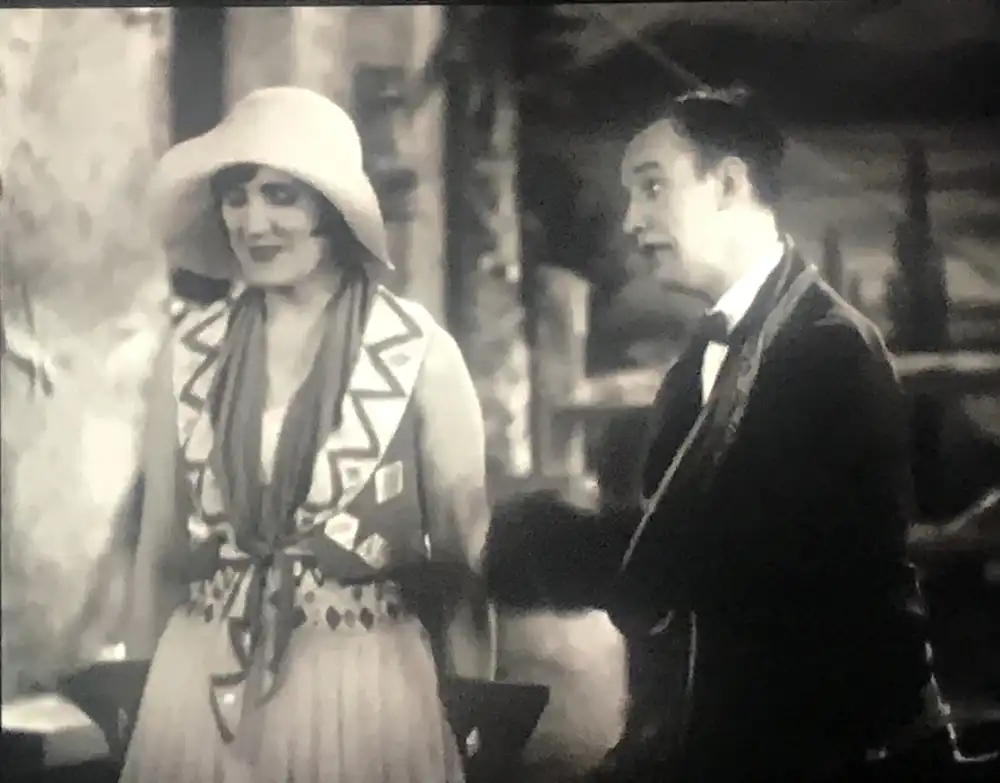
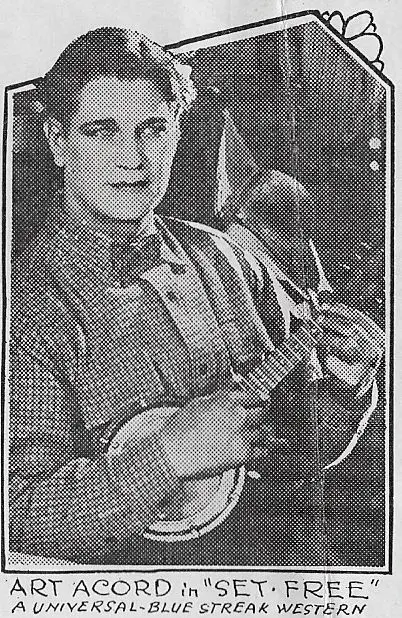
Art Acord was a real-life rodeo champion, and that authenticity bleeds into every frame of Set Free. In the opening scenes, where he performs as 'Side-Show' Saunders, his movements are fluid and performative. He isn't just playing a cowboy; he's playing a cowboy who is playing a role. This meta-layer is rare for 1927. When he transitions into working at Holly’s store, Acord uses his physicality to convey frustration. The way he handles a broom is as telling as the way he handles a revolver.
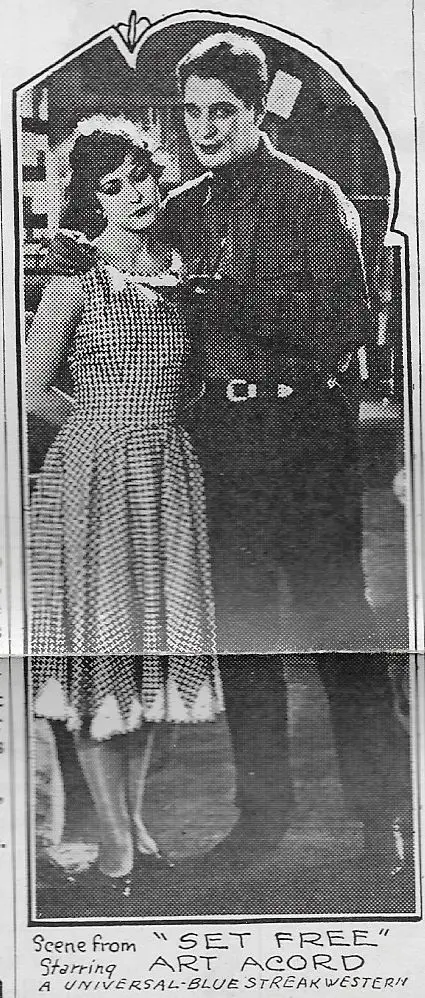
The chemistry between Acord and Olive Hasbrouck (Holly) is grounded in a refreshing power dynamic. Holly doesn't fall for his charms; she finds them pathetic. This rejection of the 'knight in shining armor' trope makes Saunders’ eventual heroism feel earned rather than inevitable. It’s a stark contrast to the more traditional romantic structures seen in films like Maid of the West.
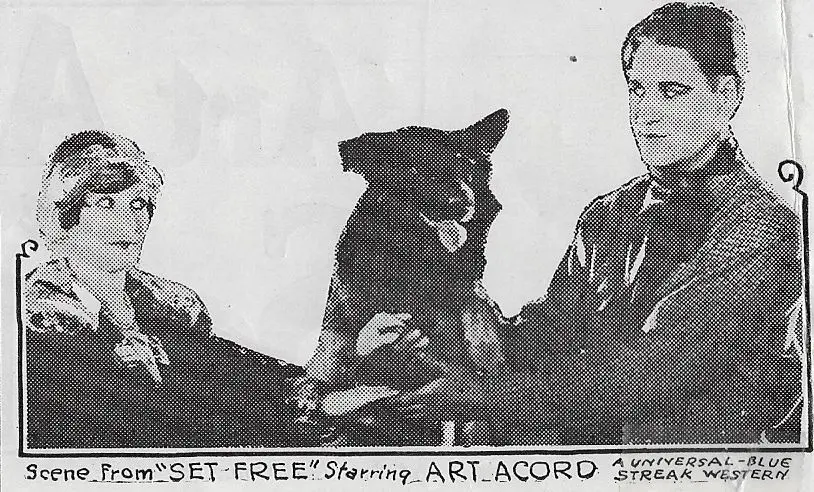
Let’s be brutally honest: Rex the Dog has more emotional range than half the human supporting cast. In the sequence where Saunders is trapped in the mine, the camera relies heavily on Rex and Buddy to convey the urgency of the rescue. These aren't just pets; they are narrative engines. The stunts performed by Buddy the Horse are particularly impressive, showing a level of training that makes modern animal performances look stiff.
There is a specific moment where Rex has to navigate a narrow ledge to reach the trapped Saunders. The cinematography here shifts to low-angle shots, emphasizing the dog's perspective and heightening the tension. It’s simple, effective filmmaking that doesn't need a single line of dialogue to explain the stakes. It works. But it’s flawed in how much weight it puts on these sequences to carry the film's emotional climax.
Claude Payton plays Burke Tanner with a sneer that you can almost hear through the silent frame. He is the quintessential 'land-grabber' villain, a trope that was already becoming a cliché by 1927. However, his motivation—marrying Holly specifically for the gold he discovered in her mine—adds a layer of predatory cynicism that makes him easy to hate. Compared to the nuanced villains in The Return of Peter Grimm, Tanner is a cardboard cutout, but he serves his purpose as a foil to Saunders’ newfound integrity.
The confrontation in the mine is the film's technical highlight. The use of low-key lighting creates a sense of dread that is almost expressionistic. When Tanner’s henchmen knock Saunders unconscious, the film briefly flirts with the aesthetics of a thriller. The shadows cast against the jagged rock walls are more evocative than any of the outdoor scenery. It’s a shame the film doesn't spend more time in this visual register.
Pros:
Cons:
When compared to other films of the period, like The Right of Way, Set Free feels more grounded and less theatrical. It doesn't strive for the epic scale of some silent dramas, choosing instead to focus on a small-town conflict. This intimacy is its greatest strength. It captures a specific moment in American cinema where the Western was transitioning from short, punchy shorts into more character-focused features.
One surprising observation is how the film handles the concept of 'work.' In many Westerns, the hero is defined by his skill with a gun. In Set Free, Saunders is defined by his willingness to sweep a floor. It’s a humble, almost anti-Western sentiment that sets it apart from its contemporaries. The film suggests that true freedom isn't found on the open road, but in the responsibility one takes for others.
Set Free (1927) is a sturdy, if somewhat formulaic, example of the late silent Western. While it doesn't reinvent the wheel, it features a compelling lead performance by Art Acord and some of the best animal acting of the decade. The mine collapse sequence remains a high point of tension that compensates for the slower domestic scenes. It’s a piece of history that still manages to entertain, provided you have the patience for its 1920s rhythms. It’s not a masterpiece, but it’s a damn fine way to spend an hour of your time. Final Rating: A solid recommendation for genre completionists.
IMDb —
1919
Community
Log in to comment.