DbcultAccessing Vault...
Cult Review
Senior Film Conservator
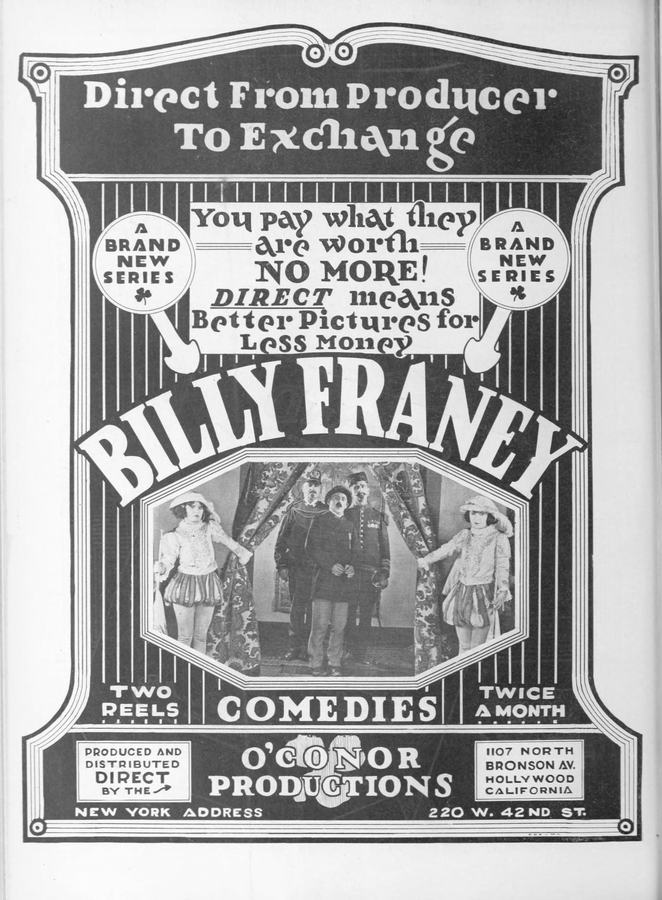
The year 1923 represents a fascinating juncture in the evolution of the moving image, a period where the primitive flickers of the past were coalescing into the sophisticated visual language we now recognize as the silent era's zenith. Within this fertile landscape, Highly Polished emerges not merely as a relic of vaudevillian slapstick, but as a precise, almost surgical examination of the comedic potential inherent in the human form. Billy Franey, a performer whose name may not carry the monolithic weight of a Keaton or a Chaplin in the modern consciousness, demonstrates here a mastery of the 'kinetic joke' that rivals the titans of the genre.
At the heart of Highly Polished lies a fundamental tension between the protagonist's aspirations and his physical reality. Unlike the exuberant, almost manic energy found in Full of Pep, Franey’s approach is more measured, more deliberative. He operates with a skeletal grace, his movements suggesting a man who is constantly negotiating a peace treaty with gravity—and losing. The film’s structure is built upon a series of cascading failures, where a simple attempt to achieve a 'polished' appearance or social standing results in a total disintegration of order.
The cinematography, though constrained by the technical limitations of its time, captures the nuance of Franey’s performance with surprising clarity. There is a specific visual rhythm here that one might find missing in more dramatic contemporary works like The Master Mind. While the latter relies on the weight of its mystery and narrative complexity, Highly Polished finds its depth in the immediate, the tactile, and the visceral. Every frame is saturated with the threat of a misplaced foot or a misinterpreted gesture.
Billy Franey’s persona is a fascinating study in the 'common man' trope. He lacks the tragic pathos of the Little Tramp, opting instead for a gritty, resilient frustration that feels perhaps more grounded in the working-class anxieties of the 1920s. In many ways, his struggle mirrors the themes of social mobility and the precariousness of status explored in Everything for Sale. However, where that film uses drama to critique the commodification of the human spirit, Highly Polished uses the absurdity of the body to highlight the same societal pressures.
Bob O'Connor, playing opposite Franey, provides the necessary gravitational pull to keep the film from floating off into pure abstraction. Their chemistry is built on a foundation of timing that can only be forged in the fires of the vaudeville circuit. The way they occupy the frame together—often in a state of mutual bewilderment—creates a comedic friction that propels the narrative forward without the need for elaborate intertitles. It is a testament to the power of pure pantomime, a skill that was beginning to reach its absolute peak during this era.
To understand the specific brand of humor in Highly Polished, it is useful to look at the broader spectrum of physical performance from the same period. Consider the raw, unchoreographed violence of a film like World's Heavyweight Championship Between Tommy Burns and Jack Johnson. While that is a documentary recording of a sporting event, the fascination with the body in motion—its limits, its endurance, and its eventual collapse—is a shared DNA. Franey’s comedy is essentially a 'prizefight' with the inanimate world. He takes hits from doors, ladders, and social expectations with the same stoic resilience of a boxer in the twelfth round.
This physicality is starkly different from the more refined, almost theatrical movements seen in The Awakening of Helena Ritchie. In that drama, movement is used to convey internal emotional shifts; in Highly Polished, movement is the externalization of a chaotic universe. There is no internal life that isn't immediately translated into a stumble or a frantic double-take.
The title itself, Highly Polished, serves as a biting irony. The film deals extensively with the idea of 'making an impression.' In an era where the 'Rage of Paris' (as seen in The Rage of Paris) dictated a certain level of chic sophistication, Franey’s character represents the antithesis of this manufactured grace. He is the grit in the gears of the social machine. His attempts to achieve a 'polished' state are inherently doomed because his very nature is abrasive, honest, and unrefined.
There is a sequence involving a sequence of mistaken identities and clumsy social maneuvers that echoes the themes found in A Game Lady. However, where that film might lean into the romance of the situation, Highly Polished remains steadfastly committed to the gag. The pursuit of the 'lady' or the 'status' is merely the catalyst for the next series of physical indignities. It is a cynical, yet strangely optimistic view of the human condition: we will fail, we will look ridiculous, but we will keep moving.
Visually, the film benefits from the stark, high-contrast lighting typical of the early 20s. The shadows are deep, and the whites are blown out, creating a graphic quality that emphasizes the geometry of the sets. This visual clarity is essential for slapstick; the audience must understand the spatial relationship between the character and the 'threat' (be it a bucket of water or a flight of stairs) at all times. In this regard, the director exhibits a keen understanding of frame composition that rivals the more 'prestige' productions like The Vicar of Wakefield, though the goals are diametrically opposed.
The editing in Highly Polished is remarkably modern. The cuts are quick, timed to the beats of the physical action, ensuring that the momentum never wanes. This is a film that understands the brevity of the 'short' format. It doesn't overstay its welcome or indulge in the languid pacing that can sometimes plague silent features like His Father's Son. Instead, it maintains a relentless forward motion, a frantic energy that mirrors the industrial age it was born into.
Why does a film like Highly Polished matter in the contemporary era? It matters because it represents the foundational grammar of visual humor. Every modern action-comedy, every piece of physical theater, owes a debt to the experiments conducted by performers like Franey and O'Connor. They were the pioneers of 'the fall,' the architects of the 'slow burn,' and the masters of the 'take.'
When we look at the 'hard-boiled' narratives of the same era, such as The Hard Rock Breed, we see a focus on masculinity and physical labor. Highly Polished takes those same elements—the working-class body, the struggle against the environment—and turns them inside out through the lens of comedy. It is the flip side of the same coin, proving that the human experience is as much a comedy of errors as it is a drama of survival.
In the end, the film is a celebration of the un-polished. It is a reminder that despite our best efforts to present a smooth, shiny exterior to the world, we are all ultimately subject to the same clumsy, chaotic forces. Whether it’s the quiet domesticity of Hush or the high-stakes tension of The Right That Failed, the underlying truth of the human condition remains the same: we are all just trying to keep our balance in a world that seems determined to trip us up.
As we delve deeper into the archives of silent cinema, gems like Highly Polished serve as vital touchstones. They remind us that cinema was once a medium of pure movement, unburdened by the complexities of synchronized sound or the bloat of modern CGI. There is a purity in Franey’s performance that transcends time. It is a performance that doesn't require a translation or a cultural primer; the language of a man falling over a chair is universal.
While it may not have the epic scope of The Wooing of Princess Pat or the historical weight of The Common Cause, Highly Polished holds its own through sheer, unadulterated craftsmanship. It is a 'highly polished' piece of entertainment in the most literal sense—a film that has been buffed and shined until only the essential elements of comedy remain. It is a brief, bright spark from a bygone era, and one that still manages to illuminate the absurdity of our own.
IMDb 6
1925
Community
Log in to comment.