DbcultAccessing Vault...
Cult Review
Senior Film Conservator
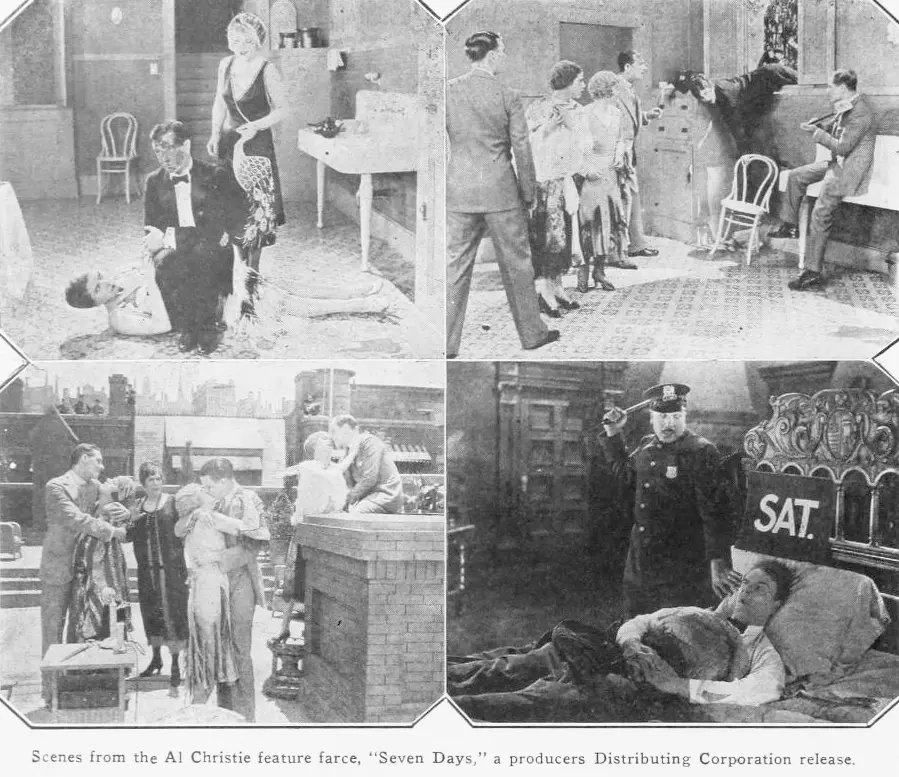
Is Seven Days worth watching today? Short answer: yes, but only if you have an appetite for the specific brand of frantic, physical comedy that defined the mid-1920s. This film is a treat for those who enjoy 'locked-room' scenarios and social satire, but it will likely frustrate viewers who prefer modern pacing or grounded logic.
The film operates on a premise that feels strangely relevant in a post-2020 world, though its execution is rooted firmly in the stage-tradition farce. It isn't a deep psychological study. It is a machine built for chaos. If you want to see how the silent era handled the dissolution of social class under pressure, this is a fascinating artifact. If you want a tight mystery, look elsewhere.
Before diving into the technical weeds, let’s establish the core of the experience. This is a film of high energy and low stakes, despite the threat of smallpox looming over the plot.
Seven Days is an adaptation of a wildly successful stage play, and it never quite loses that theatrical DNA. The direction by Scott Sidney leans into the limitations of the single-setting house. The house itself becomes a character—a maze of doors, windows, and service elevators that facilitate the constant 'near-misses' between the burglar and the police officer. Unlike the more expansive outdoor adventures of the era, such as Two Moons, this film thrives on the feeling of being trapped.
The cinematography doesn't try to be revolutionary. It stays wide enough to capture the physical comedy of the ensemble. When the burglar, played with a surprising amount of pathos by Eddie Gribbon, attempts to scale a balcony only to find the police officer waiting on the other side, the framing is precise. It’s about the geometry of the gag. The film understands that humor in a silent medium is about the distance between two people and the objects between them.
There is a specific scene where the entire household is forced to line up for a medical inspection. The way the characters are arranged—wealthy matriarch next to a common thief—is a visual representation of the film's entire thesis. Disease doesn't care about your bank account. It’s a leveler. This is a surprisingly cynical observation for a 1925 comedy, but it gives the film a bite that keeps it from being purely fluff.
Lilyan Tashman is the standout here. Long before she became a celebrated 'best-dressed' icon of the early talkies, she showed a remarkable aptitude for the 'society girl in distress' trope. She doesn't just play the role straight; she adds a layer of knowing frustration. When she realizes she is stuck with her eccentric family and a literal criminal, her facial expressions carry the weight of the audience's own disbelief. She is our surrogate in the madness.
The ensemble cast is a 'who's who' of character actors from the period. Creighton Hale brings a jittery energy that serves as the perfect foil to Tom Wilson’s more stoic police officer. The chemistry between the 'legal' characters and the 'illegal' ones provides the film's best moments. It’s not about the crime; it’s about the inconvenience of the crime. The burglar isn't trying to escape justice as much as he is trying to escape the annoying company of the upper class. It’s a subversion that feels fresh even a century later.
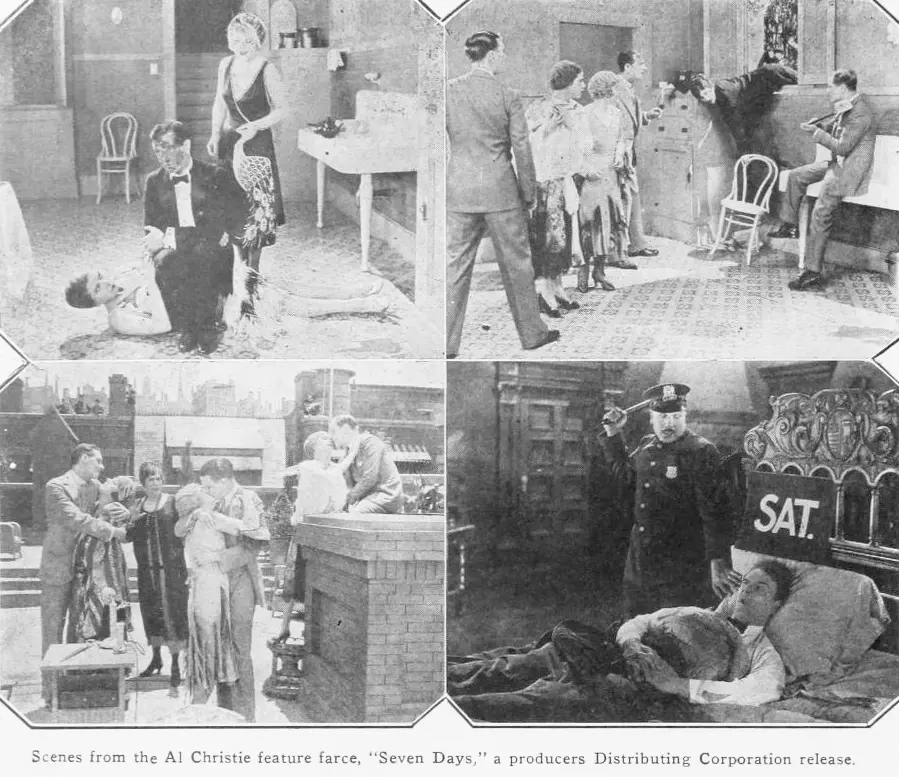
Compare this to the more melodramatic performances in The Third Degree. While that film takes its crime and punishment with deadly seriousness, Seven Days treats the presence of a criminal as a mere social faux pas. It’s a refreshing change of pace for the genre.
If you are looking for a historical curiosity that mirrors modern anxieties, yes. The idea of being 'stuck' with people you can't stand is a universal human experience. Seven Days captures the specific brand of 'cabin fever' that leads people to do irrational things. It’s a comedy of desperation.
However, if you struggle with the exaggerated gestures of silent-era acting, this might be a tough sit. The film relies heavily on pantomime to explain the complex rules of the quarantine. It’s loud, even without sound. But for those who can appreciate the craft of a well-timed sight gag, there is plenty to admire. It’s a film that knows exactly what it is: a romp. It doesn't pretend to be anything more.
The pacing of Seven Days is relentless. Once the quarantine is announced, the film never stops moving. This is both a strength and a weakness. On one hand, it prevents the audience from questioning the logic of the plot. On the other hand, it can feel a bit like being trapped in a revolving door. There are only so many times you can see someone hide under a table before the joke wears thin.
One specific moment that stands out is the 'dinner sequence.' Because they are under quarantine, the usual service staff is unavailable or restricted. Watching the wealthy characters attempt to perform basic domestic tasks—and failing miserably—is a highlight. It’s a slapstick critique of the uselessness of the elite. This kind of social commentary was common in the works of writers like Mary Roberts Rinehart, who often poked fun at the very class she belonged to.
The use of intertitles is sparse but effective. The writers, Rinehart and Conklin, understood that the visuals should do the heavy lifting. The dialogue cards are mostly used to punctuate the absurdity of the situation rather than to explain the plot. This keeps the momentum going, unlike some of its contemporaries like Stop That Wedding, which can sometimes get bogged down in exposition.
The film’s energy is infectious. It moves with a frantic grace that is hard to find in modern cinema. The set design of the house is fantastic, providing enough levels and corners to keep the action visually interesting. The social satire regarding class and disease is surprisingly sharp and remains relevant. It’s a short, punchy experience that doesn't waste much time.
The logic of the quarantine itself is a bit flimsy, serving merely as a plot device. Some of the secondary characters are one-dimensional archetypes that don't get much to do. The ending feels a bit rushed, as if the filmmakers realized they had run out of film and needed to resolve five different plot threads in three minutes.
Seven Days is a chaotic, delightful relic. It isn't a profound piece of art, but it is a masterclass in the mechanics of farce. By stripping away the ability for characters to leave, it forces a level of interaction that is both uncomfortable and hilarious. It works. But it’s flawed. It’s a film that reminds us that even in a crisis, humans will still find a way to be petty, social-climbing, and absurd. If you can handle the frantic energy of 1925, it’s a week worth spending.

IMDb —
1932
Community
Log in to comment.