DbcultAccessing Vault...
4.7/10
Senior Film Conservator
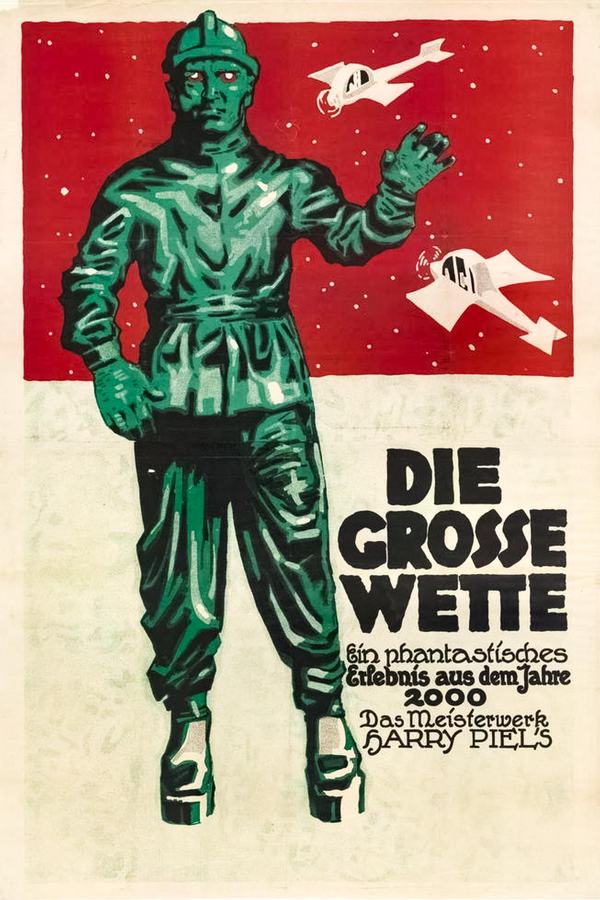
A definitive 4.7/10 rating for a film that redefined the boundaries of cult cinema. Die große Wette remains a cornerstone of transgressive art.
Stepping into the tumultuous, exhilarating world of early 20th-century German cinema, one inevitably encounters the name Harry Piel. A master showman, a daring filmmaker, and often his own intrepid star, Piel carved a niche for himself with a brand of adventure and suspense that was both uniquely German and universally thrilling. His 1917 opus, Die große Wette (The Great Wager), stands as a testament to his audacious vision, a kinetic spectacle that catapults its audience into a whirlwind of cunning, courage, and breathtaking derring-do. This isn't merely a film; it's an experience, a plunge into a meticulously crafted narrative where every frame pulsates with an almost palpable tension, a silent symphony of risk and reward that echoes the very spirit of its era.
At the heart of Die große Wette lies an audacious premise, a wager so profound it threatens to unravel the very fabric of its protagonist's existence. Baron von Falkenberg, portrayed with an almost impudent charm by Harry Piel himself, is a figure of flamboyant confidence, a man whose reputation is built on an unwavering belief in his own capabilities. His foil arrives in the form of Herr Klinger, embodied with chilling gravitas by Victor Janson, a cynical industrialist whose calculating demeanor masks a ruthless ambition. The bet is simple yet impossibly complex: Falkenberg must retrieve the legendary "Serpent's Eye," a jewel steeped in myth and guarded by a notorious criminal syndicate, within a timeframe that mocks all reason. Failure means the forfeiture of his entire fortune, his ancestral estate, and, perhaps more painfully, his very honor.
The narrative masterfully introduces Eleonore, a dazzling socialite played with exquisite grace by Mizzi Wirth. Initially a spectator to Falkenberg's reckless bravado, Eleonore finds herself irrevocably drawn into the perilous vortex of his quest. Her initial skepticism gradually gives way to a profound admiration, her fate becoming inextricably linked with his as they navigate a treacherous landscape of hidden agendas and sudden betrayals. The jewel's disappearance, it turns out, is merely the tip of a sprawling conspiracy orchestrated by the enigmatic "The Chameleon," brought to life with a sinister subtlety by Adolf Suchanek. This villain is a master of disguise and deception, a protean adversary whose every move is designed to confound and entrap.
As Falkenberg races against the relentless ticking of the clock, the film unfolds as a series of breathtaking set-pieces. He traverses secret passages, evades ingenious traps, and engages in daring aerial stunts that push the boundaries of early cinematic spectacle. The traditional, methodical investigative efforts of Detective Inspector Schmidt, portrayed with a stoic dedication by Rudolf Hilberg, often find themselves outmaneuvered, highlighting the stark contrast between conventional law enforcement and Falkenberg's unconventional, often improvisational, genius. Ludwig Trautmann adds another layer of intrigue as a shifty informant, his allegiances constantly shifting, further complicating the already intricate web of alliances and betrayals. The climax is a tour-de-force of suspense, a thrilling chase across precarious rooftops culminating in a final confrontation where not only the legendary jewel, but also Eleonore's safety and Falkenberg's very essence, hang precariously in the balance. It is a testament to Piel's storytelling prowess that this intricate plot never once feels convoluted, instead maintaining a relentless forward momentum that grips the viewer from its audacious opening to its exhilarating denouement.
Harry Piel's directorial hand in Die große Wette is unmistakable, characterized by a relentless pursuit of dynamic action and a keen understanding of popular entertainment. He wasn't one to indulge in the philosophical introspection often found in some of his German contemporaries; instead, Piel aimed squarely for the visceral thrill. His films were blueprints for adventure, meticulously designed to elicit gasps and cheers. Here, he demonstrates a remarkable aptitude for staging complex action sequences, particularly the aforementioned aerial stunts and rooftop chases, which must have been genuinely groundbreaking for 1917. The camera, while largely static by modern standards, is used with surprising effectiveness to frame the action, drawing the viewer's eye to the crucial details of a struggle or the dramatic reveal of a hidden mechanism.
Piel's direction also shines in his ability to maintain a brisk pace. There are no languid moments of contemplation; every scene serves to propel the plot forward, ratcheting up the tension with each new twist. This relentless momentum is a hallmark of his style, creating a sense of urgency that is vital for a film centered around a race against time. He skillfully employs cross-cutting during chase sequences, a technique that, while rudimentary compared to later developments, injects a palpable energy into the proceedings. Furthermore, Piel's casting choices, particularly his own presence as the dashing Baron, reflect a deliberate effort to create charismatic, aspirational figures that audiences could enthusiastically root for. His vision for Die große Wette was clear: to deliver unadulterated escapism, executed with precision and flair, a goal he achieves with remarkable success.
The ensemble cast of Die große Wette delivers a collective performance that is both compelling and indicative of the evolving art of silent acting. Harry Piel, in the role of Baron von Falkenberg, is the undeniable linchpin. His portrayal is a masterclass in silent charisma – a blend of athleticism, roguish charm, and an underlying earnestness that makes his character genuinely endearing. Piel doesn't just perform stunts; he imbues them with a sense of playful daring, making the audience believe in his character's almost superhuman capabilities without ever descending into mere caricature. His expressive eyes and confident posture convey a wealth of emotion, from steely determination to subtle romantic longing.
Victor Janson, as the formidable Herr Klinger, provides the perfect antagonist. Janson's performance is a study in controlled menace; his cold, calculating gaze and rigid demeanor effectively communicate the character's unyielding resolve and moral bankruptcy. He doesn't need grand gestures to convey villainy; his presence alone is enough to cast a shadow over the proceedings. Mizzi Wirth, as Eleonore, brings a vital human element to the high-octane narrative. Her journey from skeptical observer to active participant is beautifully rendered through subtle facial expressions and elegant body language. She embodies both vulnerability and an emerging strength, making her more than just a damsel in distress; she is a capable, intelligent woman whose emotional arc resonates deeply. Her chemistry with Piel is understated yet potent, adding a layer of romantic tension that enriches the adventure.
Adolf Suchanek's portrayal of "The Chameleon" is particularly noteworthy for its elusive quality. Without relying on extensive dialogue, Suchanek manages to convey a sense of omnipresent threat and cunning intelligence, making the villain feel truly formidable. His shifts in appearance and demeanor are subtle yet effective, emphasizing the character's namesake. Rudolf Hilberg, as Inspector Schmidt, offers a grounded performance that contrasts sharply with the flamboyant antics of Falkenberg. His character represents the steadfast, if sometimes outmaneuvered, forces of law and order, providing a necessary anchor in the film's more fantastical elements. Ludwig Trautmann, in his role as the shifty informant, adds a touch of gritty realism, his furtive glances and nervous energy perfectly capturing the ambiguity of his character's loyalties. Collectively, the cast, under Piel's astute guidance, crafts a tapestry of characters that are both archetypal and endowed with enough individual flair to remain memorable long after the final frame.
The cinematography of Die große Wette, while constrained by the technological limitations of its time, exhibits a surprising sophistication in its composition and use of light. The film effectively utilizes deep focus in certain shots, allowing for multiple planes of action to be visible, adding to the sense of a bustling, complex world. The use of natural light, augmented by artificial sources, creates dramatic contrasts between illuminated figures and shadowy backgrounds, particularly during the more suspenseful sequences. This chiaroscuro effect, a precursor to the German Expressionist movement that would soon sweep through the nation's cinema, lends an atmospheric depth to the film, enhancing the sense of mystery and danger.
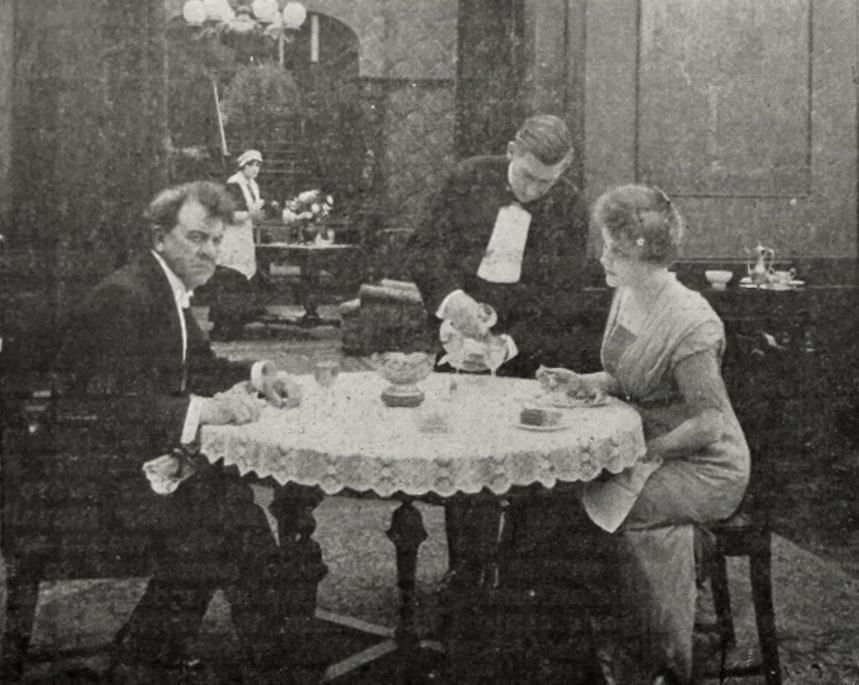
Piel's crew employs clever practical effects for the stunts, making the aerial sequences feel genuinely perilous. The camera work during these moments, though perhaps static to allow the stunt to play out, captures the scale and ambition, immersing the audience in the daring feats. Interior sets are designed with a careful eye for detail, from the opulent furnishings of Klinger's mansion to the labyrinthine corridors of the criminal hideout. These environments are not merely backdrops; they are active participants in the narrative, offering obstacles, clues, and opportunities for dramatic confrontation. The film's aesthetic is one of robust realism interspersed with moments of heightened theatricality, a balance that keeps the visual narrative engaging and visually diverse. The editing, while straightforward, is purposeful, ensuring that the visual flow matches the narrative's relentless pace, never lingering too long on unnecessary details, always driving towards the next plot point or spectacular revelation.
Beyond its thrilling facade, Die große Wette resonates with themes that speak to the societal anxieties and aspirations of early 20th-century Germany. The central theme of the wager itself is a powerful metaphor for risk-taking and the pursuit of ambition in an era marked by rapid industrialization and geopolitical upheaval. Falkenberg's willingness to stake everything on his own ingenuity and courage reflects a romanticized ideal of the individual hero against overwhelming odds, a sentiment that would have undoubtedly appealed to audiences grappling with the uncertainties of the Great War's aftermath. The film also touches upon the perennial conflict between established wealth and individual merit, with Klinger representing the cold, calculating power of capital and Falkenberg embodying a more adventurous, if reckless, spirit of enterprise.
The portrayal of a vast criminal underworld, operating with sophisticated networks and technological savvy, also taps into contemporary fears of organized crime and societal breakdown, a common trope in early detective and adventure serials. Compared to the more overtly moralistic narratives of films like Was She Justified?, Piel's film is more concerned with the mechanics of suspense and the thrill of the chase, though a clear moral compass guides Falkenberg's actions. It stands in contrast to the more domestic dramas or social commentaries of its time, aligning more closely with the pulp adventure sensibilities that captivated audiences globally. One might even draw parallels to the intricate plotting of films like The Circular Staircase, though Piel infuses his mystery with a distinctly more action-oriented approach, making it less about deduction and more about daring execution.
The film's depiction of technology, particularly the use of automobiles and perhaps even early aircraft (implied by "aerial stunts"), also places it firmly within an era fascinated by mechanical progress. This fascination with modernity and speed is a recurring motif in Piel's work and contributes significantly to the film's forward-looking energy. It's a stark contrast to the rustic charm or historical settings found in films like The Goose Girl, firmly planting Die große Wette in the burgeoning landscape of modern urban thrillers. Piel's films, including this one, were instrumental in popularizing the action-adventure genre in Germany, paving the way for future thrillers and influencing generations of filmmakers who sought to entertain through pure, unadulterated excitement.
As a silent film, Die große Wette relied heavily on the live musical accompaniment of its era to shape its emotional landscape. While we can only speculate on the specific scores performed during its original theatrical run, it's clear that the film's rapid pacing and dramatic shifts in tone would have demanded a dynamic and versatile musical backdrop. A skilled pianist or orchestra would have underscored the tension of the chases with urgent crescendos, softened the romantic interludes with lyrical melodies, and heightened the villainy with ominous chords. The absence of synchronized dialogue forced actors to rely on exaggerated facial expressions and body language, a technique that Piel's cast masterfully employs to convey their characters' inner turmoil and external resolve.
Intertitles, used sparingly but effectively, provide crucial plot exposition and dialogue, acting as a bridge between the visual narrative and the audience's understanding. These textual interruptions are integrated smoothly, never disrupting the flow of the action but rather enhancing it, much like a narrator's voice guiding the viewer through a complex tale. The film's overall ambience, therefore, was a carefully constructed experience, a synergy between the visual spectacle on screen and the aural tapestry woven by live musicians, creating an immersive world that transcended the limitations of its silent medium. This collaborative artistry is what makes revisiting such cinematic treasures so rewarding, imagining the full sensory experience that captivated audiences over a century ago.
Harry Piel's Die große Wette stands as a vibrant example of early German popular cinema, a genre that often gets overshadowed by the more art-house leaning German Expressionism. Yet, films like this were the blockbusters of their day, thrilling audiences and setting precedents for action filmmaking. Its influence can be seen in the subsequent development of European adventure cinema, laying groundwork for future serials and spy thrillers. While it might not possess the gothic brooding of a F.W. Murnau or the architectural grandeur of a Fritz Lang, Piel's film offers something equally valuable: pure, unadulterated entertainment crafted with an undeniable passion for cinema.
Comparing it to other films of its period, one finds Die große Wette in good company among films that prioritized thrills and spectacle. It shares a certain kinetic energy with films like Notorious Gallagher; or, His Great Triumph, both showcasing a triumphant hero overcoming formidable obstacles. Its intricate plotting and focus on a grand scheme might draw comparisons to the treasure-hunting escapades sometimes hinted at in serials like Phantom Fortunes, albeit with Piel's signature flair for direct, physical action. Even when considering films from vastly different cultural contexts, such as Un día en Xochimilco, which might offer a more ethnographic view, Die große Wette carves out its own distinct identity through its relentless pursuit of narrative excitement.
It is a film that demands to be viewed not just as a historical artifact, but as a living, breathing piece of cinematic artistry that continues to captivate with its ingenuity and sheer audacity. Piel's ability to create such a richly detailed and suspenseful narrative with the tools available to him in 1917 is nothing short of remarkable. For anyone interested in the origins of the action-adventure genre, the evolution of German cinema, or simply a rip-roaring good time, Die große Wette remains an essential viewing experience, a vibrant testament to the power of early cinema to transport and enthrall.
IMDb —
1916
Community
Log in to comment.