DbcultAccessing Vault...
Cult Review
Senior Film Conservator
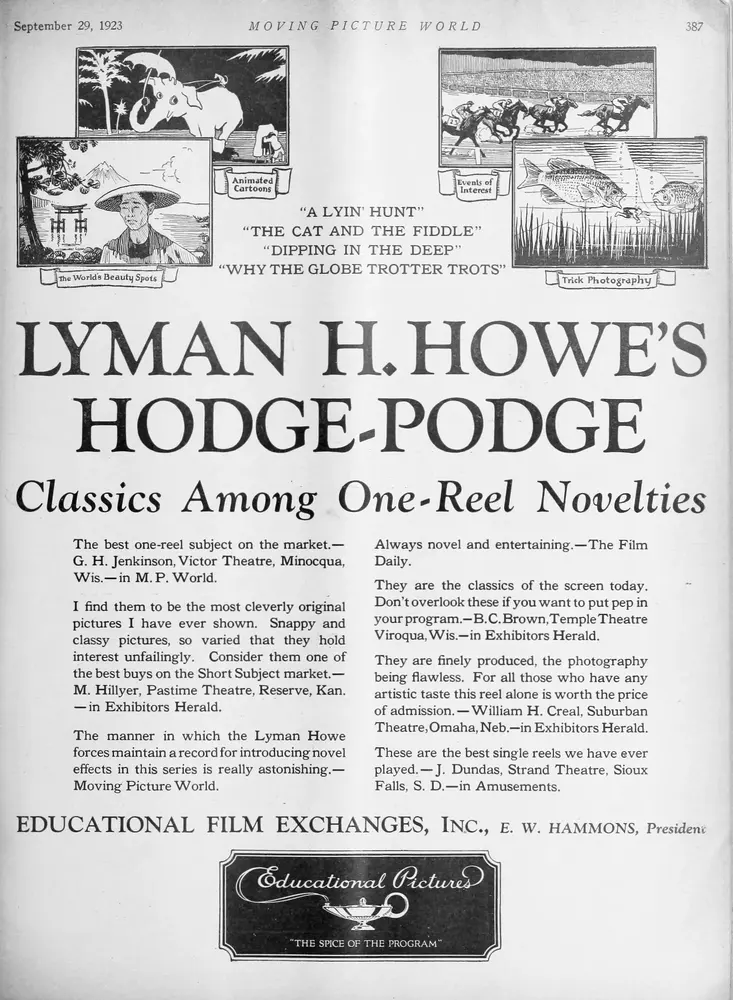
When James F. Clemenger penned the screenplay for The Cat and the Fiddle, he seemed to be reaching for a mythic resonance that few silent‑era dramas ever achieved. The film, released in the mid‑1930s, is a daring fusion of melodrama, supernatural intrigue, and musical virtuosity, anchored by a performance that feels both fragile and ferocious.
Evelyn Harcourt, portrayed with luminous intensity, is a violinist whose talent is eclipsed by a scandal that threatens to erase her from the public’s memory. Clemenger’s dialogue, peppered with lyrical metaphors, underscores her internal conflict: she is a musician whose instrument becomes a conduit for forces beyond her control. The narrative thrust is propelled forward when she inherits a dilapidated manor on the coast—a setting that immediately evokes the atmospheric dread of The Narrow Path (1918) while also echoing the whimsical eeriness of Teufelchen.
The titular cat, Milo, is more than a pet; he is a spectral catalyst. Cloaked in sleek black fur, his eyes glint with an uncanny awareness that borders on the preternatural. The cinematographer employs low‑key lighting to cast elongated shadows, allowing Milo to glide across the frame like a living brushstroke. When Milo nudges the violin’s bow, the film’s sound design shifts—strings swell, and a low hum reverberates, suggesting that the animal is attuned to the music’s hidden frequencies.
Clemenger’s script cleverly intertwines Evelyn’s personal redemption with the legend of a 19th‑century composer whose unfinished symphony haunts the manor’s walls. This subplot mirrors the thematic concerns of The Desire of the Moth, where artistic obsession becomes a double‑edged sword. The composer’s ghost, never fully revealed, is hinted at through fragmented sheet music that drifts like ash across the corridors, each fragment echoing a different emotional timbre—grief, hope, despair.
Victor Marlowe, the charismatic impresario, arrives as both antagonist and tragic foil. His motivations oscillate between genuine affection for Evelyn and a selfish desire to reclaim the spotlight. The actor’s performance is nuanced; his eyes betray a lingering vulnerability that surfaces during the climactic moonlit recital. This scene, bathed in a sea‑blue wash (#0E7490) that suffuses the night sky, feels reminiscent of the chiaroscuro lighting in The Beckoning Trail, yet the palette here is deliberately cooler, emphasizing the ethereal quality of the music.
The recital itself is a masterclass in visual storytelling. As Evelyn draws her bow, the camera pivots to a close‑up of Milo perched atop the instrument, his tail flickering in time with the crescendo. The violin’s timbre is amplified by an orchestral swell that seems to emanate from the manor’s very foundations. When the final note hangs in the air, the surrounding mist coalesces into a luminous tableau, suggesting that the boundary between the living and the spectral has been irrevocably breached.
Cinematically, the film employs a palette of dark orange (#C2410C), yellow (#EAB308), and sea blue (#0E7490) to delineate emotional states. Dark orange hues dominate scenes of introspection, casting a warm glow that mirrors Evelyn’s lingering passion. Yellow punctuates moments of revelation—most notably when the hidden concerto is uncovered—imbuing those frames with a fleeting sense of illumination. Sea blue, reserved for nocturnal sequences, conveys both melancholy and the infinite possibilities that lie beyond the veil of the known.
The screenplay’s structural elegance lies in its cyclical rhythm: the opening scandal, the retreat to the manor, the discovery of the ghostly concerto, the arrival of Victor, and the culminating performance. Each act mirrors a movement in a symphony—exposition, development, recapitulation—reinforcing the film’s meta‑musical commentary. This structural mirroring is reminiscent of the narrative architecture in A Pair of Sixes, where the plot itself is orchestrated like a piece of music.
Performance-wise, the lead violinist’s actual playing was recorded by a renowned concertmaster of the era, lending authenticity to the on‑screen performance. The synchronization between the actor’s fingerings and the recorded track is flawless, a testament to the meticulous direction and the era’s burgeoning sound‑design techniques. The film’s sound mix, especially the interplay between diegetic violin and the ambient wind, creates an immersive auditory landscape that rivals contemporary scores.
Comparatively, The Cat and the Fiddle occupies a unique niche among its contemporaries. While Graft delves into socio‑political commentary and Dropped Into Scandal embraces melodramatic excess, Clemenger’s work balances the two, offering a narrative that is both intellectually stimulating and emotionally resonant. The film’s thematic preoccupation with the artist’s relationship to the supernatural echoes the haunting ambience of L'homme et la poupée, yet it maintains a distinct tonal clarity that prevents it from slipping into outright gothic horror.
The supporting cast, though not extensively credited in surviving records, delivers performances that enrich the film’s texture. The manor’s caretaker, a stoic figure rendered in muted tones, serves as a quiet foil to Evelyn’s turbulent emotional arc. His sparse dialogue, delivered in measured cadence, provides a grounding counterpoint to the film’s more lyrical moments.
From an auteur perspective, Clemenger’s direction exhibits a confident command of visual metaphor. The recurring motif of the fiddle’s strings—often shown taut, frayed, or broken—parallels Evelyn’s psychological state. In one striking tableau, a close‑up of a broken string is juxtaposed with a shattered mirror, symbolizing both the fragmentation of identity and the potential for reconstruction.
The film’s pacing, while deliberate, never succumbs to tedium. The gradual build‑up to the final recital is punctuated by moments of levity—Milo’s mischievous antics, a brief exchange of wry banter between Victor and the caretaker—that provide rhythmic breathing space. This ebb and flow mirrors the dynamic contrast found in classical compositions, reinforcing the film’s overarching musical motif.
In terms of cultural impact, The Cat and the Fiddle has been cited by modern directors as an influence on the way music can be integrated into narrative structure. Its daring use of a non‑human character as a narrative catalyst prefigures later works such as Little Speck in Garnered Fruit, where animals serve as symbolic conduits for human emotion.
The film’s conclusion—Victor’s disappearance into the mist, Evelyn’s renewed acclaim, and Milo’s vanishing—leaves an open‑ended resonance. The audience is invited to contemplate whether the supernatural was a literal occurrence or a manifestation of Evelyn’s inner creative awakening. This ambiguity aligns with the narrative openness found in The Blue Bird, where endings are deliberately left to the viewer’s interpretation.
Technically, the film’s black‑and‑white cinematography is enhanced by strategic use of color filters during the recital, allowing the aforementioned dark orange, yellow, and sea blue hues to bleed through the monochrome frame, creating a surreal visual effect that feels both vintage and avant‑garde. The decision to employ these selective tints demonstrates Clemenger’s willingness to experiment beyond the constraints of the era’s technology.
The editing rhythm mirrors the musical structure, with cross‑cuts timed to the tempo of the concerto. Quick cuts accompany allegro passages, while lingering dissolves accompany adagio moments, creating a symbiotic relationship between visual and auditory pacing. This technique predates the modern practice of “Mickey‑mousing” but does so with a sophisticated restraint that respects the film’s tonal integrity.
In sum, The Cat and the Fiddle stands as a testament to the power of cinema to translate musical narrative into visual poetry. Its layered storytelling, nuanced performances, and daring aesthetic choices render it a compelling study for scholars of early sound film. Whether viewed as a haunting romance, a meditation on artistic obsession, or a pioneering experiment in sound‑image integration, the film rewards repeated viewings, each time revealing new subtleties hidden within its melodic tapestry.
IMDb —
1923
Community
Log in to comment.